
California, known for its stunning coastline, vibrant cities, and rich cultural tapestry, also presents a unique landscape when it comes to firearm regulations. For individuals considering the purchase of a firearm within the Golden State, understanding the stringent legal framework is paramount. This guide aims to demystify the process, offering a comprehensive overview of the requirements, procedures, and considerations involved in legally acquiring a gun in California. Navigating these regulations ensures responsible ownership and adherence to state and federal laws, safeguarding both the individual and the community.
Understanding California’s Firearm Laws
California maintains some of the most comprehensive firearm regulations in the United States. These laws are designed to promote public safety while respecting the rights of law-abiding citizens. It is crucial to familiarize yourself with these statutes before embarking on the purchasing process.
Federal and State Eligibility Requirements
To purchase a firearm in California, you must meet specific eligibility criteria established at both the federal and state levels.
Age Restrictions
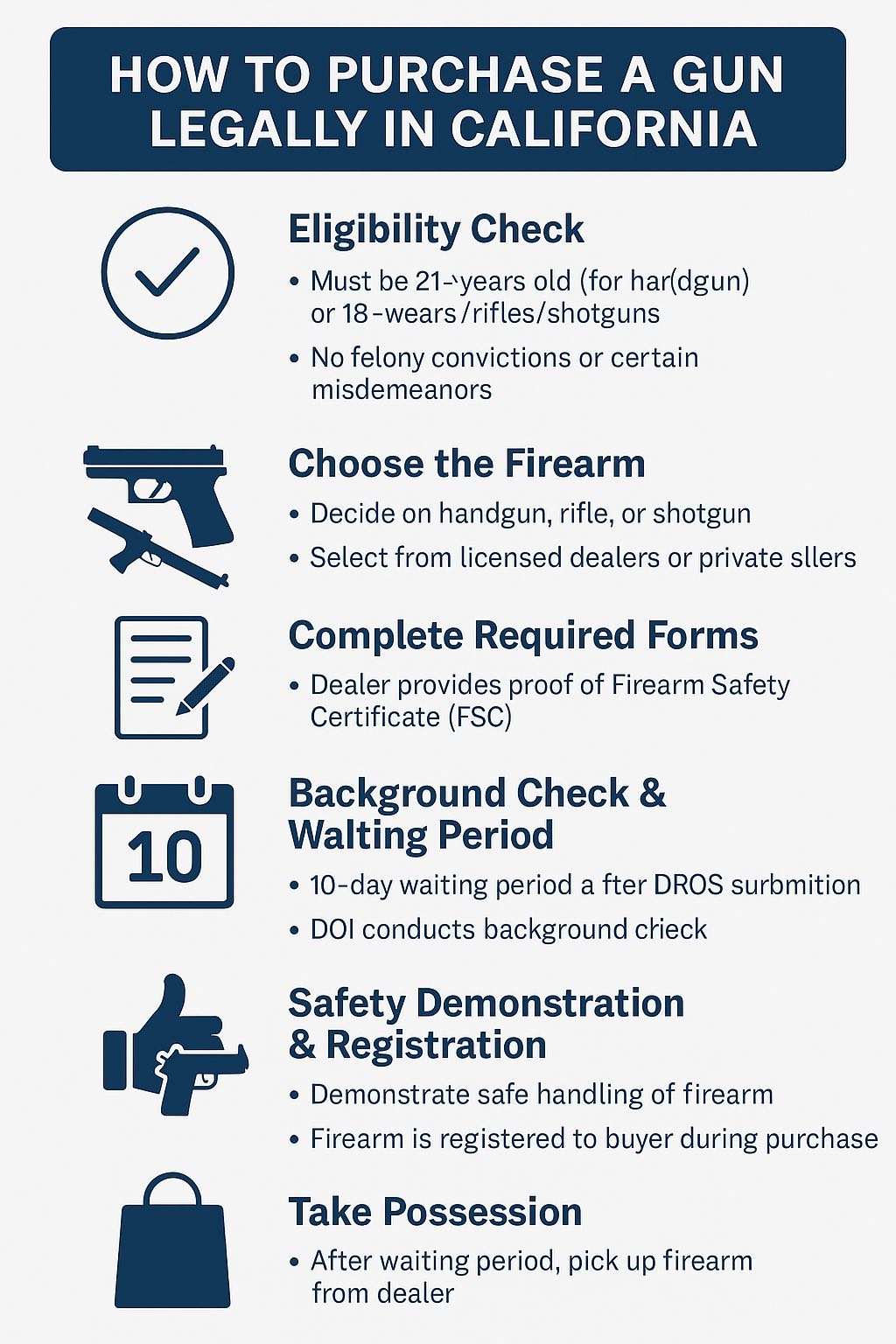
Federal law dictates that individuals must be at least 18 years old to purchase rifles and shotguns, and at least 21 years old to purchase handguns from licensed dealers. California law aligns with these federal mandates.
Residency
You must be a legal resident of California to purchase a firearm within the state. Proof of residency, typically through a valid California driver’s license or state identification card, is required. If your identification does not reflect your current California address, additional documentation may be necessary, such as utility bills or rental agreements.
Criminal Background Checks
A fundamental aspect of firearm purchase in California is the mandatory background check. This process, conducted through the Dealer Record of Sale (DROS) system, screens potential buyers against federal and state databases for disqualifying factors.
Prohibited Persons
Federal law and California law prohibit individuals convicted of certain crimes from owning firearms. These disqualifying offenses include, but are not limited to:
- Felony convictions
- Certain misdemeanor convictions (e.g., domestic violence)
- Adjudication as a mental defective or commitment to a mental institution
- Being subject to a domestic violence restraining order or a gun violence restraining order
- Unlawful user or addicted to any controlled substance
- Dishonorable discharge from the armed forces
- Renunciation of U.S. citizenship
Mental Health Restrictions
California has specific provisions regarding individuals with a history of certain mental health conditions. If you have been found by a court to be a danger to yourself or others, or have been involuntarily confined to a mental health facility, you may be prohibited from owning a firearm. It is advisable to consult with legal counsel if you have concerns about past mental health adjudications.
Restraining Orders
Individuals subject to domestic violence restraining orders or gun violence restraining orders are prohibited from possessing firearms. These orders are issued by courts to protect individuals from harm and have significant implications for gun ownership.
Types of Firearms and California Regulations
California categorizes firearms and imposes specific regulations on their sale and possession. Understanding these distinctions is vital when selecting a firearm.
Handguns
The purchase of handguns in California is subject to stricter regulations than rifles and shotguns. All handguns sold by licensed dealers must be on the California Department of Justice’s (DOJ) Roster of Handguns Certified for Sale. This roster ensures that handguns meet specific safety requirements.
Rifles and Shotguns
While generally less restricted than handguns, the sale of certain semi-automatic rifles and shotguns may be subject to additional regulations, particularly those classified as “assault weapons.”
“Assault Weapons” Ban
California has an “assault weapons” ban that prohibits the possession, importation, sale, or manufacture of certain semi-automatic firearms based on their features, such as pistol grips, folding stocks, and high-capacity magazines. Specific definitions and exceptions apply, and compliance with these regulations is mandatory.
The Firearm Purchase Process in California
The process of buying a gun in California involves several distinct steps, ensuring thoroughness and adherence to legal requirements.
Finding a Licensed Firearms Dealer (FFL)
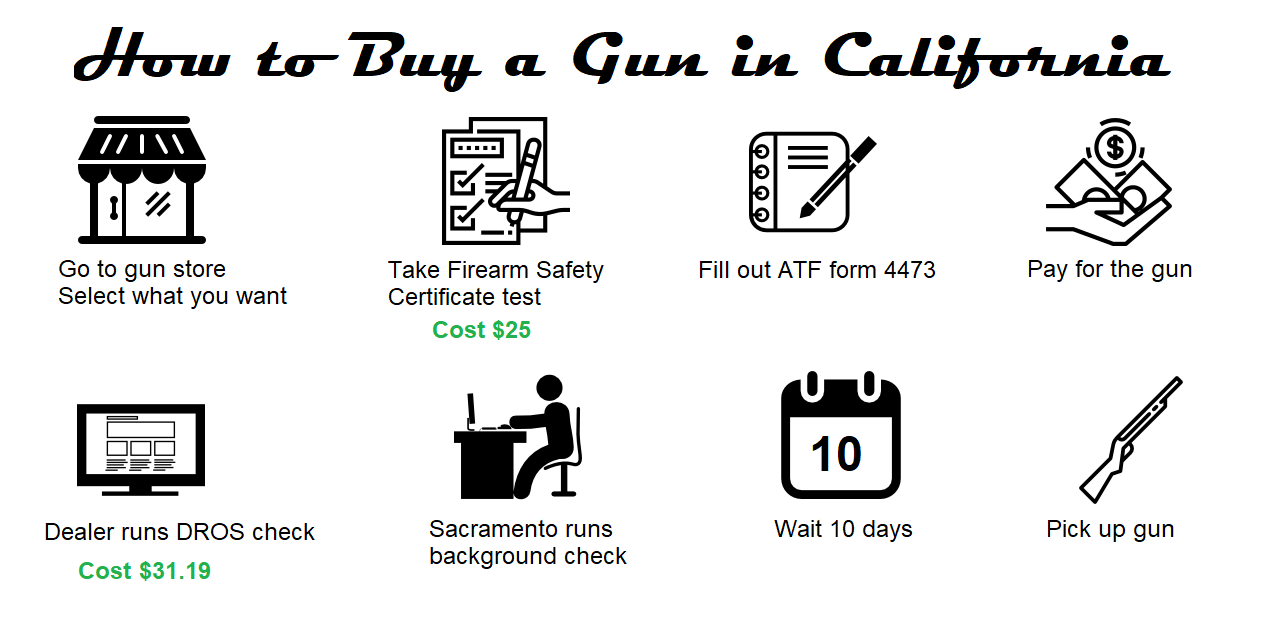
The first step in purchasing a firearm is to locate a Federal Firearms License (FFL) dealer in California. These are licensed businesses authorized to sell firearms. Reputable dealers will be knowledgeable about California’s specific laws and can guide you through the purchasing process. It is recommended to research dealers in your area and read reviews to ensure a positive and compliant transaction.
Selecting a Firearm
Once you have identified a dealer, you can proceed to select the firearm you wish to purchase. Consider your intended use for the firearm, your experience level, and California’s legal restrictions.
Handgun Safety Certificate (HSC) or Firearm Safety Certificate (FSC)
For handgun purchases, and generally for long guns, you will need to obtain a Firearm Safety Certificate (FSC). This certificate is obtained by passing a written test administered by a DOJ-certified instructor. The test covers firearm safety, laws, and responsible gun ownership. The FSC is valid for five years.
Safety Demonstrations
Prior to taking possession of a handgun, you must perform a safety demonstration. This demonstration involves safely loading and unloading the firearm and performing a basic function test under the supervision of the dealer. For rifles and shotguns, a similar safety demonstration may be required depending on the type of firearm.
The Dealer Record of Sale (DROS) Application
The DROS application is the cornerstone of the firearm purchase process in California. It is a detailed form that you will complete at the FFL dealer.
Information Required for DROS
The DROS application requires extensive personal information, including:
- Full legal name
- Date of birth
- Physical description (height, weight, eye color, hair color)
- Address and residency information
- Driver’s license or state identification card number
- Criminal history and mental health declarations
- Information about the firearm being purchased
Background Check and Waiting Period
Upon submission of the DROS application, the DOJ initiates a background check. California mandates a 10-day waiting period between the time the DROS is submitted and when you can take possession of the firearm. This waiting period is designed to allow for thorough background checks and to provide a cooling-off period. During this time, the DOJ reviews your information to ensure you are not a prohibited person.
Taking Possession of Your Firearm
After the 10-day waiting period has elapsed and your background check has cleared, you will be notified by the dealer that you can pick up your firearm.
Finalizing the Transaction
At the time of pickup, you will typically pay any remaining fees, including state and local taxes, and complete any final paperwork. The dealer will ensure all legal requirements have been met before transferring the firearm to your possession.
Additional Considerations for Firearm Ownership in California
Beyond the basic purchase process, responsible firearm ownership in California involves understanding ongoing legal obligations and best practices.
Safe Storage Requirements
California law mandates that firearms be stored securely to prevent unauthorized access, particularly by children. This often means using a gun safe, lockbox, or trigger lock. Failure to comply with safe storage laws can result in serious legal consequences, especially if a firearm is used in a crime or by an unauthorized individual.
Magazine Capacity Limits
California has a strict limit on magazine capacity. Generally, the maximum capacity for newly purchased magazines is 10 rounds. Owning or possessing magazines with a higher capacity is illegal in California, with limited exceptions for those who lawfully possessed them before the ban.
Firearm Registration
All firearms purchased in California through an FFL dealer are registered with the California DOJ. This registration links the firearm to its legal owner.
Prohibited Firearms and Accessories
California law prohibits the possession of certain types of firearms, commonly referred to as “assault weapons,” and specific accessories like high-capacity magazines. It is crucial to be aware of the definitions of these prohibited items to ensure compliance.
Expanding the Scope of Your Knowledge
For those seeking to deepen their understanding of firearm laws and responsible ownership, numerous resources are available.
DOJ Resources
The California Department of Justice (DOJ) provides extensive information on its website regarding firearm laws, regulations, and safety. Consulting official DOJ publications is an essential step for any prospective gun owner.
Licensed Firearms Dealers
FFL dealers are valuable resources for information. They can explain specific firearm models, answer questions about safety features, and provide guidance on navigating the purchasing process within the current legal framework.
Legal Counsel
In complex situations or if you have concerns about eligibility due to past legal or mental health issues, consulting with an attorney specializing in firearm law is highly recommended. They can provide personalized advice and ensure you are fully compliant with all applicable statutes.
Navigating the process of buying a gun in California requires diligence and a commitment to understanding the state’s robust legal framework. By adhering to these regulations and prioritizing responsible ownership, individuals can lawfully acquire firearms while contributing to the safety and security of the community.
LifeOutOfTheBox is a participant in the Amazon Services LLC Associates Program, an affiliate advertising program designed to provide a means for sites to earn advertising fees by advertising and linking to Amazon.com. Amazon, the Amazon logo, AmazonSupply, and the AmazonSupply logo are trademarks of Amazon.com, Inc. or its affiliates. As an Amazon Associate we earn affiliate commissions from qualifying purchases.