
Divorce in California, while often emotionally taxing, can be navigated with a clear understanding of the process and the necessary legal steps. California is a no-fault divorce state, meaning neither spouse needs to prove the other did something wrong to be granted a divorce. The grounds for divorce are simply irreconcilable differences, which means the marriage has broken down and cannot be saved. This guide will walk you through the fundamental stages of filing for divorce in the Golden State, from initial filing to final judgment.
Understanding the California Divorce Process
The California divorce process is designed to be relatively straightforward, particularly if both parties can agree on the terms of their separation. However, complexities can arise, especially when children, significant assets, or complex financial situations are involved. The process can be broadly divided into several key phases: initiating the divorce, serving the spouse, responding to the petition, reaching an agreement, and obtaining the final judgment. Each of these phases has specific requirements and timelines that must be adhered to.
Residency Requirements
Before you can file for divorce in California, you or your spouse must meet specific residency requirements. One of you must have lived in California for at least six months and in the specific county where you intend to file for at least three months. These requirements are crucial and must be satisfied to establish jurisdiction for the divorce proceedings in a California court.
Types of Divorce Proceedings
California offers several paths to divorce, catering to different circumstances:
- Uncontested Divorce: This is the most straightforward and usually the quickest type of divorce. It occurs when both spouses agree on all aspects of the divorce, including child custody, child support, spousal support (alimony), and the division of property and debts.
- Contested Divorce: This type of divorce occurs when spouses cannot agree on one or more key issues. It often requires negotiation, mediation, or court intervention to resolve disputes. This can extend the divorce process significantly.
- Summary Dissolution: This is a simplified divorce process available to couples who meet strict criteria. Both spouses must have been married for less than five years, have no children together (born or adopted), own minimal assets and debts, and agree to waive spousal support.
Key Terminology
Understanding the language used in divorce proceedings is essential. Some common terms include:
- Petitioner: The spouse who initiates the divorce by filing the initial paperwork.
- Respondent: The spouse who receives the divorce papers and must respond.
- Community Property: In California, all assets and debts acquired during the marriage are generally considered community property and are subject to equal division.
- Separate Property: Assets owned by a spouse before the marriage, or received during the marriage as a gift or inheritance, are considered separate property and are not subject to division.
- Spousal Support (Alimony): Financial support paid by one spouse to the other after the divorce.
- Child Custody: Refers to legal and physical custody arrangements for any children of the marriage.
- Child Support: Financial support paid by one parent to the other for the care of their children.
Initiating the Divorce
The divorce process officially begins when one spouse, the petitioner, files a petition with the court. This document formally requests the court to dissolve the marriage and outlines the basic terms being sought.
Filing the Petition
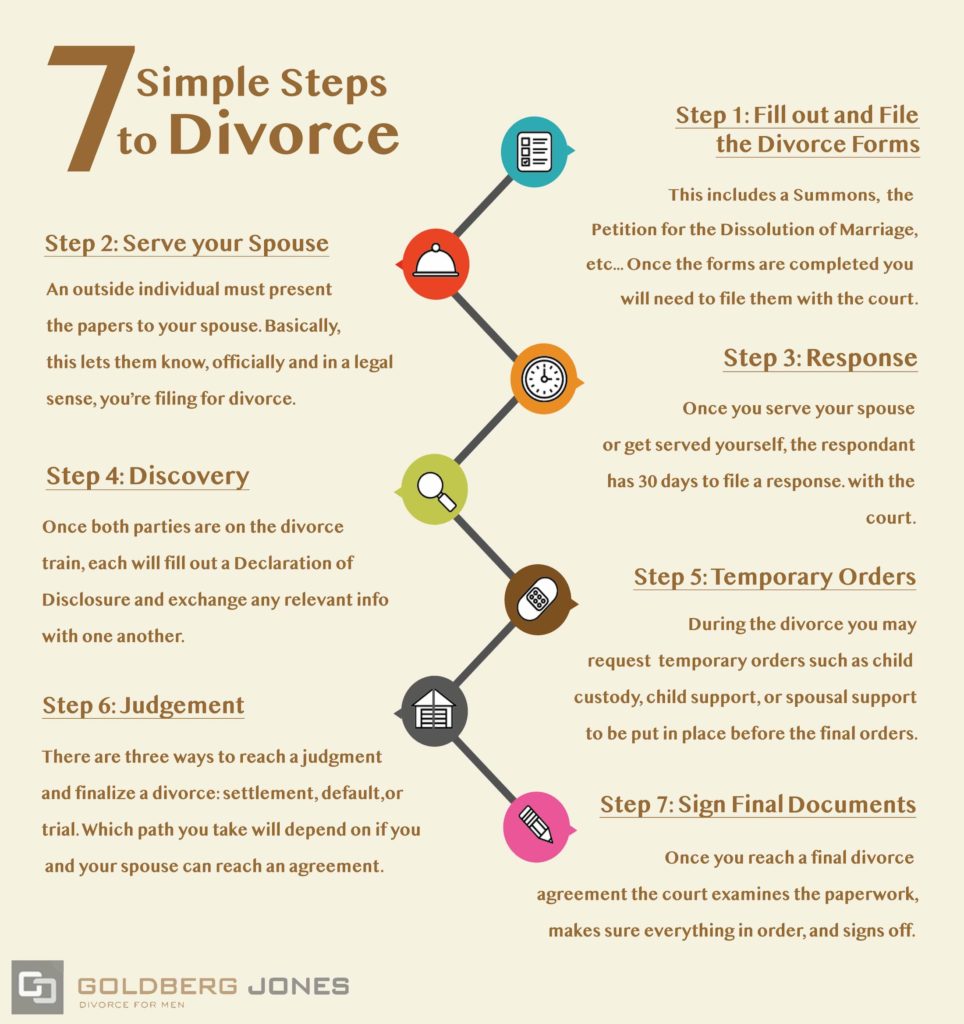
The primary document to initiate a divorce in California is the Petition for Dissolution of Marriage (Form FL-100). This form requires information about both spouses, the date of marriage, the date of separation, and the grounds for divorce (irreconcilable differences). It also asks for preliminary information regarding children, property, and support. Along with the Petition, you will also need to file a Summons (Form FL-110), which formally notifies your spouse that a divorce action has been filed against them.
Other Necessary Forms
Depending on your situation, you may need to file additional forms at the outset. For example, if you have minor children, you will need to file a Declaration Under Uniform Child Custody Jurisdiction and Enforcement Act (UCCJEA) (Form FL-105). If you are seeking child support or spousal support, you will likely need to complete a Declaration Regarding Income and Expenses (Form FL-150). The court clerk’s office at your local superior court can provide a comprehensive list of required forms based on your specific circumstances.
Serving Your Spouse
Once the Petition and Summons are filed with the court and stamped by the clerk, they must be formally delivered to your spouse, the respondent. This is known as “service of process.” The Summons and Petition cannot be served by the petitioner themselves. Service must be performed by someone who is at least 18 years old and not a party to the divorce. Common methods of service include:
- Personal Service: A process server or sheriff’s deputy hand-delivers the documents to the respondent.
- Substituted Service: If personal service is unsuccessful after reasonable attempts, the documents can be left with a competent adult at the respondent’s home or workplace and mailed to their address.
- Service by Mail with Notice and Acknowledgment of Receipt: The petitioner can mail the documents to the respondent along with a special form that the respondent must sign and return, acknowledging they received the documents. If the respondent does not return the form, personal service may be required.
- Service by Publication: In rare cases, if the respondent cannot be located after diligent efforts, the court may allow service by publishing a notice in a newspaper.
After service is completed, the person who served the documents must complete and file a Proof of Service form with the court. This document certifies that the respondent has been properly notified of the divorce proceedings.
Responding to the Divorce Petition
Once the respondent has been served with the Petition and Summons, they have a limited time to file a response with the court. This response indicates whether they agree with the claims made in the petition and outlines their own requests for the divorce.
Filing a Response
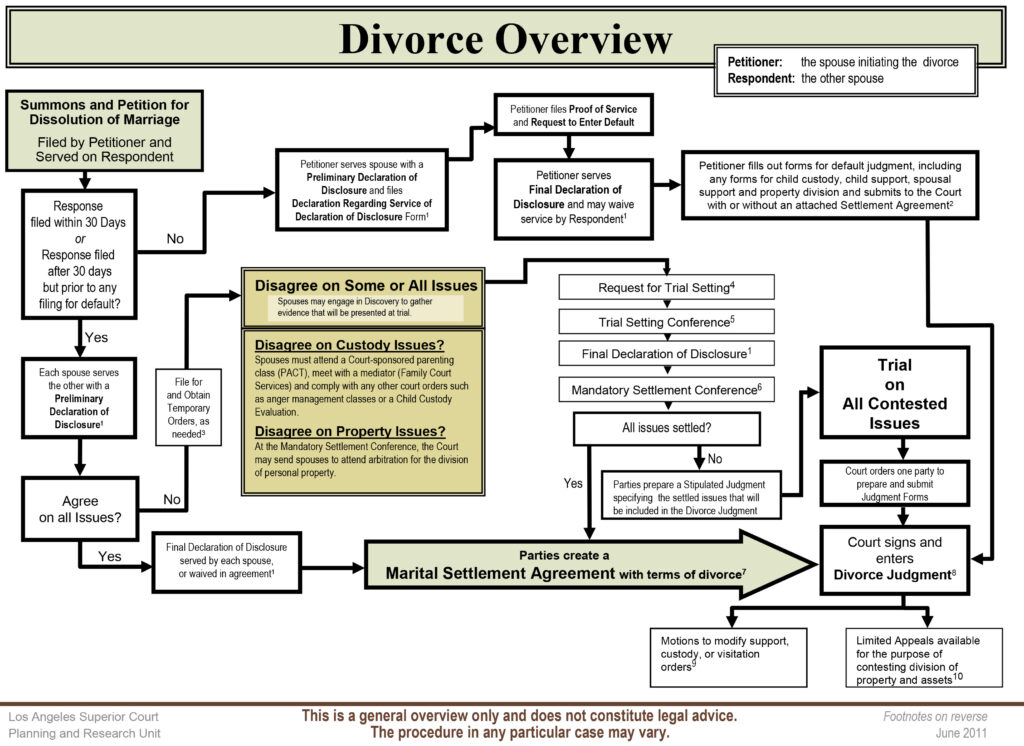
The respondent has 30 days from the date they were served to file a Response – Marriage/Domestic Partnership (Form FL-120). This form allows the respondent to agree or disagree with the statements made in the petition and to set forth their own requests regarding child custody, support, property division, and other divorce-related matters. If the respondent fails to file a response within the allotted time, the petitioner can request a “default,” which means the court may grant the divorce based solely on the petitioner’s requests without the respondent’s input.
Financial Disclosures
A critical step in any California divorce, whether contested or uncontested, is the exchange of financial information. Both parties are required to exchange detailed financial disclosures to ensure a fair division of assets and debts and to determine appropriate support orders. This involves completing:
- Declaration of Disclosure (Form FL-140): A cover sheet that lists the financial documents being provided.
- Schedule of Assets and Debts (Form FL-142): A detailed list of all community and separate property assets and debts.
- Income and Expense Declaration (Form FL-150): A comprehensive report of each party’s income, expenses, and financial situation.
These disclosures must be served on the other party and a declaration of service filed with the court. There are two stages of disclosure: preliminary and final. The preliminary declaration of disclosure must be completed early in the divorce process, and the final declaration of disclosure must be completed before a final judgment can be entered, unless waived by both parties.
Reaching an Agreement or Proceeding to Court
The goal of most divorces is to reach an agreement on all issues. If an agreement cannot be reached, the case will proceed through the court system.
Mediation and Settlement
Mediation is a highly recommended process where a neutral third-party mediator helps spouses communicate and negotiate their differences. This can be particularly effective for resolving issues related to child custody and financial matters. If a full agreement is reached through mediation or direct negotiation, the parties can draft a Marital Settlement Agreement (MSA). This legally binding document outlines all the terms of the divorce, including child custody and visitation schedules, child support, spousal support, and the division of property and debts. The MSA is then submitted to the court for approval.
Court Hearings and Trials
If spouses cannot reach an agreement on all issues, even with the help of mediation or attorneys, the case will proceed to court. This may involve:
- Temporary Orders: During the divorce process, either spouse can request temporary orders from the court to address immediate needs, such as temporary child custody arrangements, child support, spousal support, and who will reside in the family home.
- Discovery: This is the formal process where parties exchange information and evidence. It can involve interrogatories (written questions), requests for production of documents, and depositions (sworn oral testimony outside of court).
- Settlement Conferences: The court may order settlement conferences to encourage parties to resolve their disputes before a trial.
- Trial: If no settlement is reached, the case will go to trial. Both sides will present evidence and arguments to a judge, who will then make decisions on all outstanding issues. A trial can be a lengthy, expensive, and emotionally draining process.
Finalizing the Divorce
Once all issues are resolved, either by agreement or by court order, the final steps to obtain a judgment of dissolution can be taken.
Judgment of Dissolution
The Judgment of Dissolution (Form FL-180) is the court document that officially ends the marriage. It incorporates the terms of the Marital Settlement Agreement or the court’s orders from a trial. It is crucial that all details, including the division of assets and debts, custody arrangements, and support orders, are accurately reflected in the judgment.
Waiting Period
California has a mandatory six-month waiting period. This period begins on the date the respondent is served with the Summons and Petition. Even if you and your spouse agree on everything immediately, the divorce cannot be finalized until this six-month period has passed. The divorce will be effective on a specific date set by the court, which is typically at least six months and one day after the respondent was served.

Post-Divorce Matters
After the divorce is finalized, it is essential to implement the terms of the judgment. This may involve:
- Transferring Titles: Re-titling property, vehicles, or financial accounts as ordered by the court.
- Updating Beneficiaries: Changing beneficiaries on life insurance policies, retirement accounts, and wills.
- Modifying Orders: If circumstances change significantly after the divorce, it may be possible to petition the court to modify child custody, child support, or spousal support orders.
Navigating a divorce in California requires patience, diligence, and a thorough understanding of the legal landscape. Seeking legal advice from a qualified California family law attorney is highly recommended, especially if the divorce involves complex issues or if you are unsure about any aspect of the process. While the emotional journey of divorce can be challenging, a structured approach and clear understanding of the legal procedures can help to achieve a more favorable and less stressful outcome.
LifeOutOfTheBox is a participant in the Amazon Services LLC Associates Program, an affiliate advertising program designed to provide a means for sites to earn advertising fees by advertising and linking to Amazon.com. Amazon, the Amazon logo, AmazonSupply, and the AmazonSupply logo are trademarks of Amazon.com, Inc. or its affiliates. As an Amazon Associate we earn affiliate commissions from qualifying purchases.