
Navigating the path to becoming a licensed real estate salesperson in California is a journey filled with specific requirements, educational milestones, and a commitment to ethical practice. This guide aims to demystify the process, offering a clear roadmap for aspiring real estate professionals looking to enter one of the nation’s most dynamic property markets. From understanding the foundational education to passing the state examination, each step is crucial for establishing a successful career in California’s vibrant real estate landscape.
The Foundation: Eligibility and Education Requirements
Before embarking on the formal application process, it’s essential to understand the prerequisites set forth by the California Department of Real Estate (DRE). These requirements are designed to ensure that all prospective agents possess a fundamental understanding of real estate principles and laws, safeguarding both consumers and the integrity of the profession.
Age and Residency
To be eligible for a real estate salesperson license in California, applicants must be at least 18 years of age. Furthermore, while you don’t need to be a resident of California to apply for a license, you must have a physical address within the state to receive your license once issued. This ensures a point of contact and accountability for all licensed professionals operating within California.
Pre-licensing Education
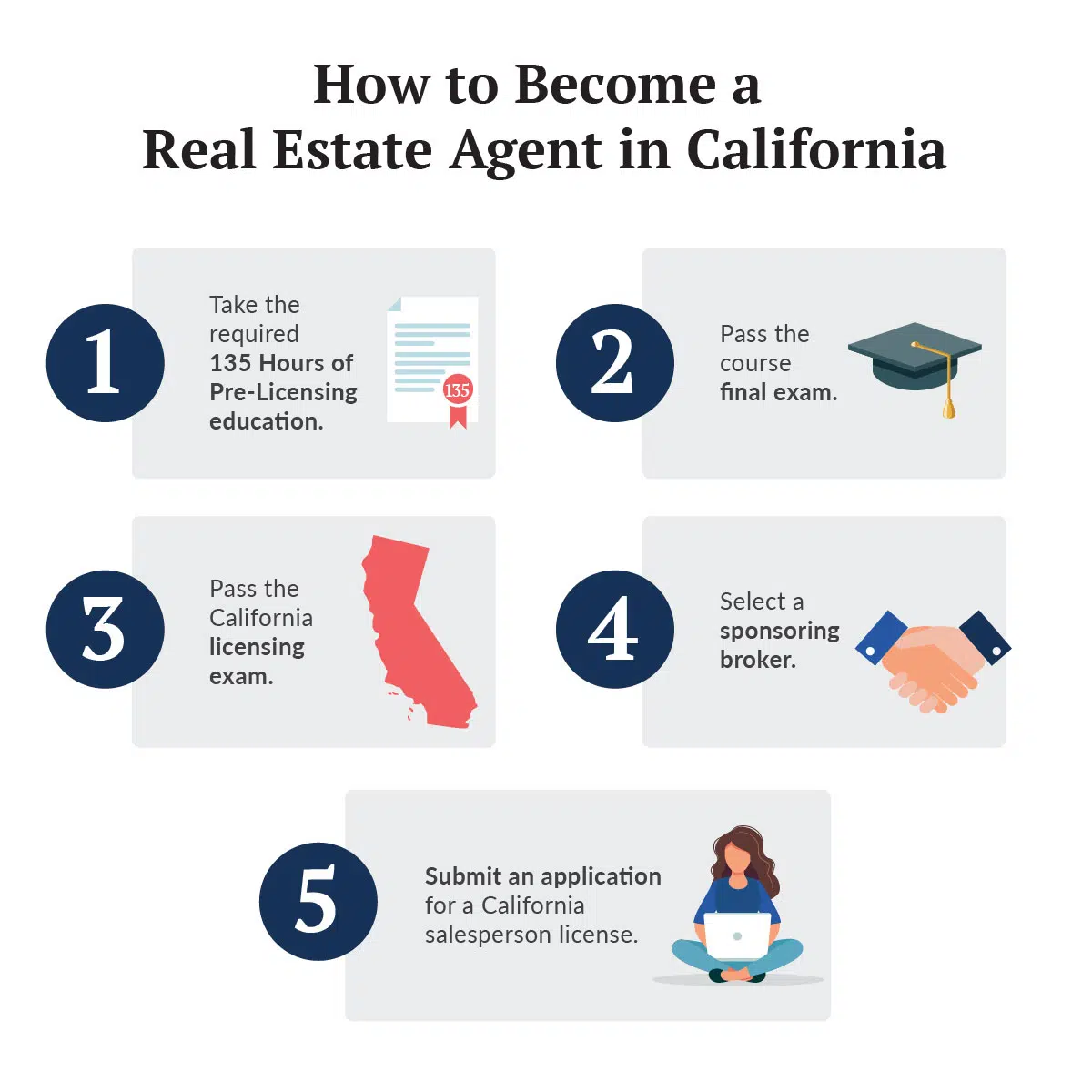
The cornerstone of the application process is completing a mandatory 135 hours of accredited pre-licensing education. This coursework is divided into three distinct 45-hour courses:
- Real Estate Principles: This course covers the fundamental concepts of real estate, including rights and estates, deeds, titles, escrows, mortgages, and land use regulations. It provides a broad overview of the industry and its various facets.
- Real Estate Practice: This practical course delves into the daily operations of a real estate agent. Topics include agency relationships, contracts, disclosures, marketing, negotiation, and ethical considerations. It aims to equip aspiring agents with the skills needed for client interaction and transaction management.
- One Elective Course: Applicants must choose one additional 45-hour course from a DRE-approved list. Common elective choices include Real Estate Appraisal, Property Management, Real Estate Finance, and Real Estate Law. The elective should ideally align with the applicant’s intended area of specialization or interest.
It is crucial to ensure that the educational institution and the specific courses are approved by the California Department of Real Estate. Many reputable online and in-person schools offer these programs, providing flexibility for students. Upon successful completion of each course, students will receive a certificate, which will be required for the license application.
The Application Process: From Submission to Examination
Once the pre-licensing education is complete, the next phase involves formally applying for the license and preparing for the state examination. This stage requires meticulous attention to detail to ensure all requirements are met promptly and accurately.
Submitting the License Application
The application for a real estate salesperson license is submitted to the California Department of Real Estate using the official application form, RE 435. This form can be downloaded from the DRE website or requested by mail. It is imperative to fill out the application completely and accurately, as any errors or omissions can lead to significant delays or rejection.
Along with the completed application form, applicants must submit:
- Proof of Pre-licensing Education: Copies of the completion certificates for all three required courses.
- Examination Fee: A non-refundable fee, which is subject to change, must be submitted with the application. The current fee schedule can be found on the DRE website.
- Fingerprint Clearance: Applicants must undergo a background check through Live Scan fingerprinting. Specific instructions and the required forms are provided by the DRE. This process ensures that all licensed professionals meet the state’s standards for honesty and integrity.
After submitting the application and fee, the DRE will review the submitted materials. If the application is deemed complete and satisfactory, the applicant will receive an examination admission letter, authorizing them to schedule their licensing exam.
Scheduling and Taking the State Examination
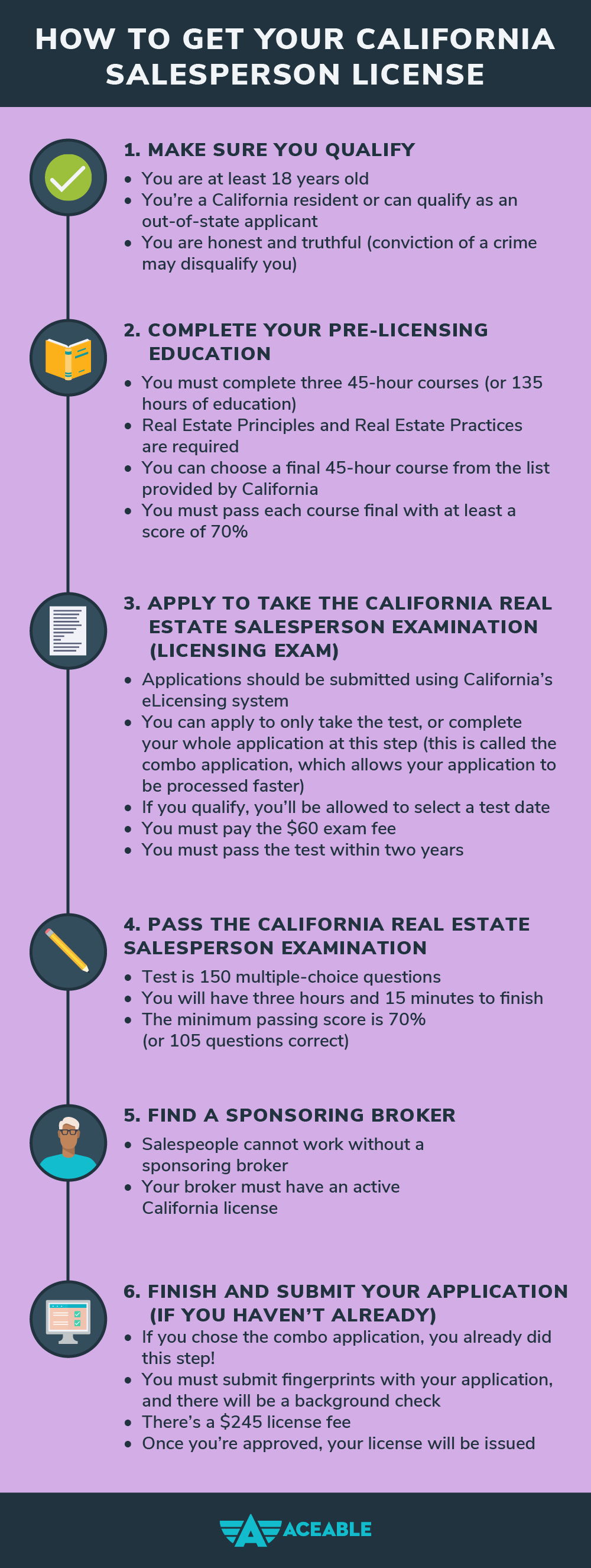
The California Real Estate Salesperson Examination is a comprehensive test designed to assess an applicant’s knowledge of real estate principles, practices, and laws. The exam is administered by the California Department of Real Estate at various testing centers across the state.
The exam consists of 150 multiple-choice questions, and candidates are given 3 hours and 15 minutes to complete it. A passing score of 70% or higher is required. The DRE provides an official Candidate Handbook, which outlines the exam content areas, structure, and general instructions. It is highly recommended to thoroughly study this handbook.
Effective study strategies include:
- Reviewing Course Materials: Revisit notes, textbooks, and practice quizzes from your pre-licensing courses.
- Utilizing Practice Exams: Many pre-licensing schools and independent providers offer simulated exams that mimic the actual test format and difficulty.
- Focusing on Key Areas: Pay close attention to topics like contracts, disclosures, agency law, financing, and fair housing regulations, as these are frequently tested.
- Understanding California-Specific Laws: California has unique real estate laws and regulations that differ from other states. Ensure your knowledge is tailored to the state’s specific requirements.
If an applicant fails the exam, they can reapply to take it again after paying the required re-examination fee. There is no limit to the number of times one can retake the exam, provided the application remains valid.
Post-Examination: Licensing and Launching Your Career
Passing the state examination is a significant achievement, but it is just one step in the process of becoming a licensed real estate salesperson. The final stages involve obtaining your license and preparing to enter the competitive real estate market.
Receiving Your Salesperson License
Upon successfully passing the examination, the DRE will notify you. If your background check and application details are also satisfactory, your salesperson license will be issued. It is common for the license to be mailed to the address you provided on your application.
It is crucial to understand that a real estate salesperson license cannot be activated independently. You must be affiliated with a licensed real estate broker to legally practice. This means that before or immediately after receiving your license, you will need to secure employment with a brokerage firm.
Choosing a Brokerage and Starting Your Career
Selecting the right brokerage is a pivotal decision that can significantly impact your success. Consider factors such as:
- Company Culture and Values: Does the brokerage’s philosophy align with yours?
- Training and Mentorship Programs: Many brokerages offer extensive training for new agents, which is invaluable.
- Support and Resources: What kind of administrative support, marketing tools, and lead generation assistance does the brokerage provide?
- Commission Splits and Fees: Understand the financial arrangement between you and the broker.
- Specialization: Some brokerages focus on specific market segments, such as luxury properties in areas like Beverly Hills or residential sales in San Francisco.
Once affiliated with a broker, you can officially begin your career as a real estate salesperson. Your broker will guide you through the necessary steps to become active with the DRE and local real estate associations, such as the California Association of REALTORS®. This affiliation grants you access to the Multiple Listing Service (MLS), industry networking opportunities, and the support needed to build your client base and complete transactions.
Continuing Education and Professional Development
Holding a real estate license in California is not a one-time achievement but an ongoing commitment. Licensees are required to complete continuing education (CE) courses to renew their licenses. The DRE mandates specific CE credits, including courses on topics like ethics, agency, and fair housing. These requirements are in place to ensure that licensees remain up-to-date with current laws, practices, and industry standards.
Beyond the mandatory CE, investing in ongoing professional development is key to long-term success. This can include attending industry conferences, pursuing advanced certifications, learning new marketing techniques, and staying informed about market trends in areas like Orange County or the Inland Empire. The real estate market is constantly evolving, and continuous learning is essential for staying competitive and providing exceptional service to clients.
LifeOutOfTheBox is a participant in the Amazon Services LLC Associates Program, an affiliate advertising program designed to provide a means for sites to earn advertising fees by advertising and linking to Amazon.com. Amazon, the Amazon logo, AmazonSupply, and the AmazonSupply logo are trademarks of Amazon.com, Inc. or its affiliates. As an Amazon Associate we earn affiliate commissions from qualifying purchases.