
Juneteenth, celebrated annually on June 19th, marks the emancipation of enslaved African Americans in the United States. Its historical significance has led to increasing recognition across the nation, prompting questions about its legal status in various states. For those planning travel or exploring the cultural landscape of the Golden State, understanding whether Juneteenth is a California state holiday is crucial for itinerary planning and appreciating local observances. This inquiry delves into the legislative journey and current status of Juneteenth within California’s framework.
The Path to Recognition: A National and State Perspective
Juneteenth’s journey from a regional commemoration to a federally recognized holiday has been a long and evolving one. While June 19, 1865, marks the date when Union soldiers arrived in Galveston, Texas, to announce that the Civil War had ended and that enslaved people were free, the official acknowledgment of this date has taken over 150 years to gain widespread traction. The Emancipation Proclamation itself was issued by President Abraham Lincoln on January 1, 1863, but its enforcement was slow and uneven across the Confederacy. The news took months to reach all enslaved populations, particularly in more remote areas like Texas.

The modern movement to recognize Juneteenth gained significant momentum in recent decades, fueled by civil rights advocacy and a growing desire to acknowledge this pivotal moment in American history. This momentum culminated in 2021 when President Joe Biden signed the Juneteenth National Independence Day Act into law, establishing Juneteenth as a federal holiday. This federal designation, while significant, does not automatically confer state holiday status. Each state retains the authority to recognize Juneteenth as a paid holiday for its state employees and to incorporate it into its official calendar of observances.
California, a state with a rich and complex history that includes significant African American contributions and struggles, has been a part of this national conversation. The Golden State has a history of progressive social legislation and a commitment to recognizing diverse cultural heritage. Therefore, the question of Juneteenth’s status as a state holiday in California is not merely a legal one but also a reflection of its evolving understanding and celebration of American history and the ongoing pursuit of racial justice and equity.
Juneteenth in California: Legislative Milestones and Current Status
The recognition of Juneteenth as a state holiday in California has been a deliberate legislative process. While the federal designation in 2021 provided a powerful impetus, efforts to establish it as a California state holiday predated this. The debate and advocacy surrounding Juneteenth’s official recognition in California reflect a broader societal reckoning with historical injustices and a commitment to honoring the end of slavery.
In recent years, there has been a growing chorus of voices, including community leaders, educators, and policymakers, advocating for Juneteenth to be officially recognized and observed as a state holiday in California. This advocacy often highlights the importance of acknowledging this emancipation day as a critical juncture in the nation’s history, one that deserves to be commemorated with the same gravitas as other national holidays. The goal is not only to acknowledge the historical event but also to foster greater understanding, education, and reflection on the enduring legacy of slavery and the ongoing fight for civil rights.
Prior to 2023, Juneteenth was not a paid state holiday in California. While it was often observed and celebrated within communities, with various events and educational programs taking place across the state, particularly in cities like Los Angeles and Oakland, it did not carry the official designation that would grant state employees a paid day off or lead to the closure of state offices. This meant that its observance was largely driven by community initiatives and individual efforts rather than mandated state policy.
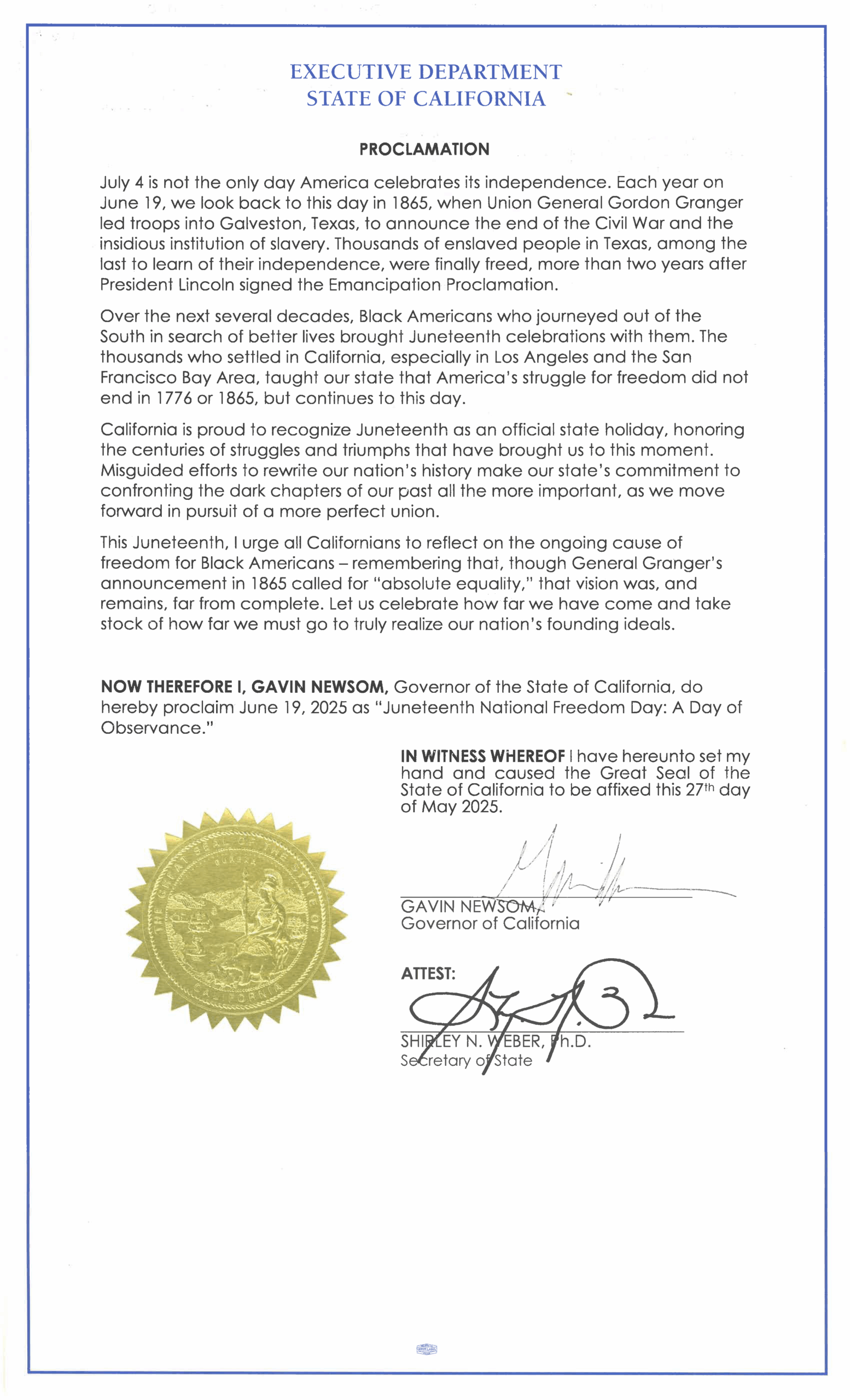
However, this status began to change. In September 2020, Governor Gavin Newsom signed a bill, Assembly Bill 1654, which officially recognized Juneteenth as a state holiday, effective January 1, 2023. This landmark legislation ensured that Juneteenth would be observed as a state holiday in California, granting state employees a paid day off. This move was a significant step forward in acknowledging the historical importance of the day and ensuring its formal observance throughout the state. The bill’s passage signaled a commitment from the California legislature to honor this pivotal moment in American history and to provide a structured opportunity for education and celebration. The implementation of this holiday allows for wider public engagement with the history and significance of Juneteenth.

Experiencing Juneteenth in California: Activities, Events, and Cultural Significance
While the official state holiday status of Juneteenth in California is a recent development, the spirit of celebration and remembrance has long been vibrant within the state’s diverse communities. The designation now provides a more structured framework for these observances, encouraging broader participation and deeper engagement with the historical and cultural significance of the day. For travelers and locals alike, understanding how Juneteenth is celebrated in California offers a unique lens through which to experience the state’s rich cultural tapestry.
Throughout California, particularly in urban centers with significant African American populations, Juneteenth celebrations typically feature a wide array of activities. These often include parades, festivals, educational forums, historical reenactments, and artistic performances. Major cities like Los Angeles, Oakland, San Francisco, and Sacramento often host large-scale events that draw crowds from across the region. These gatherings are not just festive occasions; they are also crucial opportunities for education, reflection, and dialogue about African American history, culture, and the ongoing struggle for equality.
Cultural Immersion and Learning:
Juneteenth in California provides an excellent opportunity for cultural immersion. Many events feature presentations on the history of slavery, the Civil War, and the significance of the Emancipation Proclamation. These educational components are vital for understanding the context and importance of Juneteenth. Visitors can expect to encounter storytelling sessions, lectures by historians and community leaders, and exhibits showcasing African American art, literature, and heritage. Museums and cultural centers often host special programming around Juneteenth, offering deeper insights into the African American experience in California and beyond. For instance, institutions like the California African American Museum in Los Angeles often feature exhibitions that resonate with the themes of Juneteenth.
Festivals and Community Gatherings:
The celebratory aspect of Juneteenth is a significant part of its observance. Expect vibrant festivals that showcase African American culture through music, dance, food, and crafts. These events are often family-friendly and offer a joyous atmosphere for people of all backgrounds to come together and commemorate this important day. Food is a central element in many Juneteenth celebrations, with traditional African American cuisine taking center stage. Attendees can savor dishes that reflect the culinary heritage of the South, often adapted and evolved in California. This provides a delicious way to connect with the cultural roots of the commemoration.
Artistic Expressions and Performances:
Juneteenth celebrations frequently highlight the creativity and resilience of the African American community through various art forms. Live music performances, from gospel and jazz to contemporary genres, are common. Dance troupes may perform traditional and modern routines, and theater groups might stage plays or readings that explore themes relevant to Juneteenth. Art exhibitions featuring the work of African American artists are also a staple, offering visual narratives that complement the historical and cultural discussions. These artistic expressions serve as powerful mediums for storytelling, emotional resonance, and the celebration of identity.
Local Impact and Travel Considerations:
As Juneteenth becomes a recognized state holiday, it is important for travelers to be aware of potential changes in schedules for state offices and some businesses. However, this also presents an opportunity for travelers to engage more deeply with local communities and participate in meaningful observances. Many cities and towns across California organize their own Juneteenth events, often reflecting the unique historical and cultural makeup of their locales. Researching local event listings closer to June 19th can reveal smaller, intimate gatherings that offer a more personal experience. For those interested in understanding the diverse experiences of African Americans in California, attending Juneteenth events provides an invaluable opportunity for education and connection, enriching any visit to the state. The growing recognition of Juneteenth as a state holiday in California underscores its increasing importance as a date of historical reflection, cultural celebration, and civic engagement.
LifeOutOfTheBox is a participant in the Amazon Services LLC Associates Program, an affiliate advertising program designed to provide a means for sites to earn advertising fees by advertising and linking to Amazon.com. Amazon, the Amazon logo, AmazonSupply, and the AmazonSupply logo are trademarks of Amazon.com, Inc. or its affiliates. As an Amazon Associate we earn affiliate commissions from qualifying purchases.