
Navigating the Sunshine State’s regulations regarding vehicle window tinting can be a complex affair for both residents and tourists alike. While the allure of reducing glare and enhancing privacy is undeniable, California has specific laws in place to ensure driver visibility and public safety. Understanding these rules is crucial for avoiding citations and ensuring your vehicle complies with state statutes.
California Tint Laws: A Comprehensive Overview
California’s tint laws are primarily governed by California Vehicle Code (CVC) Section 26708, which dictates the permissible levels of light transmission through vehicle windows. The primary goal is to ensure that law enforcement officers can clearly see the occupants of a vehicle during traffic stops and that drivers have adequate visibility in various driving conditions.
Understanding Light Transmission Percentages (VLT)
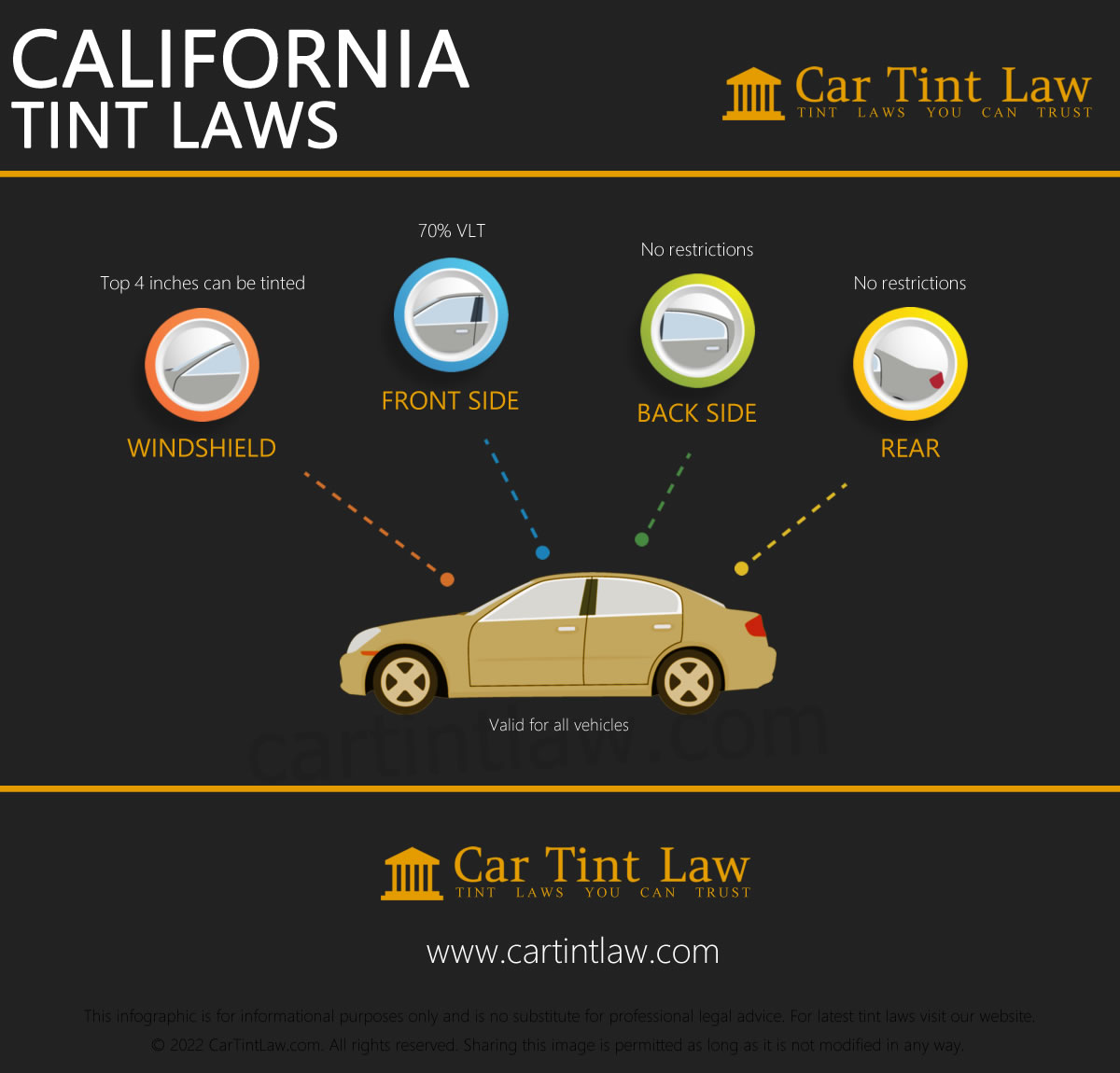
The key metric in California’s tint laws is the Visible Light Transmission (VLT) percentage. VLT measures the amount of light that passes through the tint and into the vehicle. The lower the VLT percentage, the darker the tint. California law specifies the maximum allowed VLT for different windows of a vehicle.
-
Windshield:
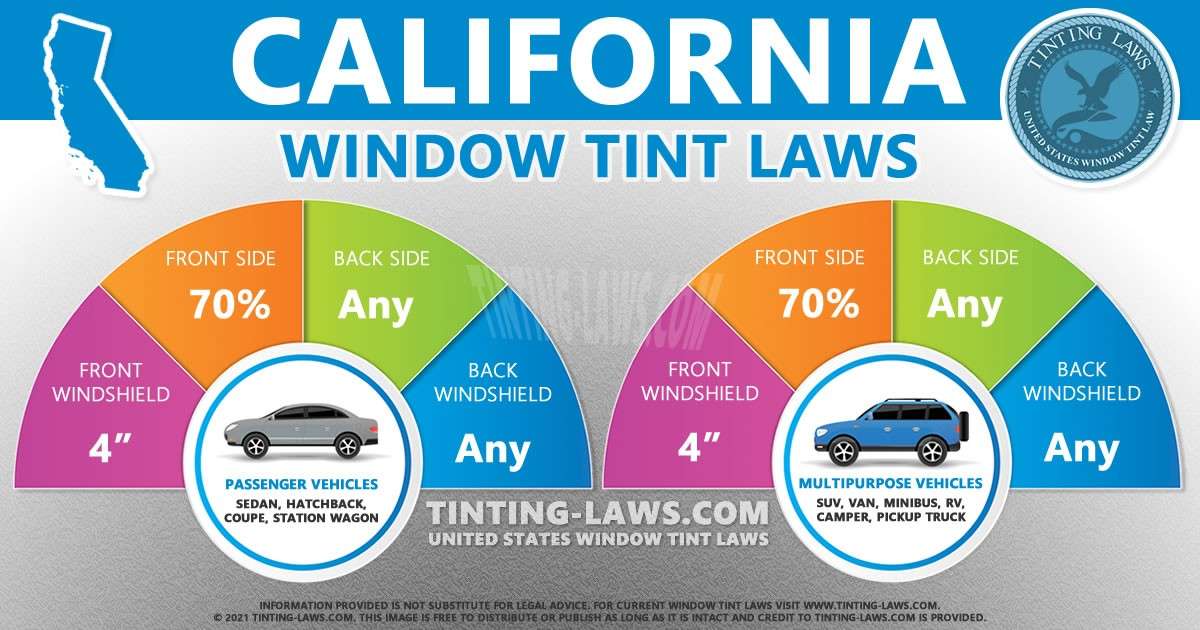
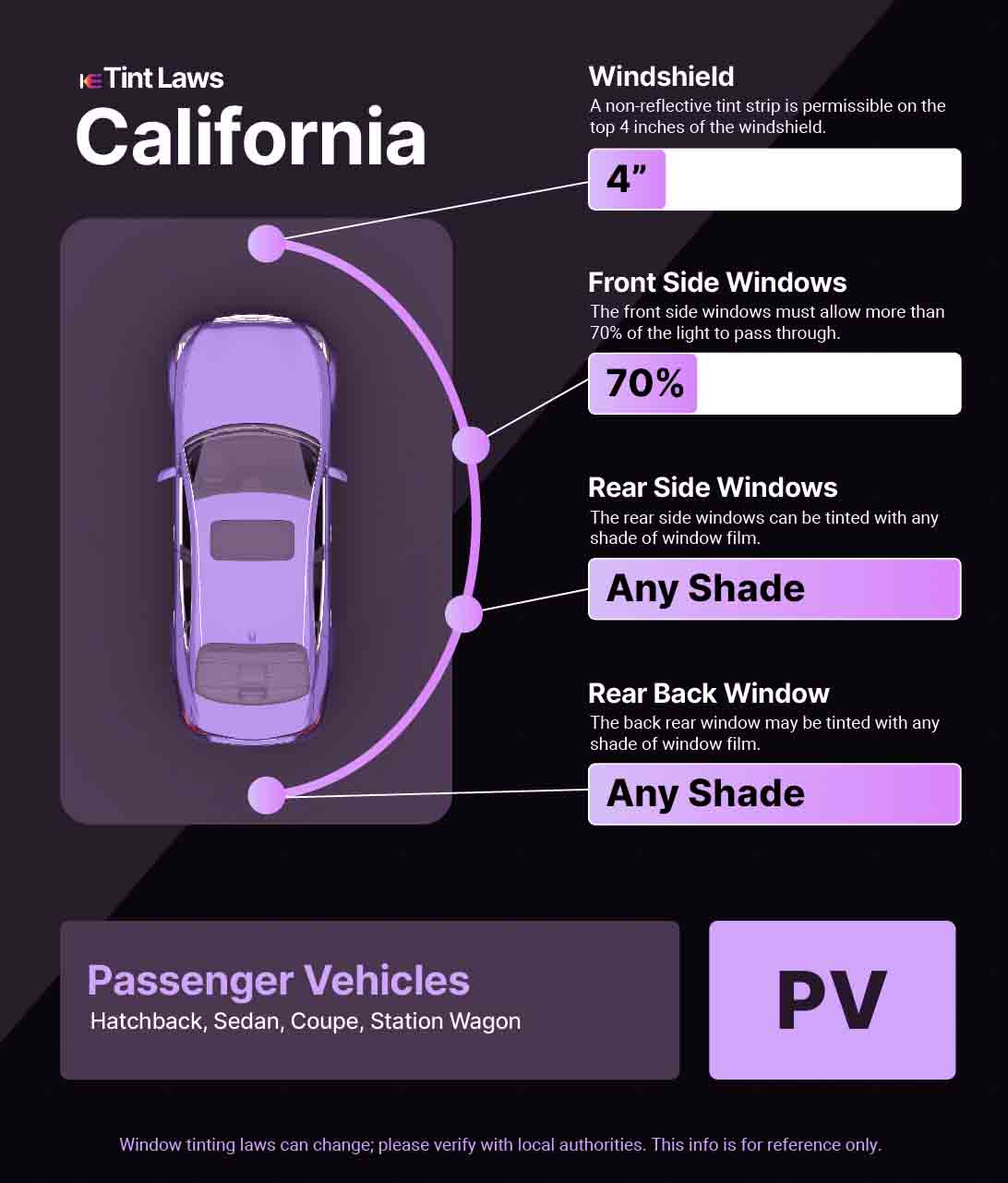
- The uppermost 4 inches of the windshield can have a non-reflective tint strip.
- No other tinting is permitted on the windshield, as it is essential for clear forward visibility in all conditions.
-
Front Side Windows:
- These are the windows immediately to the driver’s and front passenger’s left and right.
- California law requires these windows to have a VLT of 70% or higher. This means at least 70% of the natural light must be able to pass through.
-
Rear Side Windows and Rear Window:
- For vehicles manufactured after 1999, the VLT for the rear side windows and the rear window is less restrictive.
- The tint on these windows must allow 35% or higher VLT. This provides a greater degree of flexibility for drivers and passengers compared to the front windows.
It is important to note that these percentages refer to the total VLT, which includes the tinting film and the glass itself. Manufacturers often have a slight VLT from the glass, so the applied film’s VLT will need to be adjusted accordingly to meet the state’s requirements.
Tint Reflectivity
In addition to VLT, California also regulates the reflectivity of window tint. Highly reflective tints can cause glare for other drivers, posing a safety hazard.
- Side and Rear Windows:
- The tint on the side and rear windows must not reflect more than 35% of incoming light.
- This helps to minimize glare that could be directed towards other vehicles, especially during sunny conditions.
Exemptions and Special Circumstances
While the standard California tint laws apply to the vast majority of vehicles, there are specific exemptions and circumstances where darker tints might be permissible. These exemptions are carefully defined to address genuine medical needs.
Medical Exemptions
California recognizes that some individuals may require darker window tint for medical reasons. To qualify for a medical exemption, a driver must obtain a certification from a licensed physician.
-
Physician’s Certification:
- The certification must clearly state the medical condition that necessitates the darker tint.
- It should also specify the recommended VLT percentage for the driver’s windows.
- This certification must be carried in the vehicle at all times.
-
Conditions Covered:
- Conditions that might qualify include, but are not limited to, severe photosensitivity, migraines triggered by light, or certain skin conditions that require protection from UV radiation.
- The exemption is typically granted for specific windows, often the front side windows, to allow for sufficient visibility for the driver.
-
Law Enforcement Review:
- Law enforcement officers have the authority to review the medical exemption documentation during a traffic stop.
- Failure to produce valid documentation can result in a citation, even if a medical condition exists.
Other Potential Exemptions
While medical exemptions are the most common, there might be other niche situations that could allow for variations. However, these are generally rare and require specific authorization.
-
Law Enforcement and Emergency Vehicles:
- Official vehicles used by law enforcement agencies and emergency services may have different tinting regulations to enhance operational security and occupant privacy.
-
Commercial Vehicles:
- Some commercial vehicles, particularly those involved in transporting goods or specific services, might have their own set of regulations. However, driver visibility remains a paramount concern.
It is always advisable to consult the official California DMV guidelines or a legal professional if you believe your vehicle might qualify for an exemption beyond the standard medical provision.
Consequences of Non-Compliance
Operating a vehicle with window tint that does not comply with California law can lead to penalties. These penalties are designed to encourage drivers to adhere to safety regulations.
Traffic Citations and Fines
The most common consequence of illegal window tint is a fix-it ticket or a standard traffic citation.
-
Fix-It Tickets:
- In many cases, especially for minor violations, law enforcement may issue a “fix-it ticket.” This requires the driver to correct the violation (i.e., remove the non-compliant tint) and then have the correction verified by a police officer or designated inspection station. Once verified, the ticket can often be dismissed or reduced to a small administrative fee.
-
Standard Citations:
- For more significant violations, or if the tint is not corrected after receiving a fix-it ticket, a standard citation with associated fines can be issued. The fines can vary depending on the specific circumstances and the discretion of the court.
Impact on Vehicle Inspections
While California does not have a mandatory annual vehicle safety inspection for most passenger vehicles (unlike some other states), non-compliant tint could become an issue if other inspections are required or if the vehicle is subject to a roadside safety check.
Insurance Implications
While less direct, persistent non-compliance with vehicle laws could potentially affect insurance premiums or even claims in the event of an accident, though this is generally not the primary concern for tint violations. The focus is primarily on driver and public safety.
Maintaining Compliance: Tips for Drivers
Ensuring your vehicle’s window tint adheres to California’s regulations is straightforward if you are aware of the rules. Here are some tips for drivers to stay compliant:
Choosing Tint Professionally
When opting for window tinting, always choose a reputable professional installer.
-
Knowledgeable Installers:
- Experienced tint shops are well-versed in California’s VLT requirements and can advise you on legal tint percentages for each window.
- They often carry a variety of tint films that comply with state laws, including those that offer UV protection and heat rejection within legal limits.
-
Legal Tint Films:
- Ask your installer about films that are specifically certified for use in California. Reputable brands often mark their legal films to indicate compliance.
Understanding Tint Products
Be aware of what you are purchasing. Not all tint films are created equal, and some might offer features that push them beyond legal limits.
-
VLT Ratings:
- Always verify the VLT rating of the tint film being installed. A 70% VLT film allows 70% of light through, while a 35% VLT film allows only 35%.
-
“Limousine” Tint:
- Tint darker than the legal limit, often referred to as “limousine tint,” is illegal for most passenger vehicles in California.
Staying Informed
Vehicle laws can change. It’s a good practice to stay updated on any revisions to California’s tint regulations.
- Official Sources:
- Refer to the official website of the California Department of Motor Vehicles (DMV) or the California Highway Patrol (CHP) for the most current and accurate information regarding vehicle code sections and enforcement.
Traveling Through California
If you are visiting California in a vehicle with tinted windows from another state, it’s important to be aware that California law applies to all vehicles operating within its borders. While enforcement might sometimes be more lenient towards out-of-state vehicles, it is not guaranteed. If your tint exceeds California’s legal limits, you could still be cited. It is advisable to ensure your vehicle complies with California’s laws before entering the state to avoid any potential issues.
By understanding and adhering to California’s window tint laws, drivers can enjoy the benefits of tinting while ensuring road safety and avoiding legal entanglements. Whether you are a resident or a visitor, compliance with these regulations contributes to a safer driving environment for everyone on California‘s roads.
LifeOutOfTheBox is a participant in the Amazon Services LLC Associates Program, an affiliate advertising program designed to provide a means for sites to earn advertising fees by advertising and linking to Amazon.com. Amazon, the Amazon logo, AmazonSupply, and the AmazonSupply logo are trademarks of Amazon.com, Inc. or its affiliates. As an Amazon Associate we earn affiliate commissions from qualifying purchases.