
The allure of Palm Springs, California is often inextricably linked to its reliably warm and sunny climate, a significant draw for visitors seeking an escape from more temperate or inclement weather. Understanding the nuances of its temperature throughout the year is crucial for planning the perfect getaway, whether you’re dreaming of poolside relaxation, exploring desert landscapes, or indulging in the city’s vibrant arts and culture scene.
Understanding Palm Springs’ Desert Climate
Palm Springs is situated in the Colorado Desert, a region characterized by its arid conditions, stark beauty, and dramatic temperature fluctuations between day and night, and across the seasons. This desert climate means that while sunshine is abundant year-round, the intensity of the heat, particularly during the summer months, can be a defining factor in any visitor’s experience. The surrounding San Jacinto Mountains play a role in the microclimate, offering some protection and contributing to the unique atmospheric conditions.
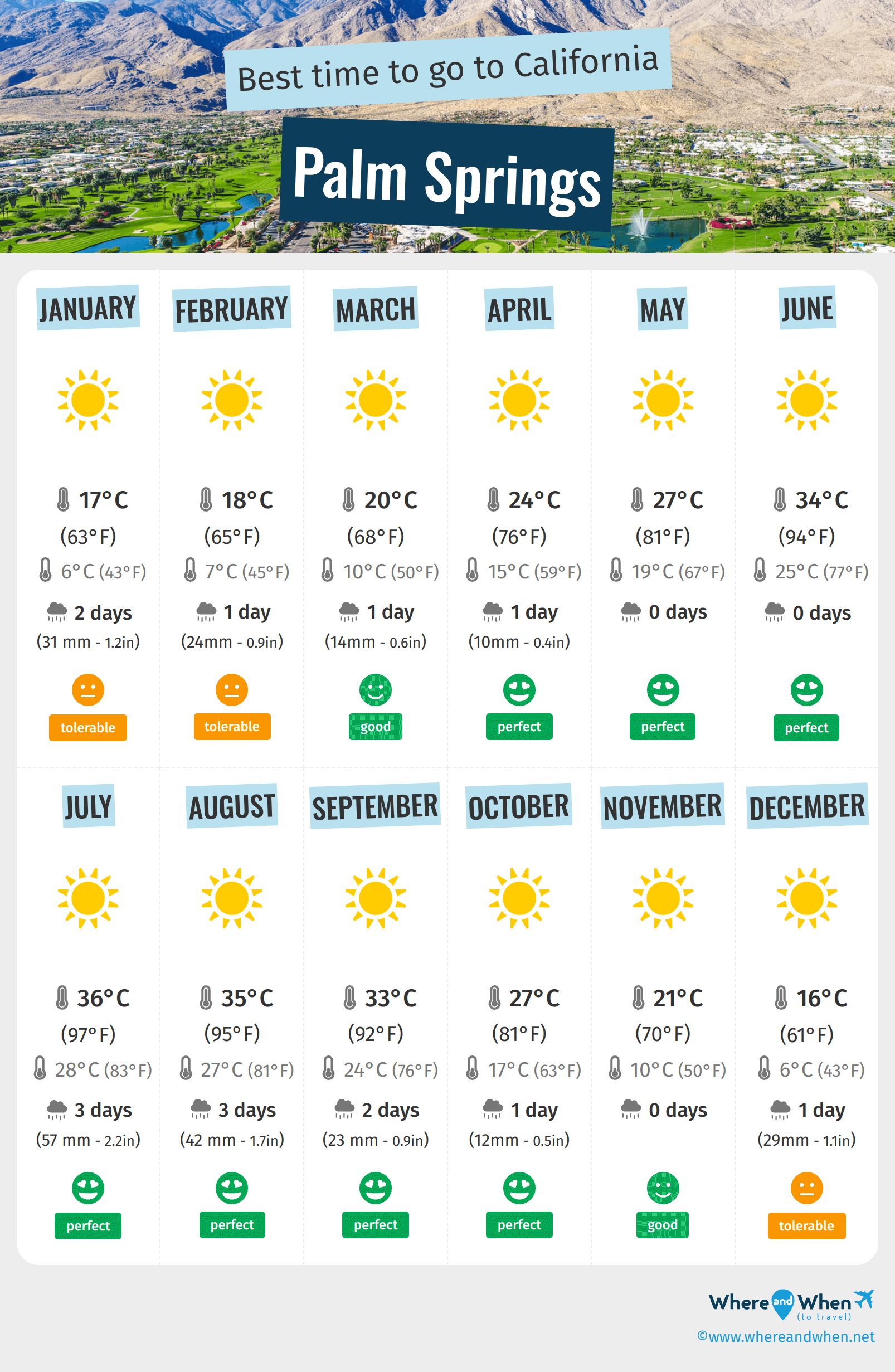
Seasonal Temperature Trends
The climate in Palm Springs can be broadly divided into four distinct seasons, each with its own temperature profile:
Spring (March – May)
Spring is arguably the most idyllic time to visit Palm Springs. The weather transitions from cooler winter temperatures to the warmth of summer.
- March: Temperatures begin to rise noticeably, with average daily highs in the mid-70s Fahrenheit (around 24°C) and lows in the comfortable 40s and 50s Fahrenheit (around 7-12°C). This is a prime time for outdoor activities.
- April: The warmth intensifies, with average highs reaching the upper 70s to low 80s Fahrenheit (26-28°C). Evenings remain pleasant, with lows in the 50s Fahrenheit (around 10-15°C). The desert flora often bursts into bloom during this period, adding a splash of color to the landscape.
- May: May signals the true arrival of summer heat, with average highs climbing into the mid-80s to low 90s Fahrenheit (29-33°C). Nighttime temperatures start to creep into the 60s Fahrenheit (around 15-20°C), still quite agreeable for al fresco dining.
Summer (June – August)
The summer months in Palm Springs are defined by extreme heat. This is when the city truly embraces its reputation as a desert oasis, with residents and visitors alike seeking refuge indoors or by the pool.
- June: Daily highs consistently reach the 90s Fahrenheit (32-37°C), often pushing towards 100°F (38°C) by the end of the month. Lows will be in the 70s Fahrenheit (21-26°C).
- July & August: These are the hottest months, with average daily highs frequently exceeding 105°F (40.5°C) and often climbing to 110°F (43°C) or higher. Overnight temperatures rarely dip below the 80s Fahrenheit (27-32°C). Hydration and seeking shade during peak hours are paramount.
Autumn (September – November)
As the intense summer heat begins to wane, autumn ushers in a return to more comfortable temperatures, making it another excellent period for visiting.
- September: While still warm, September offers a noticeable reprieve from the peak summer heat. Average highs will be in the low 90s Fahrenheit (32-35°C), with lows in the 70s Fahrenheit (21-26°C).
- October: This month is often considered the sweet spot for many visitors. Average highs settle into the comfortable 80s Fahrenheit (27-32°C), and evenings become delightfully cooler, dropping into the 50s and 60s Fahrenheit (10-20°C).
- November: Temperatures continue to cool, with average highs in the 70s Fahrenheit (21-26°C) and lows in the 40s and 50s Fahrenheit (7-15°C). This is perfect weather for exploring the vibrant downtown area and surrounding natural beauty.
Winter (December – February)
Palm Springs winters are mild and pleasant, offering a stark contrast to colder climates elsewhere. It’s a popular time for snowbirds seeking sunshine.
- December: Daily highs typically range from the mid-60s to low 70s Fahrenheit (18-22°C), with overnight lows in the 40s Fahrenheit (around 4-9°C). It’s generally sunny and clear.
- January & February: These are the coolest months. Average highs are in the high 60s Fahrenheit (around 18-20°C), with lows in the 40s Fahrenheit (4-9°C). While comfortable for daytime activities, evenings can be chilly, requiring a light jacket. Frost is rare but possible on clear, cold nights.
Factors Influencing Temperature
Several factors contribute to the specific temperature readings in Palm Springs:
- Elevation: Palm Springs is located at an elevation of approximately 487 feet (148 meters) above sea level. While not extremely high, this offers a slight moderating effect compared to lower desert basins.
- Proximity to Mountains: The towering San Jacinto Mountains to the west can influence wind patterns and provide shade during certain times of the day, particularly in the late afternoon, offering a slight cooling effect in specific neighborhoods.
- Inland Location: Being situated inland, away from the moderating influence of the Pacific Ocean, means Palm Springs experiences more extreme temperature swings.
- Daylight Hours: As with any location, the length of daylight hours directly impacts solar heating. Summers have the longest days, contributing to sustained high temperatures.
Planning Your Visit Based on Temperature
Knowing the typical temperatures for each season is key to packing appropriately and planning activities that align with the weather.
Packing Essentials by Season
- Spring & Autumn: Lightweight clothing, including t-shirts, shorts, and sundresses, will be comfortable for daytime. A light jacket or sweater is advisable for cooler evenings. Comfortable walking shoes are essential for exploring.
- Summer: The emphasis is on extreme heat. Breathable, light-colored clothing made from natural fibers like cotton or linen is crucial. Bring plenty of swimwear, a wide-brimmed hat, sunglasses, and high SPF sunscreen. Hydration is paramount, so carry a reusable water bottle.
- Winter: Pack layers. While daytime highs can be pleasant enough for short sleeves, mornings and evenings can be quite cool. A light to medium-weight jacket, long pants, and perhaps a scarf or beanie will be useful for the cooler parts of the day.
Activities and Temperature Considerations
- Peak Summer: For those visiting during the hottest months, daytime activities should be planned around avoiding the most intense sun. Early morning rounds of golf, leisurely poolside lounging, spa treatments, and indoor attractions like museums and art galleries at the Palm Springs Art Museum are ideal. Evenings offer a more comfortable climate for dining outdoors or enjoying the city’s nightlife.
- Spring & Autumn: These seasons are perfect for exploring the outdoors. Hiking in Indian Canyons, visiting the Palm Springs Aerial Tramway for cooler mountain air, cycling, and exploring the many designer boutiques and galleries are best enjoyed in the mild temperatures.
- Winter: This is an excellent time for outdoor exploration without the intense heat of other seasons. The Palm Springs VillageFest on Thursday evenings is a popular outdoor event that is particularly enjoyable in the mild winter climate. Many golf courses are bustling, and the nearby Joshua Tree National Park offers spectacular hiking opportunities.
Beyond the Numbers: Experiencing Palm Springs’ Climate
While the thermometer provides an objective measure, the “feel” of the temperature in Palm Springs is also influenced by humidity, or rather the lack thereof. The desert air is exceptionally dry, which can make even high temperatures feel slightly more bearable than in humid climates. Conversely, cool desert nights can feel crisper.
Embracing the Desert Sun
The abundant sunshine is a hallmark of the Palm Springs experience. Visitors are encouraged to embrace it responsibly. Sunscreen, protective clothing, and staying hydrated are not mere suggestions but necessities for a safe and enjoyable visit, especially during the warmer months. The quality of light in Palm Springs is renowned, offering photographers and art lovers stunning golden hour opportunities year-round.
The Magic of Desert Evenings
As the sun sets, particularly in the spring, autumn, and winter, the desert temperatures drop, creating a magical ambiance. Al fresco dining becomes a pleasure, and stargazing is often spectacular due to the clear, dry air and minimal light pollution outside the immediate city center. Many resorts and hotels in Palm Springs, such as the iconic Parker Palm Springs or the luxurious La Quinta Resort & Club, feature beautifully lit outdoor spaces that are perfect for enjoying these cooler evening hours.
In conclusion, the temperature in Palm Springs, California is a dynamic element that shapes the visitor experience. By understanding the seasonal variations and planning accordingly, you can ensure your trip to this vibrant desert city is filled with sunshine, relaxation, and unforgettable memories.
LifeOutOfTheBox is a participant in the Amazon Services LLC Associates Program, an affiliate advertising program designed to provide a means for sites to earn advertising fees by advertising and linking to Amazon.com. Amazon, the Amazon logo, AmazonSupply, and the AmazonSupply logo are trademarks of Amazon.com, Inc. or its affiliates. As an Amazon Associate we earn affiliate commissions from qualifying purchases.