
The allure of instant riches and the promise of a new life drew hundreds of thousands to the rugged terrain of California during the mid-19th century. The California Gold Rush, a seismic event in American history, fundamentally reshaped the Golden State and reverberated across the globe. While the romanticized image often conjures solitary prospectors panning in crystal-clear streams, the reality was a sprawling, dynamic phenomenon centered around a specific geographical area that quickly became the epicenter of a monumental human migration. Understanding where this historic quest for gold unfolded is key to appreciating its profound impact on California and its enduring legacy as a symbol of aspiration and opportunity.

The Sierra Nevada Foothills: The Cradle of the Gold Rush
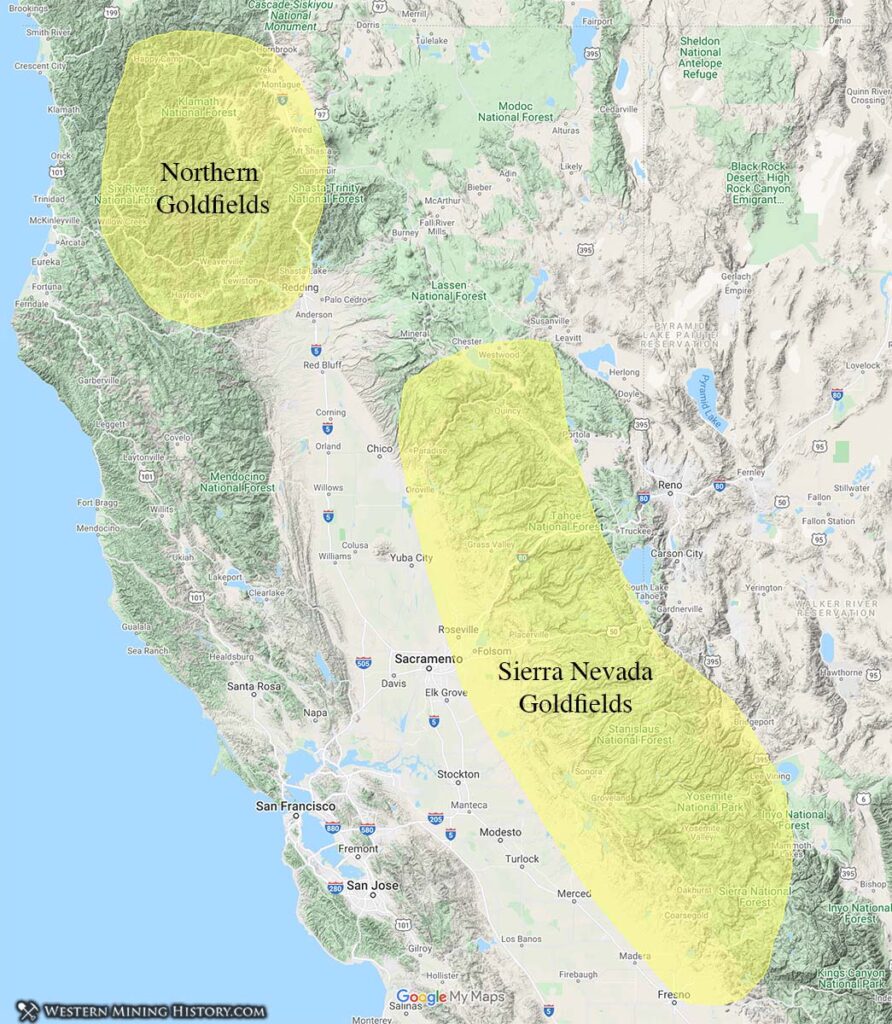
The heartland of the California Gold Rush was unequivocally the western foothills of the Sierra Nevada mountain range. This vast, undulating landscape, characterized by rolling hills, deep canyons, and a network of rivers and streams, proved to be remarkably rich in placer gold. The initial discovery that ignited this inferno occurred on January 24, 1848, at Sutter’s Mill near Coloma, by James W. Marshall. This seemingly modest find in a lumber mill owned by John Sutter would soon transform the region into a magnet for fortune seekers.
Coloma and the American River
The discovery at Sutter’s Mill in Coloma marked the genesis. Located along the South Fork of the American River, this area became the initial focal point of the gold fever. Prospectors, known as “forty-niners” after the year their mass migration truly began, flocked to Coloma and the surrounding stretches of the American River. The placid waters, now teeming with eager men, carried within them the glittering promise of wealth. The American River watershed, encompassing its three forks – the North, Middle, and South – became a critical artery for gold extraction.
Early Mining Camps and Towns
As word spread, the American River became a hive of activity. From the fertile valleys near Sacramento to the higher elevations, makeshift mining camps sprang up with astonishing speed. These were not permanent settlements initially, but rather transient communities of tents, shanties, and dugouts, dependent entirely on the fortunes of the nearby diggings.
- Coloma: The undisputed birthplace, where the initial discovery was made, and the site of Sutter’s Mill.
- Placerville: Originally known as “Hangtown” due to its rough justice, Placerville became a significant supply center and hub for miners working the American River tributaries. Its strategic location made it a crucial stopping point for those heading deeper into the goldfields.
- Georgetown: Another important early settlement, serving miners in the northern part of the American River gold region.
- Auburn: Situated at the confluence of the North Fork and Middle Fork of the American River, Auburn grew into a bustling town, a testament to the extensive mining operations in the area.
The Mother Lode Region
Beyond the immediate vicinity of Coloma and the American River, the California Gold Rush rapidly expanded throughout a vast geological formation known as the Mother Lode. This term refers to a series of gold-bearing quartz veins stretching for over 120 miles, roughly from Mariposa in the south to Shasta in the north. While the initial discoveries were of placer gold (gold found in riverbeds and stream deposits), the Mother Lode revealed the source of this wealth – rich veins of gold embedded in quartz.
Key Counties and Districts within the Mother Lode
The Mother Lode was not a single location but a geographically extensive region that encompassed numerous counties and yielded immense fortunes. The shift from surface placers to hard-rock mining required more capital and labor, leading to the establishment of more permanent towns and larger mining operations.
- Calaveras County: Famous for its rich gold deposits, Calaveras County was home to towns like San Andreas and Mokelumne Hill. The Mokelumne River and its tributaries were particularly productive.
- Amador County: Another powerhouse of gold production, Amador County saw the rise of towns like Jackson, Ione, and Plymouth. The Cosumnes River also provided significant gold.
- Tuolumne County: This county was home to Sonora, one of the largest and most boisterous gold rush towns, and Columbia, which was preserved as a state historic park, offering a remarkably intact glimpse into the era. The Tuolumne River was a major source of placer gold.
- Mariposa County: The southernmost extension of the Mother Lode, Mariposa County was the location of the famous Mariposa Mine, one of the richest quartz mines discovered. The town of Mariposa served as a vital center.
- Nevada County: North of Placer County, Nevada County became a leading producer of gold, particularly through hard-rock mining. Nevada City and Grass Valley were its prominent centers, known for their deep mines and sophisticated mining technology.
- Sierra County: Further north, Sierra County also contributed significantly to the gold output, with towns like Downieville emerging in its rugged landscape.

Beyond the Mother Lode: Expanding Frontiers
While the Sierra Nevada foothills were the undeniable core, the California Gold Rush was a dynamic force that prompted exploration and discovery across a wider swathe of the state. As the easily accessible placer deposits began to diminish, prospectors ventured further afield, seeking new sources of the precious metal.
Northern California Gold Fields
The search for gold did not stop at the southern extent of the Mother Lode. Prospectors ventured north, leading to the development of significant gold-mining districts in northern California.
- Shasta County: The region around Shasta and French Gulch proved to be rich in gold, with both placer and lode deposits being exploited. This area marked the northernmost significant reach of the initial gold rush wave.
- Trinity County: Known for its rugged terrain, Trinity County also yielded gold, particularly along its rivers, attracting prospectors who sought to escape the crowds of the more established districts.
Southern California and Other Discoveries
While the Sierra Nevada dominated the Gold Rush, smaller gold discoveries in other parts of California also fueled excitement and exploration, albeit on a lesser scale.
- Southern California: Areas in what is now Los Angeles County, particularly the San Gabriel Mountains, saw minor gold discoveries, though these never reached the magnitude of the northern mines.
- Oregon and other territories: The success in California inspired prospectors to explore other regions. Expeditions and individual miners carried the gold fever into what is now Oregon, Idaho, and even British Columbia, leading to subsequent gold rushes in those areas.
The Legacy of the Gold Rush Landscape
The sites of the California Gold Rush are not merely historical footnotes; they are integral parts of the California landscape, marked by remnants of human endeavor and the enduring power of nature.
Preserving the Past
Many of the towns and mining sites that were central to the Gold Rush have been preserved, offering invaluable insights into this transformative period.
- Columbia State Historic Park: Located in Calaveras County, this remarkably preserved gold rush town allows visitors to step back in time. The buildings, many of which date back to the 1850s, are a testament to the bustling life of a successful mining community.
- Malakoff Diggins State Historic Park: This park preserves the dramatic hydraulic mining scars left by the extensive operations that once took place there, illustrating the scale and environmental impact of later-stage gold extraction.
- Nevada City and Grass Valley: These historic Nevada County towns retain much of their 19th-century architecture and character, serving as living reminders of their gold rush origins.
Enduring Attractions
The natural beauty of the Sierra Nevada foothills and the historical significance of the gold rush sites continue to draw visitors today, transforming a landscape once defined by frantic prospecting into a region of historical and recreational appeal. The rivers that once flowed with gold now offer opportunities for rafting and fishing, and the rolling hills are dotted with vineyards and charming towns, a far cry from the rough camps of the forty-niners, yet forever marked by their indelible impact. The question of “where” the California Gold Rush took place is answered by the very soil of the Sierra Nevada, the echoing canyons, and the historic towns that stand as monuments to the quest for gold that forever changed California.
LifeOutOfTheBox is a participant in the Amazon Services LLC Associates Program, an affiliate advertising program designed to provide a means for sites to earn advertising fees by advertising and linking to Amazon.com. Amazon, the Amazon logo, AmazonSupply, and the AmazonSupply logo are trademarks of Amazon.com, Inc. or its affiliates. As an Amazon Associate we earn affiliate commissions from qualifying purchases.