
Embarking on a journey from the historic shores of Maryland to the vibrant heart of Chicago is a classic American adventure, bridging the East Coast’s colonial charm with the Midwest’s industrial dynamism. This transatlantic trek, geographically speaking, covers a substantial distance, necessitating careful planning for travelers seeking to navigate the most efficient and enjoyable routes. Understanding the nuances of this particular travel corridor—whether by air, road, or rail—is crucial for a seamless experience. This guide delves into the various facets of traveling from Maryland to Chicago, providing insights into distance, time, and the diverse experiences that await at either end of this significant migration.

Navigating the Miles: Distance and Time Considerations
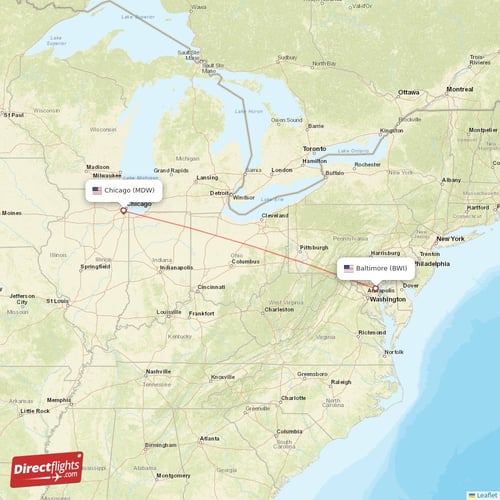
The direct distance between Maryland and Chicago is substantial, prompting different approaches depending on the chosen mode of transport. While Maryland itself is a state with varying geographical points, and Chicago is a sprawling metropolis, we can establish general parameters. For instance, if one considers the geographical center of Maryland (around Annapolis) and downtown Chicago, the aerial distance is approximately 750 miles (about 1,200 kilometers). However, actual travel distances are often greater due to route selections and infrastructure.
By Air: The Swift Passage
For many, air travel represents the most practical and time-efficient method for covering the distance between Maryland and Chicago. Numerous direct flights operate daily between major airports in Maryland, such as Baltimore/Washington International Thurgood Marshall Airport (BWI), and Chicago’s O’Hare International Airport (ORD) or Midway International Airport (MDW).
A typical non-stop flight duration from BWI to ORD is around 2 hours and 15 minutes to 2 hours and 30 minutes. This figure, however, excludes essential travel time to and from airports, security checks, boarding, and baggage claim, which can easily add another 3-4 hours to the total travel experience. Therefore, while the flight itself is swift, the entire process from leaving one’s origin point in Maryland to arriving at a destination in Chicago often spans a significant portion of a day. Airlines such as American Airlines, United Airlines, and Southwest Airlines are common carriers on this route, offering a range of schedules and pricing options.
By Road: The Scenic Expedition
The overland journey from Maryland to Chicago offers a more immersive, albeit time-consuming, travel experience. The most direct driving route typically spans approximately 800 to 900 miles, depending on the specific starting and ending points and the chosen highway network. This route predominantly utilizes major interstates, such as I-70 West connecting to I-74 West and then to I-80 West, or variations involving I-90 West.
The estimated driving time, without accounting for traffic, rest stops, or overnight stays, is around 12 to 15 hours. For most travelers, this journey is best undertaken over two days to ensure safety and comfort. This allows for one or two overnight stops in strategically located cities along the route. Popular stopping points might include cities in Ohio, such as Columbus, or in Indiana, like Indianapolis.
Potential Driving Routes and Stops:
- Northern Route (via I-80): This path often takes travelers through western Pennsylvania and into Ohio, potentially passing through cities like Pittsburgh. Continuing west on I-80 leads through Indiana before converging with I-90 or I-94 for the final stretch into Chicago. This route can be scenic but may encounter more varied weather conditions.
- Central Route (via I-70/I-74): Beginning on I-70 West from Maryland, travelers would typically head towards Columbus, Ohio, and then connect to I-74 West towards Indianapolis, Indiana. From Indianapolis, routes can vary, often involving I-74 connecting to I-55 North for the approach to Chicago. This route often offers a good balance of highway efficiency and access to amenities.
When planning a road trip, it’s essential to factor in potential tolls, fuel costs, and the cost of overnight accommodations. Utilizing navigation apps can provide real-time traffic updates and suggest the most optimal routes based on current conditions. Furthermore, ensuring your vehicle is in good mechanical condition is paramount for a safe and stress-free journey.
By Rail: A Leisurely Alternative
For those who prefer a more relaxed and environmentally conscious approach, rail travel offers a viable, albeit slower, alternative for traversing the distance from Maryland to Chicago. Amtrak is the primary provider of intercity passenger rail service in the United States.
The journey typically involves a transfer, often in a major hub city. For example, a common route might involve taking a train from Baltimore’s Penn Station or Washington Union Station south or west to a connecting city, and then boarding a direct train to Chicago Union Station. The Capitol Limited route, for instance, runs between Washington D.C. and Chicago, passing through parts of Maryland and Ohio.
The total travel time for rail journeys can vary significantly, often ranging from 15 to over 20 hours, depending on the specific route and number of stops. While this is considerably longer than flying, it allows passengers to relax, enjoy the changing scenery, and avoid the stresses of airport security and driving. Rail travel also offers the unique advantage of arriving directly in the heart of the city, bypassing the need for transportation from a distant airport. Sleeper car options are available for overnight journeys, providing a comfortable and private space for rest, further enhancing the experience for long-distance travelers.
Factors Influencing Your Travel Choice
The decision between flying, driving, or taking the train is influenced by several key factors, including budget, time constraints, personal preferences, and the purpose of the trip.
Budgetary Considerations
- Air Travel: Airfare prices fluctuate significantly based on booking time, season, and demand. Early booking often yields lower fares, while last-minute bookings can be expensive. Additional costs include baggage fees, airport parking or transportation, and in-flight purchases.
- Road Travel: The primary costs for driving include fuel, tolls, and accommodation for overnight stops. Wear and tear on the vehicle is also a factor. For families or groups, driving can sometimes be more cost-effective than purchasing multiple airline tickets, especially when factoring in the ability to pack more luggage without extra fees.
- Rail Travel: Train tickets can vary in price, with discounts often available for booking in advance or for rail passes. Sleeper car accommodations significantly increase the cost but offer added comfort and privacy. The price per mile can sometimes be competitive with other options, especially when considering the elimination of airport hassles and the ability to work or relax during transit.
Time Availability
- Air Travel: Ideal for those with limited time, offering the quickest transit between Maryland and Chicago. The total door-to-door time, however, should be carefully considered.
- Road Travel: Requires the most flexibility, as it can be spread over one to three days. This option is best for travelers who have ample time and wish to explore stops along the way.
- Rail Travel: A good middle ground for those who have more time than flying but less than a leisurely road trip. It allows for productivity or relaxation during transit without the need for active driving.
Personal Preferences and Travel Style
- Adventure Seekers: Often prefer road trips, allowing for spontaneous detours and exploration of roadside attractions.
- Business Travelers or Efficiency-Minded Individuals: Typically opt for air travel due to its speed and directness.
- Leisure Travelers or Those Seeking Relaxation: May choose rail travel for its comfort, scenic views, and the ability to unwind without the stress of navigation. This can also be a preferred method for those with environmental concerns, as trains generally have a lower carbon footprint per passenger than air travel or individual car journeys.
Arrival in Chicago: Preparing for Your Midwestern Experience
Regardless of the chosen mode of transport, arriving in Chicago marks the beginning of a vibrant urban adventure. The city, renowned for its impressive architecture, world-class museums, diverse culinary scene, and deep-rooted history in jazz and blues, offers a wealth of experiences.
- Airport Arrivals: O’Hare International Airport (ORD) and Midway International Airport (MDW) are well-connected to the city center via public transportation. The CTA’s Blue Line serves O’Hare, providing direct access to downtown Chicago in about 45-50 minutes. The CTA’s Orange Line connects Midway to the Loop, taking approximately 25-30 minutes. Taxis and ride-sharing services are also readily available.
- Driving Arrivals: Navigating Chicago by car can be challenging due to traffic congestion and limited, often expensive, parking. Familiarizing oneself with the city’s street grid and public transit options is highly recommended.
- Rail Arrivals: Chicago Union Station is a magnificent Beaux-Arts building located in the heart of the Loop, offering immediate access to public transportation and many downtown attractions.
Understanding the distances and travel times involved in reaching Chicago from Maryland is the first step in planning an unforgettable trip. Whether you seek the efficiency of air travel, the freedom of the open road, or the leisurely pace of the train, this journey promises a rich tapestry of American landscapes and urban experiences.
LifeOutOfTheBox is a participant in the Amazon Services LLC Associates Program, an affiliate advertising program designed to provide a means for sites to earn advertising fees by advertising and linking to Amazon.com. Amazon, the Amazon logo, AmazonSupply, and the AmazonSupply logo are trademarks of Amazon.com, Inc. or its affiliates. As an Amazon Associate we earn affiliate commissions from qualifying purchases.