
Chicago, a city renowned for its architectural marvels, deep-dish pizza, and vibrant arts scene, presents a unique set of challenges and opportunities for any traveler seeking to document their experience. Whether you’re a student writing a research paper on the Chicago World’s Fair or a blogger crafting a guide to the city’s iconic landmarks, understanding how to properly cite your sources is paramount. This guide focuses on the principles and practical application of Chicago-style citation, specifically tailored for content related to Chicago and its myriad attractions.
The Chicago Manual of Style (CMOS), often referred to as the Chicago style, offers two primary systems for citation: the notes-bibliography system and the author-date system. For most travel writing, guides, and descriptive pieces, the notes-bibliography system is generally preferred due to its flexibility and ability to integrate seamlessly with narrative flow.

Understanding the Notes-Bibliography System
The notes-bibliography system employs numbered footnotes or endnotes to identify source material. Each note corresponds to a superscript number placed in the text at the point where the information is referenced. A corresponding bibliography at the end of the work lists all sources cited. This system is particularly useful for travel writing as it allows for detailed attribution without disrupting the reader’s immersion in the descriptive content.
Footnotes vs. Endnotes
- Footnotes: These appear at the bottom of the page where the citation is made. They are immediately accessible to the reader, allowing for quick verification without leaving the current page. For blog posts or online articles where page numbers are not a factor, footnotes can still be implemented using digital annotation tools or by embedding them discreetly.
- Endnotes: These are collected at the end of the document, chapter, or article. While they require the reader to navigate to a separate section, they can help maintain a cleaner page layout.
The key to using either footnotes or endnotes effectively lies in consistency. Once you choose a method, adhere to it throughout your entire piece.
Crafting a Chicago-Style Note
The content and format of a Chicago-style note vary depending on the type of source (book, journal article, website, newspaper, etc.). For travel-related content about Chicago, you will likely encounter a diverse range of sources.
Books
When citing a book, the note typically includes the author’s full name, the title of the book (italicized), publication information (city, publisher, year), and the specific page number(s) referenced.
First reference note:
- Daniel Burnham and Edward H. Bennett, The Plan of Chicago (New York: Princeton Architectural Press, 1993), 112.
Subsequent references to the same source:
If you are citing the same book multiple times consecutively, you can use “Ibid.” (Latin for “in the same place”) followed by the page number if different, or simply “Ibid.” if referencing the same page. If there are intervening citations from other sources, you will use a shortened note format: author’s last name, a shortened title, and the page number.
- Burnham and Bennett, Plan of Chicago, 115.
- Ibid., 116.
- Carol S. Miller, Chicago: A Biography (New York: Alfred A. Knopf, 2005), 245.
- Miller, Chicago, 248.
Websites and Online Articles
Citing online sources requires careful attention to detail, as web pages can change or disappear.
First reference note:
- John Smith, “Exploring the Magnificent Mile,” Chicago Travel Guide, last modified January 15, 2023, https://www.chicagotravelguide.com/magnificent-mile-guide.
Subsequent references:
As with books, use shortened notes for subsequent references.
- Smith, “Exploring the Magnificent Mile.”
Key elements for website citations:
- Author (if available)
- Title of the specific page or article
- Name of the website (italicized)
- Publication or modification date (if available)
- URL
- Access date (optional but recommended for frequently updated sites)
Newspaper and Magazine Articles
These citations are similar to journal articles but often include the name of the publication.
First reference note:
- Jane Doe, “A Taste of Lincoln Park: Beyond the Zoo,” Chicago Tribune, March 10, 2023, sec. Travel, 5.
Subsequent references:
- Doe, “A Taste of Lincoln Park.”
The Bibliography
The bibliography is an alphabetical list of all sources cited in your notes. It appears at the end of your work and provides full bibliographic details for each entry, allowing readers to locate the original material. The format for bibliography entries is slightly different from notes, omitting page numbers for general references but including them for specific articles or chapters.
Book Bibliography Entry
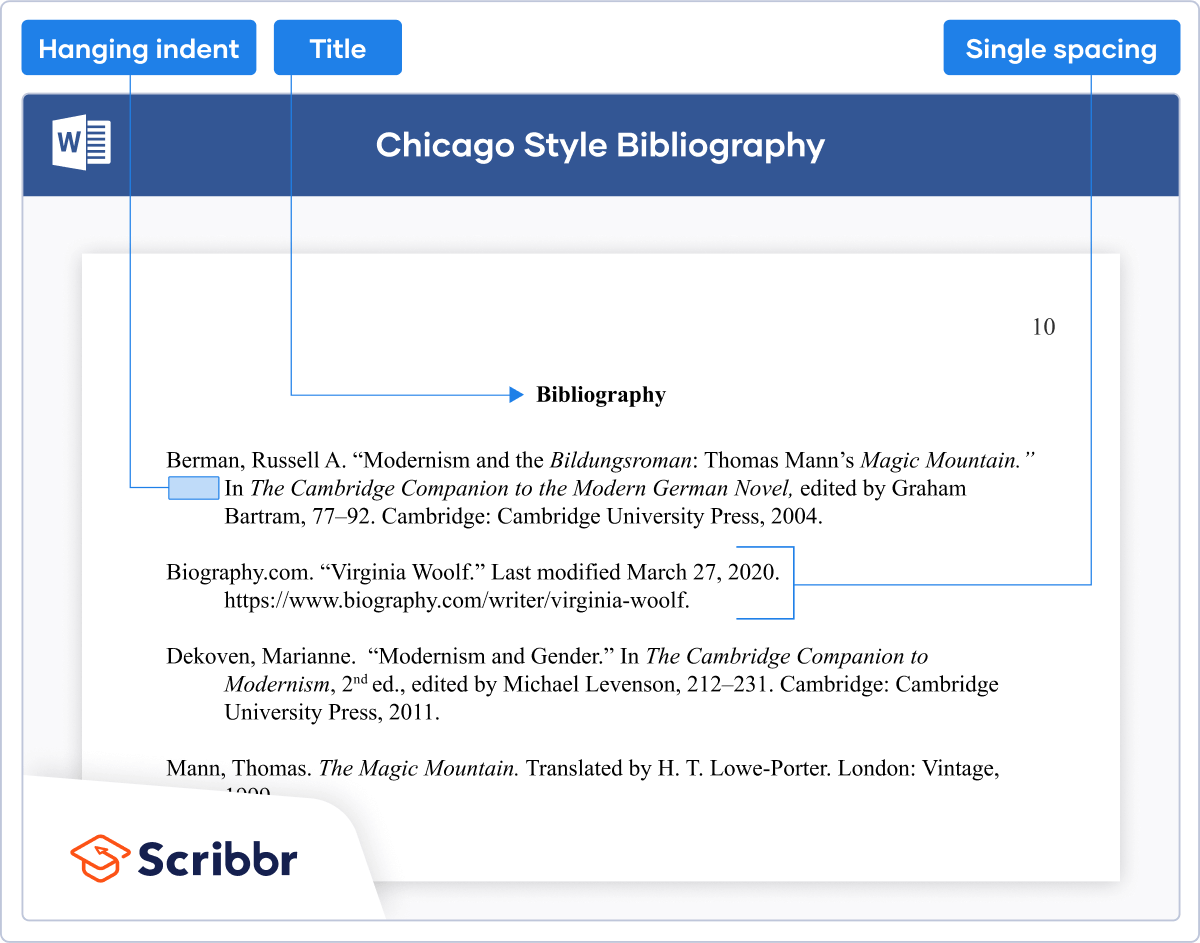
Burnham, Daniel, and Edward H. Bennett. The Plan of Chicago. New York: Princeton Architectural Press, 1993.
Website Bibliography Entry
Smith, John. “Exploring the Magnificent Mile.” Chicago Travel Guide. Last modified January 15, 2023. https://www.chicagotravelguide.com/magnificent-mile-guide.
Newspaper Article Bibliography Entry
Doe, Jane. “A Taste of Lincoln Park: Beyond the Zoo.” Chicago Tribune, March 10, 2023, sec. Travel, 5.
The Author-Date System
While less common in narrative travel writing, the author-date system is prevalent in academic and scientific fields. It uses parenthetical in-text citations that include the author’s last name and the year of publication. These citations correspond to a reference list at the end of the work, which contains full bibliographic details.
In-Text Citations
For example, when discussing the history of the Art Institute of Chicago, you might write:
The development of the Art Institute of Chicago as a premier cultural institution spanned several decades of civic engagement and architectural innovation (Smith 2005, 78).
Or, if the author’s name is already mentioned in the text:
According to Smith (2005), the development of the Art Institute of Chicago spanned several decades (78).
Reference List
The reference list would then include an entry for Smith’s book:
Smith, John. 2005. Chicago: A Biography. New York: Alfred A. Knopf.
This system is more direct for quick verification but can be more intrusive to the reading flow for descriptive or narrative content.
Citing Specific Chicago Attractions and Experiences
When crafting content about Chicago, you’ll need to cite a variety of sources.
Architectural Guides and Histories
Sources like books detailing Chicago’s architectural history, including works on architects like Frank Lloyd Wright or buildings like the Willis Tower (formerly the Sears Tower), are invaluable. Ensure you meticulously record author, title, publication details, and page numbers.
Museum and Attraction Websites
Official websites for institutions like the Field Museum or the Shedd Aquarium provide factual information that may require citation. Pay attention to “About Us” pages, exhibit descriptions, and historical information.
Food and Restaurant Reviews
If your content delves into the culinary scene, citing reputable food critics, restaurant websites, or local publications is essential. For instance, when discussing a classic Chicago dish like deep-dish pizza from a specific establishment like Lou Malnati’s, you might reference a local food blog or a review from the Chicago Reader.
Historical Archives and Documents
For deeper dives into Chicago’s history, you might consult digital archives or historical society publications. These often require detailed bibliographic information, including archive names, document titles, and collection numbers.

Best Practices for Chicago-Style Citation in Travel Content
- Consistency is Key: Whether you choose footnotes/endnotes or author-date, maintain that choice throughout your entire piece.
- Accuracy Matters: Double-check all names, dates, titles, and page numbers. Errors in citation can undermine your credibility.
- When in Doubt, Cite: If you are unsure whether a piece of information needs a citation, it is always better to err on the side of caution and provide one. This includes paraphrased ideas, direct quotes, and specific facts or statistics.
- Use Reliable Tools: While the Chicago Manual of Style is the definitive guide, citation management software can assist in formatting notes and bibliographies. However, always review the generated citations for accuracy.
- Understand Your Audience: For a general travel blog, a slightly more streamlined approach to notes might be acceptable, but for a more academic or in-depth guide, strict adherence to CMOS is crucial.
By mastering the principles of Chicago-style citation, you can elevate your travel writing about Chicago from a simple account to a well-researched, credible, and authoritative resource, providing readers with not only inspiration but also the information they need to explore further and understand the depth of this magnificent city. From the towering skyscrapers of the Loop to the serene shores of Lake Michigan, every detail can be a learning opportunity, and proper citation ensures that the knowledge gained is attributed correctly.
LifeOutOfTheBox is a participant in the Amazon Services LLC Associates Program, an affiliate advertising program designed to provide a means for sites to earn advertising fees by advertising and linking to Amazon.com. Amazon, the Amazon logo, AmazonSupply, and the AmazonSupply logo are trademarks of Amazon.com, Inc. or its affiliates. As an Amazon Associate we earn affiliate commissions from qualifying purchases.