
Navigating the intricacies of academic and professional citation can often feel like deciphering an ancient scroll. When your research delves into the rich tapestry of cinema, a medium that blends visual artistry with narrative storytelling, adhering to a consistent and recognized citation style is paramount. Among the most respected and widely adopted styles is the Chicago Manual of Style. For those focusing on films within their academic pursuits, understanding how to properly cite these works is not merely a matter of form; it is crucial for giving credit where it is due, enabling readers to locate and verify your sources, and upholding the integrity of scholarly discourse. This guide will demystify the process of citing films in Chicago style, covering both the Notes-Bibliography and Author-Date systems, and providing clear examples for various scenarios you might encounter.

Understanding the Chicago Style Systems
The Chicago Manual of Style offers two distinct, yet interconnected, systems for citation: the Notes-Bibliography (NB) system and the Author-Date (AD) system. While both aim for accuracy and clarity, they differ in their primary application and structure.
The Notes-Bibliography System
The Notes-Bibliography system is favored in many humanities disciplines, including art history, literature, and film studies. It relies on numbered footnotes or endnotes to cite sources within the text, with a corresponding bibliography at the end of the work listing all cited sources alphabetically. This system allows for detailed annotations and commentary within the notes themselves, making it particularly flexible for nuanced discussions often found in film analysis. When citing a film using the NB system, the primary goal is to provide enough information for your reader to identify the specific film and its key creative contributors.
The Author-Date System
The Author-Date system is more commonly used in the social sciences and natural sciences. It employs parenthetical citations within the text, typically including the author’s last name and the year of publication. A corresponding reference list is provided at the end of the work, containing full bibliographic details for each cited source. While less common for purely film studies, it can be used if your research incorporates film as evidence within a broader social science context.
For the purposes of citing films, the NB system is generally more prevalent and intuitive, offering greater flexibility for detailing directorial and performance credits. However, we will briefly touch upon the Author-Date approach for completeness.
Citing Films in the Notes-Bibliography System
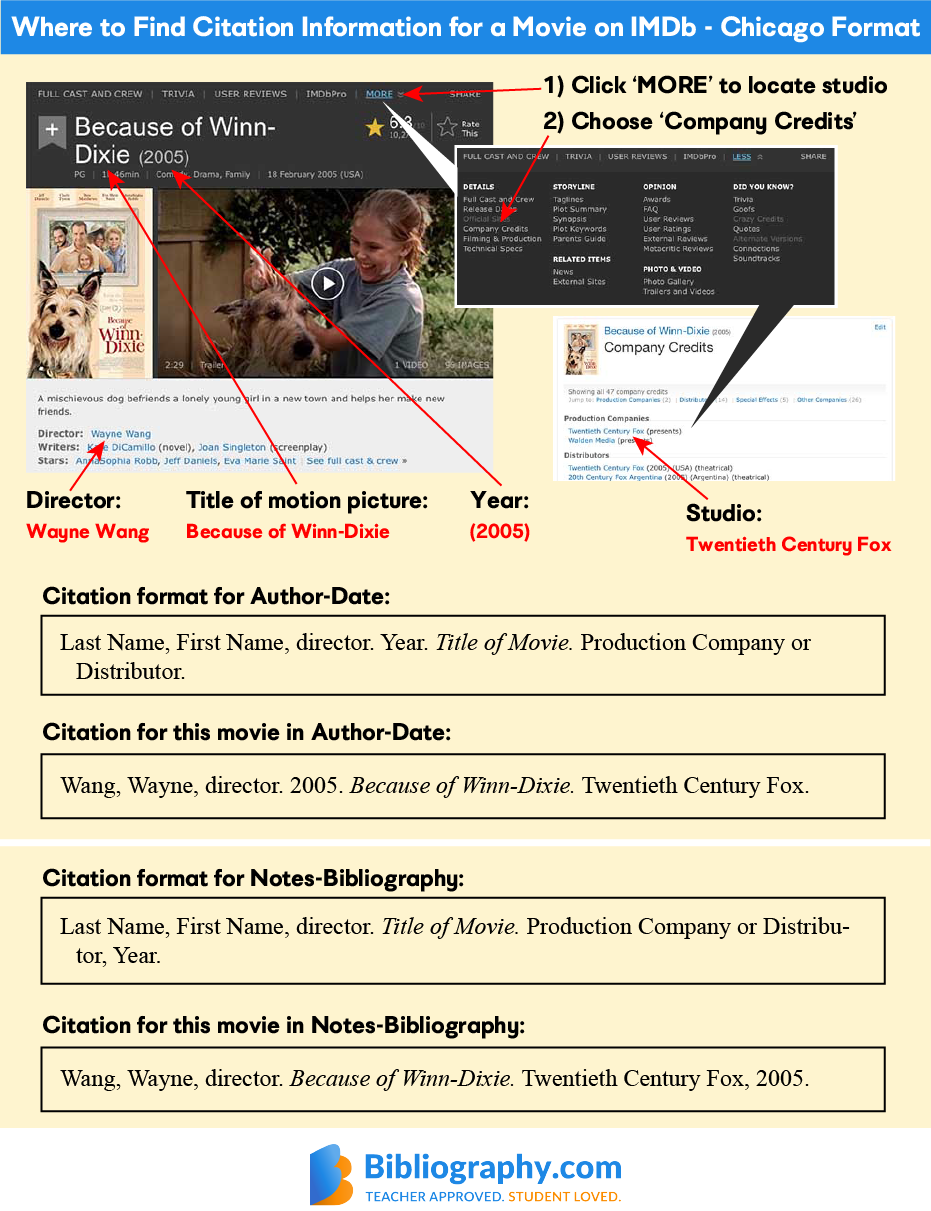
When citing a film in the Notes-Bibliography system, your goal is to provide a comprehensive citation that identifies the film accurately and credits its creators. The core elements typically include the film’s title, the director, the production company, and the year of release. You may also include other relevant information such as the primary actors, screenwriter, or composer, depending on the focus of your research and the significance of these contributors to the film.
Basic Film Citation
The most fundamental citation for a film includes the following components:
- Film Title: The full, italicized title of the film.
- Director: Identified by the credit “directed by” followed by the director’s name.
- Production Company: The primary company or companies responsible for producing the film.
- Year of Release: The year the film was initially released.
Example of a Footnote/Endnote:
- Citizen Kane, directed by Orson Welles (RKO Radio Pictures, 1941).
Example of a Bibliography Entry:
Welles, Orson, director. Citizen Kane. RKO Radio Pictures, 1941.
Notice the difference in punctuation and order between the note and the bibliography. In the note, the director’s name follows the title, and the production company and year are enclosed in parentheses. In the bibliography, the director is listed first (last name, first name), followed by the italicized title, production company, and year.
Citing Films with Additional Contributors
Your research may necessitate highlighting other creative roles. Chicago style allows for the inclusion of screenwriters, actors, composers, and others. When adding these details, be specific about their role.
Example of a Footnote/Endnote (including screenwriter and lead actor):
- The Social Network, directed by David Fincher, screenplay by Aaron Sorkin, starring Jesse Eisenberg (Columbia Pictures, 2010).
Example of a Bibliography Entry (including screenwriter and lead actor):
Fincher, David, director. The Social Network. Screenplay by Aaron Sorkin, starring Jesse Eisenberg. Columbia Pictures, 2010.
Important Considerations:
- Multiple Directors: If a film has co-directors, list them both.
- In the Heat of the Night, directed by Norman Jewison and released by United Artists in 1967.
- Distributors vs. Production Companies: Generally, you cite the production company. If the production company is obscure and the distributor is more well-known, you might list the distributor. Chicago style prioritizes clarity, so use your best judgment and be consistent.
- Documentaries: The same principles apply. You would cite the director and production company. If the documentary is based on a specific work, you might include that information as well.
- Hoop Dreams, directed by Steve James (Kartemquin Films, 1994).
- Short Films: If citing a short film that appeared within a larger program or compilation, you would include the title of the short film, its director, and then the title of the compilation or program, its director (if different), the distributor, and the date. However, if the short film is cited on its own, the basic format suffices.
- Animated Films: Treat them the same as live-action films. The director and animation studio are key.
- Spirited Away, directed by Hayao Miyazaki (Studio Ghibli, 2001).
Citing Films from Streaming Services or DVDs
With the rise of digital media and readily available home viewing options, citing films accessed via streaming services or DVDs is a common requirement. Chicago style provides guidelines for these formats.
Films on DVD
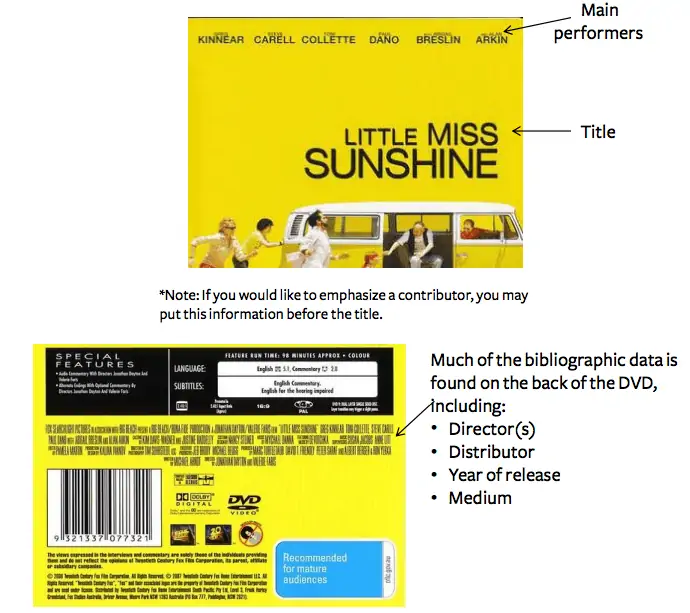
When citing a film from a DVD, include the format, manufacturer, and year of release of the DVD.
Example of a Footnote/Endnote:
- Casablanca, directed by Michael Curtiz, Warner Bros. Entertainment, 2003, DVD.
Example of a Bibliography Entry:
Curtiz, Michael, director. Casablanca. Warner Bros. Entertainment, 2003. DVD.
Films from Streaming Services
Citing films from streaming services can be more complex as details like specific server locations or release dates on the platform may vary. The key is to provide enough information for the reader to locate the film on the specified service.
Example of a Footnote/Endnote:
- Parasite, directed by Bong Joon-ho, Neon, 2019, streamed on Hulu, accessed October 26, 2023.
Example of a Bibliography Entry:
Bong Joon-ho, director. Parasite. Neon, 2019. Streamed on Hulu.
Notes on Streaming Citations:
- Streaming Service: Clearly identify the platform (e.g., Netflix, Amazon Prime Video, Hulu).
- Access Date: While not always strictly required for films that are unlikely to disappear from a platform, including an access date can be beneficial, especially if the film’s availability is uncertain.
- URL (Optional but Recommended): For the bibliography, you may include a URL for the film on the streaming service if it’s stable and directly accessible. However, the direct link to a specific movie on a streaming platform can be ephemeral.
- Year of Release: It’s crucial to include the film’s original release year, not just the year it became available on the streaming service.
Citing Specific Scenes or Quotations
If you are quoting dialogue or analyzing a specific scene, you will need to provide more granular detail in your notes. While Chicago style doesn’t mandate time codes for every analysis, they are highly recommended for precise referencing, especially in film studies where visual and auditory cues are critical.
Example of a Footnote/Endnote with a Time Code:
- Orson Welles, as Charles Foster Kane, states, “Rosebud,” in Citizen Kane, directed by Orson Welles (RKO Radio Pictures, 1941), 01:45:30.
Example of a Bibliography Entry (if a specific quote or scene is the focus and you need to list it separately):
Welles, Orson, director. Citizen Kane. RKO Radio Pictures, 1941. (Referenced for the scene at 01:45:30).
Tips for Scene/Quote Citation:
- Consistency: If you use time codes for one scene, try to use them for all significant scene references.
- Clarity: Ensure the quote is accurate and the time code precisely marks its beginning.
Citing Films in the Author-Date System
While less common for purely film studies, the Author-Date system can be employed. In this system, your in-text citations will be brief, and the full details will reside in your reference list.
Basic Film Citation (Author-Date)
In the Author-Date system, you typically cite the director as the “author.”
In-Text Citation:
(Welles 1941)
Reference List Entry:
Welles, Orson, dir. 1941. Citizen Kane. RKO Radio Pictures.
Citing with Additional Contributors (Author-Date)
When including other contributors, you might list them by last name as well, or indicate their role.
In-Text Citation:
(Fincher; Sorkin; Eisenberg 2010) – This is a simplified example; Chicago style often focuses on the primary “author” for the in-text citation.
A more typical approach would be to cite the director and then elaborate on the contributors in the full entry.
Reference List Entry:
Fincher, David, dir. 2010. The Social Network. Screenplay by Aaron Sorkin; starring Jesse Eisenberg. Columbia Pictures.
Conclusion: Mastering Film Citation
Mastering the art of citing films in Chicago style is an essential skill for any researcher engaging with cinematic works. By consistently applying the principles of the Notes-Bibliography or Author-Date system, you ensure accuracy, grant proper attribution, and empower your readers to explore the films you discuss. Whether you are analyzing the directorial genius of Orson Welles in Citizen Kane, dissecting the screenplay of Aaron Sorkin for The Social Network, or examining the visual storytelling of Hayao Miyazaki in Spirited Away, precise citation practices elevate your work from mere observation to rigorous scholarship. Remember to consult the latest edition of The Chicago Manual of Style for the most up-to-date guidelines and to maintain a consistent approach throughout your research. The pursuit of cinematic knowledge is enriched by the discipline of accurate academic citation.
LifeOutOfTheBox is a participant in the Amazon Services LLC Associates Program, an affiliate advertising program designed to provide a means for sites to earn advertising fees by advertising and linking to Amazon.com. Amazon, the Amazon logo, AmazonSupply, and the AmazonSupply logo are trademarks of Amazon.com, Inc. or its affiliates. As an Amazon Associate we earn affiliate commissions from qualifying purchases.