
The Chicago Manual of Style (CMOS) offers two distinct citation systems: the Notes-Bibliography system and the Author-Date system. Understanding which system to use, and how to implement it correctly, is crucial for anyone engaging with academic or journalistic writing that follows this widely respected style guide. Whether you’re a student researching a paper, a historian documenting findings, or a writer preparing an article for publication, mastering Chicago citations ensures your work is both credible and properly attributed. This guide will delve into the nuances of both systems, providing clear instructions and examples to help you navigate the intricacies of Chicago citation.
Understanding the Chicago Manual of Style Citation Systems
The Chicago Manual of Style is a comprehensive style guide that covers a broad range of editorial and stylistic issues, including citation. Its prominence in fields such as history, literature, and the arts has made it a standard for academic and professional writing. The manual’s flexibility is a key reason for its popularity, offering two primary methods for citing sources: the Notes-Bibliography system and the Author-Date system. Each system serves a similar purpose – to provide readers with the necessary information to locate the original sources – but they achieve this through different mechanisms.
The Notes-Bibliography System
The Notes-Bibliography system is favored in disciplines that prioritize narrative flow and in-depth engagement with sources, such as history, literature, and art history. This system relies on two main components: numbered footnotes or endnotes, and a bibliography.
- Footnotes/Endnotes: When you quote, paraphrase, or refer to a source, you place a superscript Arabic numeral in the text immediately following the borrowed material. This numeral corresponds to a note (either a footnote at the bottom of the page or an endnote at the end of the document) that provides the citation details. The first time a source is cited, the note will contain full bibliographical information. Subsequent citations of the same source can be shortened, often using a shortened title and page number.
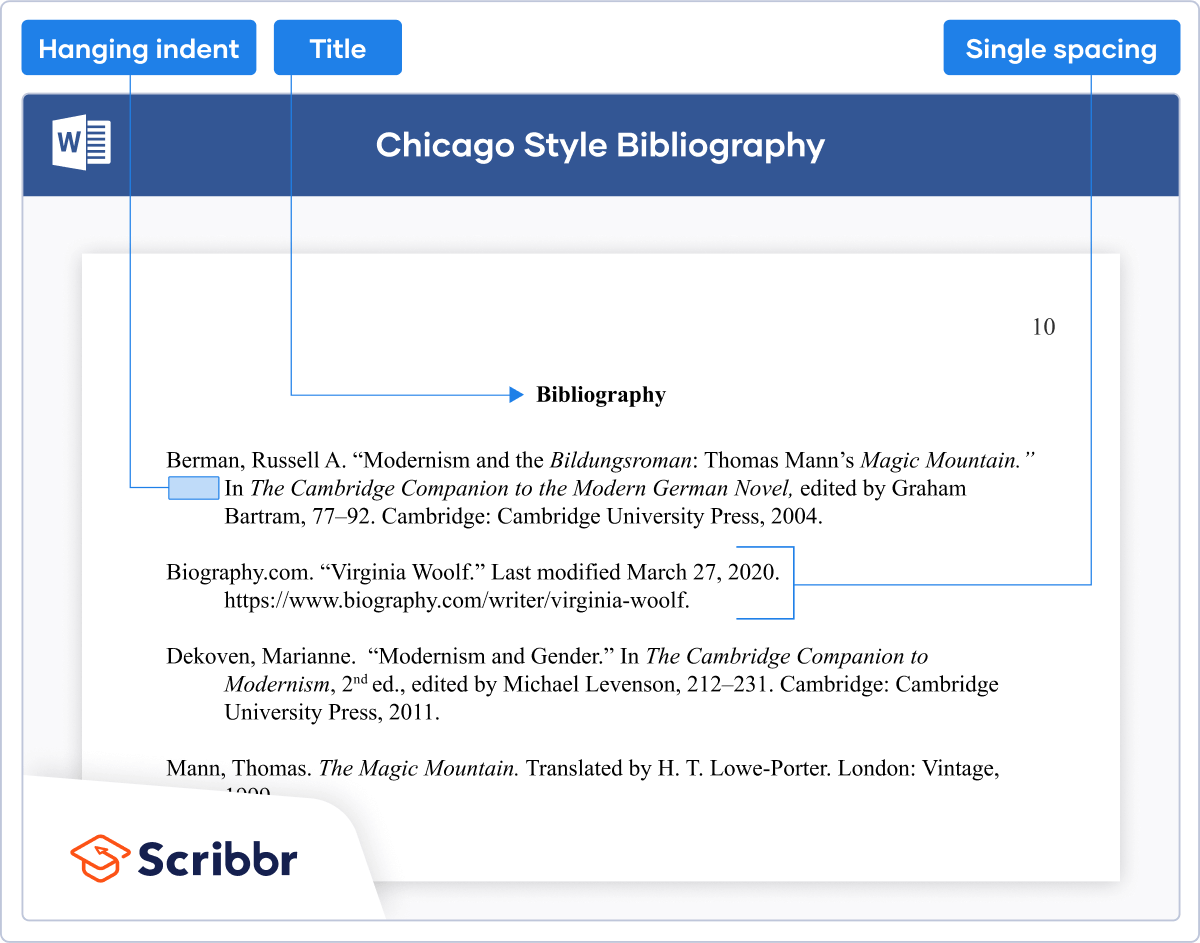
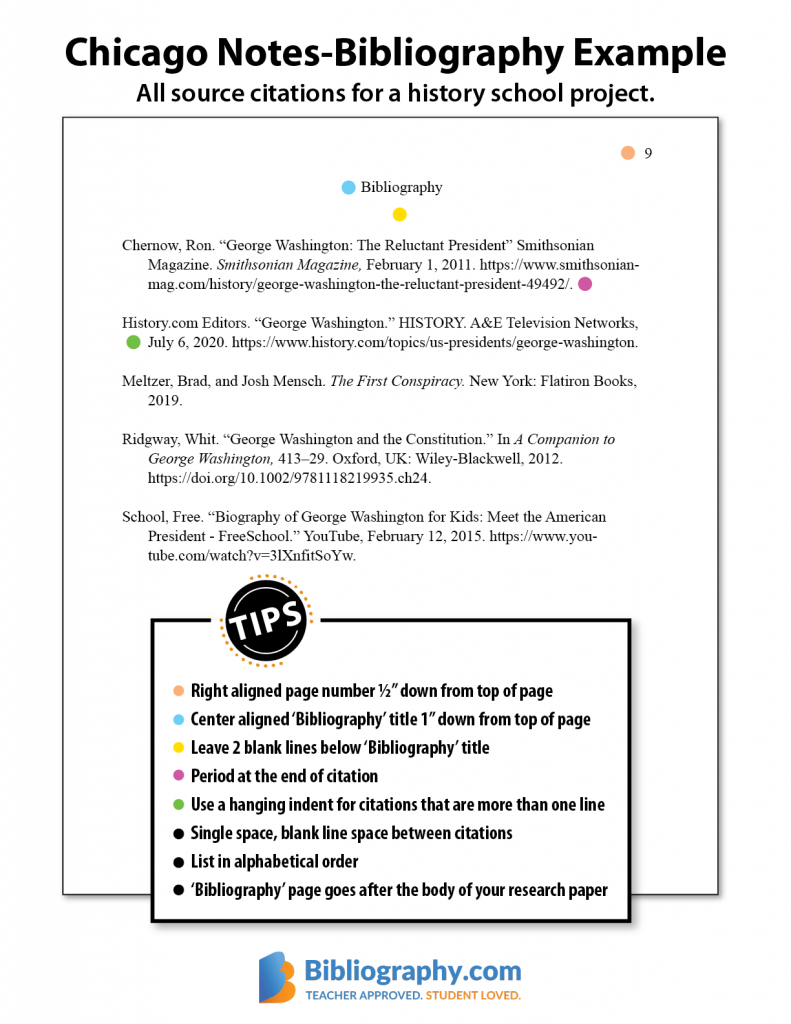
- Bibliography: At the end of the paper, a “Bibliography” section lists all the sources cited in the notes, as well as any other sources consulted. The bibliography is typically arranged alphabetically by the author’s last name and provides a comprehensive overview of the research undertaken.
The advantage of the Notes-Bibliography system is that it allows for detailed commentary or extended explanations within the notes themselves, without disrupting the main text’s readability. This is particularly useful when discussing nuanced arguments or providing background information on a source.
The Author-Date System
The Author-Date system is more commonly found in the social sciences and natural sciences. It offers a more concise in-text citation method and is designed for works where the emphasis is on the author and date of publication as indicators of the source’s authority.
- In-Text Citations: Instead of a footnote or endnote number, the in-text citation consists of the author’s last name and the year of publication enclosed in parentheses, followed by the page number if a direct quotation is used. For example: (Smith 2023, 45). If the author’s name is mentioned in the sentence, only the year and page number are needed in parentheses: Smith (2023) argues that… (45).
- Reference List: A “Reference List” at the end of the paper includes only the sources that were actually cited in the text. This list is also arranged alphabetically by author’s last name. Unlike the bibliography in the Notes-Bibliography system, the Reference List does not typically include works consulted but not cited.
The Author-Date system is appreciated for its efficiency. It allows readers to quickly identify the source and publication date of information without needing to constantly refer to footnotes or endnotes, which can be particularly helpful in scientific literature where rapid assimilation of information is paramount.
Crafting Citations: The Notes-Bibliography System in Detail
When using the Notes-Bibliography system, the accuracy and consistency of your citations are paramount. The format of your notes and bibliography entries will vary depending on the type of source being cited (e.g., book, journal article, website, newspaper article). However, there are overarching principles to follow.
Book Citations
First Note Citation (Book):
-
Author’s First Name Last Name, Title of Book (Place of Publication: Publisher, Year), Page Number.
- Example: Sarah Johnson, The Art of the Modern City (New York: Penguin Books, 2022), 78.
Subsequent Note Citation (Book):
Author’s Last Name, Shortened Title, Page Number.
* Example: Johnson, *Art of the Modern City*, 102.
Bibliography Entry (Book):
Author’s Last Name, First Name. Title of Book. Place of Publication: Publisher, Year.
* Example: Johnson, Sarah. *The Art of the Modern City*. New York: Penguin Books, 2022.
Journal Article Citations
First Note Citation (Journal Article):
-
Author’s First Name Last Name, “Title of Article,” Title of Journal Volume, no. Issue (Year): Page Number.
- Example: David Lee, “Urban Planning and Social Equity,” Journal of Urban Studies 15, no. 2 (2021): 115.
Subsequent Note Citation (Journal Article):
Author’s Last Name, “Shortened Title of Article,” Page Number.
* Example: Lee, "Urban Planning," 120.
Bibliography Entry (Journal Article):
Author’s Last Name, First Name. “Title of Article.” Title of Journal Volume, no. Issue (Year): Page Number.
* Example: Lee, David. "Urban Planning and Social Equity." *Journal of Urban Studies* 15, no. 2 (2021): 115-130.
Website/Online Article Citations
First Note Citation (Website):
-
Author’s First Name Last Name (if available), “Title of Article or Page,” Name of Website, Publication Date (if available), accessed Month Day, Year, URL.
- Example: Emily Carter, “Exploring Chicago’s Architectural Gems,” City Explorer Magazine, April 15, 2023, accessed October 26, 2023, https://www.cityexplorermag.com/chicago-architecture.
Subsequent Note Citation (Website):
Author’s Last Name, “Shortened Title of Article.”
* Example: Carter, "Architectural Gems."
Bibliography Entry (Website):
Author’s Last Name, First Name (if available). “Title of Article or Page.” Name of Website. Publication Date (if available). Accessed Month Day, Year. URL.
* Example: Carter, Emily. "Exploring Chicago's Architectural Gems." *City Explorer Magazine*. April 15, 2023. Accessed October 26, 2023. https://www.cityexplorermag.com/chicago-architecture.
It’s important to note that for online sources without a clear author or publication date, you should use “n.p.” for “no publisher” or “n.d.” for “no date” respectively, if this information is genuinely unavailable. Always try to find the most complete information.

Crafting Citations: The Author-Date System in Detail
The Author-Date system streamlines the citation process by integrating source information directly into the text. This system is particularly useful for academic papers where the primary goal is to present research and evidence clearly and efficiently.
Book Citations
In-Text Citation (Book):
(Author’s Last Name Year, Page Number)
* Example: (Johnson 2022, 78)
If the author is mentioned in the sentence:
* Example: Johnson (2022) discusses the evolution of urban design (78).
Reference List Entry (Book):
Author’s Last Name, First Name. Year. Title of Book. Place of Publication: Publisher.
* Example: Johnson, Sarah. 2022. *The Art of the Modern City*. New York: Penguin Books.
Journal Article Citations
In-Text Citation (Journal Article):
(Author’s Last Name Year, Page Number)
* Example: (Lee 2021, 115)
If the author is mentioned in the sentence:
* Example: Lee (2021) argues that equitable urban planning is essential (115).
Reference List Entry (Journal Article):
Author’s Last Name, First Name. Year. “Title of Article.” Title of Journal Volume (Issue): Page Range.
* Example: Lee, David. 2021. "Urban Planning and Social Equity." *Journal of Urban Studies* 15 (2): 115-130.
Website/Online Article Citations
In-Text Citation (Website):
(Author’s Last Name Year) or (Organization Name Year) if no author is listed.
* Example: (Carter 2023) or (City Explorer Magazine 2023)
If a specific page is referenced:
* Example: (Carter 2023, np) if no page number is available.
Reference List Entry (Website):
Author’s Last Name, First Name (or Organization Name). Year. “Title of Article or Page.” Name of Website. Accessed Month Day, Year. URL.
* Example: Carter, Emily. 2023. "Exploring Chicago's Architectural Gems." *City Explorer Magazine*. Accessed October 26, 2023. https://www.cityexplorermag.com/chicago-architecture.
For online sources where no date is available, use “(n.d.)” for “no date” in both the in-text citation and the reference list entry. For example: (Carter n.d.) and Carter, Emily. n.d. “Exploring Chicago’s Architectural Gems.” City Explorer Magazine.
Common Challenges and Best Practices in Chicago Citation
Navigating citation styles can present several common challenges, but with careful attention to detail and consistent application of the rules, these can be overcome. The Chicago Manual of Style aims for clarity and completeness, so when in doubt, refer back to the manual or reliable online resources that adhere to its guidelines.
Consistency is Key
The most critical aspect of any citation system is consistency. Whatever format you choose for a specific source type, ensure you apply it uniformly throughout your paper. For instance, if you decide to abbreviate journal titles in your bibliography, do so for all journal titles. Similarly, if you use shortened titles in your notes, maintain that format for all subsequent citations of the same source. Inconsistencies can distract readers and undermine the credibility of your work.
Handling Multiple Authors
The way you cite multiple authors varies slightly between the two systems.
-
Notes-Bibliography System:
- First Note: List all authors up to three. If there are four or more, list the first author followed by “et al.” (and others).
- Bibliography: For two or three authors, list all. For four or more, list the first author followed by “et al.”
-
Author-Date System:
- In-Text: For two authors, use “Author1 and Author2.” For three or more, use “Author1 et al.”
- Reference List: For two or three authors, list all. For four or more, list the first author followed by “et al.”
Citing Edited Volumes and Anthologies
Works with editors rather than authors require specific formatting.
-
Notes-Bibliography System (First Note):
- Editor’s First Name Last Name, ed., Title of Book (Place of Publication: Publisher, Year), Page Number.
- Example: John Smith, ed., Essays on Urban History (Chicago: University of Chicago Press, 2020), 55.
- Editor’s First Name Last Name, ed., Title of Book (Place of Publication: Publisher, Year), Page Number.
-
Author-Date System (In-Text):
- Example: (Smith 2020, 55)
-
Bibliography/Reference List Entry:
- Example: Smith, John, ed. 2020. Essays on Urban History. Chicago: University of Chicago Press.
When to Use Which System?
The choice between the Notes-Bibliography and Author-Date systems often depends on the requirements of your instructor, publisher, or the norms of your academic discipline.
- The Notes-Bibliography system is generally preferred in the humanities (history, literature, art history) where sources are often engaged with in a more discursive manner.
- The Author-Date system is typically used in the social and natural sciences where quick identification of source authority through author and date is important.
By understanding these core principles and practicing their application, you can confidently employ the Chicago Manual of Style to present your research with academic rigor and clarity. Whether you are citing a foundational text like The Great Gatsby or a contemporary article on urban development, the goal remains the same: to give credit where it is due and to enable your readers to explore your sources further.
LifeOutOfTheBox is a participant in the Amazon Services LLC Associates Program, an affiliate advertising program designed to provide a means for sites to earn advertising fees by advertising and linking to Amazon.com. Amazon, the Amazon logo, AmazonSupply, and the AmazonSupply logo are trademarks of Amazon.com, Inc. or its affiliates. As an Amazon Associate we earn affiliate commissions from qualifying purchases.