
Understanding the Fundamentals of Chicago Style Citation
Chicago Style, a widely adopted citation system, is primarily recognized for its two distinct approaches: the Notes-Bibliography (NB) system and the Author-Date (AD) system. While both systems aim to provide clear and consistent attribution for sources, they differ in their presentation and application. The NB system, often favored in the humanities, employs footnotes or endnotes for in-text citations and a comprehensive bibliography at the end of the work. Conversely, the AD system, more common in the social sciences and sciences, uses parenthetical author-date citations within the text and a corresponding reference list. This article will primarily focus on the Notes-Bibliography system as it is the most commonly encountered for book referencing in this style, particularly within academic and research contexts related to travel and cultural exploration.

The core principle behind any citation style, including Chicago, is to acknowledge the intellectual contributions of others and to allow readers to easily locate the original sources. Accurate referencing is paramount for academic integrity, preventing plagiarism, and building credibility for your own research and insights. When delving into the rich tapestry of travel destinations, historical landmarks, or cultural experiences, the ability to properly cite the books that have informed your understanding is crucial. Whether you’re writing a travelogue, a historical analysis of a city, or a guide to local cuisines, adhering to Chicago Style ensures your work is both professional and trustworthy.
The Purpose of Citations in Travel Writing
In the realm of travel writing, referencing books serves several vital purposes. Firstly, it lends authority and depth to your narratives. When you cite a historical account of Rome or a scholarly work on Machu Picchu, you are not merely stating facts; you are grounding your observations in established research and expert opinion. This enhances the reader’s confidence in your interpretations and recommendations.
Secondly, proper citation allows your readers to explore further. If a reader is captivated by your description of a particular Angkor Wat temple described in a book, your citation provides them with the exact source to delve deeper into its history and architectural intricacies. This is especially important for niche travel, where detailed historical or cultural context can significantly enrich the travel experience.
Finally, citing sources in travel writing demonstrates respect for the original authors and researchers whose work has informed your journey, both literal and intellectual. It acknowledges their efforts in uncovering and preserving the information that you are now sharing with your audience.
Key Components of a Chicago Style Book Citation
Regardless of whether you are using the Notes-Bibliography or Author-Date system, a complete Chicago Style citation for a book typically includes several key pieces of information. These elements work together to uniquely identify the source and provide readers with all the necessary details to locate it.
- Author(s): The full name of the author or authors, presented in a specific order.
- Title of the Book: The complete title and subtitle, italicized.
- Publication Information:
- Place of Publication: The city where the book was published.
- Publisher: The name of the publishing house.
- Year of Publication: The year the book was released.
- Page Number(s): Specific page numbers for direct quotations or paraphrased information.
For older books or specialized academic texts, additional information such as the edition number or the original publication date might be relevant, but for most contemporary travel-related books, the core components suffice.
Crafting a Chicago Style Footnote or Endnote
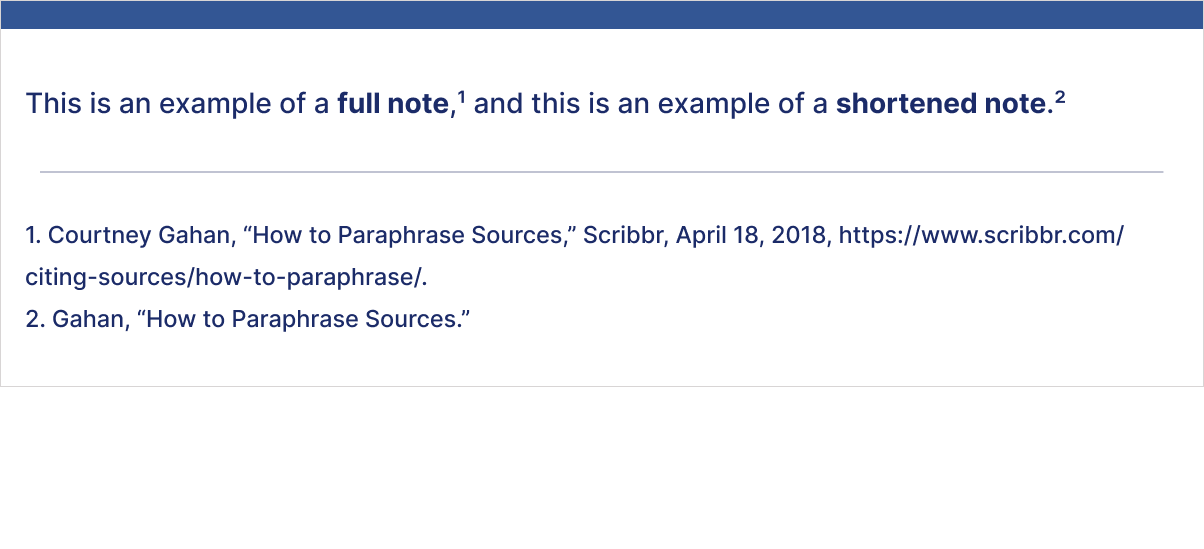
The Notes-Bibliography system is characterized by its use of footnotes or endnotes for in-text citations. These notes appear at the bottom of the page (footnotes) or at the end of the document (endnotes) and correspond to a superscript number placed in the text immediately after the material being cited. The first citation of a source in a note is typically more detailed, while subsequent citations of the same source are often shortened.
The First Note Citation for a Book
When you encounter a book for the first time in your notes, you will provide a comprehensive citation. This format allows readers to fully identify the source without needing to immediately consult the bibliography.
General Format for a First Note Citation (Book):
First Name Last Name, Title of Book (Place of Publication: Publisher, Year of Publication), page number(s).
Example:
Imagine you are writing about the historical significance of Petra and you are quoting a passage from a book. Your footnote would look like this:
- Diana Darke, The Rise and Fall of the Nabataeans (New York: St. Martin’s Press, 2015), 45.
- Explanation:
- “Diana Darke” is the author’s first name followed by their last name.
- “The Rise and Fall of the Nabataeans” is the italicized title of the book.
- “New York” is the place of publication.
- “St. Martin’s Press” is the publisher.
- “2015” is the year of publication.
- “45” is the specific page number from which the information was drawn.
Subsequent Note Citations for a Book
After the first full citation of a source, subsequent references to the same work can be shortened. This streamlines the notes section and avoids repetition without sacrificing clarity.
General Format for Subsequent Note Citation (Book):
Last Name, Shortened Title, page number(s).
Example:
If you were to cite Diana Darke’s book again later in your text, the footnote would be:
- Darke, Rise and Fall of the Nabataeans, 72.
- Explanation:
- “Darke” is the author’s last name.
- “Rise and Fall of the Nabataeans” is a shortened version of the book’s title, usually comprising the main title and omitting the subtitle if it’s lengthy.
- “72” is the new page number.
Handling Multiple Authors
When a book has more than one author, the citation format adjusts slightly.
Two Authors:
First Name Last Name and First Name Last Name, Title of Book (Place of Publication: Publisher, Year of Publication), page number(s).
Example:
- Robert D. Putnam and Lewis M. Feldstein, Better Together: Restoring the American Community (New York: Simon & Schuster, 2003), 112.
Three or More Authors:
For books with three or more authors, Chicago Style typically lists the first author’s full name followed by “et al.” (an abbreviation meaning “and others”) in both the notes and the bibliography.
Example (Note):
- Juan González et al., Cities of Gold and Silver: Urbanism and Architecture in the Ancient Andes (Cambridge: Cambridge University Press, 2018), 88.
Special Cases: Edited Volumes, Translations, and Multiple Editions
Travel writing often draws from a diverse range of sources, including edited collections and translated works. Understanding how to cite these is essential.
Edited Volumes
When citing a chapter or essay within an edited volume, you typically cite the author of the specific piece and then the details of the entire edited collection.
First Note Citation (Chapter in an Edited Volume):
First Name Last Name of Chapter Author, “Title of Chapter,” in Title of Edited Book, ed. First Name Last Name of Editor(s) (Place of Publication: Publisher, Year of Publication), page number(s) of chapter.
Example:
- Simon Jenkins, “The British Isles: A Personal Journey,” in Wanderlust: A Collection of Travel Essays, ed. Anya Sharma (London: Penguin Books, 2019), 105.
Subsequent Note Citation (Chapter in an Edited Volume):
Last Name of Chapter Author, “Shortened Chapter Title,” page number(s).
Example:
- Jenkins, “The British Isles,” 110.
Translated Works
When citing a book that has been translated, include the original author and the translator.
First Note Citation (Translated Book):
First Name Last Name of Original Author, Title of Book, trans. First Name Last Name of Translator (Place of Publication: Publisher, Year of Publication).
Example:
- Gabriel García Márquez, One Hundred Years of Solitude, trans. Gregory Rabassa (New York: HarperCollins, 1970), 215.

- Note: If the original publication year is important, you can include it in parentheses after the translator’s name:
- Gabriel García Márquez, One Hundred Years of Solitude, trans. Gregory Rabassa (New York: HarperCollins, 1970) (originally published 1967), 215.
Books with Multiple Editions
If you are referencing a book that has been published in multiple editions, it is good practice to indicate the specific edition you consulted, especially if it differs significantly from the first.
First Note Citation (Book with Edition):
First Name Last Name, Title of Book, Edition Number (Place of Publication: Publisher, Year of Publication), page number(s).
Example:
- J.R.R. Tolkien, The Lord of the Rings, 2nd ed. (Boston: Houghton Mifflin Harcourt, 1965), 58.
Compiling Your Bibliography
The bibliography is an alphabetical list of all the sources cited in your work, presented at the end of the document. Unlike the notes, the bibliography format differs slightly in terms of author names and the order of elements.
General Format for a Bibliography Entry (Book)
The bibliography entry for a book reverses the order of the author’s name and uses periods to separate the main elements, unlike the commas and parentheses used in notes.
General Format:
Last Name, First Name. Title of Book. Place of Publication: Publisher, Year of Publication.
Example:
Corresponding to our first note example about Diana Darke:
Darke, Diana. The Rise and Fall of the Nabataeans. New York: St. Martin’s Press, 2015.
- Explanation:
- “Darke, Diana” – The author’s last name is followed by a comma, then their first name.
- “The Rise and Fall of the Nabataeans.” – The italicized title is followed by a period.
- “New York: Publisher,” – The place of publication is followed by a colon, then the publisher, and a comma.
- “2015.” – The year of publication is followed by a period.
Bibliography Entries for Multiple Authors
Two Authors:
Last Name, First Name, and First Name Last Name. Title of Book. Place of Publication: Publisher, Year of Publication.
Example:
Putnam, Robert D., and Lewis M. Feldstein. Better Together: Restoring the American Community. New York: Simon & Schuster, 2003.
Three or More Authors:
For three or more authors, the bibliography lists only the first author’s name in reverse order, followed by “et al.”
Example:
González, Juan, et al. Cities of Gold and Silver: Urbanism and Architecture in the Ancient Andes. Cambridge: Cambridge University Press, 2018.
Bibliography Entries for Special Cases
Edited Volumes
For edited volumes, the editor’s name is presented in the same format as an author’s name, followed by “(ed.)” or “(eds.)” for multiple editors.
Example:
Sharma, Anya, ed. Wanderlust: A Collection of Travel Essays. London: Penguin Books, 2019.
If you are referencing a specific chapter, the entry in the bibliography would typically focus on the chapter author, followed by the details of the edited collection. However, some style guides might recommend listing the edited collection itself as a separate entry if it’s a substantial source. For clarity and reader assistance, citing the chapter is generally preferred.
Jenkins, Simon. “The British Isles: A Personal Journey.” In Wanderlust: A Collection of Travel Essays, edited by Anya Sharma, 101–20. London: Penguin Books, 2019.
Translated Works
Example:
Márquez, Gabriel García. One Hundred Years of Solitude. Translated by Gregory Rabassa. New York: HarperCollins, 1970.
Books with Multiple Editions
Example:
Tolkien, J.R.R. The Lord of the Rings. 2nd ed. Boston: Houghton Mifflin Harcourt, 1965.
The Author-Date System: A Brief Overview for Travel Contexts
While the Notes-Bibliography system is prevalent, the Author-Date system also exists within Chicago Style and is frequently used in the social sciences and natural sciences. For travel writing that leans more towards analytical or research-oriented content, understanding this system can be beneficial.
In-Text Citations in Author-Date
In the Author-Date system, in-text citations are brief parenthetical references.
General Format:
(Author Last Name Year, page number)
Example:
The ancient architecture of Angkor Wat showcases intricate Khmer artistry (Smith 2018, 75).
The Reference List
The reference list is an alphabetical list of all sources cited, similar to the bibliography, but with the year of publication immediately following the author’s name.
General Format:
Last Name, First Name. Year of Publication. Title of Book. Place of Publication: Publisher.
Example:
Smith, John. 2018. The Temples of Cambodia. Bangkok: River Books.
This system provides a different flow for in-text engagement, allowing for concise referencing directly within the narrative.
Practical Application for Travel Enthusiasts and Writers
Mastering Chicago Style referencing, whether through notes or author-date, significantly elevates the quality and credibility of any travel-related writing. When detailing a historical journey through Egypt, recounting culinary discoveries in Italy, or exploring the natural wonders of Banff National Park, the ability to meticulously cite your sources is a hallmark of professionalism. It transforms a personal account into a valuable resource for others eager to embark on similar adventures, armed with well-researched information.
Consider the meticulous detail required when documenting the historical context of Kyoto or the specific architectural styles of Barcelona. Without proper citation, these descriptions remain anecdotal. With accurate Chicago Style referencing, they become part of a larger, verifiable conversation, contributing to the collective knowledge base about these incredible destinations.
Whether you are writing a blog post, a magazine article, a research paper, or even a personal travel journal intended for wider readership, the principles of Chicago Style remain constant. They are a testament to thorough research and a respect for the sources that have guided your exploration and understanding of the world. By diligently applying these citation methods, you not only enhance your own writing but also contribute to a richer, more informed global travel discourse.
LifeOutOfTheBox is a participant in the Amazon Services LLC Associates Program, an affiliate advertising program designed to provide a means for sites to earn advertising fees by advertising and linking to Amazon.com. Amazon, the Amazon logo, AmazonSupply, and the AmazonSupply logo are trademarks of Amazon.com, Inc. or its affiliates. As an Amazon Associate we earn affiliate commissions from qualifying purchases.