
The Chicago Manual of Style (CMOS) is a widely respected guide for academic and professional writing, particularly in the humanities and social sciences. One of its distinctive features is its robust system of footnotes and endnotes, which serve to cite sources, provide supplementary information, and engage with readers beyond the main text. Mastering Chicago style footnotes is crucial for academic integrity and for enhancing the depth and credibility of your written work, whether you’re crafting a research paper, a historical account, or even a detailed travelogue. This guide will break down the essentials of using Chicago style footnotes effectively, ensuring your citations are accurate, consistent, and informative.
Understanding the Purpose and Placement of Footnotes
Footnotes in Chicago style serve multiple vital functions. Primarily, they attribute the ideas, words, and data of others to their original sources, preventing plagiarism and giving credit where it is due. This is fundamental to scholarly discourse and ethical writing. Beyond simple attribution, footnotes can also offer opportunities to expand on points made in the main text without disrupting the narrative flow. This can include providing brief historical context, defining a technical term, offering a tangential but interesting anecdote, or acknowledging a limitation of a particular argument. For a travel writer, this might mean a brief historical aside about a landmark or a quick definition of a local culinary term.
Where to Place Your Footnote Markers
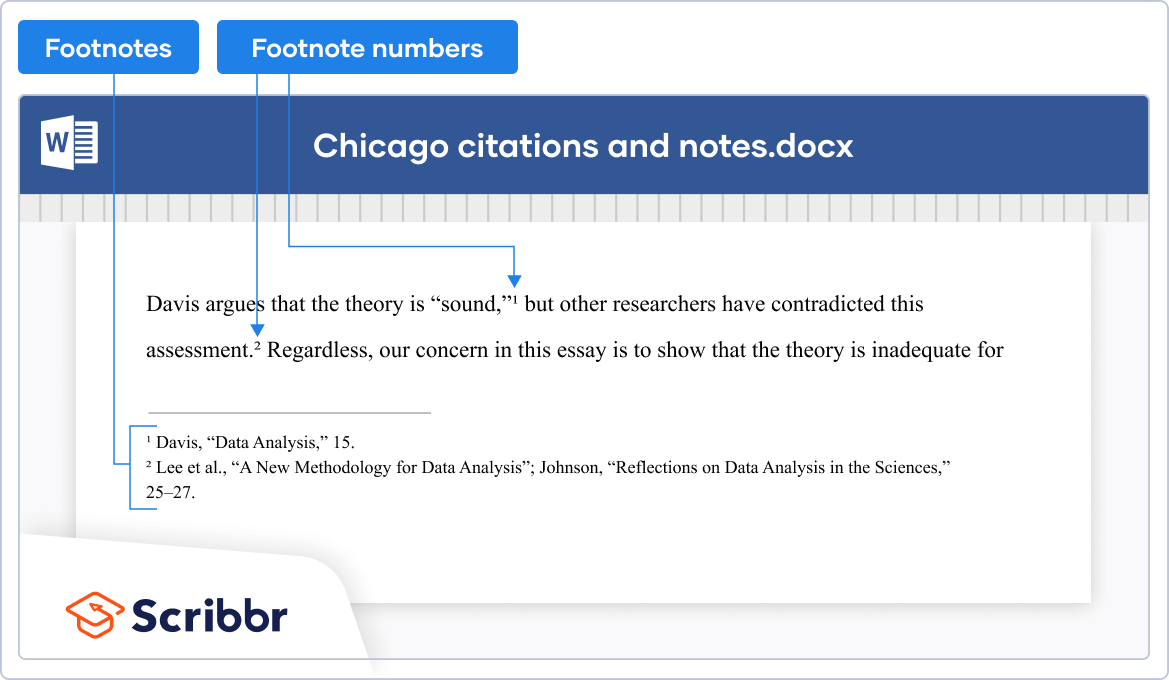
The placement of footnote markers is as important as the content of the footnote itself. Generally, a footnote marker should appear immediately after the word, phrase, clause, or sentence to which it directly relates.
- Punctuation: The marker is typically placed after any punctuation mark (commas, periods, semicolons, question marks, exclamation points), but before any closing parenthesis or bracket. For example: “The ancient city walls were remarkably well-preserved.”¹
- Quotations: When citing a direct quotation, the footnote marker should follow the closing quotation mark and any punctuation associated with it. For instance: “Her description of the bustling marketplace was vivid.”²
- Parenthetical Phrases: If a footnote refers to the entire parenthetical statement, the marker should be placed after the closing parenthesis. However, if it refers only to the text within the parenthesis, it should be placed inside.
- Lists: For bulleted or numbered lists, the marker is usually placed at the end of the list item, after the final word or punctuation.
It’s important to maintain consistency in your marker placement throughout your document. The numbers themselves are sequential, starting with 1 at the beginning of your document and continuing to the end.
Constructing Your Footnotes: The Basics
The structure of a Chicago style footnote depends on the type of source being cited. While the complete details can be extensive, we will cover the most common types encountered in academic and descriptive writing. The general principle is to provide enough information for a reader to locate the source themselves.
First Reference vs. Subsequent References
A key distinction in Chicago style is the difference between the first time a source is cited and any subsequent citations.
- First Reference: This provides full bibliographic information.
- Subsequent References: These are shortened, often including only the author’s last name, a shortened title, and the page number. If you’ve cited a source multiple times consecutively, you can use the abbreviation ” ibid.” (from the Latin ibidem, meaning “in the same place”) followed by a page number if different. If it’s the same page, just “ibid.” suffices. However, use “ibid.” judiciously; it can become confusing if overused.
Common Source Types and Their Formats
Let’s explore the formatting for frequently cited sources:
Books
First Reference (Book):
Author’s Full Name, Title of Book (City of Publication: Publisher, Year of Publication), Page Number(s).
- Example: Maryanne Jones, The Art of Travel Writing (New York: Wanderlust Press, 2022), 45.
Subsequent Reference (Book):
Author’s Last Name, Shortened Title, Page Number(s).
- Example: Jones, Art of Travel Writing, 88.
If the book has two authors, list both names in the first reference. For three or more authors, list the first author followed by “et al.” (and others) in the first reference and all subsequent references.
Journal Articles
First Reference (Journal Article):
Author’s Full Name, “Title of Article,” Title of Journal Volume, no. Issue (Year of Publication): Page Number(s).
- Example: David Chen, “The Cultural Significance of Street Food in Southeast Asia,” Global Gastronomy Journal 15, no. 3 (2021): 112.
Subsequent Reference (Journal Article):
Author’s Last Name, “Shortened Title,” Page Number(s).
- Example: Chen, “Cultural Significance,” 118.
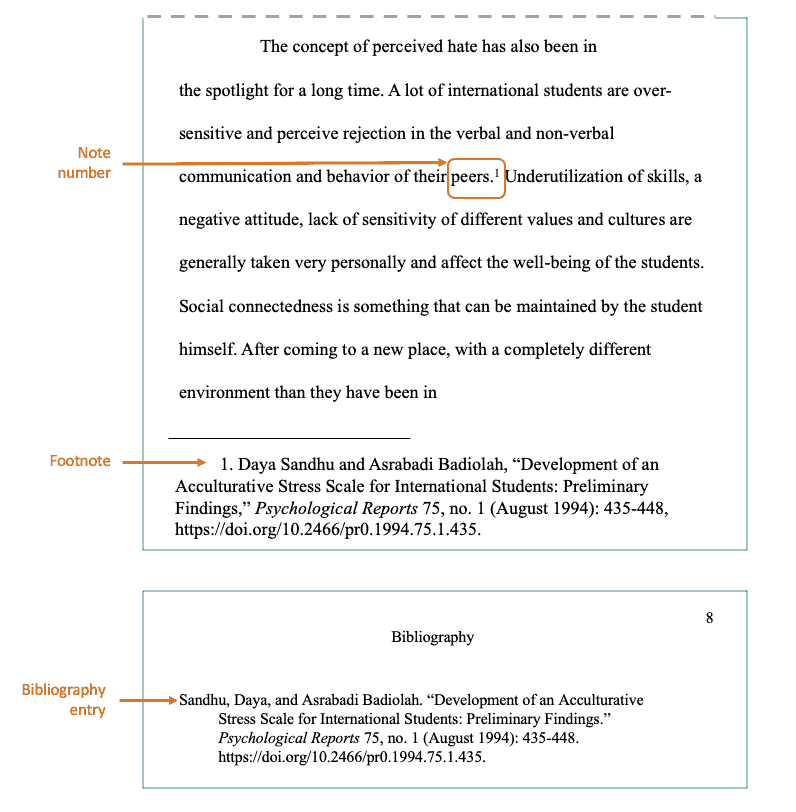
When citing online journal articles, include a DOI (Digital Object Identifier) if available, or a URL.
Websites and Online Resources
First Reference (Website):
Author’s Name (if available), “Title of Page or Article,” Name of Website, Publication Date (if available), accessed Access Date, URL.
- Example: Sarah Miller, “Exploring the Hidden Gems of Kyoto,” Traveler’s Compass, October 15, 2023, accessed November 10, 2023, https://www.travelerscompass.com/kyoto-hidden-gems.
Subsequent Reference (Website):
Author’s Last Name, “Shortened Title.”
- Example: Miller, “Hidden Gems.”
If an author isn’t listed, start with the title of the page. If a publication date isn’t available, use “n.d.” (no date). Always include the date you accessed the material, as web content can change.
Interviews
When citing an interview you conducted or one that is publicly available:
First Reference (Interview):
Name of Interviewee, type of interview (e.g., personal interview, email interview), Date.
- Example: Maria Rodriguez, personal interview, November 5, 2023.
If the interview is published or recorded, provide full details as you would for other published works.
Advanced Footnote Considerations
Beyond the basic formats, Chicago style offers guidance for more complex citation scenarios, ensuring comprehensive coverage.
Quoting and Paraphrasing
- Direct Quotations: Always include the specific page number where the quote appears. For example: “The architecture of Prague was a harmonious blend of Gothic and Baroque.”³
- Paraphrasing: While page numbers are not strictly required for paraphrased material, they are highly recommended. This aids readers in finding the original passage that inspired your rephrasing and is good practice for clarity.
Editorials, Letters, and Other Forms
Chicago style provides specific formats for a vast array of source types. If you are citing an editorial, a letter to the editor, or a chapter in an edited collection, consult the latest edition of The Chicago Manual of Style for the precise formatting. The principle remains the same: provide enough information for the reader to locate the original.
The Use of “et al.” and “a.”
- et al.: As mentioned, used for works with three or more authors in the first citation.
- a.: Stands for ante (Latin for “before”) and is used to refer to a work cited earlier in the same footnote. For example: Smith, Guide to the Alps, 25 a. (referring to the same source as previously cited in the same footnote, but a different page). This is less common than “ibid.” and should be used with care.
Integrating Notes for Enhanced Reading
Footnotes are not just a chore; they are a powerful tool for enhancing the reader’s experience. When used thoughtfully, they can:
- Provide Context: For a travel piece about ancient ruins in Rome, a footnote might briefly explain the architectural significance of a particular arch or the historical period it represents.
- Define Terms: If discussing a specific local dish or custom, a footnote can offer a concise explanation without interrupting the main narrative.
- Acknowledge Sources of Inspiration: You might use a footnote to credit a fellow traveler whose advice led you to a particular hidden gem.
- Offer a Different Perspective: Occasionally, a footnote can briefly present an alternative interpretation or a counterargument, demonstrating a nuanced understanding of the subject.
The Distinction Between Notes and Bibliography
It’s important to remember that footnotes are distinct from a bibliography. A bibliography, or works cited list, appears at the end of your document and lists all the sources you consulted, whether cited in the text or not. Footnotes, on the other hand, appear at the bottom of the page (or as endnotes at the end of the document) and directly correspond to the numbered markers in your text. The bibliographic entry for a source typically includes more detailed publication information than the initial footnote.
Conclusion: Precision and Purpose in Citations
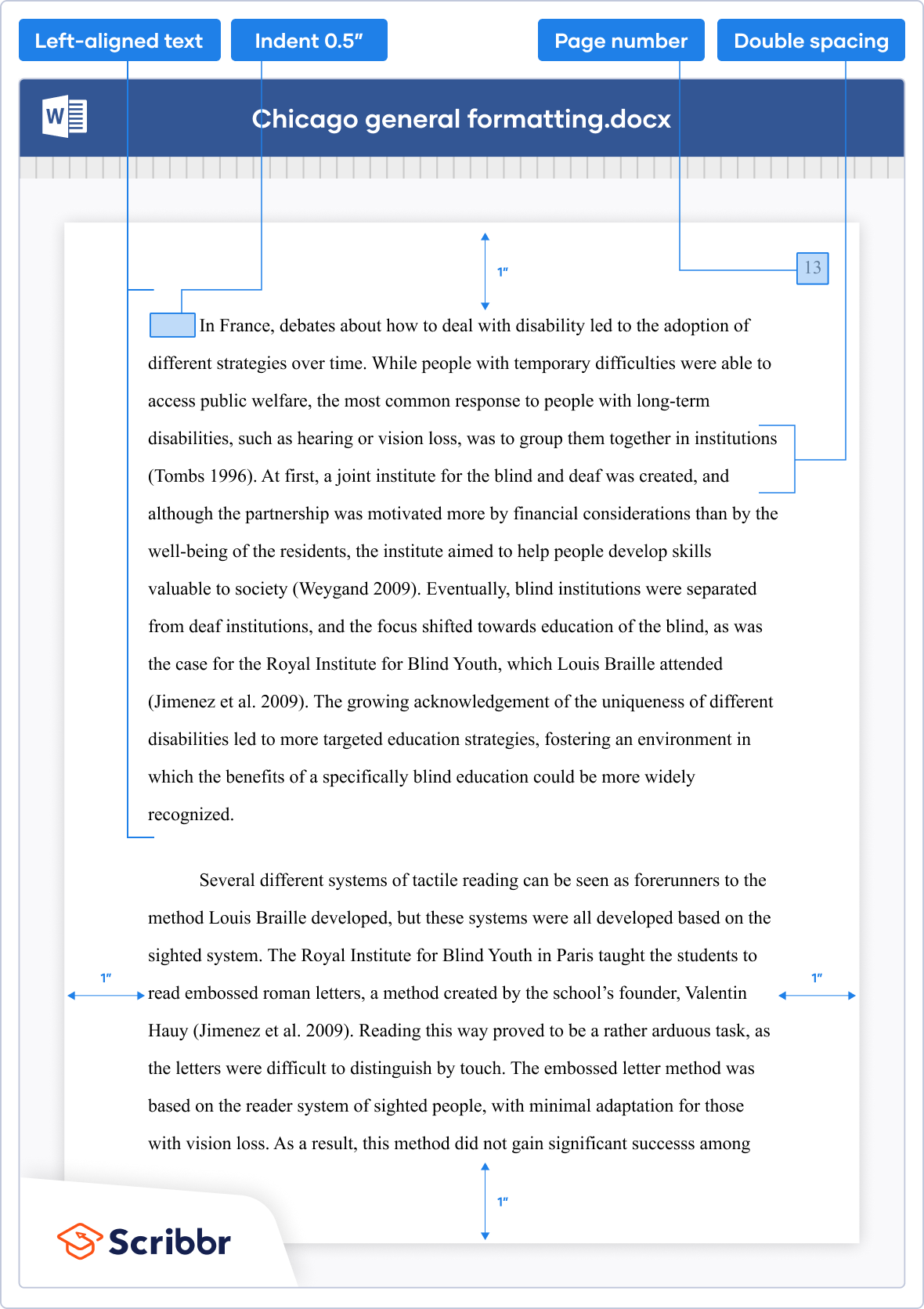
Adhering to Chicago style footnotes requires attention to detail and a clear understanding of the purpose behind each citation. By carefully constructing your footnotes, you not only uphold academic integrity but also enrich your writing, providing your readers with a more informed and comprehensive experience. Whether you’re documenting your explorations of ancient wonders in Machu Picchu or detailing the nuances of local cuisine in Marrakech, the accurate and effective use of Chicago style footnotes will elevate your work, lending it authority and depth. Practice these formats, consult the manual when in doubt, and transform your citations from a mere requirement into a valuable component of your storytelling.
LifeOutOfTheBox is a participant in the Amazon Services LLC Associates Program, an affiliate advertising program designed to provide a means for sites to earn advertising fees by advertising and linking to Amazon.com. Amazon, the Amazon logo, AmazonSupply, and the AmazonSupply logo are trademarks of Amazon.com, Inc. or its affiliates. As an Amazon Associate we earn affiliate commissions from qualifying purchases.