
While the term “Ivy League” conjures images of venerable institutions steeped in history and prestige, the landscape of higher education is far broader and more nuanced than a simple eight-member club. The University of Chicago, a titan of academia renowned for its rigorous intellectual environment and groundbreaking research, often finds itself in discussions about elite universities. Yet, a common question arises: Is the University of Chicago an Ivy League school? The straightforward answer is no. However, to understand why this distinction matters, and more importantly, to appreciate the University of Chicago’s own unparalleled standing, we must delve into the origins of the Ivy League and the criteria that define it, alongside the unique attributes that make the University of Chicago a globally recognized powerhouse in its own right.
The Genesis of the Ivy League
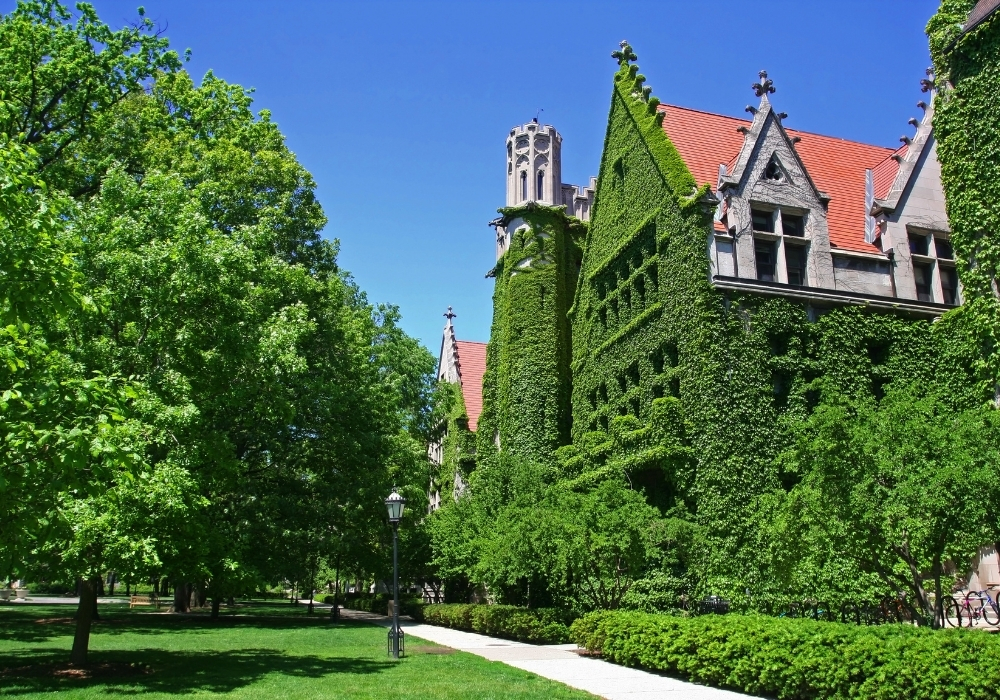
The concept of the “Ivy League” is intrinsically tied to athletic rivalries and a shared history among a select group of private research universities in the Northeastern United States. The term itself, reportedly originating from the widespread use of ivy on the historic campuses, gained formal recognition in 1954 when the NCAA Division I athletic conference was established. The eight member institutions are:
- Harvard University
- Yale University
- Princeton University
- University of Pennsylvania
- Columbia University
- Brown University
- Dartmouth College
- Cornell University
These institutions share several common characteristics that contributed to their collective identity. They are all private universities, boast significant endowments, have highly selective admissions processes, and are deeply committed to both undergraduate and graduate education, with a strong emphasis on research. Their geographical proximity in the Northeast also played a role in fostering these historical connections and rivalries.
Beyond Athletics: Shared Values and Academic Excellence
While athletics provided the framework for the formal conference, the underlying foundation of the Ivy League is a shared commitment to academic rigor, intellectual inquiry, and the cultivation of leaders. Graduates from these institutions have historically gone on to achieve significant success in various fields, from politics and business to science and the arts. This perception of inherent quality and influence has cemented the Ivy League’s status as a benchmark for elite education.
However, it is crucial to understand that “Ivy League” is a formal athletic and organizational designation, not an objective measure of academic merit alone. Many other universities across the United States and the world rival, and in some cases surpass, Ivy League institutions in specific academic disciplines, research output, and overall educational impact.
The University of Chicago: A Different Kind of Elite
The University of Chicago, located in the vibrant city of Chicago, Illinois, stands as a testament to academic excellence, albeit outside the geographical and historical confines of the Ivy League. Founded in 1890, the university has consistently ranked among the top universities globally, distinguished by its distinctive intellectual culture.
A Culture of Inquiry and Intellectual Intensity
What truly sets the University of Chicago apart is its unwavering dedication to the “life of the mind.” The university is famous for its “Chicago School” of thought in various disciplines, particularly economics, sociology, and political science, fostering a tradition of rigorous empirical research and theoretical innovation. Students and faculty are encouraged to engage in deep, critical thinking, often debating complex ideas with an intensity that is palpable throughout the campus.
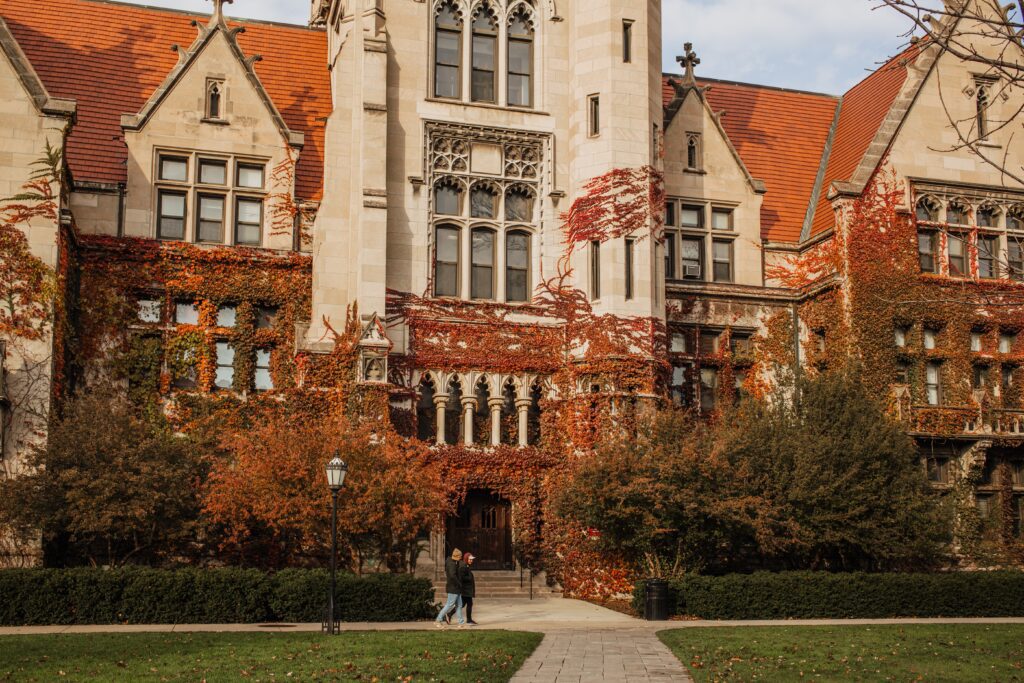
The Core Curriculum at the undergraduate level is a prime example of this commitment. It ensures that all students, regardless of their major, receive a broad grounding in the humanities, social sciences, and physical sciences, fostering intellectual versatility and a capacity for interdisciplinary thinking. This emphasis on foundational knowledge and analytical skills prepares graduates to tackle multifaceted challenges in any field they choose to pursue.
Research Prowess and Groundbreaking Discoveries
The University of Chicago is a research powerhouse, with faculty and students contributing significantly to the advancement of knowledge. From the development of the first nuclear chain reaction at the University of Chicago’s Metallurgical Laboratory during the Manhattan Project to ongoing discoveries in fields like genetics, astrophysics, and public policy, the university has a rich history of transformative research.
Its graduate programs are particularly strong, attracting top talent from around the world. The University of Chicago consistently ranks among the top universities for its doctoral programs, producing scholars and researchers who go on to shape academia and industry.
Comparing Apples and Oranges: Prestige vs. Membership
The question of whether the University of Chicago is an Ivy League school is often driven by a desire to categorize universities based on perceived prestige. While the Ivy League has a historical and cultural cachet, its membership is a matter of definition, not necessarily a universal benchmark of quality.
The University of Chicago competes directly with Ivy League institutions for top students and faculty. Its academic reputation is stellar, its research output is world-class, and its alumni network is influential. In many academic fields, the University of Chicago is considered equivalent to, or even superior to, many Ivy League schools. For instance, its economics department is legendary, its physics program is consistently ranked among the best, and its Booth School of Business is a global leader.
The “Little Ivies” and Other Elite Consortia
The academic landscape is dotted with other groupings of highly respected universities. The term “Little Ivies” is sometimes used to refer to a group of selective liberal arts colleges in the Northeast that share some of the historical and academic characteristics of the Ivy League, though they are not part of the athletic conference. Institutions like Amherst College and Williams College are often included in this category.
Similarly, other prestigious university systems and associations exist, such as the Association of American Universities, a prestigious organization of leading research universities devoted to maintaining a strong system of academic research and education in North America. The University of Chicago is, of course, a proud member of this association.

Conclusion: Defining Excellence Beyond Labels
In conclusion, the University of Chicago is not an Ivy League school. This is a factual distinction based on historical and organizational criteria. However, this lack of affiliation does not diminish its standing as one of the world’s premier institutions of higher learning. The university’s commitment to intellectual rigor, its groundbreaking research, and its unique academic culture have earned it a reputation that transcends any collegiate conference.
Prospective students and observers should look beyond the labels and consider the specific strengths and characteristics of each university. The University of Chicago offers an educational experience that is distinct, profound, and deeply rewarding, preparing its graduates to make significant contributions to society, much like their counterparts from the Ivy League. The true measure of a university’s quality lies in its intellectual vitality, the caliber of its faculty and students, and the impact of its research and alumni, qualities that the University of Chicago possesses in abundance.
LifeOutOfTheBox is a participant in the Amazon Services LLC Associates Program, an affiliate advertising program designed to provide a means for sites to earn advertising fees by advertising and linking to Amazon.com. Amazon, the Amazon logo, AmazonSupply, and the AmazonSupply logo are trademarks of Amazon.com, Inc. or its affiliates. As an Amazon Associate we earn affiliate commissions from qualifying purchases.