
The realm of academic and professional writing often presents a labyrinth of citation styles, each with its own set of rules and conventions. Among these, the Chicago Manual of Style (CMOS) stands out for its flexibility and widespread adoption, particularly within the humanities and social sciences. Understanding the Chicago format is crucial for anyone aiming to present their research or writing in a clear, consistent, and credible manner. This guide delves into the core components of the Chicago format, equipping you with the knowledge to navigate its intricacies.
Understanding the Two Chicago Systems
The Chicago Manual of Style offers two primary systems for citing sources: the Notes and Bibliography system and the Author-Date system. While both are under the umbrella of Chicago style, they cater to different disciplinary needs and preferences.
The Notes and Bibliography System
This system, often favored in fields like history, literature, and the arts, relies heavily on footnotes or endnotes to cite sources. It allows for more discursive notes, where an author can provide supplementary information or commentary without disrupting the main text’s flow.
Footnotes and Endnotes
- Footnotes: These appear at the bottom of the page where the citation is made. They are numbered sequentially throughout the document.
- Endnotes: These are collected at the end of the chapter or the entire document, also numbered sequentially.
Each note typically includes the author’s name, the title of the work, publication details, and the specific page number(s) being referenced. The first citation of a source in a note is usually comprehensive, while subsequent citations for the same source are shortened, often using the author’s last name and a shortened title.
The Bibliography
Accompanying the notes is a bibliography, an alphabetical list of all sources cited in the work. This provides readers with a complete overview of the research undertaken and allows them to easily locate the referenced materials. The bibliography entries generally follow a similar format to the first note for each source but omit page numbers unless the work is a collection of essays or a chapter.
The Author-Date System
The Author-Date system is more common in the sciences and social sciences. It uses parenthetical in-text citations that include the author’s last name and the year of publication, and sometimes the page number. This system aims for conciseness within the text itself.
In-Text Citations
When a citation is needed within the body of the text, the author’s last name and the publication year are enclosed in parentheses. For example, a citation might appear as (Smith 2023). If a specific passage is being referenced, the page number is included: (Smith 2023, 45).
The Reference List
Similar to the bibliography in the Notes and Bibliography system, the Author-Date system requires a reference list at the end of the document. This list contains full bibliographic information for all sources cited in the text, alphabetized by the author’s last name. Each entry provides enough detail for readers to identify and retrieve the source.
Key Elements of Chicago Style Formatting
Regardless of which system you choose, the Chicago Manual of Style dictates specific formatting guidelines for various elements of your paper. Adhering to these ensures a professional and polished presentation.
Title Page
A title page is generally required for research papers and theses. It should include:
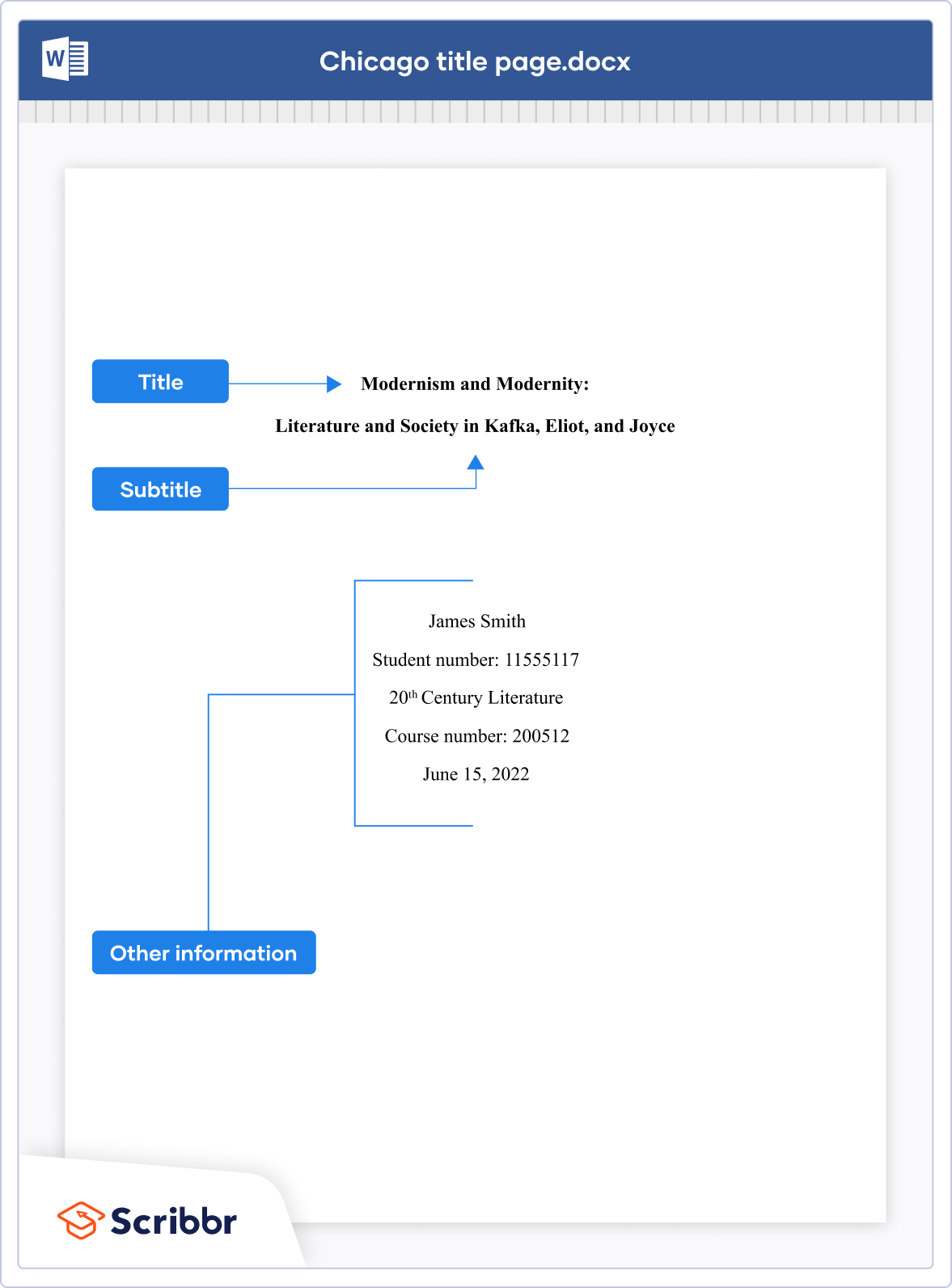
- The title of the paper, centered and in uppercase.
- The author’s name.
- The course name or number.
- The instructor’s name.
- The date.
Margins, Spacing, and Font
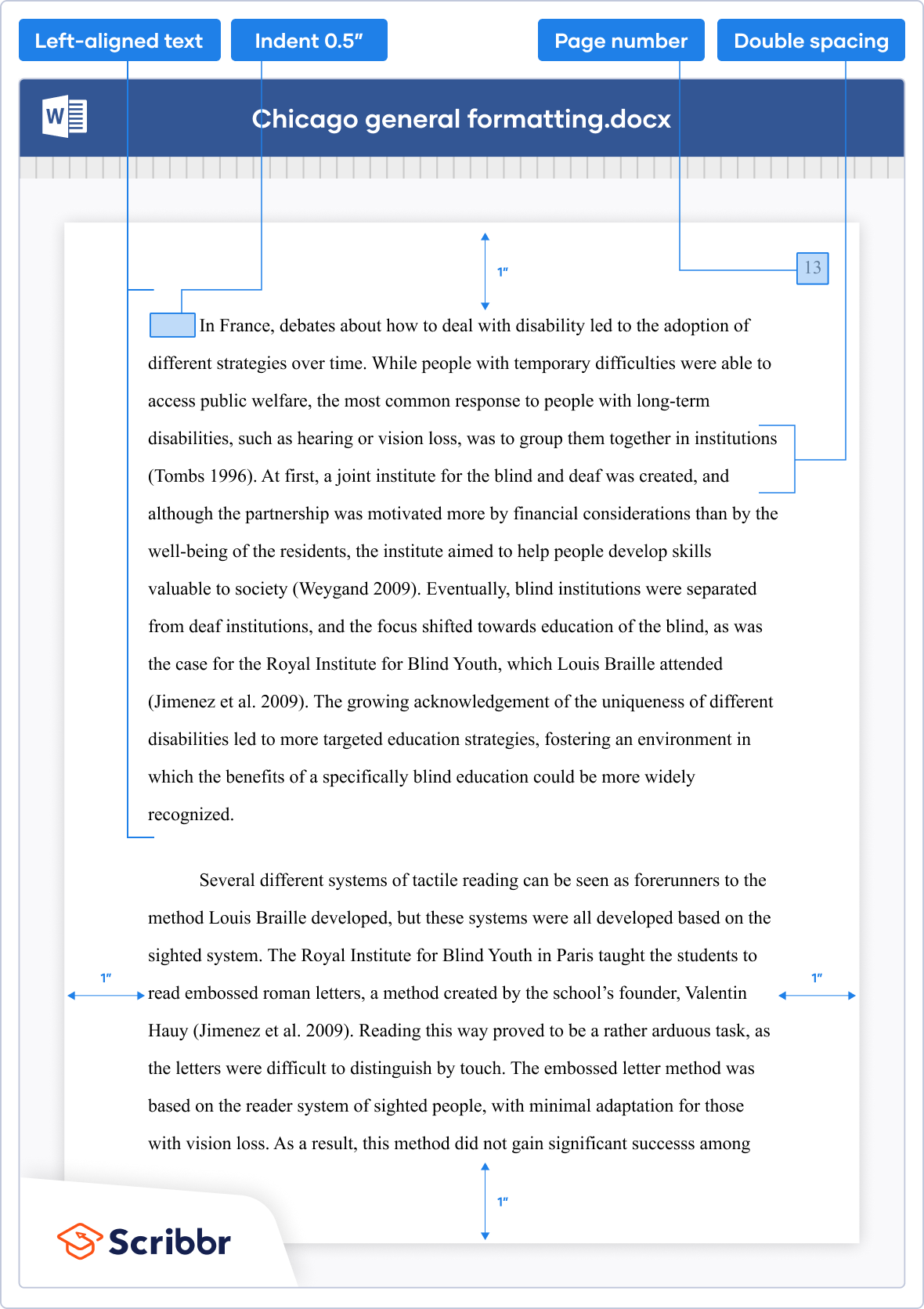
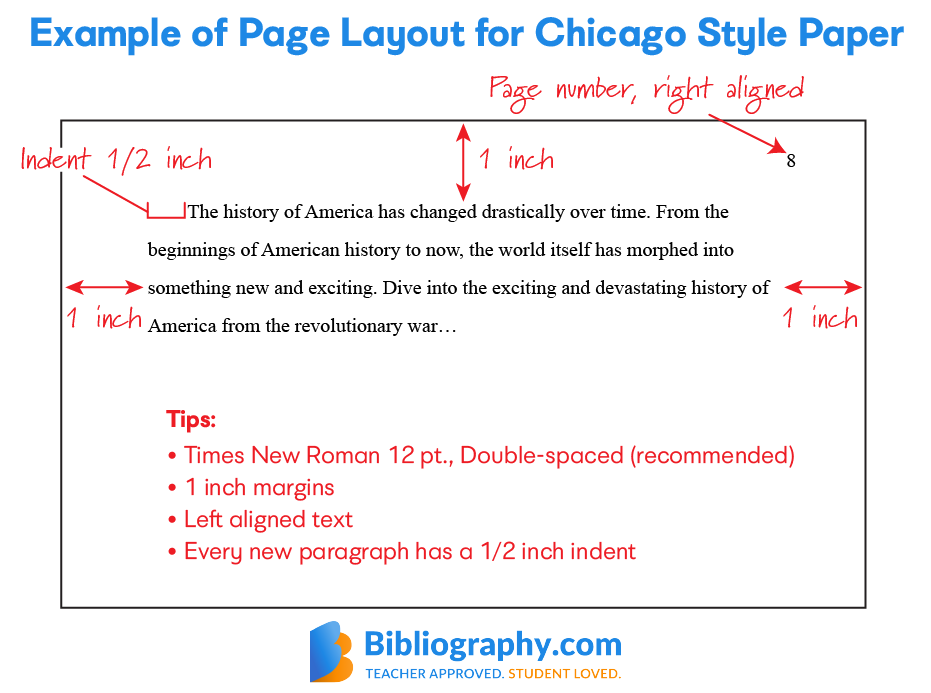
- Margins: Standard margins are typically 1 inch on all sides of the page.
- Spacing: The body of the text is usually double-spaced. Headings and subheadings may have different spacing conventions depending on the specific guidelines.
- Font: A clear, readable font such as Times New Roman, Arial, or Georgia, usually in 12-point size, is recommended.
Headings and Subheadings
Chicago style allows for clear organization through headings and subheadings. While there isn’t a rigid hierarchy mandated, consistent formatting is key. Common practice involves using different levels of headings, often centered or flush left, with varying degrees of capitalization and bolding to distinguish them.
- First-level headings: These are typically centered, in all caps or title case, and may be bolded.
- Second-level headings: These might be flush left, title case, and bolded.
- Third-level headings: These could be indented, title case, italicized, and followed by a colon.
The specific arrangement of headings and subheadings will often depend on the complexity of the content and the preferences of the instructor or publisher.
Tables and Figures
When incorporating visual elements like tables and figures, Chicago style provides specific guidance.
- Tables: Tables should be clearly labeled with a number (e.g., Table 1) and a descriptive title. They should be self-explanatory, with column and row headings providing context.
- Figures: Figures, which include charts, graphs, and images, are also numbered sequentially (e.g., Figure 1). A caption should be provided beneath the figure, offering a brief explanation and any necessary source information if the figure is not original.
Block Quotations
Direct quotations of a certain length (typically more than 40 words or four lines of prose) should be formatted as block quotations. This involves indenting the entire quoted passage from the left margin and omitting quotation marks. The citation follows the quotation.
Crafting Effective Citations
The accuracy and consistency of your citations are paramount in Chicago style. Whether using notes or author-date, the goal is to give credit to original authors and allow readers to find the sources.
Citing Books
- Notes and Bibliography:
- First Note: Author’s First Name Last Name, Title of Book (Place of Publication: Publisher, Year), page number.
- Bibliography Entry: Last Name, First Name. Title of Book. Place of Publication: Publisher, Year.
- Author-Date:
- In-text: (Last Name Year, page number).
- Reference List: Last Name, First Name. Year. Title of Book. Place of Publication: Publisher.
Citing Journal Articles
- Notes and Bibliography:
- First Note: Author’s First Name Last Name, “Title of Article,” Title of Journal Volume, no. Issue (Year): page number(s).
- Bibliography Entry: Last Name, First Name. “Title of Article.” Title of Journal Volume, no. Issue (Year): page number(s).
- Author-Date:
- In-text: (Last Name Year, page number).
- Reference List: Last Name, First Name. Year. “Title of Article.” Title of Journal Volume, no. Issue: page number(s).
Citing Websites and Web Pages
Citing online sources can be more variable due to the diverse nature of web content. Chicago style generally requires the author (if available), title of the specific page, title of the overall website, publication or last updated date, and the URL. For periodicals published online, the format often resembles that of print journals.
- Notes and Bibliography:
- First Note: Author’s First Name Last Name, “Title of Web Page,” Title of Website, Publication Date or Last Modified Date, accessed Month Day, Year, URL.
- Bibliography Entry: Last Name, First Name. “Title of Web Page.” Title of Website. Publication Date or Last Modified Date. Accessed Month Day, Year. URL.
- Author-Date:
- In-text: (Last Name Year).
- Reference List: Last Name, First Name. Year. “Title of Web Page.” Title of Website. Publication Date or Last Modified Date. Accessed Month Day, Year. URL.
The Chicago Manual of Style is a comprehensive guide, and mastering its nuances requires practice and attention to detail. By understanding the fundamental principles of the Notes and Bibliography and Author-Date systems, and by diligently applying its formatting rules for text, headings, and citations, writers can produce work that is both academically sound and professionally presented. The ultimate goal of any citation style, including Chicago, is to enhance the clarity and credibility of your writing.
LifeOutOfTheBox is a participant in the Amazon Services LLC Associates Program, an affiliate advertising program designed to provide a means for sites to earn advertising fees by advertising and linking to Amazon.com. Amazon, the Amazon logo, AmazonSupply, and the AmazonSupply logo are trademarks of Amazon.com, Inc. or its affiliates. As an Amazon Associate we earn affiliate commissions from qualifying purchases.