
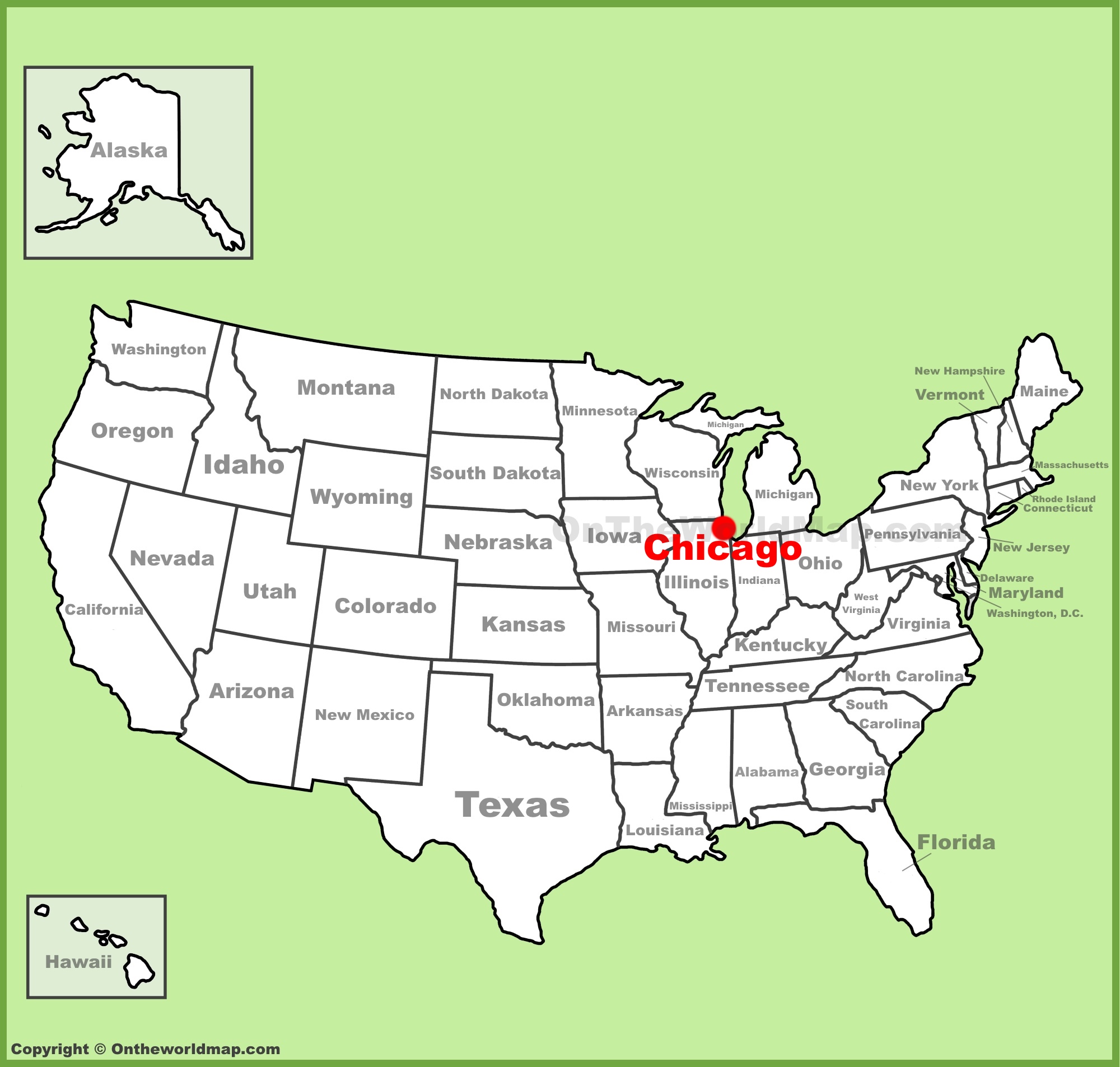
Chicago, a titan of the American Midwest, is a city that defies simple geographical categorization, yet its place on the map is as solid and influential as its iconic skyline. Situated in the northeastern corner of Illinois, on the southwestern shores of the magnificent Lake Michigan, this metropolis is a pivotal hub for commerce, culture, and travel, drawing millions of visitors each year. Its strategic location has shaped its history, economy, and its vibrant, diverse character.
The Heart of the Midwest
Chicago’s geographical placement is fundamental to its identity. As the most populous city in the Midwest, it serves as a gateway to the vast American interior, connecting East Coast ambitions with West Coast aspirations. The city’s positioning is not merely about cardinal directions; it’s about a nexus of transportation, innovation, and human endeavor.
A Crossroads of Commerce and Transportation
The very name “Chicago” is often attributed to a Native American word, “chicagoua,” believed to refer to a wild leek or onion that grew in the area. Long before it was a bustling metropolis, this land was a vital crossing point for indigenous peoples. The arrival of European settlers and the subsequent development of transportation infrastructure cemented its role as a critical junction.
The construction of the Illinois and Michigan Canal in the mid-19th century was a watershed moment. This waterway connected the Great Lakes to the Mississippi River system, effectively linking the Atlantic Ocean to the Gulf of Mexico through Chicago. This engineering marvel transformed the nascent settlement into a powerhouse of trade and industry.
Today, Chicago O’Hare International Airport is one of the busiest airports in the world, a testament to the city’s enduring role as a global travel hub. Similarly, Chicago Union Station remains a vital passenger rail terminal, serving as a central point for Amtrak routes across the country. The city’s extensive network of highways and its central location make it an indispensable node for freight transportation as well. This logistical prowess underpins its economic strength and its ability to attract and sustain a large population.
Influence of Lake Michigan
The presence of Lake Michigan is arguably the most defining geographical feature of Chicago. This vast freshwater sea not only provides a stunning natural backdrop to the urban landscape but has also profoundly influenced the city’s development, climate, and recreational opportunities.
Climate and Its Impact
The lake moderates Chicago’s climate, leading to what is often termed a “lake effect.” Summers can be cooler near the shoreline due to the lake breeze, while winters can experience enhanced snowfall downwind of the lake. This maritime influence, unusual for an inland city, creates a distinct microclimate that affects everything from local weather patterns to the types of flora that can thrive. The lakefront itself is a vital recreational resource, offering miles of parks, beaches, and trails that are central to the city’s quality of life.
Shaping the Cityscape
The shoreline of Lake Michigan is where much of Chicago’s most iconic imagery resides. From the gleaming skyscrapers of the Loop to the expansive green spaces of Lincoln Park, the lakefront is a dynamic interface between nature and urbanity. The establishment of the Chicago Park District and its commitment to preserving and developing the lakefront has ensured that this natural asset is accessible and enjoyed by all residents and visitors.
Navigating the Urban Grid

Beyond its broad regional and natural context, Chicago’s internal geography is meticulously organized, making it a remarkably navigable city. Its celebrated urban planning is a key aspect of its identity.
The Grid System
Much of Chicago’s street plan is based on a rigorous grid system, a legacy of its rapid growth and rebuilding after the Great Chicago Fire of 1871. This systematic layout, with numbered streets and avenues radiating from a central point, makes orientation relatively straightforward for visitors. The Chicago Plan of 1909, envisioned by Daniel Burnham, further solidified the city’s commitment to organized urban development, emphasizing grand boulevards, public spaces, and a harmonious relationship between the built environment and the natural surroundings.
Neighborhoods and Their Identity
Within this structured framework, Chicago is a city of distinct neighborhoods, each with its own unique character, history, and cultural flavor. From the bustling commercial centers to the quiet residential enclaves, these areas form the mosaic of the city. Understanding the map of Chicago often means understanding the map of its neighborhoods, each offering a different facet of the city’s rich tapestry.
- The Loop: The central business district, home to iconic skyscrapers like the Willis Tower (formerly the Sears Tower) and numerous theaters, museums, and shopping destinations.
- North Side: Encompassing diverse areas like Lincoln Park with its zoo and conservatory, Lakeview known for its vibrant nightlife, and Wicker Park with its artistic flair and independent boutiques.
- South Side: Home to cultural institutions like the Museum of Science and Industry, the historic University of Chicago, and the iconic Jackson Park with its Japanese garden.
- West Side: Characterized by its evolving culinary scene, vibrant street art, and historic architecture in areas like West Loop and Humboldt Park.
Public Transportation: The ‘L’ and Beyond
Chicago’s comprehensive public transportation system, managed by the Chicago Transit Authority (CTA), is intrinsically linked to its geography. The elevated train system, affectionately known as the ‘L’, crisscrosses the city, with its tracks often defining neighborhood boundaries and serving as vital arteries for commuters and tourists alike. The iconic Loop ‘L’ encircles the downtown core, offering a unique perspective on the city’s architecture. Bus routes further extend the reach of public transit, making it possible to explore almost every corner of Chicago without a car.
A Global Metropolis
While firmly rooted in the American Midwest, Chicago’s influence extends far beyond its immediate geographical boundaries. It is a city that connects, inspires, and hosts the world.
A Destination for Global Travelers
Chicago’s status as a major transportation hub, combined with its world-class attractions, makes it a prime destination for international visitors. The city offers a compelling blend of historical significance, architectural marvels, renowned museums like the Art Institute of Chicago, and a vibrant performing arts scene. From the architectural boat tours on the Chicago River to the breathtaking views from the Skydeck Chicago at the Willis Tower, the city provides experiences that are both distinctly American and universally appealing.

Cultural and Economic Significance
The city’s location has fostered a dynamic economy, built on a diverse range of industries including finance, technology, manufacturing, and healthcare. This economic vitality, in turn, supports its rich cultural landscape. The diverse population, drawn from across the United States and the globe, contributes to a culinary scene that is second to none, from deep-dish pizza to Michelin-starred restaurants.
In essence, Chicago’s place on the map is not just a point on a globe; it’s a confluence of waterways, transportation networks, architectural ambition, and human spirit. It is a city where the vastness of the Great Lakes meets the intricate planning of urban design, creating a destination that is as geographically significant as it is culturally captivating.
LifeOutOfTheBox is a participant in the Amazon Services LLC Associates Program, an affiliate advertising program designed to provide a means for sites to earn advertising fees by advertising and linking to Amazon.com. Amazon, the Amazon logo, AmazonSupply, and the AmazonSupply logo are trademarks of Amazon.com, Inc. or its affiliates. As an Amazon Associate we earn affiliate commissions from qualifying purchases.