
The year 1968 was a turbulent one in the United States. Amidst the deepening quagmire of the Vietnam War and a nation reeling from the assassinations of Martin Luther King Jr. and Robert F. Kennedy, the Democratic National Convention in Chicago became a flashpoint for protest. Out of the ensuing chaos, a group of seven men, initially accused of conspiracy and inciting a riot, would become known as the Chicago Seven. Their trial, a dramatic and often farcical spectacle, laid bare the deep divisions within American society and raised profound questions about freedom of speech, dissent, and the role of law enforcement.

The Genesis of Dissent: Protests at the 1968 Democratic Convention
The 1968 Democratic National Convention was intended to nominate the next presidential candidate for the Democratic Party. However, with the incumbent President Lyndon B. Johnson having withdrawn his candidacy and the nation deeply divided over the Vietnam War, the convention became a magnet for anti-war activists, civil rights groups, and various counter-cultural movements. Thousands of protesters descended upon Chicago, hoping to influence the party’s platform and voice their opposition to the war and the establishment.
A City Under Siege
The city of Chicago, under the firm hand of Mayor Richard J. Daley, was determined to prevent any disruption to the convention. A massive police presence was mobilized, alongside the Illinois National Guard and even federal troops. The mayor famously declared that the police would “shoot to kill” anyone caught looting or committing arson, a chilling statement that foreshadowed the violence to come.
The protesters, a diverse coalition with varying tactics and goals, sought to demonstrate their opposition to the war and the political system. Some advocated for non-violent civil disobedience, while others were more confrontational, believing that direct action was necessary to be heard. This ideological spectrum within the protest movement, coupled with the heavy-handed response from law enforcement, created a volatile atmosphere that quickly escalated.
On the streets of Chicago, particularly in areas like Grant Park and along Michigan Avenue, clashes between protesters and police became inevitable. These confrontations were broadcast live on national television, shocking millions of Americans and etching indelible images of brutality and chaos into the national consciousness. The events of that week were later described by the Walker Report, an official investigation, as a “police riot.”
The Accused: Who Made Up The Chicago Seven?
Following the convention, the federal government, under the direction of the Nixon administration, identified eight men as being responsible for the unrest. These individuals, representing a spectrum of anti-war and radical political thought, were indicted on charges of conspiracy, incitement to riot, and crossing state lines with intent to riot. Initially, the group was known as the Chicago Eight. However, one of the defendants, Bobby Seale, was largely silenced and eventually severed from the trial, leading to the remaining defendants being referred to as the Chicago Seven.
The individuals accused were:
- Abbie Hoffman: A charismatic and flamboyant activist, co-founder of the Yippies (Youth International Party). Hoffman was known for his theatrical protests and use of humor as a political tool. He famously threw money onto the floor of the courtroom, declaring “A dollar, a dollar, for all!”
- Jerry Rubin: Another prominent Yippie leader, Rubin was a key organizer of the protests. He often employed humor and absurdity in his activism, advocating for a radical transformation of American society.
- Tom Hayden: A former student leader of the Students for a Democratic Society (SDS) and a founder of the New Left movement. Hayden was a more intellectual and policy-oriented activist, focused on systemic change. He later became a politician and actor.
- Rennie Davis: A key organizer of the National Mobilization Committee to End the War in Vietnam. Davis was known for his passion and commitment to the anti-war cause, advocating for mass demonstrations.
- David Dellinger: An influential anarchist and pacifist, Dellinger was a veteran peace activist and organizer of the National Mobilization Committee. He had a long history of protest and civil disobedience.
- Lee Weiner: A sociologist and activist who had been involved in various social justice movements.
- John Froines: A chemist and activist who had been involved with the SDS.
- Bobby Seale: The fiery co-founder of the Black Panther Party. Seale’s presence in the trial was highly contentious. He was representing himself and was frequently at odds with the judge, leading to his being gagged and chained during some proceedings. Eventually, his case was severed, and he became the Chicago One.
These men, representing different factions and approaches to activism, were united by their opposition to the Vietnam War and their belief that the government had failed to address the concerns of its citizens.
The Trial of the Century: Justice in the Courtroom
The trial of the Chicago Seven, which began in September 1969, was held in the courtroom of U.S. District Judge Julius Hoffman in Chicago. It quickly devolved into a circus, marked by defiance, theatricality, and outright chaos. The courtroom became a stage for a political and ideological battle, broadcast to a captivated nation.
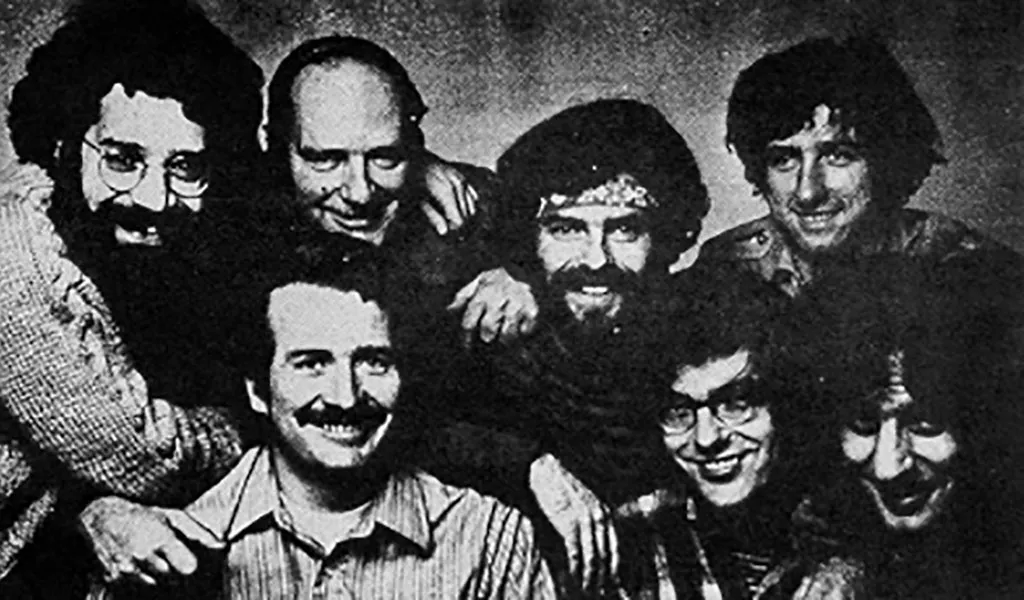
A Judge, Lawyers, and Defendants at Odds
Judge Julius Hoffman presided with an iron fist, often clashing with the defendants and their defense attorneys, William Kunstler and Leonard Weinglass. The defense team, representing a radical approach to legal defense, sought to highlight the political nature of the charges and the illegitimacy of the prosecution. They aimed to turn the trial into a platform for dissent, much to the chagrin of the judge.
The defendants themselves were not passive observers. Abbie Hoffman and Jerry Rubin, in particular, embraced the absurdity of the situation, often dressing in unconventional attire and engaging in provocative behavior. They saw the trial as another opportunity to challenge authority and expose what they perceived as the hypocrisy of the American legal system.
Charges, Counter-Charges, and Acquittals
The prosecution, led by U.S. Attorney Thomas Foran, aimed to prove that the defendants had conspired to incite violence and disrupt the Democratic National Convention. The government presented evidence of planning, communication, and speeches made by the defendants in the lead-up to and during the convention.
The defense argued that the defendants were exercising their First Amendment rights to protest and that the government was using the charges to silence political dissent. They presented evidence of police provocation and brutality, suggesting that the violence was initiated by law enforcement.
The trial was a lengthy and often exhausting affair, punctuated by outbursts, legal wrangling, and dramatic moments. Judge Julius Hoffman’s rulings, often seen as biased by the defense, further fueled the animosity. He famously sentenced Bobby Seale to four years in prison for contempt of court during his brief involvement in the trial, a move that drew widespread criticism.
After a marathon trial, the jury delivered its verdict on February 20, 1970. The Chicago Seven were acquitted of the most serious charge of conspiracy. However, five of the defendants – Abbie Hoffman, Jerry Rubin, Tom Hayden, Rennie Davis, and David Dellinger – were convicted of crossing state lines to incite a riot. John Froines and Lee Weiner were acquitted of all charges.
The Legacy of the Chicago Seven
While the convictions of five of the defendants were eventually overturned on appeal due to the judge’s conduct and jury irregularities, the trial of the Chicago Seven left an indelible mark on American history and law.
A Symbol of Dissent and Freedom of Speech
The trial became a powerful symbol of the era’s countercultural rebellion and the fight for freedom of speech. It highlighted the tension between the right to protest and the government’s interest in maintaining order. The spectacle of the trial, broadcast and widely discussed, brought these complex issues into American living rooms, prompting debate and introspection.
The legal battles that followed the initial verdict further solidified the case’s significance. The appeals process exposed the flaws and potential biases within the judicial system, leading to discussions about judicial reform and the rights of defendants.

Enduring Impact on Activism and Politics
The Chicago Seven and their trial continue to be studied and referenced in discussions about political activism, civil liberties, and the history of dissent in the United States. The individuals involved went on to have varied careers, with many continuing their work in activism, politics, and academia.
The events of 1968 in Chicago, and the subsequent trial, served as a stark reminder of the power of protest and the challenges of navigating dissent in a democratic society. The legacy of the Chicago Seven remains a potent testament to a period of intense social upheaval and the enduring struggle for justice and free expression.
LifeOutOfTheBox is a participant in the Amazon Services LLC Associates Program, an affiliate advertising program designed to provide a means for sites to earn advertising fees by advertising and linking to Amazon.com. Amazon, the Amazon logo, AmazonSupply, and the AmazonSupply logo are trademarks of Amazon.com, Inc. or its affiliates. As an Amazon Associate we earn affiliate commissions from qualifying purchases.