
The question of whether a Colorado driver’s license meets the federal Real ID Act requirements is a crucial one for many residents. As the deadline for stricter identification requirements for boarding commercial flights and accessing certain federal facilities looms, understanding the status of your Colorado identification is paramount for seamless travel and access. This guide delves into what constitutes a Real ID, how Colorado is addressing these standards, and what you need to do to ensure your license or state identification card is compliant.
Understanding the Real ID Act
The Real ID Act of 2005 was enacted by Congress following the September 11, 2001, terrorist attacks. Its primary goal is to establish minimum security standards for state-issued driver’s licenses and identification cards, which are used as official identification for various purposes, including boarding federally regulated commercial aircraft and entering certain federal facilities.

Key Provisions of the Real ID Act:
- Enhanced Security Features: Licenses and ID cards must include specific security features designed to prevent tampering and fraud. These can include holograms, microprinting, and other advanced security elements.
- Verification of Identity: States must implement stricter procedures for verifying the identity of individuals applying for these documents. This involves demanding a more comprehensive set of supporting documents.
- Underlying Data Security: States must ensure the security of the databases that contain personal information used to issue these credentials.
Why Real ID Matters for Travelers:
Starting on May 7, 2025, a standard driver’s license or state ID card that does not meet Real ID standards will no longer be accepted for boarding domestic commercial flights within the United States or for entering certain federal buildings and military bases. This means that if you plan to fly domestically or need to access secure federal locations, you will need a compliant form of identification.
Colorado’s Real ID Compliance
Colorado has taken steps to comply with the Real ID Act, offering residents the option to obtain a compliant driver’s license or identification card. Not all Colorado licenses are automatically Real ID compliant. Residents must actively choose to apply for a “Star ID,” which signifies compliance with federal standards.
The “Star ID”: Colorado’s Real ID-Compliant Credential
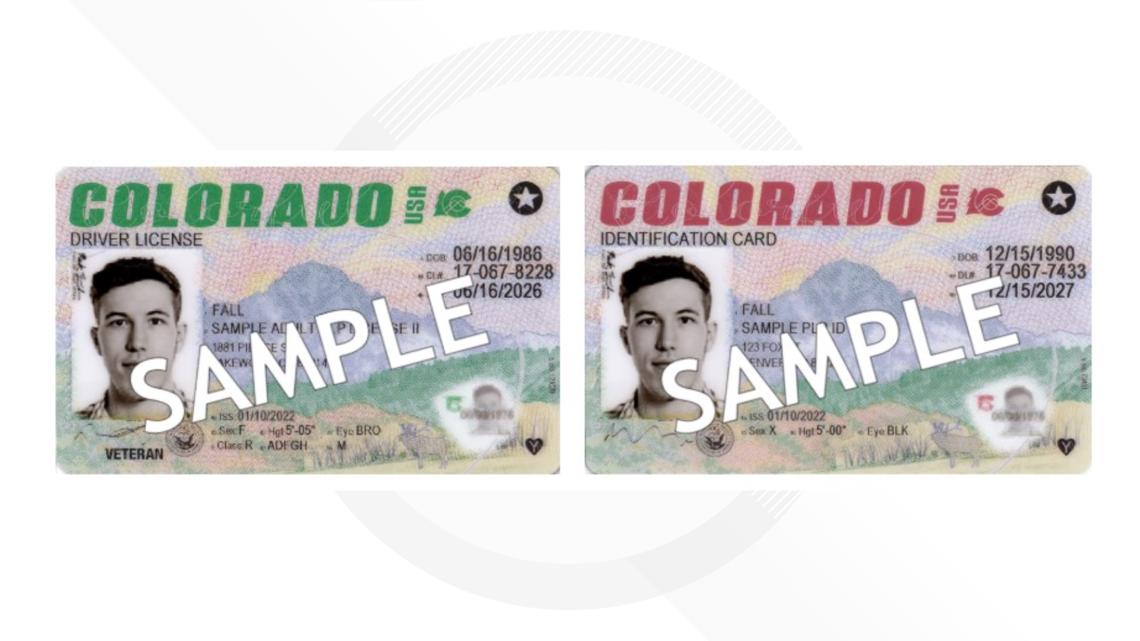
In Colorado, a driver’s license or state ID card that meets the federal Real ID Act requirements is distinguished by a star symbol, typically located in the upper right-hand corner of the card. This “Star ID” is the credential you will need for air travel and access to restricted federal facilities after the enforcement date.
Differentiating Standard vs. Real ID Licenses:
- Standard License/ID: These are issued by Colorado and are valid for driving and general identification purposes within the state. However, they will not be sufficient for TSA checkpoints at airports or for entry into certain federal buildings after the Real ID deadline.
- “Star ID” (Real ID Compliant): These licenses and ID cards feature the star symbol, indicating they have been issued after a verification process that meets federal standards. They are accepted for all purposes that a standard license is, plus the enhanced requirements for air travel and federal access.
It is important to note that Colorado also offers optional licenses and ID cards that are not Real ID compliant. These will look similar to the compliant versions but will lack the star symbol. This distinction ensures that residents can choose the credential that best suits their needs.
Obtaining a Real ID-Compliant License in Colorado
Applying for a Real ID-compliant driver’s license or ID card in Colorado requires a visit to a Colorado Division of Motor Vehicles (DMV) office. The process is more rigorous than a standard renewal and necessitates bringing specific documentation to prove your identity and residency.
Essential Documentation for a Real ID Application:
To apply for a “Star ID,” you will need to present original or certified copies of several documents. The Colorado DMV provides a comprehensive checklist, but generally, you will need to provide:
- Proof of Identity and Date of Birth: Typically, a certified copy of your birth certificate or a valid U.S. Passport.
- Proof of Social Security Number: Your Social Security card or a W-2 form that includes your full Social Security number.
- Proof of Colorado Residency (Two Documents): Examples include utility bills, bank statements, or lease agreements showing your name and Colorado address. These documents must be recent.
- Proof of Legal Presence: This can be satisfied by your birth certificate, passport, or other acceptable documents that establish your lawful presence in the United States.
It is highly recommended to consult the official Colorado DMV website or contact them directly for the most up-to-date list of acceptable documents, as requirements can change. Submitting incomplete or incorrect documentation can lead to delays or the inability to obtain your compliant credential.
The Application Process:
- Gather Documents: Collect all necessary original documents as per the Colorado DMV guidelines.
- Schedule an Appointment: Many Colorado DMV offices recommend or require appointments to manage customer flow and reduce wait times.
- Visit the DMV: Present your documents to a DMV representative. They will verify your information and take your photograph.
- Pay Fees: There are fees associated with obtaining a new driver’s license or ID card, including a Real ID.
- Receive Your Card: You will likely receive a temporary paper license or ID on-site, with your permanent “Star ID” mailed to your address within a few weeks.
Considerations for Existing Licenses:
If your current Colorado driver’s license or ID card is not a “Star ID,” you do not necessarily need to wait for it to expire. You can apply for a compliant credential at any time by following the same application process outlined above. This allows you to upgrade your identification proactively.
Alternatives to a Real ID-Compliant License for Travel
While a Real ID-compliant license is the most common form of identification for domestic air travel, it’s not the only option. If you do not wish to obtain a “Star ID” or if you have another form of federally accepted identification, you can still fly.
Other Acceptable Forms of Identification for TSA:
The Transportation Security Administration (TSA) has a list of other forms of identification that are accepted for boarding commercial aircraft. These include:
- U.S. Passport: A valid U.S. passport is always accepted for domestic and international travel.
- U.S. Passport Card: This is a cheaper, wallet-sized alternative to a U.S. passport, valid for land and sea travel to certain North American countries and for domestic flights.
- DHS Trusted Traveler Cards: These include Global Entry, NEXUS, and SENTRI cards, which are issued to pre-approved, low-risk travelers.
- Permanent Resident Card: For non-U.S. citizens who are lawful permanent residents.
- State-Issued Enhanced Driver’s License: Some states issue enhanced driver’s licenses with additional security features that are also accepted.
When a Standard Colorado License Might Suffice:
A standard Colorado driver’s license will still be valid for many purposes, such as driving, voting, and general identification within the state. However, its utility for air travel and access to specific federal facilities will be significantly limited after the Real ID enforcement date.

Planning Your Travel Documentation:
For residents of Colorado, the decision of whether to obtain a “Star ID” depends on your future travel plans and needs. If you anticipate flying domestically or requiring access to federal buildings, upgrading to a Real ID-compliant license is the most straightforward path. If you already possess a valid U.S. passport or another accepted form of identification, you may not need to pursue a “Star ID.” It’s always wise to check the latest TSA guidelines for accepted identification before you travel.
LifeOutOfTheBox is a participant in the Amazon Services LLC Associates Program, an affiliate advertising program designed to provide a means for sites to earn advertising fees by advertising and linking to Amazon.com. Amazon, the Amazon logo, AmazonSupply, and the AmazonSupply logo are trademarks of Amazon.com, Inc. or its affiliates. As an Amazon Associate we earn affiliate commissions from qualifying purchases.