
Navigating the process of obtaining a marriage license in Colorado is a straightforward endeavor, designed to be accessible for couples embarking on their lifelong commitment. Unlike many states that impose waiting periods or require extensive documentation, Colorado offers a streamlined approach. This guide delves into the essential steps, requirements, and considerations for securing your marriage license, ensuring your special day in the Centennial State is legally recognized and celebrated without unnecessary hurdles. Whether you’re planning a destination wedding amidst the majestic Rockies or a cozy ceremony in a charming mountain town, understanding the licensing process is a crucial first step.
Understanding Colorado’s Marriage License Requirements
Colorado stands out for its user-friendly marriage license system, making it an attractive destination for couples from across the nation and beyond. The state prioritizes simplicity and efficiency, allowing couples to focus on the joyous aspects of their union.
Age and Identification
The primary requirement for obtaining a marriage license in Colorado is that both individuals must be at least 18 years of age. If either applicant is 16 or 17 years old, they must have the consent of their parents or legal guardians. This consent typically needs to be in writing and may require a court order in some circumstances.
Identification is essential for all applicants. Most Colorado county Clerk and Recorder offices accept a valid, government-issued photo ID. This can include:
- A driver’s license from any U.S. state or territory.
- A state-issued identification card.
- A U.S. passport.
- A military identification card.
Some counties may also accept a certified copy of a birth certificate, particularly if the applicant does not possess a government-issued photo ID. It’s always advisable to check the specific identification requirements with the county clerk’s office where you intend to apply.
Marital Status and Previous Marriages
Colorado law requires that both parties be unmarried at the time of applying for the marriage license. If either applicant has been previously married, they must provide proof that the previous marriage has been legally terminated. This typically involves presenting a certified copy of the divorce decree or an annulment decree. Some counties may require the date and location of the previous divorce, so having this information readily available is beneficial.
Residency and Waiting Periods
One of the significant advantages of getting married in Colorado is that there is no residency requirement. You do not need to be a resident of Colorado to obtain a marriage license in the state. Similarly, there is no waiting period between the issuance of the marriage license and the performance of the marriage ceremony. This means that if you obtain your license on a Monday, you can get married on the same day.
Relationship Restrictions
Colorado law prohibits marriage between individuals who are closely related by blood. This includes marriages between parents and children, siblings, grandparents and grandchildren, aunts and nephews, and uncles and nieces. There are also restrictions on marriages between first cousins, though these can sometimes be waived under specific circumstances, such as proof of infertility.
The Application Process: A Step-by-Step Guide
Obtaining your marriage license in Colorado involves a clear and accessible application process, designed to be completed efficiently.
Locating the Appropriate Office
Marriage licenses are issued by the County Clerk and Recorder offices in each of Colorado’s 64 counties. You can obtain a marriage license in any county in Colorado, regardless of where you plan to hold your ceremony. It’s generally recommended to apply in the county where your wedding will take place, as some counties may have specific requirements or preferences, though this is not mandatory. Popular wedding destinations like Aspen, Vail, or areas near Denver will have county clerk offices readily available.
Completing the Application Form
Both applicants must appear in person at the County Clerk and Recorder office to apply for the marriage license. You will be asked to fill out an application form, which will require personal information for both individuals, including:
- Full legal names.
- Dates and places of birth.
- Current addresses.
- Social Security numbers (if applicable).
- Names and birthplaces of parents.
- Information about previous marriages, including dates of termination.
Ensure all information provided is accurate and matches your identification documents. Any discrepancies could lead to delays or the inability to issue the license.
Fees and Payment
There is a fee associated with obtaining a marriage license in Colorado. The exact amount varies slightly by county but generally ranges from $30 to $70. This fee is typically payable in cash, check, or by credit card, though payment methods can differ between counties. It’s wise to confirm the fee and accepted payment methods with the specific county clerk’s office beforehand.

Issuance of the Marriage License
Once the application is completed, reviewed, and the fee is paid, the County Clerk and Recorder will issue the marriage license. This document is valid for 35 days from the date of issuance. This means your marriage ceremony must be performed within 35 days of receiving the license. If your wedding date falls outside this period, you will need to apply for a new license.
Important Considerations for Your Colorado Marriage
While the process is straightforward, a few additional points can help ensure a smooth experience and a legally sound marriage in Colorado.
Same-Day Ceremonies
As mentioned, Colorado does not have a waiting period. This means you can obtain your marriage license and have your wedding ceremony on the same day. This flexibility is particularly appealing for elopements or couples planning spontaneous celebrations.
Officiants and Witnesses
To solemnize your marriage in Colorado, you will need a legally authorized officiant. This can be:
- A judge of a Colorado court.
- A former judge of a Colorado court.
- A licensed physician who is also an ordained minister of any religious society or church.
- A minister, preacher, priest, or rabbi of any religious society or church.
- A person authorized by any religious denomination to solemnize marriages.
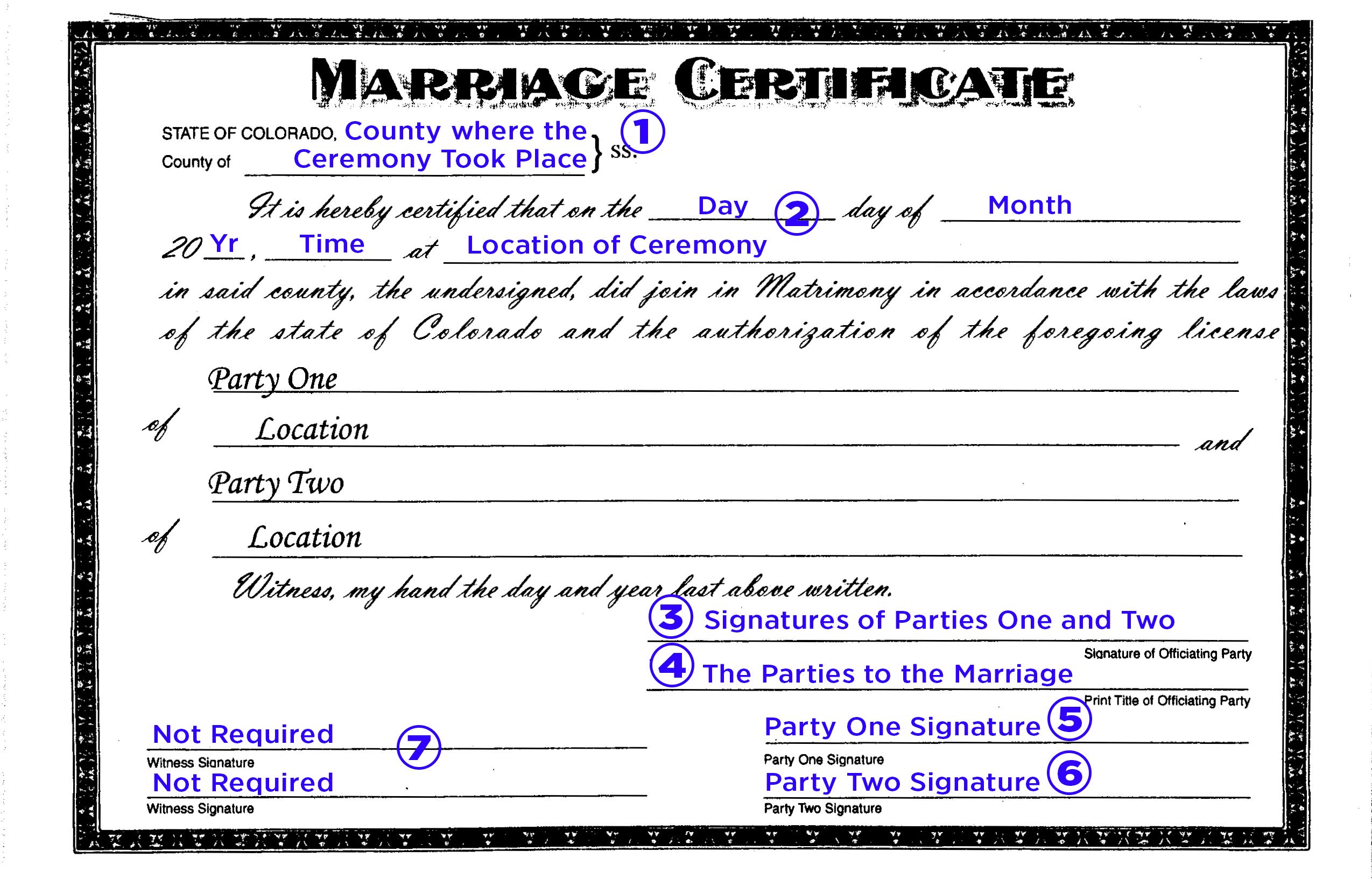
While not legally required by the state, many officiants prefer to have at least one witness present during the ceremony. Most counties also require one witness to sign the marriage certificate when it is returned to the clerk’s office. The witness must be at least 18 years old and must present a valid photo ID.
Returning the Marriage Certificate
After the wedding ceremony, the officiant is responsible for completing and signing the marriage certificate. The certificate, along with the signatures of the officiant and witness(es), must be returned to the County Clerk and Recorder office that issued the license within a specific timeframe, typically within 30 days of the ceremony. Once the signed certificate is received and recorded, the marriage is officially registered. You can then request certified copies of your marriage certificate, which are often needed for name changes, insurance purposes, or other legal matters.
Marriage Licenses for Non-Residents
Colorado’s welcoming stance on marriage licenses extends to non-residents. Couples from out of state or even out of the country can obtain a marriage license in Colorado without needing to establish residency. This makes the state a popular choice for destination weddings, allowing couples to exchange vows against the stunning backdrop of the Rocky Mountains or in charming towns like Estes Park.
Special Circumstances: Proxy Marriage
Colorado is one of the few states that allows proxy marriages under specific conditions. This means that one party can be absent from the ceremony and have another person stand in for them. However, this is only permitted if the absent party is a member of the United States Armed Forces who is deployed out of state or out of the country. The absent party must provide written authorization for the proxy marriage.
Planning Your Colorado Wedding
Beyond the marriage license, planning a wedding in Colorado offers a wealth of opportunities for unique and memorable experiences.
Choosing Your Venue
Colorado boasts a diverse range of wedding venues, from rustic mountain lodges and elegant ballrooms in Denver to intimate chapels nestled in picturesque towns. Consider the season and the type of atmosphere you envision for your special day. A summer wedding might take advantage of outdoor patios with mountain views, while a winter wedding could be held in a cozy resort like The Broadmoor in Colorado Springs.
Embracing the Local Culture
Colorado’s natural beauty is a significant draw, but its local culture also offers unique wedding elements. Consider incorporating local flavors into your catering, such as Rocky Mountain trout or bison. You might also explore activities for your guests, such as hiking in Rocky Mountain National Park, visiting historical mining towns like Telluride, or enjoying a scenic drive along Trail Ridge Road.

Legalities for Destination Weddings
If you are planning a destination wedding in Colorado, remember that the marriage license is a state-level requirement, not specific to a particular town or city within the state. Ensuring you have your license in hand before the ceremony is paramount. For international couples, it’s advisable to check with your home country’s requirements for recognizing a marriage performed in the United States.
By understanding and adhering to Colorado’s marriage license procedures, couples can ensure a legally sound and stress-free start to their married life in the beautiful state of Colorado. The simplicity and accessibility of the process underscore why Colorado remains a beloved choice for wedding celebrations.
LifeOutOfTheBox is a participant in the Amazon Services LLC Associates Program, an affiliate advertising program designed to provide a means for sites to earn advertising fees by advertising and linking to Amazon.com. Amazon, the Amazon logo, AmazonSupply, and the AmazonSupply logo are trademarks of Amazon.com, Inc. or its affiliates. As an Amazon Associate we earn affiliate commissions from qualifying purchases.