
The question of “How many people in [Denver, Colorado]?” is more than just a demographic statistic; it’s a gateway to understanding the vibrant tapestry of this dynamic American city. As the mile-high capital of [Colorado], [Denver] has experienced significant population growth over the decades, transforming from a frontier town into a thriving metropolitan hub. This growth influences everything from its urban landscape and cultural offerings to its economic opportunities and the very essence of what it means to live and visit here. Delving into the population figures offers a lens through which to examine the city’s evolution, its current character, and its future trajectory.

Understanding Denver’s Population Dynamics
[Denver]’s population is not a static number but a continuously shifting entity, shaped by a confluence of economic drivers, lifestyle attractions, and geographical advantages. Understanding these dynamics requires looking beyond a single census figure and exploring the factors that attract new residents and shape the demographic profile of the city.Historical Population Trends
The story of [Denver]’s population is one of steady, often accelerated, growth. Founded during the Pike’s Peak Gold Rush in 1858, its initial population was a small, transient group of prospectors and entrepreneurs. As the gold fever subsided, [Denver] pivoted to become a crucial hub for mining, transportation, and agriculture in the Rocky Mountain West. The late 19th and early 20th centuries saw consistent expansion, fueled by its strategic location and the burgeoning industries of the region.
The post-World War II era marked a significant acceleration in population growth, a trend mirrored across many American cities. [Denver] benefited from the GI Bill, suburbanization, and a growing national interest in outdoor recreation, for which its proximity to the [Rocky Mountains] proved to be a major draw. This period saw the construction of new neighborhoods, the expansion of infrastructure, and the establishment of a robust service economy.
More recently, [Denver] has emerged as a prominent destination for young professionals and families, attracted by its booming tech industry, vibrant arts and culture scene, and unparalleled access to outdoor adventures. This influx has continued to swell the city’s numbers, making it one of the fastest-growing major metropolitan areas in the United States.
Current Population Estimates
As of recent estimates, the population of the city of [Denver] itself hovers around 700,000 to 720,000 residents. However, this figure only tells part of the story. The true scope of [Denver]’s influence and the area where its population is concentrated is best understood by considering the [Denver] Metropolitan Statistical Area (MSA). This broader region, which includes surrounding counties such as [Adams], [Arapahoe], [Douglas], and [Jefferson], encompasses a much larger population, estimated to be well over three million people. This metropolitan expanse highlights [Denver]’s role as a central economic, cultural, and social anchor for a vast swathe of the Front Range.
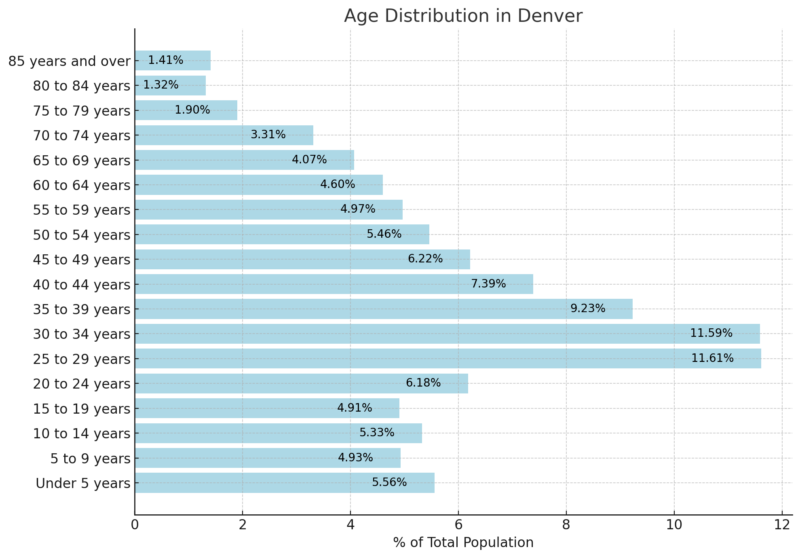
The demographic makeup of [Denver] is diverse and evolving. The city has seen an increase in its Hispanic/Latino population, reflecting national demographic shifts. It also boasts a significant population of young adults, a testament to its appeal for career opportunities and an active lifestyle. The median age in [Denver] is typically lower than the national average, indicating a youthful and energetic populace.
Factors Driving Growth
Several key factors contribute to [Denver]’s sustained population growth:
- Economic Opportunity: [Denver] has cultivated a strong and diversified economy. While historically reliant on mining and agriculture, it has successfully transitioned into a leader in sectors such as aerospace, technology, biosciences, and renewable energy. The presence of major companies and a thriving startup ecosystem attracts skilled workers from across the country and internationally.
- Quality of Life and Outdoor Recreation: The unparalleled access to outdoor activities is a significant draw. Residents and visitors alike are drawn to the proximity of the [Rocky Mountains], offering world-class skiing, hiking, biking, and climbing. [Denver]’s numerous parks, trails, and the nearby [Denver Botanic Gardens] further enhance its appeal as a city that embraces an active and healthy lifestyle.
- Cultural Amenities and Urban Vibrancy: Beyond its natural surroundings, [Denver] offers a rich cultural tapestry. The [Denver Art Museum], the [Denver Museum of Nature & Science], the [Denver Center for the Performing Arts], and a burgeoning craft brewery scene contribute to its appeal as a dynamic urban center. A lively culinary scene, diverse neighborhoods, and regular festivals and events create a vibrant atmosphere.
- In-Migration: A substantial portion of [Denver]’s population growth comes from people moving from other states. States like [California], [Texas], and [Illinois] are common points of origin, with individuals and families seeking a lower cost of living (though this has been rising), a more relaxed pace, and the lifestyle benefits that [Denver] offers.
The Impact of Population on Urban Development
The growing number of people in [Denver] has profound implications for its urban development, infrastructure, and the overall living experience. Managing this growth effectively is a continuous challenge and a key focus for city planners and residents.
Infrastructure and Transportation
As the population swells, so does the demand on [Denver]’s infrastructure. Transportation networks are particularly strained. The [Denver] International Airport (DEN), a major global gateway, is one of the busiest airports in the world and continues to expand to meet passenger demand.
Within the city and its surrounding suburbs, traffic congestion is a growing concern. While [Denver] has invested in its public transportation system, including the [RTD] (Regional Transportation District) light rail and bus services, the rate of car ownership remains high. Expanding and improving public transit options, as well as promoting alternative modes of transportation like cycling and walking, are critical for sustainable growth. The development of new residential areas also necessitates the expansion of utilities, water resources, and other essential services.
Housing Market Dynamics
One of the most visible impacts of population growth is on the housing market. [Denver]’s popularity has led to a significant increase in housing demand, driving up property values and rental costs. This has created challenges for affordability, with many long-term residents finding it increasingly difficult to remain in the city.
The city is actively exploring various strategies to address housing affordability, including zoning reforms, incentives for affordable housing development, and the preservation of existing affordable units. The construction of new apartment buildings, condominiums, and single-family homes is ongoing, but often struggles to keep pace with demand, particularly in desirable urban neighborhoods. This dynamic shapes the residential landscape, influencing where people can afford to live and the types of housing available.
Economic Landscape and Job Market
The influx of residents is intrinsically linked to the strength of [Denver]’s job market. The growth in sectors like technology has created a competitive environment for talent, with many companies establishing offices and headquarters in the city. This economic vitality is a primary driver for new residents, who are attracted by career opportunities and competitive salaries.
However, this economic success also contributes to the rising cost of living. As more people compete for jobs and housing, wages and prices tend to increase. This creates a delicate balance that city leaders and economic development agencies continually work to manage, aiming to foster growth while ensuring economic inclusivity.
Experiencing Denver: A City for Everyone
Understanding the population of [Denver] helps in appreciating the experiences available to both its residents and its visitors. The city’s demographics contribute to its diverse culture, its culinary landscape, and the wide array of activities it offers.
A Cultural Melting Pot
The diverse population of [Denver] is reflected in its cultural offerings. Neighborhoods like [Five Points], historically a center for African American culture, and the [Santa Fe Arts District], known for its vibrant murals and galleries, showcase the city’s rich heritage and evolving artistic scene. The presence of a young, dynamic population also fuels a lively nightlife and entertainment sector, with numerous bars, breweries, and music venues.
The culinary scene in [Denver] is a direct beneficiary of its growing and diverse population. Immigrants and residents from various backgrounds have brought their culinary traditions, enriching the city’s gastronomic landscape. From authentic Mexican and Vietnamese cuisine to innovative farm-to-table restaurants, [Denver] offers a taste of the world. The craft beer movement, which has exploded in [Denver] in recent years, is also a significant part of its social and cultural fabric, with numerous breweries offering unique local brews.
Activities and Attractions
The sheer number of people in [Denver] and its surrounding metropolitan area means there’s always something happening. Whether you’re interested in exploring world-class museums, catching a professional sports game (the [Denver Nuggets] in basketball, the [Colorado Rockies] in baseball, the [Denver Broncos] in football, and the [Colorado Avalanche] in hockey all have passionate fan bases), or enjoying a concert at Red Rocks Park and Amphitheatre, the city caters to a wide range of interests.
For those seeking an active vacation, [Denver] serves as an ideal base. Day trips to nearby mountain towns like [Estes Park] and the [Rocky Mountain National Park] are popular. Within the city, parks like [Washington Park] and [City Park] offer ample green space for recreation, and the extensive urban trail system encourages exploration on foot or by bike. The popularity of these outdoor activities means they are often bustling with locals and tourists alike.

Planning Your Visit
When planning a visit to [Denver], understanding its population context can enhance your experience. The city’s growth means it’s a dynamic place, but also one that can experience congestion, especially during peak tourist seasons or major events. Booking accommodations and popular tours in advance is often recommended.
Whether you’re drawn by the allure of the mountains, the burgeoning urban culture, or the promise of economic opportunity, the population of [Denver] is a testament to its enduring appeal. It’s a city that continues to grow, evolve, and welcome new faces, all while maintaining its unique spirit under the vast Colorado sky.
LifeOutOfTheBox is a participant in the Amazon Services LLC Associates Program, an affiliate advertising program designed to provide a means for sites to earn advertising fees by advertising and linking to Amazon.com. Amazon, the Amazon logo, AmazonSupply, and the AmazonSupply logo are trademarks of Amazon.com, Inc. or its affiliates. As an Amazon Associate we earn affiliate commissions from qualifying purchases.