
Navigating the legal intricacies of personal identity can be a significant undertaking, and for those residing in the Centennial State, understanding the process of changing a last name in Colorado is paramount. Whether driven by marriage, divorce, personal preference, or a desire to reclaim a family heritage, the procedure involves several distinct steps, legal filings, and adherence to state statutes. This comprehensive guide will illuminate the pathway to successfully altering your legal surname within Colorado, ensuring clarity and efficiency throughout the process.
Understanding the Legal Framework for Name Changes in Colorado
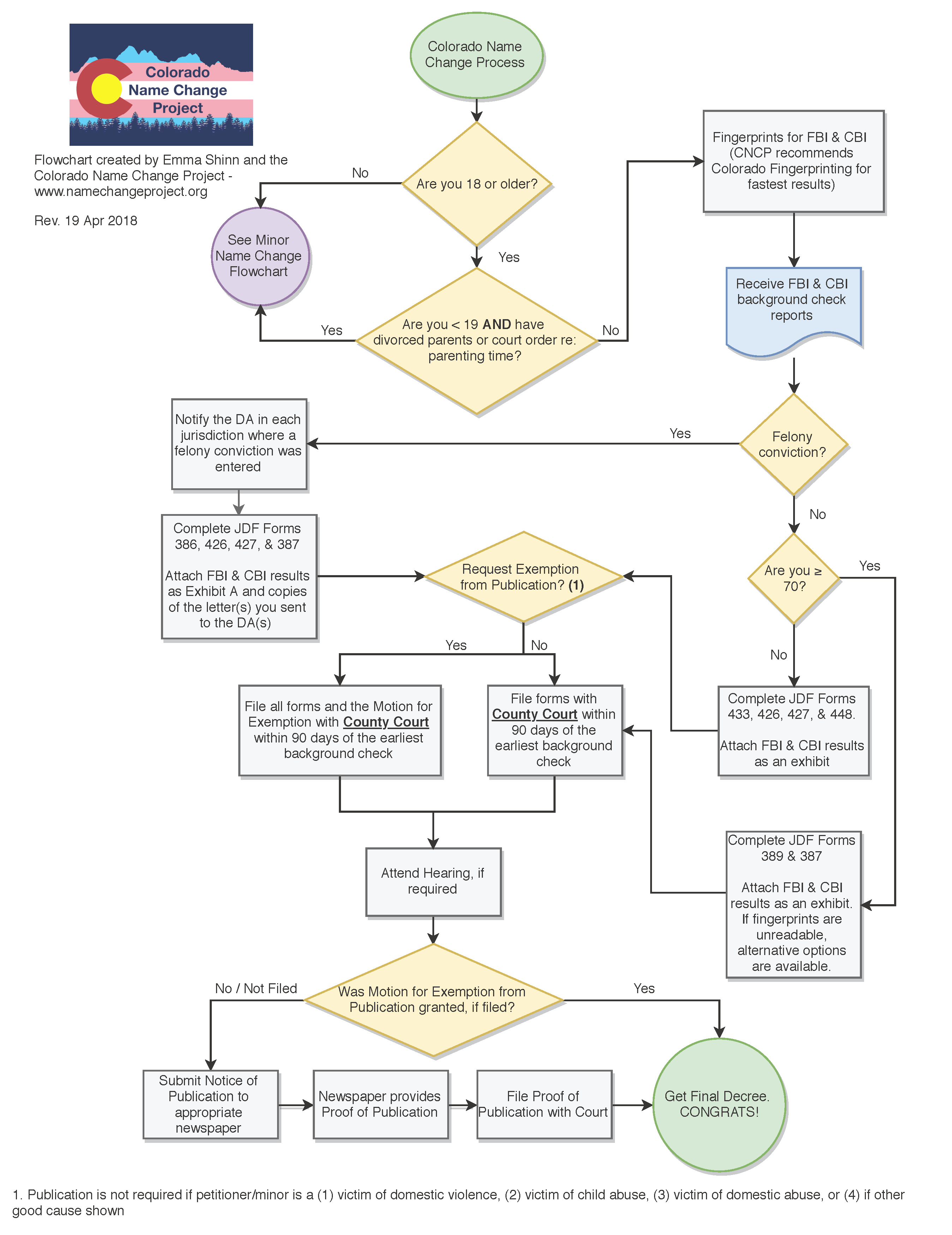
In Colorado, the legal mechanism for changing one’s name is primarily governed by the Revised Statutes of Colorado, particularly concerning civil procedures. The state provides a structured approach to ensure that name changes are legitimate and not undertaken for fraudulent purposes.
Grounds for a Legal Name Change
Colorado law allows for name changes for a variety of reasons. The most common include:
- Marriage: Spouses often adopt a shared surname or one spouse takes on the other’s surname. While often managed through marriage certificates in some jurisdictions, a formal court order offers a definitive legal change.
- Divorce: Upon dissolution of marriage, individuals may wish to revert to their maiden name or a previous surname. A court can specifically grant this relief as part of the divorce decree.
- Personal Preference: An individual may simply desire a different surname for personal, cultural, or aesthetic reasons. This typically requires a petition for a name change.
- Reclaiming Heritage: Some individuals choose to change their name to honor their ancestry or adopt a surname that better reflects their cultural identity.
- Adoption: In adoption proceedings, the child’s surname is legally changed to that of the adoptive parents.
It is crucial to note that name changes are generally not permitted if the intent is to defraud creditors, avoid legal obligations, evade criminal prosecution, or deceive the public. The court will scrutinize petitions to ensure the change is made in good faith.
Eligibility Requirements
To petition for a legal name change in Colorado, you must meet certain criteria. Typically, this involves being a legal resident of the state. For adult name changes, you must be at least 18 years old. For minors, the petition is filed by a parent or legal guardian. Specific residency requirements may vary slightly depending on the county, but generally, you must demonstrate a period of established residency in Colorado before filing.
The Petition Process: Step-by-Step Guidance
The cornerstone of changing your last name in Colorado is the filing of a formal petition with the appropriate court. This legal document outlines your request and the reasons behind it.
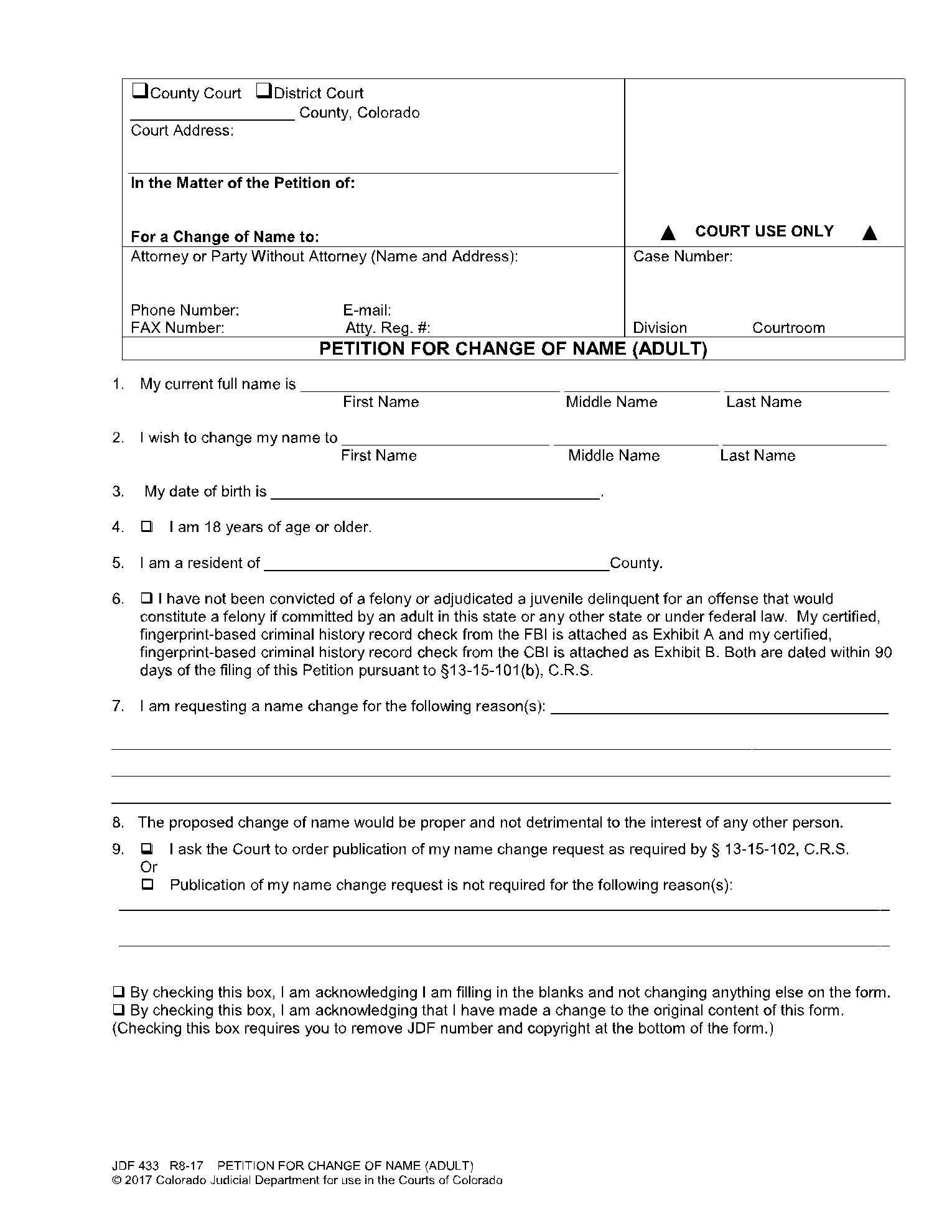
Step 1: Obtain and Complete the Necessary Forms
The first practical step involves acquiring the correct legal forms. These are typically available through the Colorado Judicial Branch website or directly from the Clerk of Court in the county where you reside. The primary document is usually titled “Petition for Change of Name.”
You will need to provide accurate personal information, including your current legal name, the desired new name, your date of birth, and your residential address. The petition will also require a statement detailing the reasons for the requested name change. Be clear and concise in your explanation.
Step 2: File the Petition with the Court
Once completed, the petition must be filed with the Clerk of Court in the county where you have established residency. There will be a filing fee associated with this process, which varies by county. If you are unable to afford the filing fee, you may be eligible to request a fee waiver by submitting an Application for a Waiver of Filing Fees.
The court clerk will assign a case number to your petition and may provide you with specific instructions regarding the next steps. It is advisable to keep copies of all filed documents for your records.
Step 3: Publication of Notice
A critical component of the name change process in Colorado is public notification. This is to inform any interested parties of your intent to change your name and to allow them an opportunity to object if they have valid legal grounds.
You will be required to publish a notice of your name change petition in a legally recognized newspaper of general circulation in your county. The court will specify the newspaper and the duration of the publication period, typically for a set number of consecutive weeks. Proof of publication, often in the form of an affidavit from the newspaper, must be submitted to the court. Failure to properly publish the notice can lead to delays or dismissal of your petition.
Step 4: Court Hearing
After the publication period has concluded and proof has been submitted, the court will schedule a hearing for your name change petition. The hearing is usually a brief proceeding where a judge will review your petition and the evidence presented.
At the hearing, you may be asked to state your reasons for the name change under oath. The judge will ensure that all legal requirements have been met and that there are no valid objections to the change. In most straightforward cases where no objections are filed, the hearing is often a formality. However, if there are objections, the hearing may involve a more extensive discussion of the legal merits.
Step 5: Obtaining the Court Order
If the judge approves your petition, they will sign a Decree for Change of Name (or a similar court order). This document is the official legal instrument that validates your name change. It will clearly state your former name and your new legal name.
Make sure to obtain several certified copies of the court order from the Clerk of Court. These certified copies are essential for updating your identification and informing various agencies and institutions of your new legal name.
Special Considerations for Minors and Marriage/Divorce
While the general process applies to most individuals, there are specific nuances for name changes involving minors or those related to marriage and divorce.
Name Changes for Minors
When a parent or legal guardian wishes to change the name of a minor child in Colorado, the process requires additional considerations.
- Parental Consent: Generally, both parents must consent to the name change. If one parent objects, the court will need to hold a hearing to determine if the name change is in the best interest of the child. The objecting parent will have the opportunity to present their case.
- Best Interest of the Child: The court’s primary consideration in a minor’s name change case is always the best interest of the child. Factors such as the child’s age, their relationship with each parent, and the potential impact of the name change on the child are evaluated.
- Guardian Ad Litem: In contested cases or when there are significant concerns, the court may appoint a Guardian ad Litem (GAL) to represent the child’s interests.
Name Changes Related to Marriage and Divorce
In Colorado, name changes associated with marriage or divorce can sometimes be streamlined.
- Marriage: While many couples choose to adopt a new surname and this can sometimes be reflected on the marriage certificate, a formal name change process through the court provides a more robust legal record.
- Divorce: A divorce decree can often include a provision for a party to resume a former surname. If this is the case, you may not need a separate petition for a name change. However, if the divorce decree does not address name changes, or if you wish to change to a name other than your maiden name or a previous legal name, you will need to follow the general petition process. It is essential to consult with your divorce attorney or review your divorce decree carefully to understand how name changes are handled in your specific case.
Updating Your Name Across Official Records and Institutions
Once you have your certified court order for the name change, the work is not entirely complete. The next crucial phase involves updating your legal name on all relevant identification and records. This ensures that your new identity is recognized across all aspects of your life.
Government Identification
- Social Security Administration: This is often the first agency to update. You will need to visit a Social Security office with your certified court order and proof of identity.
- Driver’s License/State ID: Visit a Colorado Division of Motor Vehicles (DMV) office with your certified court order and existing identification.
- Passport: For passport holders, you will need to apply for a new passport with your updated name, using the appropriate application form and providing your certified court order.
Financial and Employment Records
- Banks and Credit Unions: Inform your financial institutions of your name change and provide them with a copy of your court order. This will involve updating your account names, debit/credit cards, and checks.
- Employer: Notify your employer’s Human Resources department. They will need to update your payroll records, benefits information, and employee files.
- Credit Card Companies: Contact all credit card issuers to update your name.
- Loan Providers: Update your name with any lenders for mortgages, auto loans, or student loans.
Other Important Institutions
- Voter Registration: Update your voter registration with your new name.
- Insurance Providers: Inform your health, auto, home, and life insurance companies.
- Post Office: While not always strictly necessary, it can be helpful to inform your local post office.
- Utilities and Service Providers: Update your name for electricity, gas, water, internet, and phone services.
- Medical Providers: Ensure your doctor’s offices, dentists, and any other healthcare providers update your records.
- Educational Institutions: If you are a student or have attended educational institutions, you may want to update your records with them.
- Professional Licenses and Certifications: If you hold any professional licenses or certifications, contact the relevant licensing boards.

Tips for a Smooth Name Change Process
To navigate the name change process in Colorado with as few hurdles as possible, consider the following tips:
- Start Early: Legal processes can take time. Begin the process well in advance of any deadlines or significant events that require your updated name.
- Read Instructions Carefully: Pay close attention to all instructions provided by the court and the various agencies you will interact with.
- Keep Meticulous Records: Maintain copies of all documents submitted and received. Organize them in a secure place.
- Be Prepared for Fees: Factor in filing fees, publication costs, and the cost of obtaining certified copies.
- Seek Legal Counsel if Necessary: If your situation is complex, involves contested issues, or if you are unsure about any aspect of the process, consulting with a family law attorney in Colorado can provide invaluable assistance and peace of mind. An attorney can help you prepare the petition, navigate court procedures, and represent you if necessary.
- Be Patient: While many name changes are straightforward, patience is often required as court dockets can be busy, and administrative processes can take time.
Changing your last name in Colorado is a legal process that, with careful attention to detail and adherence to state regulations, can be accomplished successfully. By understanding the legal framework, following the prescribed steps, and diligently updating your records, you can effectively establish your new legal identity within the state.
LifeOutOfTheBox is a participant in the Amazon Services LLC Associates Program, an affiliate advertising program designed to provide a means for sites to earn advertising fees by advertising and linking to Amazon.com. Amazon, the Amazon logo, AmazonSupply, and the AmazonSupply logo are trademarks of Amazon.com, Inc. or its affiliates. As an Amazon Associate we earn affiliate commissions from qualifying purchases.