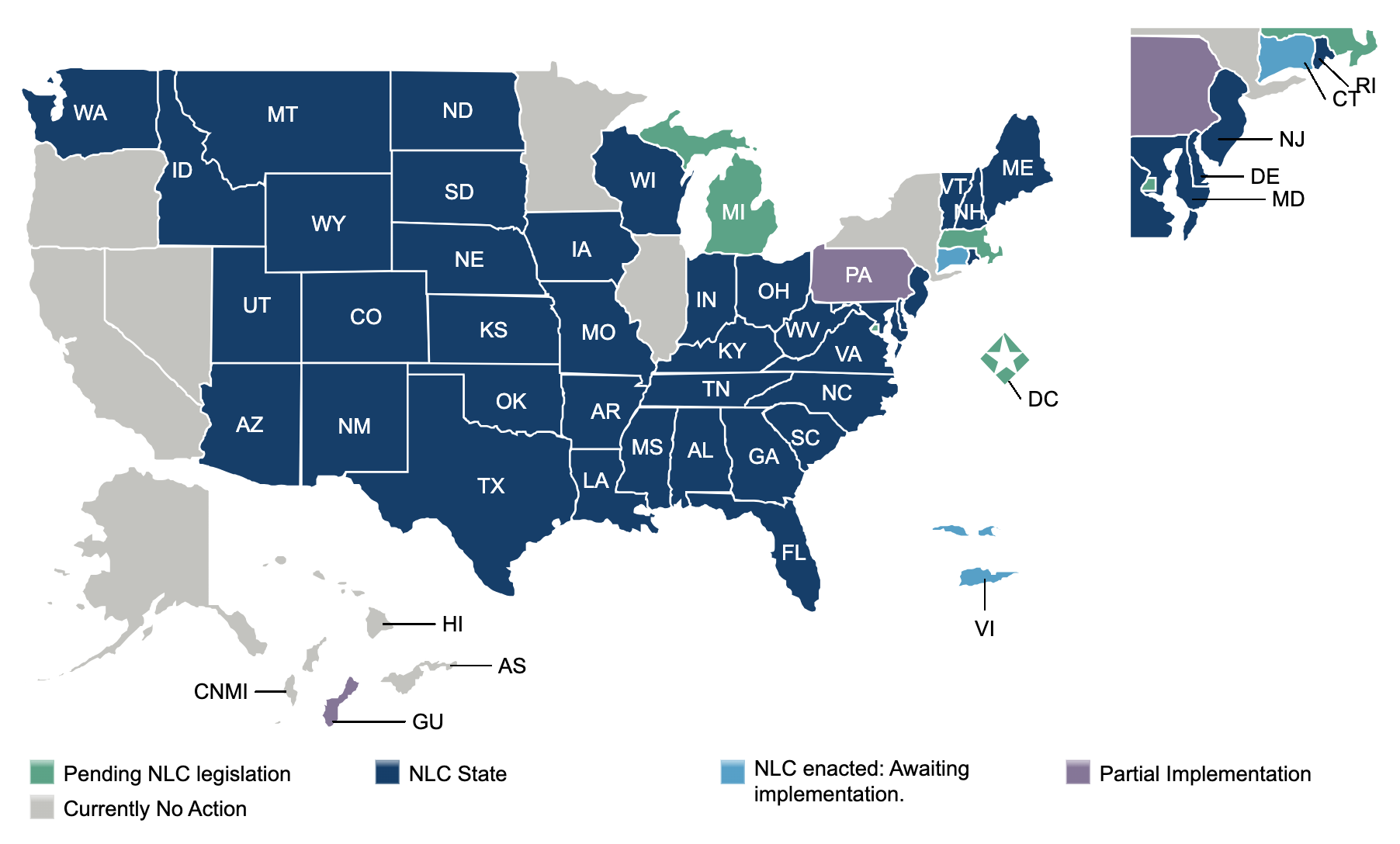
The question of whether Colorado is a compact state for nursing has significant implications for healthcare professionals considering relocation or seeking temporary assignments within the Centennial State. Understanding the Nurse Licensure Compact (NLC) and Colorado’s participation in it is crucial for navigating the licensing landscape and ensuring compliance. This article delves into the specifics of the NLC, Colorado’s current status, the benefits and drawbacks of a compact state for nurses, and what aspiring and current nurses need to know.
Understanding the Nurse Licensure Compact (NLC)
The Nurse Licensure Compact (NLC) is an interstate agreement that allows nurses to have one multistate license, allowing them to practice in other NLC member states without needing to obtain additional licenses in each state. This streamlined process significantly reduces administrative burdens and facilitates the mobility of qualified nursing professionals across state lines.
How the NLC Works
To be eligible for a multistate license under the NLC, a nurse must declare a primary state of residence. This primary state of residence dictates which state issues the multistate license. Once a nurse holds a multistate license, they can practice in any other NLC member state as if they were licensed in that state. However, if a nurse moves their primary state of residence to another NLC member state, they must apply for a new multistate license in that new state and surrender their old one.
Key Provisions of the NLC
The NLC is governed by a set of uniform standards and rules designed to ensure public safety and consistent practice across member states. These provisions include:
- Uniform Licensure Requirements: All NLC states adhere to the same educational and examination requirements for nurses.
- Background Checks: Nurses applying for a multistate license undergo a criminal background check.
- Disciplinary Monitoring: The NLC facilitates the sharing of disciplinary information among member states, ensuring that any sanctions against a nurse in one state are recognized in others.
- Continuing Education: Nurses are required to meet the continuing education requirements of their primary state of residence.
- Practice in Accordance with State Laws: While a multistate license allows practice in multiple states, nurses must still adhere to the specific laws and regulations of the state in which they are physically providing care.
The NLC aims to improve public access to nursing services, particularly in areas with nursing shortages, while maintaining high standards of professional practice and patient safety.
Colorado’s Participation in the NLC
The crucial aspect of the article’s title hinges on Colorado’s official status within the NLC. As of the latest updates, Colorado is not a compact state for nursing. This means that nurses wishing to practice in Colorado must obtain a separate, state-specific nursing license, even if they hold a multistate license from another NLC member state.
The Licensing Process in Colorado
For nurses who are not residents of Colorado and wish to practice within the state, the process involves applying for a Colorado nursing license through the Colorado Board of Nursing. This typically involves:
- Submitting an Application: Completing the official application form provided by the Colorado Board of Nursing.
- Verification of Licensure: Providing proof of licensure from all other states where the nurse has held a license.
- Background Check: Undergoing a fingerprint-based criminal background check.
- Fees: Paying the required application and licensing fees.
- Continuing Education: Meeting Colorado’s specific continuing education requirements, which may differ from those of other states.
For nurses who are residents of Colorado and wish to practice in other NLC states, they will need to apply for a multistate license in Colorado once it becomes an NLC member. However, until that time, they will need to obtain individual state licenses for any NLC states in which they wish to practice, in addition to their Colorado license.
The Journey Towards NLC Membership
While Colorado is not currently a compact state, there have been discussions and efforts to join the NLC. The process of becoming a compact state involves legislative action and adherence to the requirements set forth by the NLC. This often requires a significant amount of political will and coordination among various stakeholders, including the state board of nursing, legislative bodies, and nursing advocacy groups.
The advantages of joining the NLC are substantial, and many states are actively pursuing membership. It is advisable for nurses to stay informed about legislative developments in Colorado regarding its potential NLC status. Resources like the National Council of State Boards of Nursing website often provide updates on states that have enacted legislation to join or have recently joined the NLC.
Implications for Travel Nurses and Relocating Professionals
The non-compact status of Colorado has direct implications for travel nurses and healthcare professionals considering a move to the state.