
Navigating the requirements for official identification can sometimes feel like a journey in itself, especially when travel is on the horizon. In Colorado, understanding what a REAL ID compliant driver’s license or identification card looks like is crucial for anyone planning to fly domestically or visit certain federal facilities in the near future. The REAL ID Act, passed by Congress in 2005 following the September 11th attacks, sets minimum security standards for state-issued driver’s licenses and identification cards. Colorado has been actively issuing these compliant cards, and knowing how to spot one is key.

Understanding the REAL ID Standard
The REAL ID Act mandates that identification cards must meet stringent security features to be accepted for federal purposes. This includes things like boarding federally regulated commercial aircraft and entering certain federal buildings. Colorado’s implementation of the REAL ID Act ensures that its residents can continue to travel and access these facilities without disruption. The primary visual cue for a REAL ID compliant card in Colorado is the presence of a specific symbol.
The Universal Symbol of Compliance
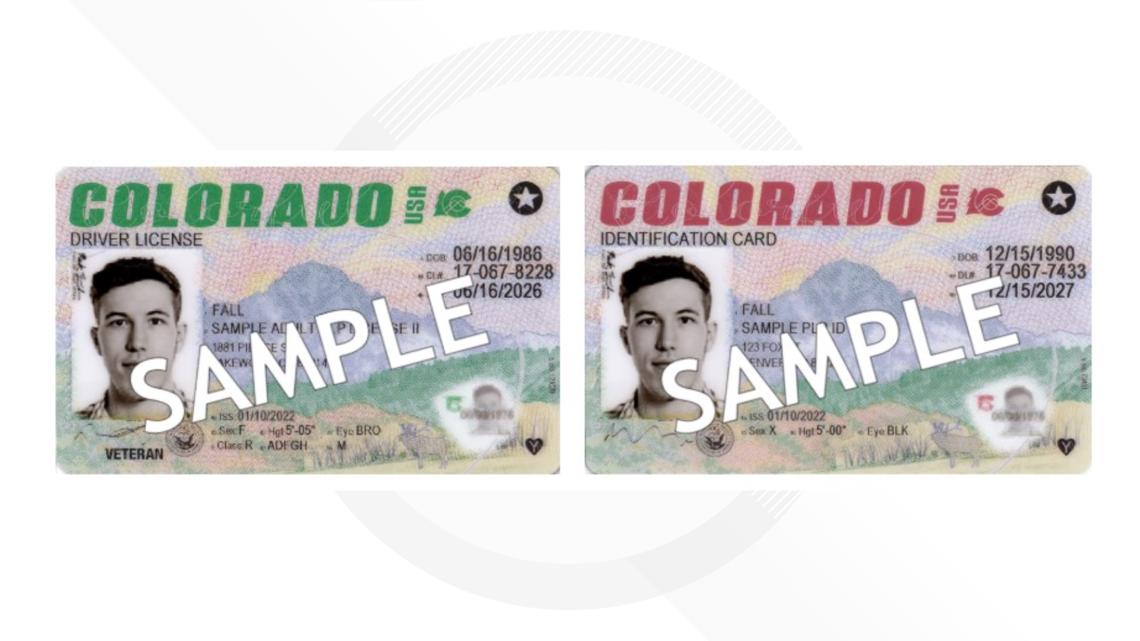
The most definitive indicator of a Colorado REAL ID is a small, circular gold star embedded in the upper right corner of the card. This star signifies that the card meets the federal standards set forth by the REAL ID Act. It’s a subtle but important detail that travelers should look for when presenting their identification. This symbol is internationally recognized as a mark of enhanced security and compliance.
Beyond the Star: Enhanced Security Features
While the gold star is the most visible identifier, Colorado’s REAL ID compliant cards incorporate a suite of sophisticated security features designed to prevent counterfeiting and tampering. These features are not always immediately apparent but contribute to the card’s integrity and trustworthiness.
High-Definition Imagery and Ghost Images
REAL ID cards in Colorado utilize high-definition printing techniques, resulting in crisp and clear images. Furthermore, they often include a “ghost image” – a smaller, duplicate of the primary photograph that is printed directly onto the card’s surface, often overlapping the main photo or in a designated area. This is a common security measure that makes duplication much more difficult.
Tactile Features and Microprinting
Some versions of the Colorado REAL ID may also incorporate tactile features, meaning you can feel raised elements on the card’s surface, such as the issuance date or the cardholder’s name. Microprinting, text so small that it’s almost invisible to the naked eye, is another layer of security. This microprint is typically incorporated into lines, borders, or even within larger text elements and can only be clearly seen under magnification.
UV Ink and Holographic Elements
Under ultraviolet (UV) light, additional elements become visible, such as specific graphics, patterns, or even the cardholder’s photograph. This is a common feature in modern identification documents designed to deter counterfeiters. Colorado’s REAL IDs may also feature holographic images or OVDs (Optically Variable Devices) that shift in appearance when the card is tilted. These can include the state seal, the cardholder’s photo, or other unique designs.
Data Management and Verification
Beyond the physical attributes of the card, the REAL ID Act also governs how states collect and manage the data used to issue these cards. Colorado’s process for obtaining a REAL ID involves verifying identity, date of birth, Social Security number, and residency through specific documentation. This rigorous verification process ensures that the information on the card is accurate and that the cardholder is who they claim to be. When a REAL ID is scanned, the data embedded within it is designed to be more secure and less susceptible to fraudulent alteration.
Obtaining a REAL ID in Colorado
For residents of Colorado, obtaining a REAL ID compliant driver’s license or identification card requires a visit to a local office of the Colorado Division of Motor Vehicles (DMV). It’s important to be prepared with the necessary documentation to expedite the process.
Essential Documentation for Application

To apply for a REAL ID in Colorado, you will need to present original or certified copies of several documents:
- Proof of Identity: This could be a certified copy of your birth certificate, a U.S. passport, or a valid U.S. passport card.
- Proof of Social Security Number: This can be your Social Security card, a W-2 form, or a pay stub showing your full Social Security number.
- Proof of Colorado Residency (Two Documents): Examples include utility bills, bank statements, lease agreements, or official mail from a government agency, all showing your current Colorado address.
- Proof of Legal Presence: For those not born in the U.S., this would involve documents like a valid U.S. passport, Certificate of Citizenship, or Certificate of Naturalization.
It is highly recommended to check the official Colorado DMV website for the most up-to-date list of accepted documents, as requirements can occasionally be updated.
The Application Process
During your visit to the DMV, you will fill out an application form, present your documentation for verification, have your photograph taken, and provide a thumbprint. You will then pay the required fee for the license or ID card. The new REAL ID compliant card will then be mailed to your verified address within a specified timeframe. It’s important to note that while your application is being processed, you may receive a temporary paper identification document, but this is not a REAL ID.
When You’ll Need a REAL ID
The primary driver for obtaining a REAL ID is for air travel. Starting May 7, 2025, all individuals 18 years of age and older will need a REAL ID-compliant driver’s license or identification card, or another TSA-acceptable form of identification, such as a U.S. passport, to fly domestically. This deadline has been extended a few times, so it’s always wise to stay informed about any further changes, but preparing for the current deadline is advisable.
Domestic Air Travel
Once the deadline is in effect, a standard Colorado driver’s license or ID card that is not REAL ID compliant will no longer be sufficient for boarding commercial aircraft within the United States. This means that if you plan to fly from Denver International Airport to cities like Los Angeles or Chicago, your non-compliant card will be rejected at TSA checkpoints.
Accessing Federal Facilities
Beyond air travel, REAL ID compliant cards are also required for accessing certain federal facilities. This includes:
- Entering federal courthouses.
- Accessing federal prisons.
- Entering certain federal buildings that require identification for entry.
It is important to note that the REAL ID Act does not affect your ability to drive, vote, or access state services. Your standard Colorado driver’s license will still be valid for these purposes. However, for the specific federal uses mentioned, compliance with the REAL ID Act is becoming increasingly important.
Distinguishing REAL ID from Standard Licenses
For those who already possess a Colorado driver’s license or identification card, it’s simple to determine if it is REAL ID compliant without needing to visit the DMV. As mentioned earlier, the presence of the gold star in the upper right corner is the universal indicator.
Non-Compliant Cards
Standard Colorado driver’s licenses and identification cards issued before the state began issuing REAL ID compliant versions will not have this gold star. These cards remain valid for driving and other state-related purposes but will not be accepted for federal identification requirements after the compliance deadline.
The Importance of Planning
As the May 7, 2025, deadline approaches, it is advisable for all Colorado residents who anticipate needing to fly domestically or access federal facilities to plan their visit to the DMV to obtain a REAL ID compliant card. The process can sometimes involve wait times, so proactive planning is key to avoiding any travel disruptions or access issues. Keeping your identification documents organized and understanding the requirements can make the entire experience smoother. The transition to enhanced security standards is a national effort, and Colorado is ensuring its residents are well-equipped to meet these evolving requirements for travel and federal access.
LifeOutOfTheBox is a participant in the Amazon Services LLC Associates Program, an affiliate advertising program designed to provide a means for sites to earn advertising fees by advertising and linking to Amazon.com. Amazon, the Amazon logo, AmazonSupply, and the AmazonSupply logo are trademarks of Amazon.com, Inc. or its affiliates. As an Amazon Associate we earn affiliate commissions from qualifying purchases.