
Establishing a Limited Liability Company (LLC) in Connecticut offers a robust legal structure for businesses, blending the liability protection of a corporation with the pass-through taxation and operational flexibility of a partnership or sole proprietorship. This guide provides a comprehensive, step-by-step approach for entrepreneurs and business owners looking to navigate the process of forming an LLC within the Constitution State. From initial planning to post-formation compliance, understanding each stage is crucial for a successful launch and sustained operation.
Understanding the Basics of an LLC in Connecticut
Before embarking on the formation process, it’s essential to grasp what an LLC is and why it’s a preferred choice for many businesses. An LLC is a business structure recognized by state statute. Its primary advantage lies in the separation of personal assets from business debts and liabilities. This means that the personal assets of the LLC’s members (owners) are generally protected from business lawsuits and creditors.

Key Benefits of Forming an LLC
- Limited Liability Protection: This is the cornerstone of an LLC. Members are typically not personally responsible for the debts or legal obligations of the company.
- Pass-Through Taxation: By default, LLCs are taxed as partnerships (if multi-member) or sole proprietorships (if single-member). Profits and losses are passed through to the members’ personal income tax returns, avoiding the “double taxation” often associated with C-corporations.
- Operational Flexibility: LLCs are not subject to the same stringent record-keeping and operational formalities as corporations. They offer a simpler management structure.
- Credibility: Operating as a formal business entity like an LLC can enhance your business’s credibility with customers, suppliers, and potential investors.
When is an LLC the Right Choice?
An LLC is an excellent option for a wide range of businesses, including:
- Small businesses and startups
- Freelancers and independent contractors
- Real estate investors
- Service-based businesses
- Businesses looking for liability protection without corporate complexities
Step-by-Step Guide to Forming Your Connecticut LLC
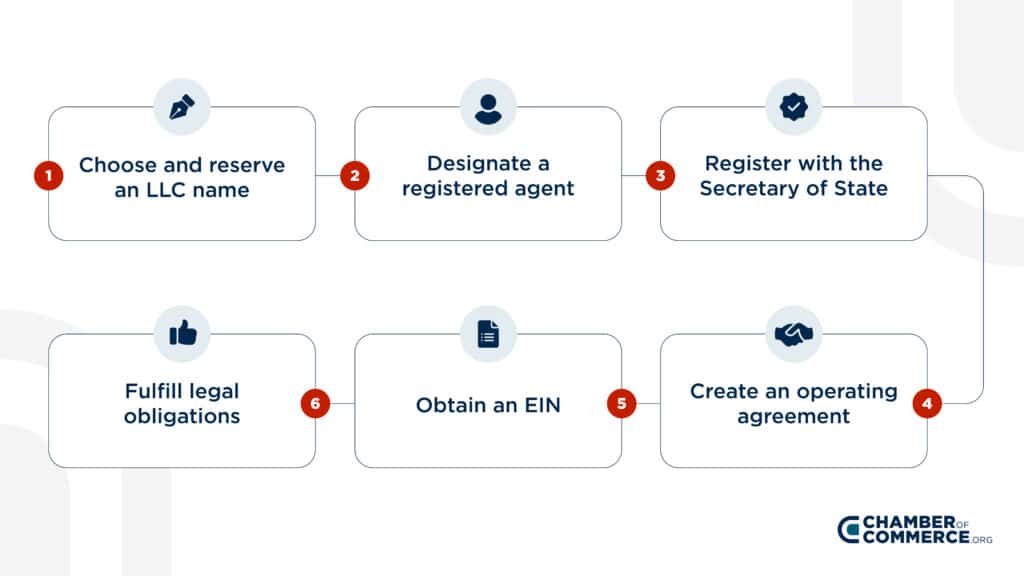
Forming an LLC in Connecticut involves several key steps, each requiring careful attention to detail. The process is primarily managed through the Connecticut Secretary of State ‘s office.
Step 1: Choose a Unique Business Name
The first critical step is selecting a name for your LLC. This name must be distinguishable from other registered business names in Connecticut.
Name Availability Search
You can check the availability of your desired business name by conducting a search on the Connecticut Secretary of State ‘s website. This search will reveal whether another business is already using the name. It’s advisable to have a few alternative names in mind in case your first choice is unavailable.
Naming Requirements
Your LLC name must include a designator indicating that it is a limited liability company. Acceptable designators in Connecticut include:
- “Limited Liability Company”
- “LLC”
- “L.L.C.”
The name cannot contain words that may be misleading as to the nature of the business, such as “Bank,” “Trust,” “Insurance,” or “Credit Union,” unless specific authorization is obtained.
Step 2: Appoint a Registered Agent
A registered agent is a person or business entity designated to receive official legal documents and government correspondence on behalf of your LLC. The registered agent must have a physical street address in Connecticut (a P.O. Box is not sufficient) and be available during normal business hours.
Who Can Be a Registered Agent?
- An Individual Resident of Connecticut: This could be you, another member of the LLC, or an employee.
- A Business Entity: This could be another domestic or foreign business authorized to do business in Connecticut, provided its business office is the same as the registered agent’s address.
Choosing a reliable registered agent is crucial, as failure to receive important notices could have serious consequences for your business. Many entrepreneurs opt for a professional registered agent service for added convenience and assurance.
Step 3: File the Certificate of Organization
This is the official document that legally establishes your LLC in Connecticut. The Certificate of Organization (often referred to as Articles of Organization in other states) must be filed with the Connecticut Secretary of State.
Information Required on the Certificate of Organization
While the exact wording may vary slightly, a typical Connecticut Certificate of Organization will require the following information:
- LLC Name: The exact name you chose and verified.
- Registered Agent Name and Address: The name and physical street address of your designated registered agent in Connecticut.
- Principal Office Address: The main business address of the LLC. This can be the same as the registered agent’s address if applicable.
- Name and Address of Organizer: The person or entity filing the Certificate of Organization. This is usually the business owner or their legal representative.
- Management Structure: Whether the LLC will be managed by its members (member-managed) or by appointed managers (manager-managed).
- Effective Date: The date on which the LLC will become effective, which can be the date of filing or a future date.
Filing Methods
You can file the Certificate of Organization online through the Connecticut Secretary of State ‘s website, by mail, or in person. Online filing is generally the fastest and most efficient method.
Filing Fee
There is a filing fee associated with the Certificate of Organization. As of the latest information, the fee is $120. It is always advisable to check the Connecticut Secretary of State ‘s website for the most current fee schedule.
Step 4: Create an Operating Agreement
While not legally required by the state of Connecticut for LLC formation, an Operating Agreement is a crucial internal document for any LLC. It outlines the ownership structure, operating procedures, and member responsibilities of your LLC.
Purpose of an Operating Agreement
- Defines Ownership Percentages: Clearly states each member’s ownership stake in the company.
- Outlines Member Duties and Responsibilities: Clarifies who is responsible for what within the business.
- Specifies Profit and Loss Distribution: Details how profits and losses will be allocated among members.
- Establishes Decision-Making Processes: Sets forth how major business decisions will be made.
- Governs Member Admission and Withdrawal: Provides a framework for adding or removing members.
- Dissolution Procedures: Outlines how the LLC will be dissolved if necessary.
A well-drafted Operating Agreement helps prevent disputes among members and ensures smooth operations. It also strengthens the liability protection of the LLC by demonstrating that it is a distinct business entity with defined operational rules.
Step 5: Obtain an Employer Identification Number (EIN)
An EIN, also known as a Federal Tax Identification Number, is a unique nine-digit number assigned by the Internal Revenue Service (IRS) to businesses for tax purposes.
When is an EIN Required?
You will need an EIN if your LLC:
- Plans to hire employees.
- Is a multi-member LLC.
- Files excise taxes or alcohol, tobacco, and firearms taxes.
- Operates as a corporation or partnership for tax purposes.
- Has a Keogh plan.
- Is involved with certain types of organizations.
Even if not strictly required, obtaining an EIN is recommended as it allows you to open a business bank account, which is essential for maintaining the separation between personal and business finances.
How to Obtain an EIN
You can apply for an EIN online directly from the Internal Revenue Service (IRS) website. The application is free, and you will receive your EIN immediately upon successful submission.
Step 6: Understand Ongoing Compliance Requirements
Forming an LLC is just the beginning. To maintain good standing with the state of Connecticut and the federal government, you must adhere to ongoing compliance requirements.
Annual Report
Connecticut requires LLCs to file an annual report. This report updates the state on any changes to your LLC’s information, such as changes in registered agent, principal office, or management. The annual report is due by March 31st each year. There is a filing fee associated with this report, which is currently $150. Failure to file the annual report can result in administrative dissolution of your LLC.
Business Licenses and Permits
Depending on your industry and the nature of your business activities, you may need to obtain specific federal, state, and local licenses and permits. Researching these requirements thoroughly is essential for operating legally.
Tax Obligations
As mentioned, LLCs generally benefit from pass-through taxation. However, you will still need to file appropriate federal, state, and potentially local tax returns. Consult with a tax professional to ensure you are meeting all your tax obligations accurately and on time.
Factors to Consider for Your Connecticut LLC
Beyond the basic formation steps, several other considerations can significantly impact your LLC’s success and operational efficiency in Connecticut.
Opening a Business Bank Account
It is imperative to open a dedicated business bank account for your LLC. This practice is critical for maintaining the legal separation between your personal finances and your business finances, which is fundamental to preserving your limited liability protection. Using a personal account for business transactions can “pierce the corporate veil,” exposing your personal assets to business debts.
Business Insurance
While not always mandated by law, having appropriate business insurance is a prudent step for protecting your LLC from unforeseen events. Common types of business insurance include:
- General Liability Insurance: Covers claims of bodily injury or property damage.
- Professional Liability Insurance (Errors & Omissions): Protects service-based businesses from claims of negligence or mistakes.
- Workers’ Compensation Insurance: Required if you have employees, covering medical expenses and lost wages for work-related injuries.
Legal and Professional Advice
Navigating business formation and compliance can be complex. It is highly recommended to consult with legal and tax professionals.
- Business Attorney: Can provide guidance on structuring your LLC, drafting your Operating Agreement, and ensuring compliance with all legal requirements.
- Certified Public Accountant (CPA): Can advise on tax implications, set up accounting systems, and ensure accurate tax filings.

Conclusion
Forming an LLC in Connecticut is a strategic move for business owners seeking robust liability protection and operational flexibility. By diligently following the steps outlined – from selecting a unique name and appointing a registered agent to filing the Certificate of Organization and establishing an Operating Agreement – you lay a solid foundation for your business. Remember that ongoing compliance, such as filing annual reports, and maintaining sound financial practices are just as important as the initial formation process. With careful planning and attention to detail, your LLC in Connecticut can thrive.
LifeOutOfTheBox is a participant in the Amazon Services LLC Associates Program, an affiliate advertising program designed to provide a means for sites to earn advertising fees by advertising and linking to Amazon.com. Amazon, the Amazon logo, AmazonSupply, and the AmazonSupply logo are trademarks of Amazon.com, Inc. or its affiliates. As an Amazon Associate we earn affiliate commissions from qualifying purchases.