
A Haven for Dissent and Order
The establishment of the Connecticut Colony was not a singular event, but rather a complex interplay of religious aspirations, political disagreements, and a pragmatic desire for self-governance. Emerging from the shadow of more established Puritan settlements, Connecticut offered a unique proposition: a society built on strong religious principles yet grounded in a remarkably progressive and democratic framework for its time. Its genesis is deeply rooted in the theological and social currents of 17th-century England and the nascent attempts to forge a new identity in the New World.

Religious Dissatisfaction and the Quest for Purity
The primary impetus for the migration of many early settlers to North America was a deep-seated religious discontent. The Puritans, a group seeking to “purify” the Church of England of its perceived Catholic remnants, found themselves increasingly at odds with the religious and political establishment back home. While the Massachusetts Bay Colony offered a haven for many, its strict theocratic governance and internal divisions soon led some to seek even greater autonomy and a purer expression of their faith.
- John Winthrop’s Vision and its Limits: John Winthrop, the first governor of the Massachusetts Bay Colony, envisioned a “city upon a hill,” a model of religious and civic virtue. However, the stringent requirements for church membership and participation in governance within Massachusetts left many feeling excluded and stifled. This exclusionary practice, coupled with disputes over land and authority, created fertile ground for dissent.
- The Appeal of New Horizons: The promise of fertile lands and the opportunity to establish communities that more closely aligned with their spiritual ideals drew groups away from the established settlements. The desire to build a society from the ground up, where their religious principles could be fully implemented without external interference, was a powerful motivator.
Political Aspirations and the Pursuit of Self-Governance
Beyond religious fervor, the establishment of Connecticut was also a testament to a growing desire for self-determination and the creation of a political structure that offered broader participation. The experience in Massachusetts, where governance was often centralized and decisions could be perceived as being made by a select few, highlighted the appeal of a system that empowered more of its citizens.
- Thomas Hooker’s Influence: A pivotal figure in the establishment of Connecticut was Thomas Hooker, a charismatic Puritan minister who differed with the leadership of the Massachusetts Bay Colony on matters of church membership and political participation. Hooker believed that all freemen, not just church members, should have a voice in government. This conviction led him and his followers to seek a new location where they could implement their more inclusive vision of governance.
- The Fundamental Orders of Connecticut: The most significant political achievement of the early Connecticut settlers was the creation of the Fundamental Orders of Connecticut in 1639. This document is widely regarded as one of the first written constitutions in the world. It established a representative government with a governor, a council, and an assembly elected by the freemen. This radical departure from the more exclusive governance of Massachusetts laid the groundwork for a more democratic society in the colonies.
Geographical Draw and Expansion
The fertile river valleys of the Connecticut River offered a significant geographical draw for settlers. The land was more conducive to agriculture than the rocky terrain of coastal Massachusetts, promising greater prosperity and sustainability for the growing population. This agricultural potential, combined with the desire for new opportunities, fueled westward expansion from the established colonies.
The Lure of Fertile Lands
The economic prospects of the Connecticut River valley were a crucial factor in its settlement. The land was rich and well-suited for farming, allowing colonists to cultivate crops like corn, wheat, and beans, which were essential for survival and trade. This agricultural bounty was a stark contrast to some of the less productive areas of the initial Puritan settlements.
- Economic Self-Sufficiency: The ability to produce a surplus of foodstuffs was vital for the long-term success and independence of the colony. It allowed settlers to sustain themselves, trade with other colonies and Native American tribes, and reduce their reliance on supplies from England.
- Growth and Prosperity: The agricultural wealth generated by the Connecticut River valley contributed to the overall growth and prosperity of the colony, attracting more settlers and further solidifying its existence.
Expansion and the Formation of New Towns
The settlement of the Connecticut River valley was not a planned, top-down endeavor but rather a series of migrations and the organic growth of new communities. As word of the fertile lands and the promise of a more self-governing society spread, groups began to organize expeditions to establish new towns.
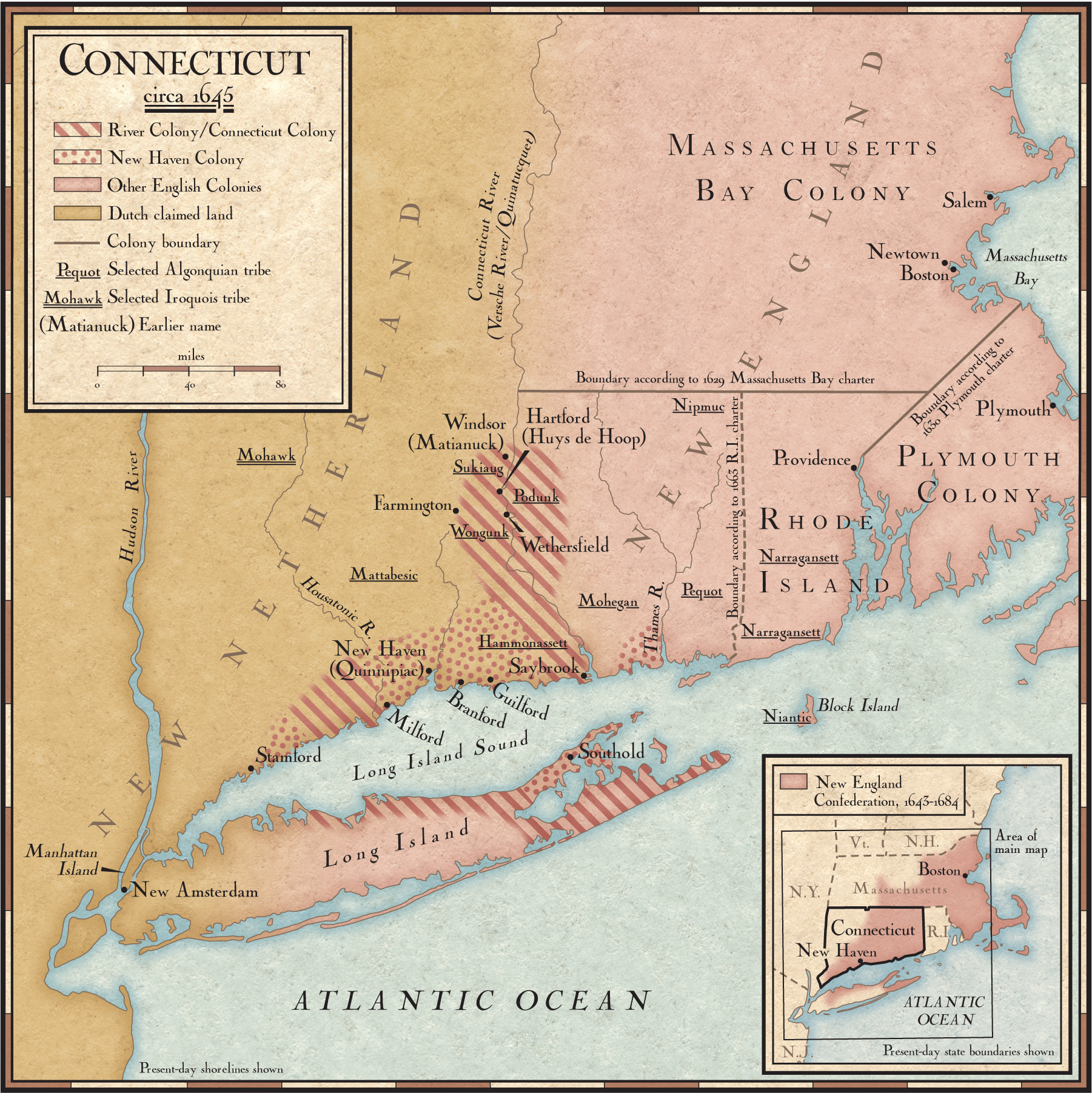
- Early Settlements: The first significant settlements in the area were established in 1635 and 1636. Hartford, Wethersfield, and Windsor were among the earliest towns founded along the Connecticut River, laying the foundation for the future colony. These towns, initially independent, would eventually coalesce under a unified government.
- Divergent Streams of Settlement: While Thomas Hooker’s followers from the Massachusetts Bay Colony were instrumental, there were also other groups, such as those from the Plymouth Colony, who established settlements in the region. This diversity of origins, while sometimes leading to initial friction, ultimately contributed to the unique character of the Connecticut Colony.
Relations with Indigenous Peoples and Other Colonies
The establishment of the Connecticut Colony was not conducted in a vacuum. It involved complex and often fraught interactions with the indigenous Native American tribes already inhabiting the land, as well as navigating the political landscape of other English colonies. These relationships significantly shaped the development and security of the new settlement.
Interacting with Native American Tribes
The arrival of English settlers inevitably led to encounters with the indigenous populations of the region, primarily the Pequot and Mohegan tribes. These interactions were characterized by a mix of trade, diplomacy, and, tragically, conflict.
- The Pequot War: The early years of the colony were marked by the devastating Pequot War (1636-1638). This conflict, fueled by land disputes, competition for resources, and escalating tensions, resulted in the near annihilation of the Pequot people. The war had a profound and lasting impact on the relationship between European colonists and Native Americans in the region, and it solidified the dominance of the English settlements.
- Alliances and Diplomacy: Following the Pequot War, the nascent Connecticut Colony sought to establish relationships with other tribes, such as the Mohegan under Chief Uncas. These alliances, though often pragmatic and self-serving for both sides, provided a degree of stability and allowed the English to expand their territorial claims.
Navigating Inter-Colonial Dynamics
The English colonization of North America was a competitive enterprise, and the Connecticut Colony had to constantly negotiate its place among other English settlements, particularly those in its immediate vicinity.
- Competition with Massachusetts: As mentioned, the Connecticut Colony emerged partly as a response to perceived limitations in the governance of the Massachusetts Bay Colony. While there were periods of cooperation, underlying tensions and competing interests persisted.
- The Role of Royal Charters: The eventual securing of royal charters provided a degree of legitimacy and protection for the Connecticut Colony. These charters defined its boundaries, granted certain rights, and helped to insulate it from the more direct control of other colonies, allowing it to pursue its own destiny. The establishment of the Saybrook Colony by Lords Saye and Sele and Lord Brooke, which was later absorbed by Connecticut, also played a role in solidifying English claims to the territory.
Legacy and the Foundation of a “Bible Commonwealth”
The establishment of the Connecticut Colony left an enduring legacy, shaping not only the future of the region but also contributing to the broader narrative of American self-governance and the development of democratic ideals. Its founders sought to create a “Bible Commonwealth,” a society where religious principles guided civic life, but they inadvertently laid the groundwork for a more secular and inclusive political order.
The “Bible Commonwealth” Ideal
The initial vision for Connecticut was deeply rooted in the Puritan ideal of a godly society. The founders aimed to create a community where religious observance was paramount, and where the laws and governance of the colony reflected biblical principles.
- Church and State Integration: In practice, this meant a close integration of church and state. Church membership was often a prerequisite for full participation in civil affairs, and religious leaders held considerable influence. This model was intended to ensure moral order and religious conformity.
- Moral Governance: The emphasis was on establishing a society that was not only prosperous but also morally upright, a beacon of Puritan piety for others to emulate.

Seeds of Democracy and Enduring Influence
Ironically, the very structures established to create a religiously ordered society contained the seeds of greater democracy and individual liberty. The Fundamental Orders of Connecticut, with its emphasis on elected representation and a written constitution, proved to be a remarkably forward-thinking document.
- The “Land of Steady Habits”: Connecticut became known for its conservatism and stability, often referred to as the “Land of Steady Habits.” This reputation stemmed in part from the enduring legacy of its founding principles, which emphasized order, industry, and a strong work ethic.
- A Model for Future Governance: The success of the Connecticut Colony and its innovative governmental structures served as an inspiration and a practical example for other colonial endeavors. Its emphasis on written laws and representative government contributed to the evolving understanding of governance in the New World, laying crucial groundwork for the eventual formation of the United States of America. The colony’s enduring contributions are still visible today in the historical landmarks and the rich cultural tapestry of the state.