
The allure of the balisong, often referred to as a butterfly knife, is undeniable. Its intricate design, the mesmerizing flicking and flipping maneuvers, and its historical association with martial arts and self-defense have captivated enthusiasts for decades. However, for those considering Florida as a travel destination, or for residents who appreciate the unique craftsmanship of a balisong, a crucial question arises: are these distinctive knives legal in the Sunshine State? Understanding Florida’s specific statutes regarding knives, particularly switchblades and balisongs, is paramount to avoid potential legal complications. This exploration delves into the nuances of Florida’s knife laws, specifically addressing the legality of balisongs and related considerations for travelers and residents alike.

Florida Knife Legislation: A General Overview
Florida’s approach to knife laws is generally more permissive than in many other states, but with specific distinctions that are vital to comprehend. The relevant statutes are primarily found within Chapter 870 of the Florida Statutes, which addresses unlawful assembly, riots, and related offenses. While the chapter’s focus is broader, it contains key definitions and prohibitions pertaining to certain types of weapons, including knives.
Understanding “Prohibited Weapons”
Florida Statute § 870.01 defines a “prohibited weapon” as, among other things, “any knife, the blade of which is exposed in an automatic way by a spring, metal device, or other mechanism of like kind.” This definition is critical because it directly addresses what are commonly known as “switchblades” or “automatic knives.”
However, the statutory language is often interpreted in conjunction with case law and further legislative clarifications. The intent behind the prohibition typically focuses on knives designed for rapid, one-handed deployment, often associated with criminal intent. The crucial element is the automatic exposure of the blade.
The Case of the Balisong
The balisong presents a unique case study within these legal frameworks. Unlike a switchblade, a balisong’s blade is not exposed by a spring or automatic mechanism. Instead, it is deployed through manual manipulation of its two handles. This manual deployment is a key distinction that often places balisongs outside the strict definition of “automatic knives” as outlined in some statutes.
In Florida, the general consensus, supported by interpretations of statutory language and the absence of explicit prohibitions against balisongs themselves, is that they are legal to possess under state law. The mechanism of operation – manual manipulation rather than a spring-loaded or mechanical trigger – is the determining factor. This means that carrying, owning, and even using a balisong for its intended recreational purpose (such as tricking or flipping) is generally permissible within the state.
Specific Statutes and Their Implications
While the possession of a balisong may be legal, it is imperative to consider other Florida statutes that govern the carrying of weapons, including knives. The legality of carrying a balisong, like any other knife, is contingent upon whether it is considered “concealed” and whether the manner of carrying or the circumstances of its possession constitute a violation of public safety laws.
Carrying Concealed Weapons
Florida Statute § 790.01 addresses the carrying of concealed weapons. It states that it is unlawful for any person to carry a “concealed weapon” on or about his or her person. The definition of “weapon” in this context is broad and can include knives. However, there are important exceptions and clarifications, particularly regarding knives.
Florida Statute § 790.001(17) provides a crucial exception: “This chapter does not apply to or govern any antique firearm… or any knife, the blade of which is not longer than 4 inches and which is not a [switchblade knife] or [any ballistic knife].” This exception is significant. It implies that knives with blades not longer than 4 inches and that are not automatic or ballistic knives are generally permissible to carry, whether openly or concealed, without a Concealed Weapon License.
Since a balisong, by its design, is not a switchblade or ballistic knife, and assuming its blade length does not exceed 4 inches, it would generally fall under this exception for concealed carry. This means that a law-abiding adult could potentially carry a balisong concealed in Florida without needing a specific permit for it, provided it meets the blade length criterion.
Open Carry vs. Concealed Carry
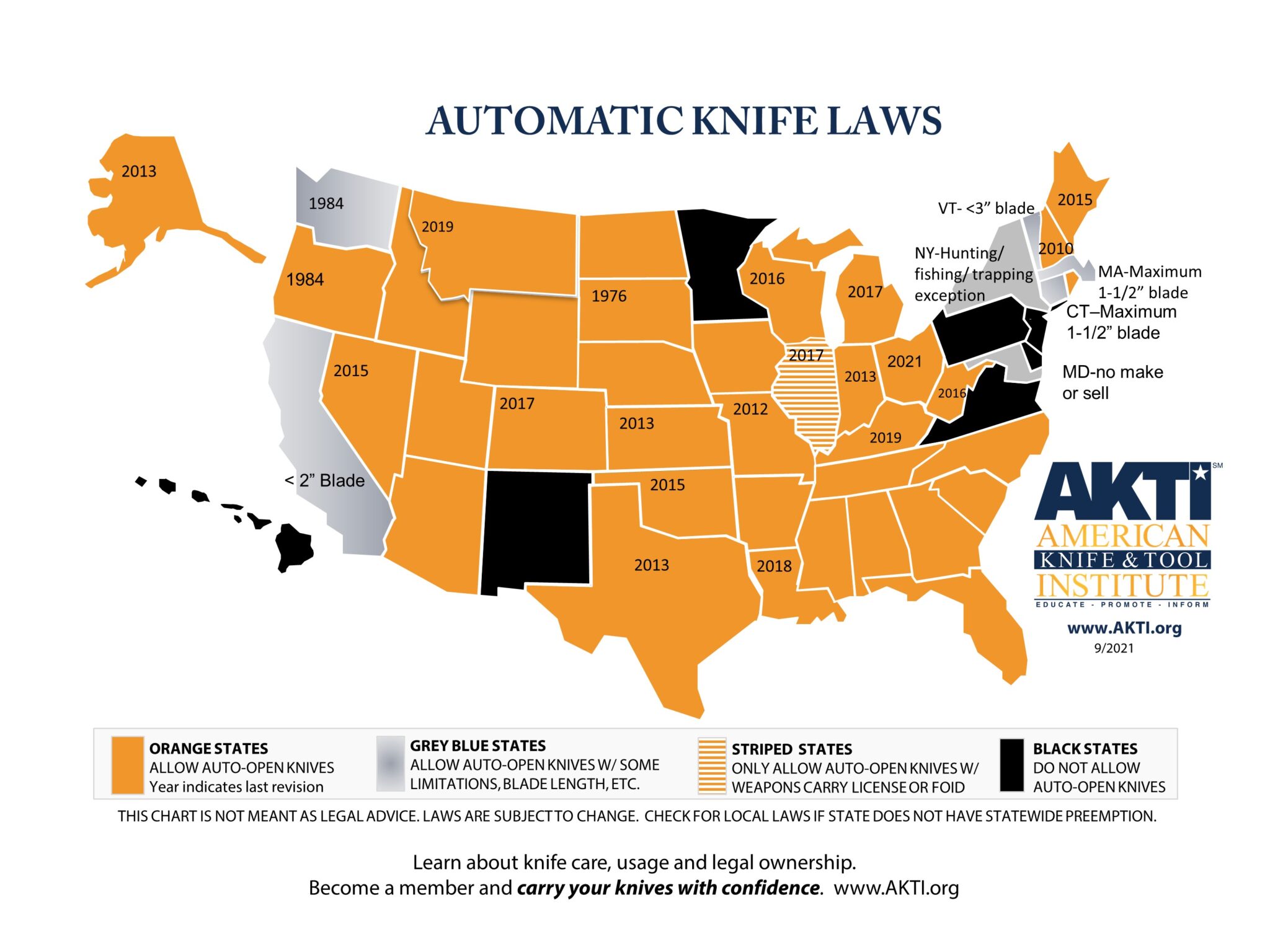
Florida law is somewhat ambiguous regarding the open carry of knives. While there isn’t a specific statute explicitly prohibiting the open carry of all knives, local ordinances in some municipalities might impose restrictions. It is generally understood that open carry of a knife, especially one with a blade over 4 inches, may attract more attention and could potentially be viewed as provocative or threatening depending on the context and location.
For balisongs, due to their distinct appearance and association with “trick knives,” open carry might be perceived differently than a standard utility knife. While not inherently illegal under state law, discretion is advised. For travelers, it’s often best to err on the side of caution and opt for concealed carry if the knife’s size and design permit it and it complies with all statutes.
Intent and Circumstances
Beyond the physical characteristics of the knife and the method of carry, the legal interpretation of knife possession in Florida can also hinge on the owner’s intent and the circumstances surrounding its possession. Florida Statute § 790.10 prohibits the carrying of a concealed weapon with the intent to use it unlawfully against another person. This means that while possessing a balisong may be legal, intending to use it for criminal purposes would render its possession illegal.
Furthermore, certain locations may have specific prohibitions. For instance, carrying weapons, including knives, is typically prohibited in courthouses, schools, polling places, and secure areas of airports. It is always prudent to be aware of signage and posted regulations in any public or private establishment.
Travel Considerations for Balisong Enthusiasts in Florida
For individuals planning a trip to Florida, whether for leisure or to attend events, understanding these legalities is crucial for a stress-free experience.
Traveling with a Balisong
When traveling to Florida with a balisong, especially if flying, adherence to airline regulations is paramount. The Transportation Security Administration (TSA) generally prohibits knives of any kind in carry-on baggage. Therefore, any balisong must be packed in checked luggage. It is advisable to check the specific airline’s policies regarding weapons and knives, as they may have additional requirements. Ensuring the balisong is safely secured and not easily accessible within checked luggage is also a standard recommendation.
Local Ordinances and Private Property
While state law permits the possession of balisongs, it is important to remember that local ordinances can sometimes impose stricter regulations. Some cities or counties might have their own rules regarding the possession or open carry of knives. Furthermore, private businesses and property owners have the right to prohibit weapons on their premises. Always respect posted signage and be prepared to secure your balisong if asked to do so.
Training and Recreational Use
For those interested in the art of balisong flipping, Florida offers no specific state-level prohibitions against practicing this skill, provided it is done in a safe and responsible manner, and in an appropriate location. Public parks or private residences (with permission) are generally suitable environments. However, engaging in such activities in highly public or crowded areas might be viewed as disruptive or a nuisance, and local authorities could intervene.

Conclusion: A Clearer Picture for Balisong Owners in Florida
In summary, the question of whether balisongs are legal in Florida leans towards a “yes,” with important caveats. Under Florida state law, balisongs are generally legal to possess because they are not classified as automatic knives or switchblades, which are the primary focus of the state’s prohibitions. Their manual deployment mechanism distinguishes them from those explicitly banned.
However, legality is a multifaceted concept. The manner in which a balisong is carried and the intent behind its possession are critical factors. As long as the balisong’s blade does not exceed 4 inches, it can typically be carried concealed without a permit. Open carry, while not explicitly outlawed by state statute, may be subject to local ordinances and common-sense discretion.
For travelers and residents, the key takeaway is to be informed and responsible. Familiarize yourself with Florida Statutes § 790.01 and § 870.01, be mindful of blade length limitations, and always exercise good judgment regarding where and how you carry your balisong. By understanding these nuances, enthusiasts can enjoy their interest in balisongs within the legal framework of the Sunshine State.
LifeOutOfTheBox is a participant in the Amazon Services LLC Associates Program, an affiliate advertising program designed to provide a means for sites to earn advertising fees by advertising and linking to Amazon.com. Amazon, the Amazon logo, AmazonSupply, and the AmazonSupply logo are trademarks of Amazon.com, Inc. or its affiliates. As an Amazon Associate we earn affiliate commissions from qualifying purchases.