
Navigating the complexities of legal documentation for vehicle-related transactions in Florida can often lead to inquiries about the specific procedures and contact points. One such area of frequent questioning revolves around the use of a Power of Attorney (POA) when dealing with the Florida Department of Motor Vehicles (DMV), also known as the Department of Highway Safety and Motor Vehicles (DHSMV). While the concept of a POA is widely understood for various legal matters, its application within the realm of vehicle registration, title transfers, and licensing in Florida requires a clear understanding of the state’s regulations and the specific channels through which to obtain necessary information, including contact numbers.
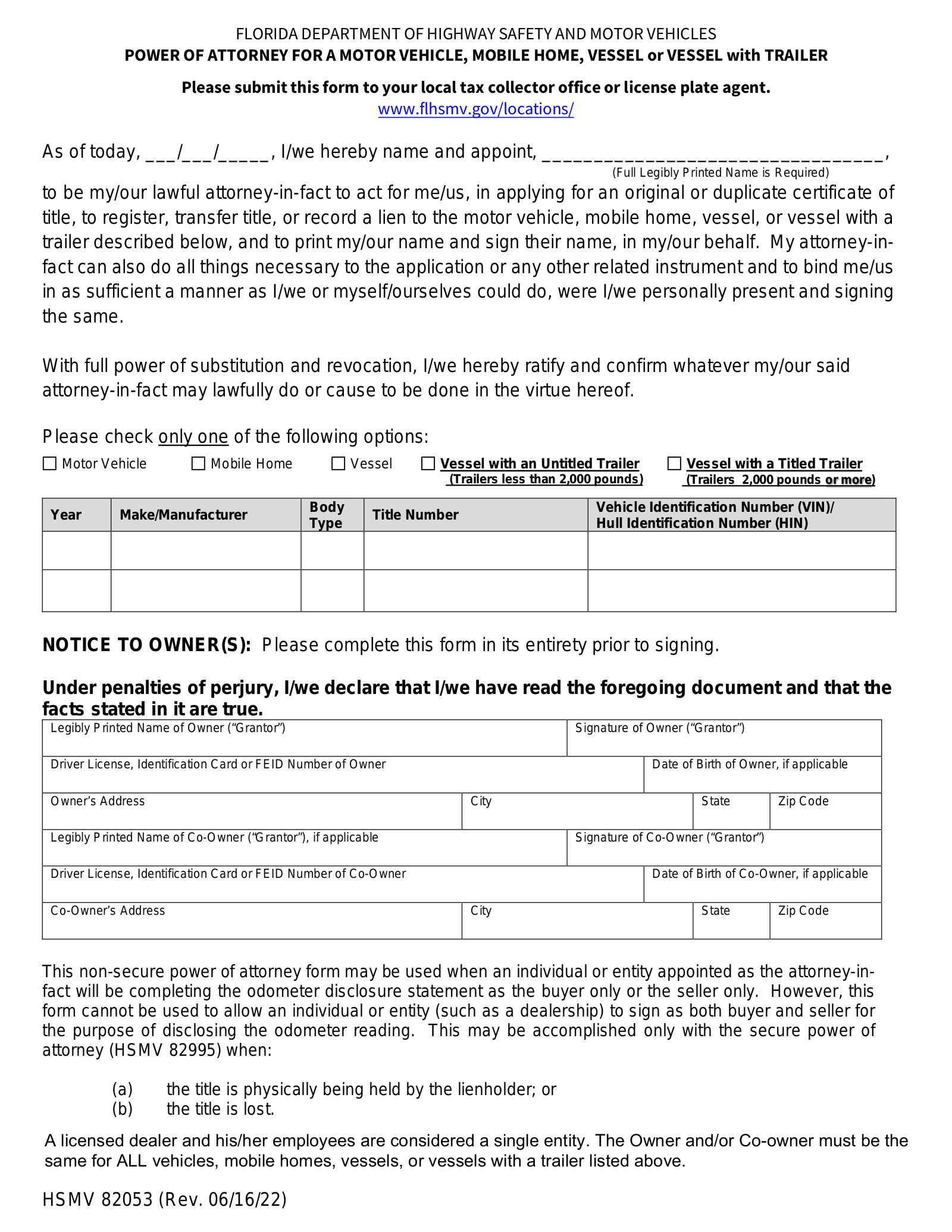
The Florida DMV does not typically provide a direct, dedicated phone number specifically for “Power of Attorney” inquiries in the way one might expect for a general service line. Instead, inquiries related to POAs and their use in DMV transactions are usually handled through the broader customer service channels of the DHSMV. Understanding this distinction is crucial for individuals seeking to authorize another person to act on their behalf for Florida vehicle matters, such as selling a car, registering a new purchase, or handling title issues.
Understanding Power of Attorney in Florida DMV Transactions
A Power of Attorney is a legal document that grants authority to another person (the agent or attorney-in-fact) to act on behalf of the principal (the person granting the authority). In the context of the Florida DMV, a POA can be essential when the vehicle owner is unable to personally visit a Florida Tax Collector’s Office (which often serves as a licensing agent for the DHSMV) to complete a transaction. This might be due to geographical distance, illness, or other incapacitating circumstances.
Types of Power of Attorney Relevant to DMV Matters
While various forms of POAs exist, the most common and generally accepted for DMV transactions in Florida is a Durable Power of Attorney. The “durable” aspect means the POA remains in effect even if the principal becomes incapacitated. This is critical for ensuring that the designated agent can continue to manage vehicle affairs without interruption.
When preparing a POA for Florida DMV purposes, it is vital that the document clearly specifies the scope of authority granted. It should explicitly state that the agent is authorized to handle matters related to motor vehicles, including but not limited to titling, registration, and sale. Vague or overly broad POAs may be rejected by DHSMV personnel. It is highly recommended to consult with a legal professional to draft or review a POA to ensure it meets all legal requirements and is suitable for its intended purpose.
Essential Components of a Valid POA for DMV Use
For a Power of Attorney to be recognized by the Florida DMV or its agents, it must typically include:
- Principal’s Information: Full legal name, address, and signature.
- Agent’s Information: Full legal name and address of the person being granted authority.
- Grant of Authority: Clear statement granting the agent the power to act on behalf of the principal concerning motor vehicle matters. Specificity is key.
- Effective Date and Duration: When the POA becomes effective and, if applicable, when it terminates.
- Durable Clause: For POAs intended to remain effective during incapacitation, the document must contain language that makes it durable under Florida Statutes.
- Notarization: The principal’s signature must be notarized by a Florida notary public.
- Witnesses: In some cases, witness signatures may be required, depending on the specific type and intent of the POA.
Failure to adhere to these requirements can result in the POA being deemed invalid, preventing the agent from completing the desired DMV transaction.
Obtaining Information from the Florida DMV/DHSMV

When seeking specific guidance on using a Power of Attorney with the Florida DMV, or to inquire about the validity of specific POA forms, contacting the Department of Highway Safety and Motor Vehicles (DHSMV) directly is the most effective approach.
Official Contact Channels for the Florida DHSMV
The Florida Department of Highway Safety and Motor Vehicles (DHSMV) provides several official channels for public inquiries:
- Customer Service Center: The primary phone number for general inquiries to the DHSMV is 850-617-3207. This line is staffed by representatives who can provide information on a wide range of services, including those related to vehicle titles, registrations, and driver licenses. When calling about a POA, it is advisable to have specific questions ready. Agents may be able to provide general guidance on acceptable POA formats and documentation requirements.
- Online Resources: The official Florida DHSMV website is an invaluable resource. It often features sections dedicated to specific services, including information on vehicle transactions and required forms. While a direct link to a POA phone number is unlikely, the website may contain downloadable forms, FAQs, and detailed explanations of procedures that address the use of authorized representatives. Searching the site for “Power of Attorney” or “vehicle transactions” can yield pertinent information.
- Local Tax Collector Offices: For most in-person vehicle-related transactions in Florida, residents must visit their local Florida Tax Collector’s Office. These offices act as agents for the DHSMV and are equipped to handle title and registration processes. If you are using a POA, you will typically present the POA document, along with other required paperwork, at one of these local offices. The staff at the Tax Collector’s Office can provide specific instructions and verify the validity of the POA for the transaction at hand. It is often beneficial to call the specific Tax Collector’s Office you plan to visit beforehand to confirm their requirements for POAs.
Preparing for Your Inquiry
When contacting the DHSMV or a local Tax Collector’s Office regarding a Power of Attorney, having the following information ready will streamline the process:
- Vehicle Information: Year, make, model, and Vehicle Identification Number (VIN) of the vehicle in question.
- Transaction Type: Clearly state whether the POA is for a sale, purchase, registration, title transfer, or other specific vehicle-related action.
- Your POA Document: Have a copy of the Power of Attorney readily available, either to present in person or to refer to specific clauses when speaking with an official.
Alternatives and Considerations
While a Power of Attorney is a common and effective tool, other options might be available or necessary depending on the specific circumstances.
When a POA May Not Be Necessary
In some cases, especially for straightforward transactions like renewing a registration, a POA might not be required if the owner can authorize someone else through a simpler form or by providing specific information. However, for title transfers and sales, a POA is generally the most robust legal mechanism.

Legal Counsel and Professional Assistance
For complex situations, or if there is any doubt about the validity or scope of a Power of Attorney, seeking advice from an attorney specializing in estate planning or Florida property law is highly recommended. They can ensure the POA is drafted correctly and will be accepted by the Florida DMV. Additionally, some title and registration services can assist with navigating these processes, though their fees will apply.
Understanding the proper use of a Power of Attorney and knowing how to obtain accurate information from the Florida DMV and its agents is essential for smooth vehicle transactions. While a direct “POA phone number” for the Florida DMV is not a distinct entity, the general customer service lines and local Tax Collector’s Offices are equipped to guide you through the necessary steps.
LifeOutOfTheBox is a participant in the Amazon Services LLC Associates Program, an affiliate advertising program designed to provide a means for sites to earn advertising fees by advertising and linking to Amazon.com. Amazon, the Amazon logo, AmazonSupply, and the AmazonSupply logo are trademarks of Amazon.com, Inc. or its affiliates. As an Amazon Associate we earn affiliate commissions from qualifying purchases.