
Navigating the purchase of a vehicle, particularly in a state as vast and diverse as Florida, can be an exciting prospect. Whether you’re a resident seeking a reliable daily driver or a visitor looking for an adventure vehicle to explore the Sunshine State’s many attractions, the anticipation of a new set of wheels is undeniable. However, this excitement can quickly turn into dismay if the vehicle you purchase turns out to be a “lemon” – a car with persistent, unfixable defects that significantly impair its use, value, or safety. This is where consumer protection laws, commonly known as “lemon laws,” come into play. For those considering or having recently made a vehicle purchase in Florida, understanding the state’s specific protections is crucial.

Understanding Florida’s Lemon Law: The Automobile Lemon Law Act
Florida does indeed have a robust consumer protection statute designed to address situations where a new motor vehicle is found to be defective. Officially known as the Florida Automobile Lemon Law Act, this legislation provides recourse for consumers who have purchased a new vehicle that suffers from a nonconformity that cannot be repaired after a reasonable number of attempts. The primary goal of this act is to ensure that consumers receive vehicles that are free from substantial defects and that manufacturers and dealers are held accountable for providing quality products.
What Constitutes a “Lemon” Under Florida Law?
To qualify for protection under the Florida Lemon Law, a vehicle must meet specific criteria. The law focuses on new motor vehicles, generally defined as vehicles purchased or leased for personal, family, or household purposes. The vehicle must also have a substantial defect, known as a “nonconformity,” that impairs its use, market value, or safety.
Key Criteria for a Lemon:
- New Motor Vehicle: The law primarily applies to new vehicles purchased or leased in Florida. While there can be some nuances regarding used vehicles, the strongest protections are for new car buyers.
- Substantial Nonconformity: This refers to a defect that significantly hinders the vehicle’s functionality, makes it less safe to operate, or substantially diminishes its resale value. Minor cosmetic issues or problems that do not impact the core operation of the vehicle typically do not qualify.
- Reasonable Number of Repair Attempts: This is a critical component. The law presumes that a vehicle is a lemon if the manufacturer or its authorized dealer has attempted to repair the same nonconformity a specified number of times without success.
- Three Repair Attempts: If the same nonconformity has been subject to three separate repair attempts by the manufacturer or its authorized dealer, and the problem persists, the vehicle may be considered a lemon.
- Out of Service for 30 Days: Alternatively, a vehicle can be deemed a lemon if it has been out of service for repairs due to one or more nonconformities for a cumulative total of 30 or more days during the first 12 months of ownership or the first 12,000 miles driven, whichever comes first. It is important to note that these days do not have to be consecutive.
It is important for consumers to meticulously document all repair attempts, including dates, descriptions of the problems, and work performed. This documentation is essential for building a case if legal action becomes necessary.
The Consumer’s Rights and Remedies
When a vehicle is determined to be a lemon under Florida law, the consumer has a right to seek a remedy from the manufacturer. The primary remedies available are:
- Vehicle Replacement: The consumer can request a comparable new motor vehicle. The replacement vehicle must be the same model or, if that is unavailable, a comparable model with equivalent features and value.
- Vehicle Buyback: Alternatively, the consumer can request a refund of the full purchase price of the vehicle. This buyback price typically includes the full purchase price, less a reasonable allowance for the consumer’s use of the vehicle. The allowance for use is generally calculated based on the mileage driven before the first repair attempt for the nonconformity. Other charges that may be refunded include taxes, title, registration fees, and any collateral charges such as financing fees.
The consumer generally has the option to choose between replacement or buyback. The manufacturer is also responsible for any consequential damages that resulted from the nonconformity, such as towing costs or rental car expenses incurred due to the defects.
The Process of Filing a Lemon Law Claim in Florida
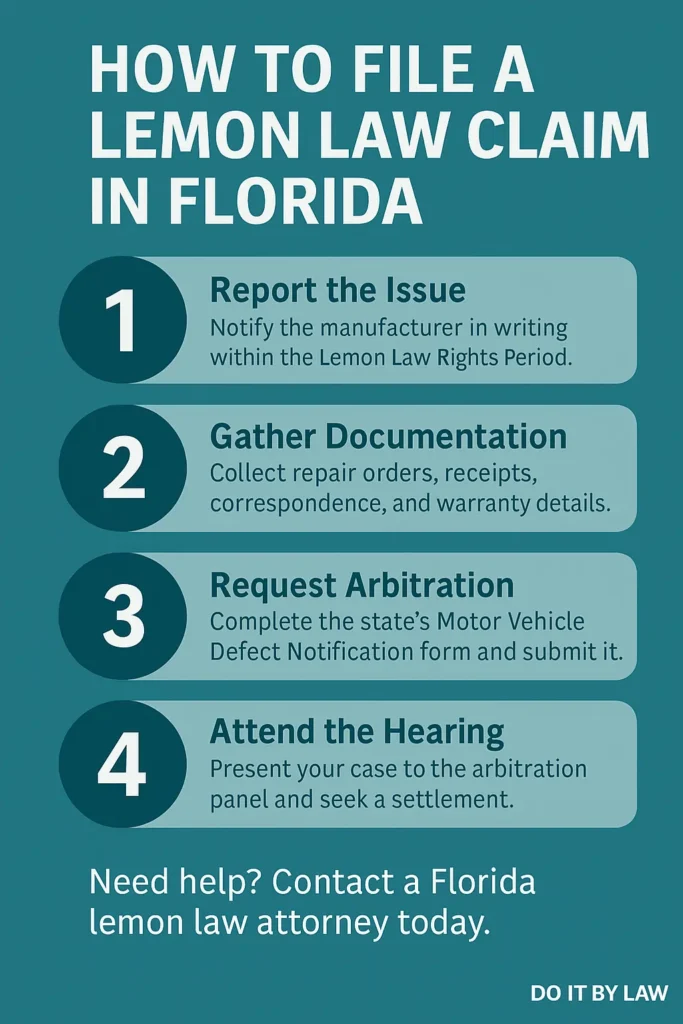
Pursuing a lemon law claim in Florida involves a structured process designed to give consumers a fair opportunity to resolve their issues. While it is possible to navigate this process independently, many consumers find it beneficial to consult with an attorney specializing in lemon law.

Step-by-Step Guide to Filing a Claim:
- Document Everything: As mentioned, meticulous record-keeping is paramount. Keep copies of all repair orders, invoices, communications with the dealer and manufacturer, and any other relevant documents. This documentation will serve as the foundation of your claim.
- Provide Notice to the Manufacturer: Before filing a lawsuit, Florida law requires that the consumer provide written notification to the manufacturer of the vehicle’s nonconformity. This notice should clearly state the problem and the desired resolution (replacement or buyback). The manufacturer is then typically given one final opportunity to attempt repairs.
- Manufacturer’s Final Repair Opportunity: If the manufacturer opts to provide a final repair opportunity, the consumer must allow the manufacturer or its authorized representative to attempt to fix the defect. This opportunity is usually granted after the consumer has provided written notice of the ongoing issue.
- Arbitration or Litigation: If the manufacturer fails to repair the nonconformity after the final attempt, or if the consumer is unsatisfied with the outcome, they can pursue legal action. This can involve:
- Informal Dispute Settlement (IDSO): Some manufacturers have established informal dispute settlement programs that are certified by the Attorney General’s office. Consumers can opt to use these programs, which are typically faster and less expensive than traditional litigation. However, if the consumer is dissatisfied with the outcome of arbitration, they can still pursue legal action in court.
- Formal Litigation: The consumer can file a lawsuit in civil court to seek enforcement of their rights under the Florida Lemon Law. This process involves filing a complaint, discovery, and potentially a trial.
The Role of Attorneys in Lemon Law Cases
While it is possible to handle a lemon law claim yourself, the complexities of the law and the legal system can be daunting. An experienced lemon law attorney can:
- Evaluate Your Case: Assess whether your vehicle meets the criteria for a lemon and advise you on the strength of your claim.
- Handle Communication: Act as an intermediary between you, the dealer, and the manufacturer, ensuring that all communications are handled professionally and legally.
- Negotiate Settlements: Leverage their expertise to negotiate a favorable settlement, whether it be a replacement vehicle or a buyback.
- Represent You in Court or Arbitration: If a settlement cannot be reached, they can represent your interests in legal proceedings.
Crucially, under the Florida Automobile Lemon Law Act, if you are successful in your claim, the manufacturer is often required to pay your reasonable attorney’s fees and court costs. This provision makes legal representation accessible to more consumers.
Important Considerations for Consumers
Beyond the legal framework, there are several practical aspects for consumers to keep in mind when dealing with potential lemon law issues in Florida.
Timelines and Limitations
The Florida Lemon Law has specific timeframes within which claims must be made. Generally, a consumer must report the nonconformity and pursue remedies within a period defined by the vehicle’s age and mileage – typically within the first 12 months or 12,000 miles for the initial defect, with additional timeframes for pursuing remedies after that. It’s essential to act promptly upon discovering a substantial problem.
What is Not Covered
It’s important to note that the Florida Lemon Law does not cover every vehicle problem. Issues arising from abuse, neglect, vandalism, or modifications made by the consumer are typically excluded. Additionally, the law primarily applies to new vehicles; while some protections might exist for used vehicles under different consumer protection statutes, the specific remedies and criteria of the Lemon Law Act are for new motor vehicles.
Alternatives to Lemon Law Claims
In some instances, a vehicle might not meet the strict criteria of the Florida Lemon Law, but the consumer may still have recourse. Dealers may offer goodwill repairs, extended warranties might provide coverage, or consumers might have claims under general contract law or the Florida Deceptive and Unfair Trade Practices Act. However, for qualifying new vehicles with persistent defects, the Lemon Law Act offers the most direct and powerful protection.
For residents and visitors to Florida alike, the peace of mind that comes with knowing their automotive purchase is protected by a robust lemon law is invaluable. Understanding these rights and the processes involved empowers consumers to make informed decisions and seek appropriate remedies when faced with a defective vehicle, ensuring that their experience exploring the beautiful state of Florida is a positive one, from the road trip’s start to its enjoyable conclusion.
LifeOutOfTheBox is a participant in the Amazon Services LLC Associates Program, an affiliate advertising program designed to provide a means for sites to earn advertising fees by advertising and linking to Amazon.com. Amazon, the Amazon logo, AmazonSupply, and the AmazonSupply logo are trademarks of Amazon.com, Inc. or its affiliates. As an Amazon Associate we earn affiliate commissions from qualifying purchases.