
Navigating the landscape of social assistance programs can often feel complex, particularly when seeking vital support for food security. For residents of Florida, understanding the process for applying for the Supplemental Nutrition Assistance Program (SNAP), commonly referred to as food stamps, is crucial. This guide aims to demystify the application procedure, eligibility requirements, and key considerations for individuals and families seeking this essential form of assistance within the Sunshine State. While the primary focus here is on accessing a vital resource, it’s important to note how such programs indirectly support the broader lifestyle of residents by ensuring basic needs are met, allowing individuals to engage more fully with other aspects of life, whether that’s enjoying local culture or planning budget travel.
Understanding SNAP in Florida and Eligibility Criteria
The Supplemental Nutrition Assistance Program (SNAP) in Florida is administered by the Florida Department of Children and Families (DCF). Its primary purpose is to provide eligible low-income individuals and families with the means to purchase nutritious food, thereby improving their health and well-being. The program operates under federal guidelines, but each state has specific rules regarding income limits, household composition, and asset tests.
Income and Asset Limitations
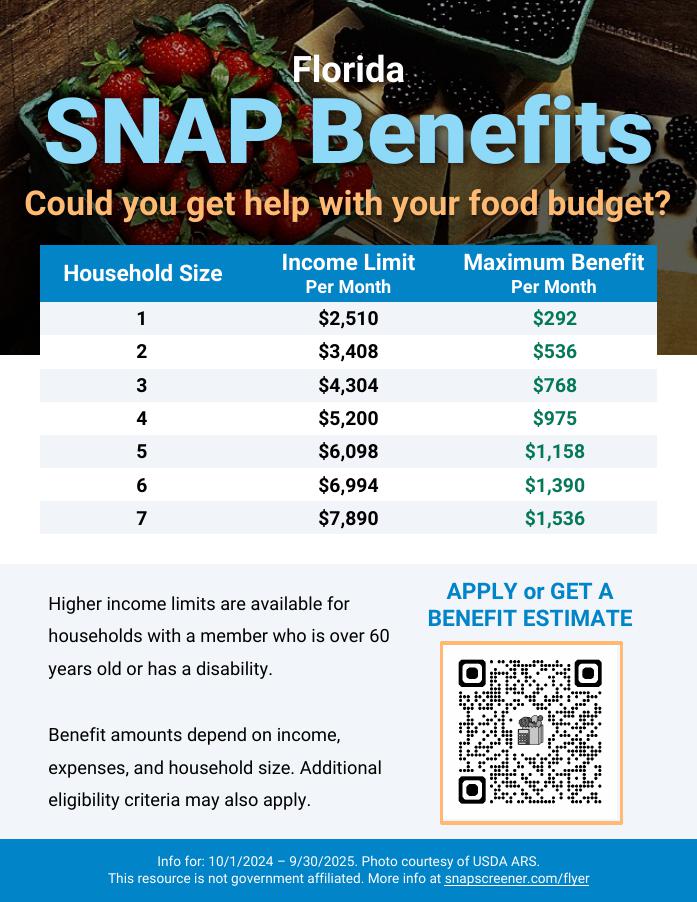
Eligibility for SNAP in Florida is largely determined by a household’s gross and net monthly income, as well as the value of their assets. These limits are subject to change annually based on federal poverty guidelines.
- Gross Monthly Income: This is the total income of all household members before any deductions. For most households, the gross monthly income must be at or below 185% of the federal poverty level for their household size.
- Net Monthly Income: This is the gross income minus certain allowable deductions, such as a standard deduction, dependent care expenses, and medical expenses for elderly or disabled household members. The net monthly income must generally be at or below 100% of the federal poverty level.
- Assets: Certain resources owned by the household are considered countable assets. These typically include cash on hand, checking and savings accounts, and other liquid assets. As of recent guidelines, the asset limit for most households is $2,750. This limit is higher, at $4,250, for households with at least one member aged 60 or older, or who is disabled. Certain assets are excluded from this count, such as a primary residence and one vehicle.
Household Composition and Other Factors
The composition of the household applying for SNAP is also a key factor. SNAP benefits are calculated based on the number of eligible individuals within a household. Special rules may apply to certain individuals, such as students, those receiving disability benefits, or elderly individuals. Residency in Florida is a mandatory requirement for eligibility. Applicants must also provide a Social Security number for all household members applying for benefits and meet work requirements, unless exempt. Exemptions typically include individuals who are elderly, disabled, pregnant, or caring for a young child.
The Application Process: Step-by-Step Guidance
Applying for SNAP in Florida can be done through several convenient methods, designed to accommodate different applicant preferences and accessibility needs. The Florida DCF encourages applicants to utilize online services for efficiency, but paper applications are also available.
Online Application
The most streamlined method for applying for SNAP benefits in Florida is through the official ACCESS Florida portal. This online system allows individuals to submit their applications, upload necessary documents, and track the status of their application from any internet-connected device.
- Access the ACCESS Florida Portal: Navigate to the Florida DCF website and locate the link for ACCESS Florida. This portal serves as a gateway for various public assistance programs, including SNAP.
- Create an Account: If you are a new user, you will need to create an account. This typically involves providing your email address and creating a secure password.
- Complete the Application: Once logged in, select the option to apply for SNAP benefits. The online application is designed to be user-friendly, guiding you through a series of questions about your household’s income, expenses, assets, and personal information. Be prepared to provide details for all household members included in the application.
- Upload Supporting Documents: During the online application process, you will be prompted to upload verifications for the information you provide. Common documents include proof of identity, proof of residency, proof of income (e.g., pay stubs, benefit award letters), proof of expenses (e.g., rent receipts, utility bills), and documentation for any special circumstances (e.g., medical expenses, disability).
- Submit and Track: After completing all sections and uploading documents, submit your application. You will receive a confirmation, and you can then use your ACCESS Florida account to monitor the status of your application and receive important updates from the DCF.
Paper Application and In-Person Assistance
For individuals who prefer a paper application or require in-person assistance, the Florida DCF offers alternative methods.

- Download Application Forms: Application forms can be downloaded from the DCF website. Once completed, these can be mailed or dropped off at a local DCF service center.
- Visit a Service Center: DCF service centers are located throughout Florida. You can visit these centers to pick up a paper application, receive assistance in completing it, and submit it directly. Staff members are available to answer questions and guide you through the process.
- Phone Assistance: You can also call the ACCESS Florida Customer Service line for assistance with your application or to request a paper application be mailed to you. The phone number is typically found on the DCF website.
Required Documentation and Verifications
Accurate and complete documentation is paramount to a successful SNAP application. The Florida DCF requires proof to verify the information provided on your application. Gathering these documents in advance can significantly expedite the review process.
Essential Documents
While the specific documents needed can vary depending on your household circumstances, a comprehensive list of commonly required items includes:
- Proof of Identity: A valid photo ID for the applicant (e.g., driver’s license, state ID, passport).
- Proof of Residency: Documents showing you live in Florida (e.g., utility bill, lease agreement, mortgage statement).
- Proof of Income:
- Earned Income: Recent pay stubs, employer statements, or W-2 forms.
- Unearned Income: Award letters from Social Security, Supplemental Security Income (SSI), unemployment benefits, or child support statements.
- Proof of Household Expenses:
- Rent/Mortgage: Lease agreement, mortgage statement, or rent receipts.
- Utilities: Recent utility bills (electricity, gas, water).
- Childcare Expenses: Receipts or statements from a childcare provider.
- Medical Expenses: For elderly or disabled household members, receipts or statements for medical costs exceeding a certain amount.
- Proof of Assets: Bank statements (checking and savings accounts), information on stocks, bonds, or other liquid assets.
- Social Security Numbers: Social Security cards for all household members.
- Citizenship or Alien Status: Proof of legal residency for all household members.
- Medical Information: For elderly or disabled household members, documentation of their status may be required.
Tips for Document Submission
- Make Copies: Always make copies of original documents before submitting them.
- Organize Your Documents: Keep your documents organized and clearly labeled to ensure they are easily accessible and can be uploaded or presented efficiently.
- Be Prepared for Interviews: In some cases, you may be required to participate in an interview, either by phone or in person, to clarify information or provide further details.
- Understand Deadlines: Pay close attention to any deadlines provided by the DCF for submitting additional information.
Post-Application: Processing and Benefit Issuance
Once your SNAP application is submitted, it enters the review and processing stage. The Florida DCF aims to process applications as quickly as possible, with specific timeframes mandated by federal regulations.
Processing Timeframes
- Expedited Service: In cases of urgent need, such as when a household has very little or no income and cash resources, applications may be processed on an expedited basis, often within seven calendar days.
- Standard Processing: For most applications, the DCF has 30 calendar days to make a decision. This timeframe allows for thorough verification of all provided information.
Benefit Issuance
If your application is approved, you will receive a notification of your eligibility and the amount of benefits you will receive. SNAP benefits are issued electronically through a Florida Electronic Benefit Transfer (EBT) card, often referred to as a “plastic food stamp card.”
- EBT Card: The EBT card functions much like a debit card. Funds are deposited onto the card monthly. You can use your EBT card at authorized retailers, including most grocery stores and farmers’ markets, to purchase eligible food items.
- Benefit Amount: The amount of SNAP benefits a household receives is determined by a formula that considers the household’s net income, the number of eligible members, and specific deductions allowed by the program.
- Reporting Changes: It is crucial to report any changes in your household’s circumstances to the DCF promptly, as these changes can affect your eligibility and benefit amount. This includes changes in income, household size, residency, or expenses. Failure to report changes could lead to overpayments, which may need to be repaid.
Understanding the application process, eligibility requirements, and the importance of accurate documentation empowers Florida residents to successfully access SNAP benefits, ensuring they have the resources to purchase nutritious food for themselves and their families. This vital program plays a significant role in supporting the overall lifestyle and well-being of its recipients, enabling them to focus on other aspects of their lives, whether that involves exploring local attractions or planning future travel experiences.
LifeOutOfTheBox is a participant in the Amazon Services LLC Associates Program, an affiliate advertising program designed to provide a means for sites to earn advertising fees by advertising and linking to Amazon.com. Amazon, the Amazon logo, AmazonSupply, and the AmazonSupply logo are trademarks of Amazon.com, Inc. or its affiliates. As an Amazon Associate we earn affiliate commissions from qualifying purchases.