
Navigating the process of obtaining a contractor’s license in Florida is a crucial step for anyone looking to operate legally and professionally within the state’s vibrant construction industry. This guide aims to demystify the requirements, outline the application procedures, and provide essential insights to ensure a smooth and successful licensing journey. Understanding the intricacies of Florida’s licensing regulations is paramount for both individual contractors and the businesses they represent, fostering a climate of accountability and quality across the state.
Understanding Contractor Licensing in Florida
The state of Florida mandates that most individuals performing contracting work must possess a license. This licensing requirement is primarily overseen by the Florida Department of Business and Professional Regulation (DBPR), specifically through its Board of Construction Industry. The intent behind this regulation is to protect the public from unqualified or unscrupulous individuals, ensuring that all construction projects are undertaken with a certain standard of competence, knowledge, and financial responsibility.
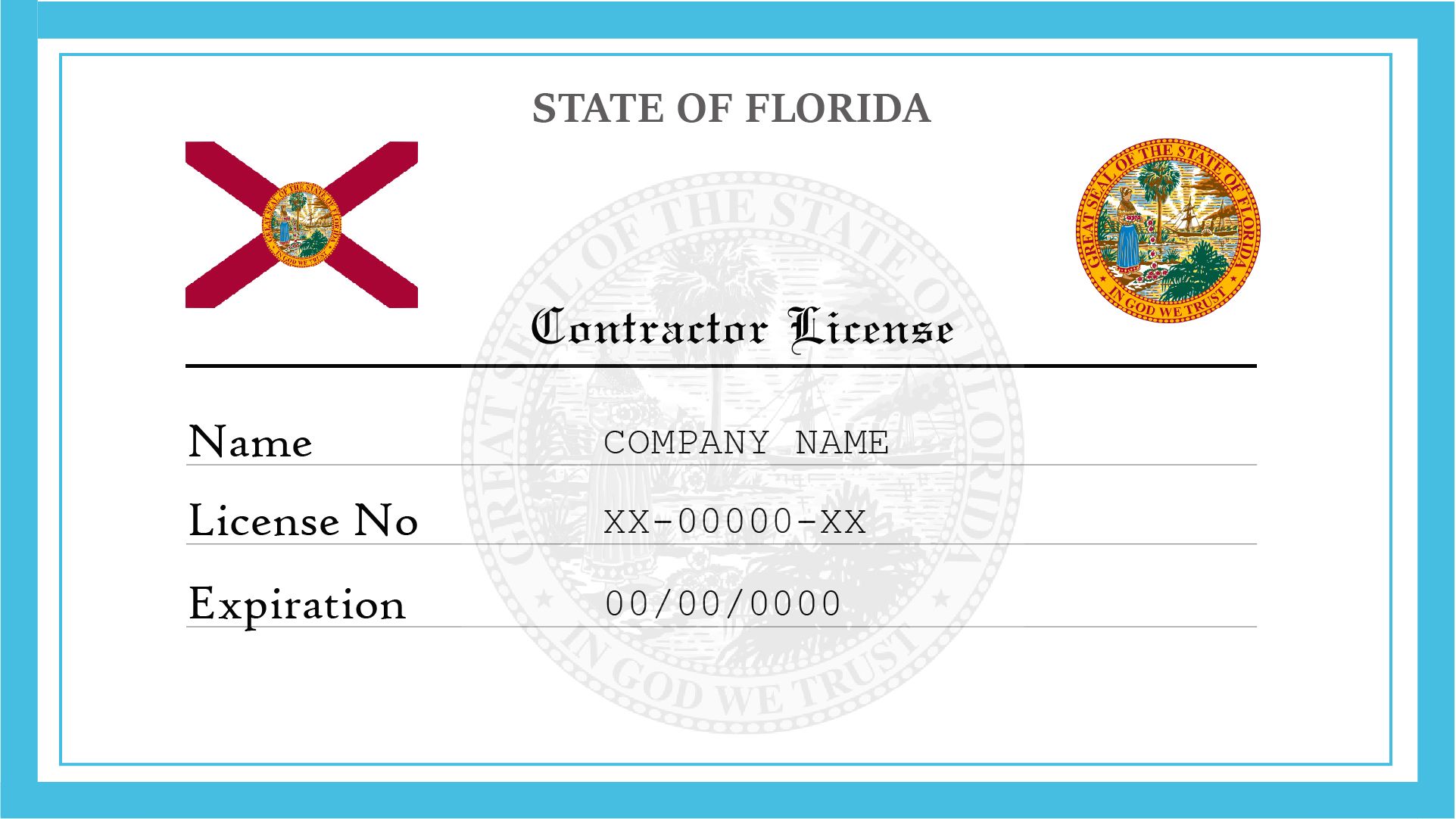
There are two primary types of contractor licenses in Florida:
State Licenses
A state contractor license allows you to perform contracting work in any county or municipality within Florida. This offers the broadest scope of operation and is generally preferred by contractors intending to work across multiple regions or on larger projects. To obtain a state license, you typically need to meet specific criteria related to experience, education, financial stability, and pass comprehensive examinations.
Local Licenses (County/City)
In some instances, even if you hold a state license, individual cities or counties may require you to obtain a local license or certificate of competency. Conversely, if you only plan to work within a specific geographic area and your projects fall below certain thresholds, a local license might be sufficient. However, it’s always advisable to verify the requirements of the specific jurisdiction you intend to operate in. For comprehensive projects, a state license is almost always the preferred route.
Types of Contractor Licenses in Florida
Florida categorizes contractor licenses based on the type of work performed. This specialization ensures that licensees possess the relevant expertise for their specific trade. The most common types of licenses include:
Certified Contractor Licenses
These licenses are issued to individuals who have demonstrated a high level of expertise and have passed rigorous statewide examinations. Certified contractors are qualified to perform work on projects of any size and in any jurisdiction within Florida without needing further local licensing. They are recognized for their comprehensive understanding of building codes, safety regulations, and construction management.
- General Contractor (GC): This license is for individuals who supervise and manage an entire construction project. They are responsible for overseeing all aspects of construction, from planning and budgeting to execution and completion. General contractors can undertake projects of any size or value.
- Building Contractor (BC): This license is for individuals who primarily focus on residential and commercial buildings that are not more than three stories high. They can also perform work on other types of structures if the project is incidental to the building contract.
- Residential Contractor (RC): This license is for individuals who specialize in the construction, repair, or improvement of residential buildings, typically single-family homes and duplexes.
- Underground Utility Contractor: This license covers the construction of underground utilities, such as water, sewer, and storm drainage systems.
- Solar Energy Systems Contractor: This license is for those specializing in the installation and maintenance of solar energy systems.
- Pool Contractor: This license pertains to the construction, repair, and maintenance of swimming pools.
- Roofing Contractor: This license is for individuals who perform work on roofs, including installation, repair, and maintenance of various roofing materials.
- Sheet Metal Contractor: This license is for those who specialize in the fabrication and installation of sheet metal products for construction purposes.
- Air Conditioning Contractor: This license covers the installation, maintenance, and repair of air conditioning and ventilation systems.
- Plumbing Contractor: This license is for individuals who install, repair, and maintain plumbing systems.
- Electrical Contractor: This license is for those who engage in the business of planning, superintending, and installing electrical systems.
- Mechanical Contractor: This license covers the installation, maintenance, and repair of mechanical systems, including HVAC, plumbing, and fire protection.
- Marine
Industrial Contractor: This license is for those who perform construction work on marine and industrial facilities. - Irrigation Contractor: This license is for individuals specializing in the design, installation, and maintenance of irrigation systems.
- Swimming Pool Specialty Contractor: This license covers specific aspects of pool construction and maintenance, such as structural work or equipment installation.
Registered Contractor Licenses
Registered contractor licenses are typically issued to contractors who have been licensed in a local jurisdiction for a certain period and have demonstrated competency through local examinations. While registered contractors can perform work within their registered locality, their scope may be limited compared to certified contractors. To perform work outside their registered jurisdiction, they may need to obtain a state license or meet reciprocity agreements.
The Application Process: Step-by-Step
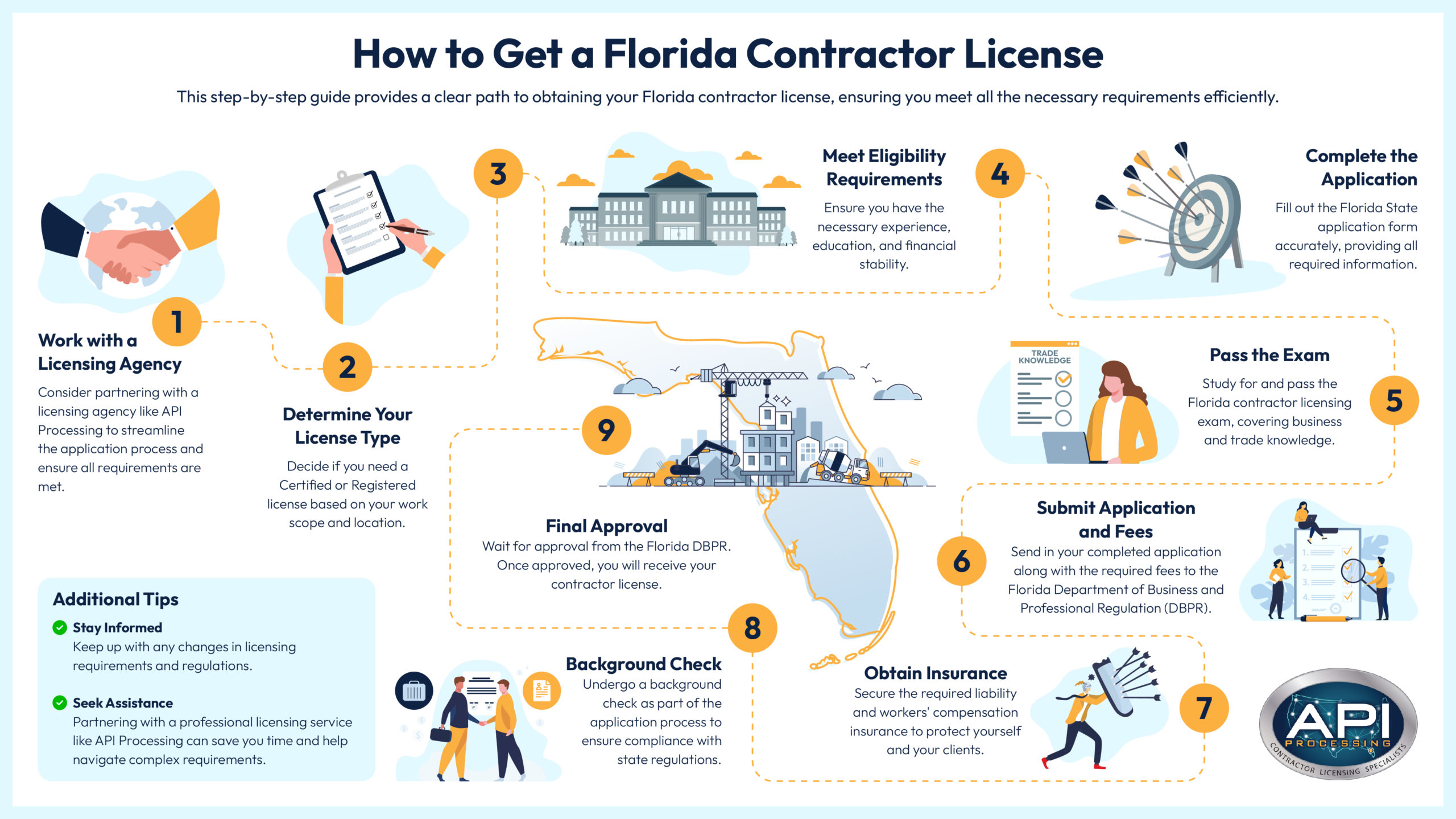
The process of obtaining a contractor license in Florida involves several key stages. It requires careful attention to detail and thorough preparation.
Step 1: Determine Your License Type and Classification
The first and most critical step is to accurately identify the type of contractor license and classification that best suits your intended scope of work. Review the descriptions of each license type listed above and consult the Florida DBPR website for detailed definitions and requirements. Incorrectly identifying your license type can lead to delays or rejection of your application.
Step 2: Meet the Experience and Education Requirements
Florida has stringent requirements for contractor experience and, in some cases, education. The specific amount of experience required varies depending on the license type and whether you have a relevant college degree.
- Experience: Generally, applicants must demonstrate a minimum of four years of experience as a contractor, a competent supervisory employee of a contractor, or a contractor under a valid license. This experience must be directly related to the scope of the license for which you are applying. You will need to provide detailed information about your work history, including names of employers, dates of employment, and descriptions of your responsibilities.
- Education: Possessing a degree in construction management or a related engineering field from an accredited college or university may substitute for some or all of the required experience. For example, a bachelor’s degree in construction management might reduce the experience requirement to three years, while a master’s degree could reduce it further.

Step 3: Pass the Required Examinations
All applicants for certified contractor licenses in Florida must pass two examinations:
- The Business and Finance Examination: This exam tests your knowledge of Florida business practices, financial management, contract law, and related regulations.
- The Trade Examination: This exam assesses your technical knowledge and competency in the specific trade for which you are applying. The content of the trade exam varies significantly depending on the license classification.
These exams are administered by a third-party testing service, typically Professional Testing, Inc. (PTI). You will need to register for and schedule your exams after your application is deemed complete and you are approved to test. Preparation is key, and numerous study guides and courses are available to help you succeed.
Step 4: Financial Responsibility and Creditworthiness
Florida requires contractors to demonstrate financial responsibility. This is typically assessed through a credit report. The DBPR will review your credit history to ensure you have a satisfactory record of financial management. You will need to obtain a credit report from a major credit reporting agency. Specific minimum credit scores may be required, and judgments, bankruptcies, or significant delinquencies can impact your application.
Step 5: Obtain Required Insurance and Bonds
Depending on the license type and the nature of your business, you may be required to obtain specific insurance policies and surety bonds.
- General Liability Insurance: This is a standard requirement for most contractors to protect against claims of bodily injury or property damage.
- Workers’ Compensation Insurance: If you have employees, you are legally required to carry workers’ compensation insurance to cover medical expenses and lost wages for employees injured on the job.
- Surety Bonds: Certain license types, particularly those involving public projects or specific contract values, may require you to obtain a surety bond. A surety bond is a guarantee from a third party (the surety company) that you will fulfill your contractual obligations.
Step 6: Submit Your Application and Supporting Documents
Once you have gathered all the necessary documentation, including proof of experience, educational transcripts (if applicable), credit reports, and other required forms, you will need to submit your application to the Florida DBPR. The application form can typically be downloaded from the DBPR website or obtained by contacting them directly. It is crucial to complete the application accurately and attach all required supporting documents. Incomplete applications are a common cause of delays.
Step 7: Application Review and Approval
After submitting your application, the DBPR will review it for completeness and accuracy. This review process can take several weeks. If any information is missing or unclear, the DBPR will contact you for clarification. Once your application is deemed complete, you will be notified of your eligibility to take the licensing examinations.
Step 8: Pass the Examinations and Finalize Licensing
After passing both the business and finance, and the trade examinations, you will need to submit proof of passing to the DBPR. You may also need to provide proof of your insurance policies and bonds at this stage. Upon successful completion of all requirements, your contractor license will be issued.
Maintaining Your License
Obtaining a contractor license is not the end of the process; it requires ongoing maintenance to remain valid.
Continuing Education
Florida requires licensed contractors to complete a certain number of hours of continuing education (CE) every two years to renew their licenses. These CE courses are designed to keep contractors updated on the latest building codes, safety standards, and industry best practices. Specific CE requirements vary by license type, so it’s essential to check the DBPR’s guidelines for your particular license.
License Renewal
Contractor licenses in Florida must be renewed every two years. The renewal process involves submitting a renewal application, paying the required renewal fees, and providing proof of completed continuing education. Failure to renew your license by its expiration date can result in penalties, including late fees, and may even require you to reapply and re-examine.
Tips for a Smooth Licensing Process
- Start Early: The licensing process can be time-consuming. Begin researching requirements and gathering documents well in advance of your planned start date.
- Be Thorough and Accurate: Pay meticulous attention to detail when completing your application and providing supporting documentation. Errors or omissions can lead to significant delays.
- Consult the DBPR: The Florida DBPR is your primary resource. Their website is comprehensive, and their staff can answer specific questions about your application.
- Consider Professional Assistance: If the process seems overwhelming, consider engaging the services of a licensing consultant or a legal professional specializing in construction law. They can guide you through the application process and ensure all requirements are met.
- Prepare for Exams: Do not underestimate the difficulty of the licensing examinations. Invest in reputable study materials and consider taking preparatory courses to maximize your chances of success.
By understanding and meticulously following these steps, aspiring contractors in Florida can successfully navigate the licensing process, establishing a solid foundation for a reputable and compliant construction business. The investment in time and effort to obtain and maintain a license ultimately safeguards your professional integrity and contributes to the quality and safety of construction projects across the state.
LifeOutOfTheBox is a participant in the Amazon Services LLC Associates Program, an affiliate advertising program designed to provide a means for sites to earn advertising fees by advertising and linking to Amazon.com. Amazon, the Amazon logo, AmazonSupply, and the AmazonSupply logo are trademarks of Amazon.com, Inc. or its affiliates. As an Amazon Associate we earn affiliate commissions from qualifying purchases.