
Navigating the legal process of changing your name can feel complex, especially when you’re planning a significant life event like a destination wedding or a major relocation. For those residing in the Sunshine State, understanding the steps involved in a legal name change in Florida is crucial for ensuring all your official documents—from your passport to your driver’s license—accurately reflect your new identity. This guide breaks down the process into manageable steps, offering clarity and direction for Floridians seeking this important legal transition.
Understanding the Florida Name Change Process
A legal name change in Florida primarily involves petitioning a court to grant your request. While the process is straightforward, it requires careful attention to detail and adherence to specific legal procedures. The underlying principle is to demonstrate to the court that you have a legitimate reason for the change and that you are not attempting to evade debts or engage in fraudulent activities. For individuals planning extensive international travel, updating your name on all identification is a critical step for smooth passage through airports and border control. Similarly, if you’re considering a long-term stay in a new Florida city or a permanent move to another state, ensuring your legal name matches your travel documents will prevent complications.
Eligibility Requirements
To legally change your name in Florida, you must meet certain basic requirements.
Residency
You must be a resident of Florida. This typically means demonstrating that you have lived in the state for a specific period, though the exact duration can vary depending on the county. Filing your petition in the county where you currently reside is generally the most practical approach.
Age
Applicants must typically be adults (18 years or older) to file a petition for a name change independently. Minors can also change their names, but the process involves a parent or legal guardian filing the petition on their behalf, and often requires consent from both parents or a court order.
Valid Reason
You must have a valid reason for changing your name. Common reasons include marriage, divorce, personal preference, or aligning your legal name with your chosen gender identity. The court needs assurance that the change is not for deceptive purposes, such as avoiding legal obligations or criminal prosecution.
The Petition for Name Change
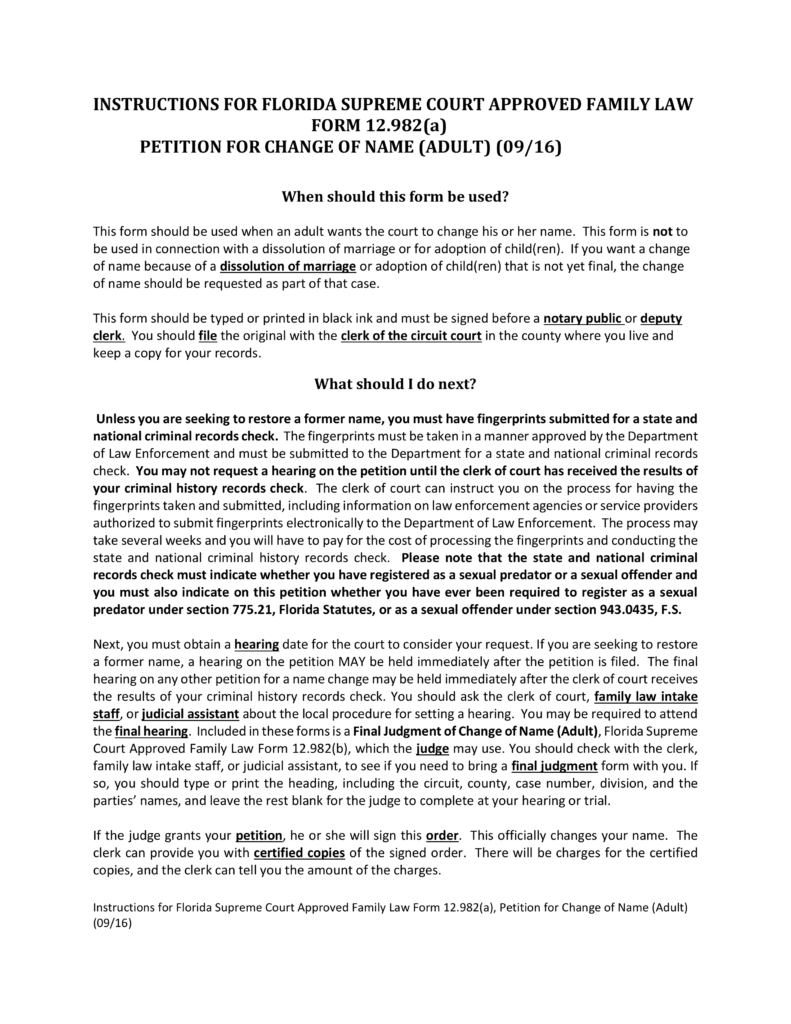
The cornerstone of the legal name change process is the filing of a formal petition with the appropriate court. This document initiates the legal proceedings and informs the court of your intentions.
What is a Petition for Name Change?
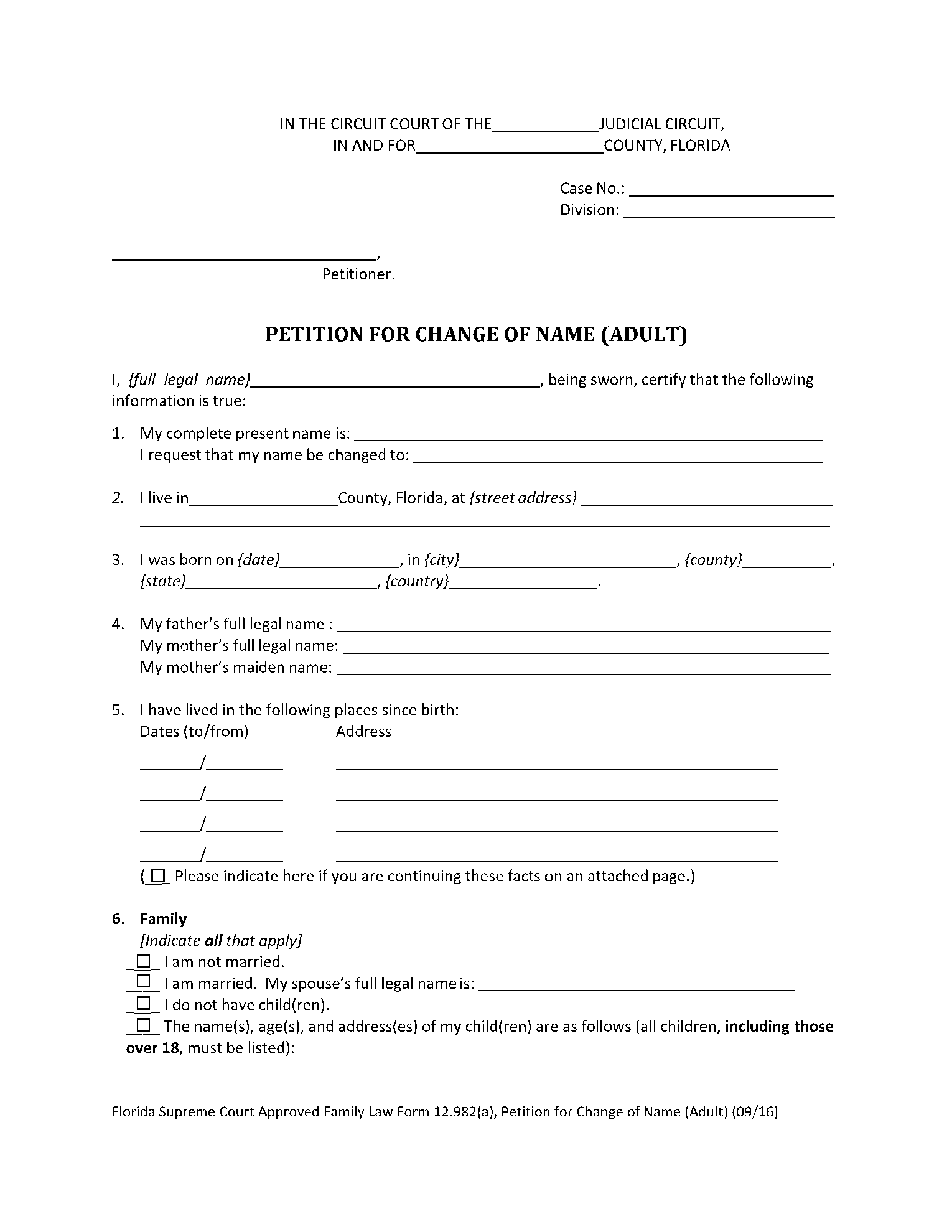
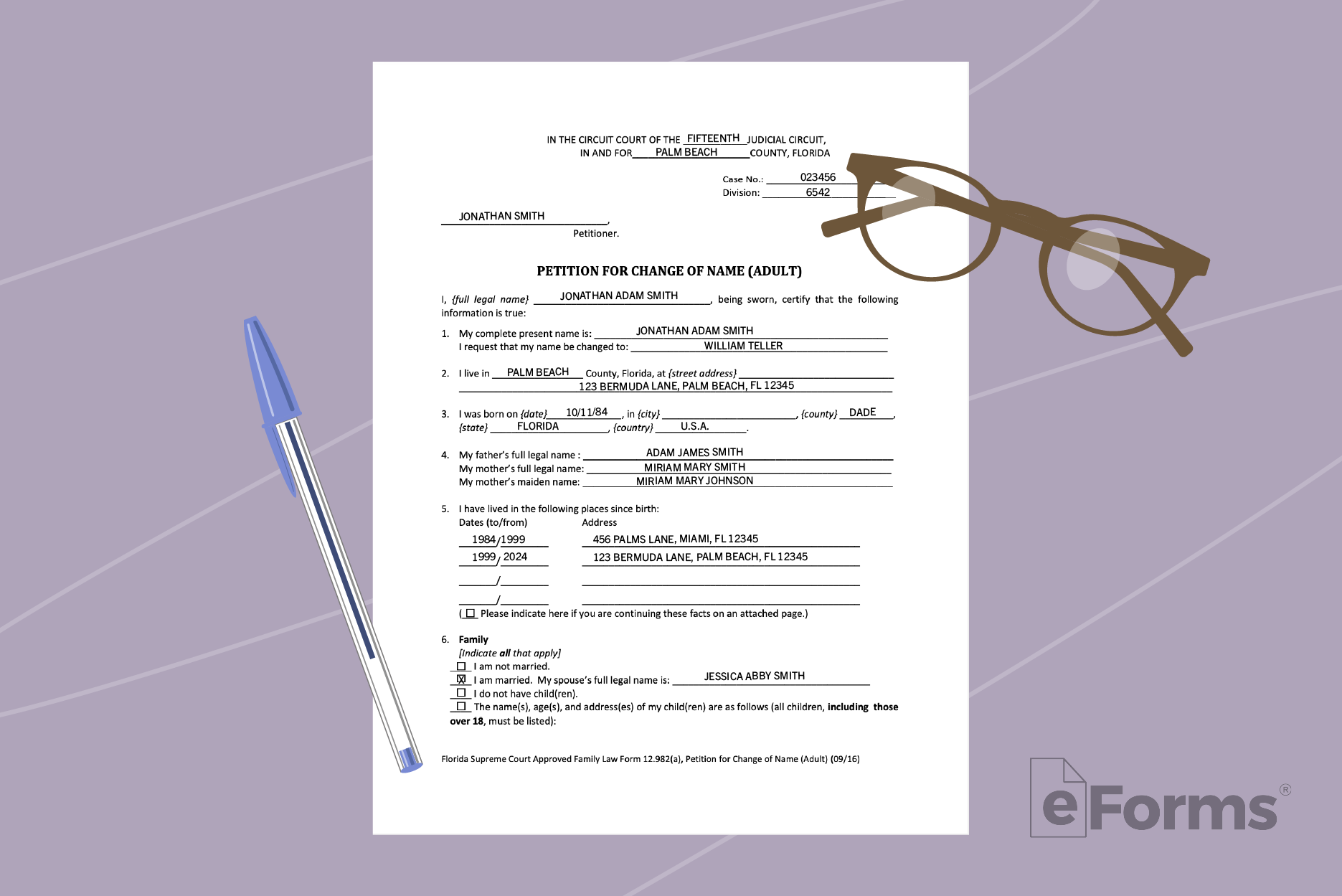
A Petition for Name Change is a legal document that formally requests a court order to allow you to assume a new legal name. It requires specific information about you, the proposed new name, and the reasons for the change.
Information Required in the Petition
While forms may vary slightly by county, a typical Florida Petition for Name Change will require:
- Your Current Legal Name: This is the name you are legally known by at the time of filing.
- Your Proposed New Legal Name: The exact name you wish to adopt.
- Your Date of Birth and Place of Birth: Essential identifying information.
- Your Current Address and Contact Information: To ensure the court can communicate with you.
- Your Marital Status: Relevant as marriage is a common reason for name changes.
- A Statement of Reasons for the Name Change: A clear explanation of why you wish to alter your name. This should be truthful and straightforward.
- A Declaration Under Oath: You will typically need to swear that the information provided is true and accurate to the best of your knowledge.
It is crucial to fill out this petition accurately and completely. Errors or omissions can lead to delays or even dismissal of your petition. Many counties offer downloadable petition forms on their clerk of court websites, or you can obtain them in person.
The Legal Steps to Changing Your Name
Once you have prepared your petition, the subsequent steps involve filing it with the court, attending any required hearings, and obtaining the final court order. For those planning a significant journey, perhaps a month-long exploration of the Florida Keys or a move to a new residence in Miami, completing this legal formality beforehand is highly recommended.
Filing the Petition and Paying Fees
After completing the Petition for Name Change, you will need to file it with the Clerk of the Court in your county of residence.
Where to File
Your petition should be filed in the circuit court or county court that has jurisdiction over your county of residence. The Clerk of the Court’s office is where you will submit your documents.
Filing Fees
There are filing fees associated with initiating a legal name change case. These fees vary by county and court. You can inquire about the exact amount at the Clerk of the Court’s office or check their website. If you are unable to afford the filing fees, you may be eligible to file a “Motion to Proceed as a Poor Person,” which, if granted, can waive these costs.
Publication Requirements (Often Waived)
In many cases, Florida law requires that you publish a notice of your intended name change in a local newspaper. This is to inform the public and allow any creditors or interested parties to come forward if they have a valid objection.
Purpose of Publication
The publication requirement serves as a public notice. It ensures transparency and provides an opportunity for anyone who might be adversely affected by your name change to raise concerns with the court.
Exceptions and Waiting
However, there are common exceptions where publication may be waived or is not required. For instance, if you are changing your name due to marriage, divorce, or if you are a victim of domestic violence or stalking, the court may waive the publication requirement. For name changes related to gender affirmation, publication is also often waived. It is essential to check with your local court or consult an attorney regarding whether publication is mandatory for your specific situation.
The Court Hearing
Once your petition is filed and any required notices are published (or waived), the court will schedule a hearing. This is a formal court proceeding where a judge will review your petition and ask you questions.
What to Expect at the Hearing
The hearing is typically brief. The judge will want to confirm your identity, understand your reasons for the name change, and ensure you are not attempting to use the name change for any illicit purposes. Be prepared to answer questions honestly and directly. You will be under oath, so your testimony must be truthful.
Presenting Your Case
You will likely represent yourself, though you have the right to have an attorney present. If you are seeking a name change for straightforward reasons like personal preference or marriage, the hearing is usually a formality. If there are any complications or objections, the hearing might be more involved.
The Final Court Order (Decree)
If the judge approves your petition, they will sign a court order, often referred to as a “Decree of Name Change” or “Order for Change of Name.” This is the official document that legally grants your name change.
Obtaining Certified Copies
It is vital to obtain several certified copies of this court order. These copies are essential for updating your identification and official records. You can request certified copies from the Clerk of the Court for a small fee per copy.
What to do with the Order
This decree is your legal proof of name change. You will need it to update your Social Security card, driver’s license, passport, bank accounts, employment records, and any other official documentation.
Updating Your Identification and Records
Receiving your court order is a significant milestone, but the process isn’t complete until you update all your official documents and records to reflect your new legal name. This is where the real work begins in ensuring your identity is consistently represented across all platforms.
Social Security Administration (SSA)
The first step after obtaining your court order is to update your name with the Social Security Administration.
How to Update Your Social Security Card
You will need to visit a local SSA office or mail in your application. You will need to provide:
- A completed Application for a Social Security Card (Form SS-5).
- Proof of your identity (e.g., a current driver’s license or passport).
- Proof of your U.S. citizenship or lawful immigration status.
- Your original court order decreeing the name change.
The SSA will issue you a new Social Security card with your new name, but your Social Security number will remain the same.
Florida Department of Highway Safety and Motor Vehicles (FLHSMV)
Next, you’ll want to update your Florida driver’s license or state identification card.
Changing Your Driver’s License or ID
Visit a Florida Department of Highway Safety and Motor Vehicles (FLHSMV) office. You will need to bring:
- Your current driver’s license or ID.
- Your original court order decreeing the name change.
- Proof of your updated Social Security card showing your new name.
- Potentially other supporting documents, so it’s wise to check the FLHSMV website or call ahead.
There will be a fee for a duplicate or updated license/ID.
U.S. Department of State (Passport)
If you have a passport, it’s crucial to update it, especially if you have upcoming travel plans, such as a planned vacation to Orlando or a business trip to Tampa.
Passport Name Change Procedures
The process depends on when your current passport was issued.
- If Issued Less Than 1 Year Ago: You can typically use the Passport Re-Application form (DS-5504) for free. You’ll need to submit the form, your current passport, and a certified copy of your name change document.
- If Issued More Than 1 Year Ago: You will need to apply for a new passport using the Passport Application form (DS-11) and pay the standard passport fees. You will also need to submit your current passport and a certified copy of your name change document.
Always check the official U.S. Department of State website for the most current forms and requirements.
Other Important Updates
Beyond these primary documents, remember to update your name with various other entities:
- Banks and Financial Institutions: Notify your bank, credit card companies, and any loan providers.
- Employer: Inform your employer for payroll and HR records.
- Voter Registration: Update your voter registration with your local Supervisor of Elections.
- Insurance Providers: Update your insurance policies (health, auto, home, life).
- Utilities and Service Providers: Change your name on utility bills and subscriptions.
- Medical Providers: Inform your doctors and dentists.
- Loyalty Programs and Memberships: Update any frequent flyer accounts or store loyalty programs.
By systematically updating all your records, you ensure a smooth transition and avoid any potential confusion or complications in your daily life and future travel adventures.
Name Changes for Minors and Special Circumstances
While the general process for name changes in Florida applies to adults, there are specific considerations for minors and individuals facing unique situations. These scenarios often involve additional legal requirements and documentation to protect the best interests of the child or the safety of the individual.
Name Changes for Minors
Changing a minor’s name requires the involvement of their parents or legal guardians. The process is designed to ensure that the change is in the child’s best interest.
Parental Consent
Generally, both parents must consent to the name change. If one parent objects, the court will hold a hearing to determine if the name change is in the child’s best interest. The court will consider factors such as the child’s age, the reasons for the change, and the potential impact on the child’s relationship with both parents.
Guardian Ad Litem
In some cases, especially when there is parental disagreement or concerns about the child’s welfare, the court may appoint a Guardian ad Litem. This is an individual, often an attorney, who represents the child’s best interests in court proceedings.
Petition Process for Minors
The petition is filed by a parent or legal guardian on behalf of the minor. It will include information about the child, the current name, the proposed new name, and the reasons for the change. The court’s primary focus will always be the welfare of the child.
Name Changes Due to Marriage and Divorce
Florida law provides specific pathways for name changes related to marital status.
Marriage
When a couple marries, the wedding ceremony itself does not legally change a name. To change your name, you must obtain a marriage license and then follow the legal name change process outlined previously. The marriage certificate serves as proof of the event, and the court order will finalize the legal name change. Many individuals choose to adopt their spouse’s last name, hyphenate their names, or revert to a maiden name after divorce.
Divorce
Upon divorce, individuals often wish to revert to their maiden name or a previous legal surname. This can often be requested as part of the divorce proceedings by including the request in the final judgment of dissolution of marriage. If the divorce judgment explicitly grants the name change, it serves as the legal document to update your records, potentially bypassing the separate name change petition process in some instances. However, if the divorce judgment does not address the name change, a separate Petition for Name Change will be necessary.
Name Changes for Gender Affirmation
Individuals undergoing gender transition may legally change their name to align with their gender identity. Florida courts generally support these requests, recognizing the importance of legal documentation aligning with an individual’s gender identity.
Legal Procedures
The process is similar to a standard Petition for Name Change. However, courts are typically sensitive to the needs of transgender individuals. Publication requirements are often waived in these cases to protect the individual’s privacy and safety. Many legal aid organizations and LGBTQ+ advocacy groups offer resources and support for individuals navigating this process.
Other Legitimate Reasons
Beyond the common scenarios, individuals may have other legitimate reasons for a name change. This could include:
- Dislike of Current Name: Simply disliking one’s given name.
- Religious or Cultural Reasons: Adopting a name with significant religious or cultural meaning.
- Adoption: An adopted child receives a new legal name as part of the adoption process.
- Professional Reasons: In some cases, individuals may change their name for professional branding, though this is less common for full legal name changes.
Regardless of the reason, the core requirement remains demonstrating a legitimate purpose to the court and not engaging in any fraudulent or deceptive acts. For anyone planning extensive travel to explore global destinations or a significant lifestyle change such as booking a long-term villa rental, ensuring your legal name is accurate on all documents is paramount. The legal name change process in Florida provides the necessary framework to achieve this important identity update.
LifeOutOfTheBox is a participant in the Amazon Services LLC Associates Program, an affiliate advertising program designed to provide a means for sites to earn advertising fees by advertising and linking to Amazon.com. Amazon, the Amazon logo, AmazonSupply, and the AmazonSupply logo are trademarks of Amazon.com, Inc. or its affiliates. As an Amazon Associate we earn affiliate commissions from qualifying purchases.