
Navigating the landscape of unemployment benefits in any state can feel like a labyrinth, and Florida is no exception. For those experiencing job loss or reduced work hours, understanding the eligibility requirements for unemployment benefits is paramount. This guide will demystify the process, outlining the key criteria you must meet to qualify for financial assistance through the Florida Department of Economic Opportunity (now CareerSource Florida). While this article focuses on qualification criteria, it’s important to remember that the Florida unemployment system is designed to provide a temporary safety net, allowing individuals to bridge the gap while seeking new employment opportunities.
Meeting the Basic Eligibility Criteria
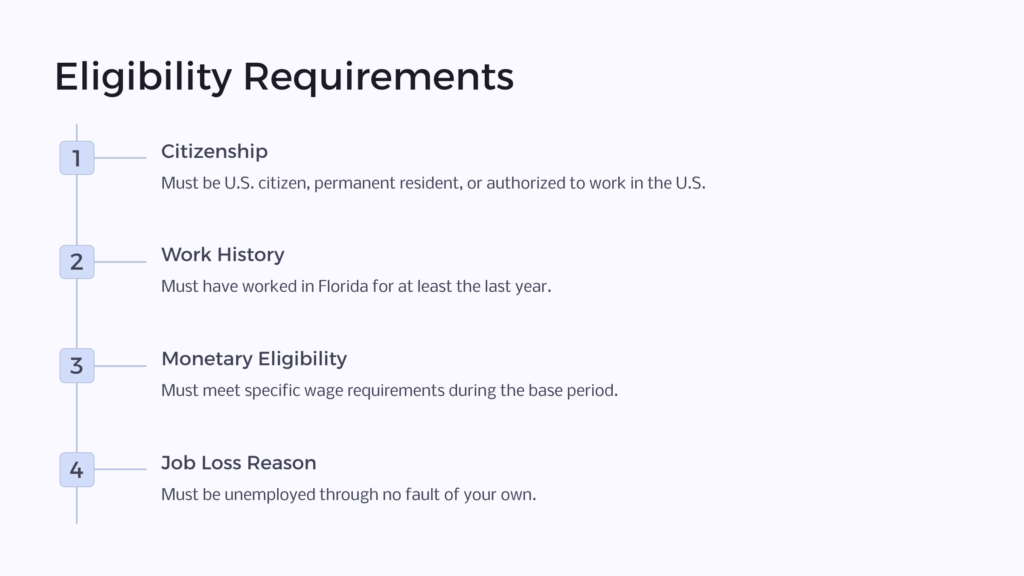
To even begin the application process for unemployment benefits in Florida, you must satisfy several fundamental conditions. These are the initial hurdles every claimant must clear.
U.S. Citizenship or Legal Authorization to Work
First and foremost, you must be legally authorized to work in the United States. This typically means being a U.S. citizen or a lawful permanent resident with a valid work permit. If you are not a citizen, you will need to provide documentation verifying your legal right to be employed in the U.S. when you apply. The Department of Homeland Security provides specific guidance on acceptable work authorization documents.
Filing a Claim in Florida
You must file your claim in Florida. This generally means that you were employed in Florida when you lost your job, or if you worked in multiple states, you meet specific criteria for filing in Florida based on your employment history and residency. If you recently moved to Florida from another state where you worked, the rules for determining the correct state to file a claim can be complex, and it’s advisable to consult directly with CareerSource Florida for guidance.
Being Unemployed Through No Fault of Your Own
A core requirement for receiving unemployment benefits is that your unemployment must be due to reasons outside of your control. This generally includes layoffs, business closures, or reductions in force.
- Voluntary Resignation: If you quit your job, you typically won’t qualify for unemployment benefits unless you had “good cause” for quitting. Good cause is narrowly defined and usually involves situations such as unsafe working conditions, significant changes in job duties or pay, or needing to care for a seriously ill family member. Simply finding a new job that pays more or a position you prefer is generally not considered good cause.
- Discharge for Misconduct: If you were fired from your job due to misconduct, you are also likely disqualified. Misconduct is defined as behavior that violates rules or standards of behavior expected by your employer, such as chronic absenteeism, insubordination, theft, or deliberate violation of company policy.
It is crucial to be honest and accurate when reporting the reason for your separation from employment. The Florida Department of Economic Opportunity will investigate your claim and may contact your former employer for verification.
Establishing Sufficient Earnings History
Beyond the basic eligibility, Florida has specific requirements regarding your past earnings. This is to ensure that benefits are provided to individuals who have a demonstrated attachment to the workforce.
The Base Period Defined
To determine if you have earned enough wages to qualify, the state looks at your employment history during a specific period known as the “base period.” The base period is typically the first four of the last five completed calendar quarters before you file your claim. For example, if you file your claim in October 2023, the base period would likely be from July 1, 2022, through June 30, 2023.
Minimum Earnings Requirements
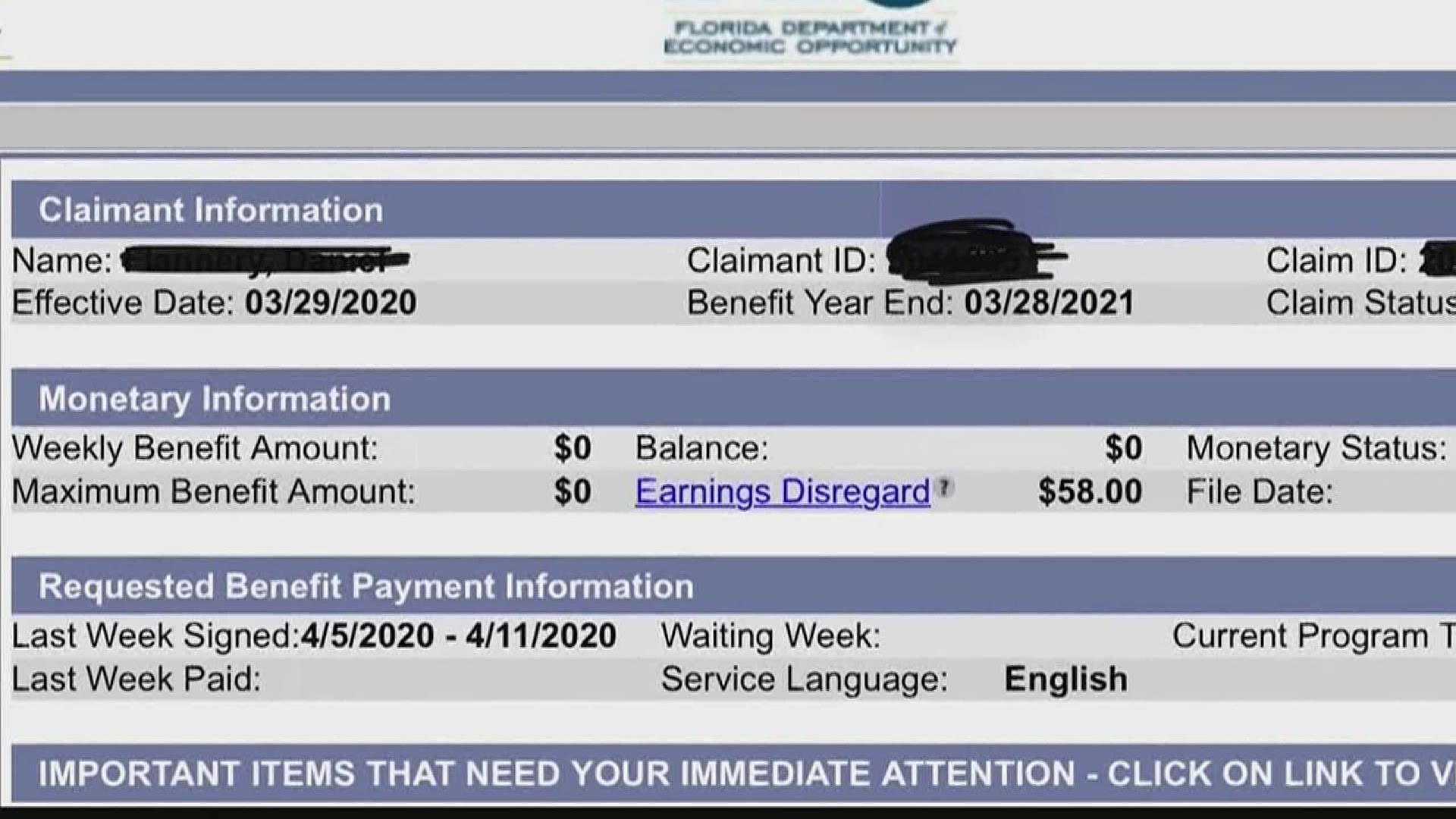
Within this base period, you must have earned a minimum amount of wages. Florida has a two-part test to determine if you meet the monetary eligibility requirements:
- Total Wages: You must have earned at least $3,000 in wages during the entire base period.
- High-Quarter Wages: You must also have earned wages in at least one quarter of the base period that are equal to or greater than the average weekly wage in Florida during that quarter. The exact dollar amount changes annually, so it’s essential to check the most current figures from CareerSource Florida.
The system calculates your “average weekly wage” (AWW) and your “highest quarter wages” (HQW) based on the wages reported by your employers during the base period. If you meet both the total wage requirement and the high-quarter wage requirement, you will be deemed monetarily eligible.
- Example: If your base period is January 1, 2023, to December 31, 2023, and you earned $2,000 in the first quarter, $1,500 in the second quarter, $3,000 in the third quarter, and $1,000 in the fourth quarter:
- Your total wages for the base period are $7,500 ($2,000 + $1,500 + $3,000 + $1,000), which meets the $3,000 minimum.
- Your highest quarter wages are $3,000 (from the third quarter). You would then compare this to the high-quarter wage requirement for that specific quarter in Florida to see if you meet the second part of the test.
It’s important to note that wages earned from self-employment or as an independent contractor may not count towards your unemployment insurance claim unless you have specifically elected to pay into the system as a self-employed individual through specific programs.
Actively Seeking Work and Being Available for Work
Eligibility for unemployment benefits is not passive; it requires an active role from the claimant. You must demonstrate that you are making a genuine effort to find new employment and are ready and able to accept suitable work.
The Work Search Requirement
Once you are approved for benefits, you are typically required to conduct a diligent search for suitable employment each week. CareerSource Florida outlines what constitutes a “suitable” job search. This usually involves a variety of activities such as:
- Applying for jobs: Submitting applications to employers.
- Attending job interviews: Meeting with potential employers.
- Contacting employers: Following up on applications or inquiring about openings.
- Participating in job fairs: Engaging with multiple employers at organized events.
- Utilizing re-employment services: Taking advantage of resources offered by CareerSource Florida or other workforce development agencies.
The number of work search contacts required per week can vary, and you will need to keep detailed records of your job search activities. These records may be requested by CareerSource Florida for verification. Failure to meet the work search requirements can result in the denial of benefits for that week.
Availability for Work
In addition to actively searching, you must be available to accept suitable work. This means you cannot have any personal circumstances that prevent you from accepting a job offer promptly.
- No Restrictions: You cannot have restrictions on your availability that would limit your job prospects unreasonably. This could include geographic limitations, lack of transportation, or personal commitments that prevent you from working full-time.
- Illness or Injury: If you are unable to work due to illness or injury, you generally will not be eligible for unemployment benefits during that period. You may, however, be eligible for other benefits, such as Social Security Disability Insurance or workers’ compensation, depending on the circumstances.
- Training or Education: While pursuing training or education can be beneficial for long-term career prospects, it’s important to ensure it doesn’t make you unavailable for work. In some cases, approved training programs may allow for continued eligibility, but this requires prior approval from CareerSource Florida.
The definition of “suitable work” generally refers to work that is within your usual occupation or a closely related field, and that pays at least the prevailing wage for similar positions in the area.
Special Circumstances and Considerations
Several situations can affect your eligibility or the duration of your benefits, and understanding these is vital.
Extended Benefits and Other Programs
In times of high unemployment, the federal government may authorize “extended benefits” to provide additional weeks of unemployment assistance beyond the standard period. Eligibility for extended benefits is subject to specific economic triggers and additional work search requirements.
Re-employment Assistance for Former Federal Employees and Ex-Service Members
Individuals who were formerly employed by the federal government or who are ex-service members of the U.S. Armed Forces have specific programs and procedures for filing unemployment claims. These claims are handled through agreements between CareerSource Florida and the respective federal agencies. The wage information and eligibility requirements may differ slightly from those for private-sector employees.
Appeals Process
If your initial claim for unemployment benefits is denied, you have the right to appeal the decision. The appeals process involves several steps, including requesting a hearing where you can present your case. It is crucial to follow the deadlines and procedures outlined by CareerSource Florida for filing an appeal. Gathering all relevant documentation and preparing your arguments thoroughly can significantly impact the outcome of your appeal.
Understanding these nuances is critical for anyone seeking unemployment benefits in Florida. While the process may seem complex, by familiarizing yourself with the eligibility criteria, maintaining accurate records, and actively engaging in your job search, you can successfully navigate the system and secure the support you need during a period of transition.
LifeOutOfTheBox is a participant in the Amazon Services LLC Associates Program, an affiliate advertising program designed to provide a means for sites to earn advertising fees by advertising and linking to Amazon.com. Amazon, the Amazon logo, AmazonSupply, and the AmazonSupply logo are trademarks of Amazon.com, Inc. or its affiliates. As an Amazon Associate we earn affiliate commissions from qualifying purchases.