
The allure of Florida has long captivated travelers, drawing them to its sun-drenched beaches, vibrant cities, and unique ecosystems. Yet, beyond the immediate appeal of its attractions lies a fundamental geographical question: how far is the Sunshine State from the Equator? This seemingly simple query unlocks a deeper understanding of Florida‘s climate, its biodiversity, and its place on the global stage, particularly for those interested in travel and exploring the diverse offerings of this prominent American destination. Understanding Florida‘s latitudinal position provides crucial context for appreciating its tropical and subtropical environments, influencing everything from the types of flora and fauna found within its borders to the optimal times for visiting its many attractions.
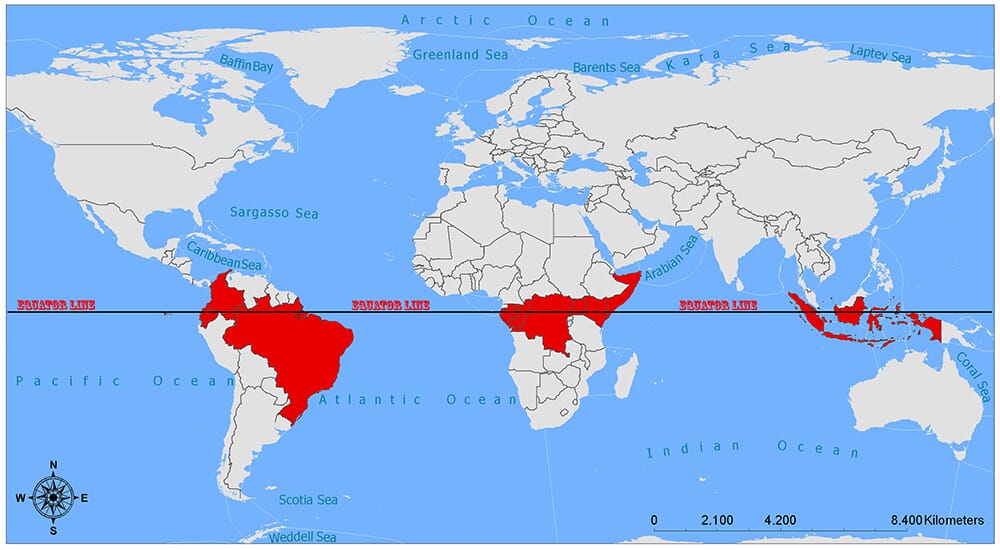
Florida’s Latitudinal Placement: A Gateway to the Tropics
Florida‘s geographical position in the southeastern United States is key to understanding its climate and the experiences it offers to visitors. Situated on a peninsula bordered by the Atlantic Ocean to the east and the Gulf of Mexico to the west, Florida extends southward, bringing it closer to the Equator than most other contiguous United States. This proximity is a significant factor in its classification as a subtropical to tropical region.
Measuring the Distance
The northernmost point of Florida lies at approximately 31 degrees North latitude. In contrast, the Equator is located at 0 degrees latitude. To determine the distance, one can use the approximation that one degree of latitude is roughly equivalent to 69 miles (111 kilometers).
Northern Florida
The northernmost regions of Florida, such as the area around Jacksonville and the Florida Panhandle, are situated at latitudes similar to states like South Carolina and North Carolina. These areas experience a more temperate climate, with distinct seasons and occasional frost. The distance from the Equator for these regions is therefore greater, roughly around 2,100 miles (3,380 kilometers).
Central Florida
As one travels south through Florida, the distance to the Equator decreases. Central Florida, home to major theme park destinations like Orlando, is located around 28 degrees North latitude. This position significantly contributes to its warmer climate, with milder winters and longer, hotter summers. The approximate distance from the Equator for this region is around 1,900 miles (3,060 kilometers).
Southern Florida
The southernmost tip of Florida, including cities like Miami and the gateway to the Florida Keys, reaches latitudes as low as 24 degrees North. This is where Florida truly enters subtropical and, in some areas, tropical climate zones. The distance from the Equator here is considerably less, approximately 1,650 miles (2,655 kilometers). The Florida Keys, an archipelago extending southwestward from the mainland, are the closest part of the continental United States to the Equator, with the southernmost island, Key West, lying just 90 miles (145 kilometers) north of Cuba.
The Climate Implications for Travelers
Florida‘s proximity to the Equator directly dictates its climate, profoundly impacting the travel experience. Understanding these climatic nuances allows visitors to plan their trips more effectively, ensuring they experience the best of what Florida has to offer.
Subtropical vs. Tropical Climates
While often generalized as a tropical destination, Florida exhibits a climatic gradient. Northern Florida has a humid subtropical climate, characterized by hot, humid summers and mild to cool winters. Central Florida leans more heavily into this subtropical classification, with even warmer summers and very mild winters, where frost is infrequent. Southern Florida, particularly the area south of Lake Okeechobee and the Florida Keys, experiences a true tropical monsoon climate. This means high temperatures year-round, significant humidity, and a distinct wet season (typically summer) and dry season (typically winter).
Summer Travel Considerations
For travelers visiting during the summer months (June through August), the increased proximity to the Equator means higher temperatures and humidity across the state. This is the peak of the wet season in southern Florida, with daily afternoon thunderstorms being common. These showers, while often intense, are usually brief and can provide a welcome respite from the heat. Visitors planning summer trips should pack light, breathable clothing, stay hydrated, and be prepared for the possibility of rain. However, the warmth also means the oceans are at their most inviting for swimming and water sports, and many of Florida‘s iconic attractions, such as Walt Disney World Resort and Universal Orlando Resort, are fully operational and vibrant.

Winter Travel Considerations
The winter months (December through February) are a prime time for travel to Florida, especially for those escaping colder climates. The reduced angle of the sun due to the Earth’s tilt means less direct solar radiation reaching Florida compared to summer. While northern Florida can experience cool spells, central and southern Florida enjoy mild, pleasant temperatures, making it ideal for outdoor activities, theme park visits, and exploring cities like Miami or the natural beauty of the Everglades National Park. This is the dry season for much of the state, offering sunny days and comfortable evenings.
Biodiversity: A Tropical Influence
The latitudinal position of Florida, particularly its southern reaches, is a critical factor in its rich and diverse biodiversity. The warmer temperatures and lack of prolonged freezing conditions allow for a unique blend of North American and Caribbean species.
Unique Ecosystems
The southern half of Florida, due to its tropical climate, supports ecosystems rarely found in the continental United States. The Everglades National Park, a UNESCO World Heritage Site, is a prime example. This vast, slow-moving river of grass is home to species like the American alligator, American crocodile, and a plethora of wading birds, many of which have tropical origins. The increased sunlight and warmth from the Equator fuel the lush vegetation that defines this unique environment.
The Florida Keys: A Caribbean Connection
The Florida Keys are a testament to Florida‘s connection to tropical regions. These islands boast coral reefs teeming with marine life, similar to those found in the Caribbean. Visitors can explore this underwater world through snorkeling and diving, encountering colorful fish, sea turtles, and coral formations. The warm, clear waters, a direct consequence of their southern latitude and distance from the Equator, make the Keys a premier destination for marine enthusiasts.
Flora and Fauna
The impact of Florida‘s southerly latitude is evident in its plant and animal life. While northern Florida has pine forests and oak hammocks characteristic of the southeastern United States, southern Florida transitions into mangrove forests, cypress swamps, and hardwood hammocks that harbor species more commonly associated with the tropics. Many migratory birds also use Florida as a vital stopover point or wintering ground, benefiting from the extended warm season afforded by its proximity to the Equator. This biological richness is a significant draw for eco-tourists and nature lovers.
Planning Your Florida Adventure: Leveraging Geographical Knowledge
Understanding how far Florida is from the Equator is more than just a geographical trivia point; it’s a practical tool for enhancing any travel experience within the state. This knowledge can inform decisions about when to visit, what to pack, and what activities are best suited for different regions and times of the year.
Choosing the Right Time to Visit
For those seeking the quintessential warm-weather experience, the winter months are ideal for visiting southern Florida. The mild temperatures are perfect for exploring cities like Miami, enjoying the beaches, or taking a boat trip through the Florida Keys. Conversely, if the goal is to experience the full force of a subtropical summer, with its vibrant energy and lush landscapes, then summer is the time, with the caveat of being prepared for heat and rain. Travelers looking for a balance might find spring and fall to offer the most temperate conditions across the state.
Packing Smartly
The distance from the Equator directly correlates with the intensity of the sun. Florida receives significant solar radiation year-round. Therefore, packing essentials like high SPF sunscreen, hats, sunglasses, and light, protective clothing is crucial, regardless of the season. For winter visits, a light jacket or sweater might be necessary for cooler evenings, especially in northern Florida. During summer, swimwear, moisture-wicking fabrics, and rain gear are advisable.

Experiencing Regional Differences
Florida is not a monolithic destination. The subtle yet significant differences in climate and environment between northern Florida and the southern tip, influenced by their varying distances from the Equator, mean that different regions offer distinct experiences. Exploring the historic charm of cities like St. Augustine in the north requires a different approach than soaking up the vibrant nightlife of Miami or the laid-back island vibe of the Florida Keys. By understanding the geographical underpinnings, travelers can better tailor their itineraries to match their interests and desired climate conditions. Whether drawn by the warmth, the unique ecosystems, or the sheer variety of attractions, a grasp of Florida‘s position relative to the Equator provides a valuable framework for a more informed and enjoyable journey.
LifeOutOfTheBox is a participant in the Amazon Services LLC Associates Program, an affiliate advertising program designed to provide a means for sites to earn advertising fees by advertising and linking to Amazon.com. Amazon, the Amazon logo, AmazonSupply, and the AmazonSupply logo are trademarks of Amazon.com, Inc. or its affiliates. As an Amazon Associate we earn affiliate commissions from qualifying purchases.