
The crisp, cold air of Boston in late winter has witnessed countless moments that have shaped the course of American history. Yet, few events resonate with the raw emotion and revolutionary fervor as profoundly as the Boston Massacre. Far more than a mere street brawl, this pivotal incident ignited the flames of independence, forever altering the relationship between the American colonies and Great Britain. If you’re a history enthusiast planning a trip to explore Boston’s rich past, understanding the timeline of this dramatic confrontation is essential. So, to answer the central question: The Boston Massacre occurred on the evening of March 5, 1770.
This date marks a turning point, a bloody crescendo in the growing tensions that had gripped the colonial capital for years. For travelers drawn to historical landmarks and significant sites, the location of the Boston Massacre remains a powerful and poignant stop on any journey through Revolutionary Boston. It’s a moment etched into the cobblestones and collective memory, inviting visitors to step back in time and feel the weight of history.
The Fateful Evening of March 5, 1770: A City on the Brink
To truly grasp the significance of the Boston Massacre, one must first understand the volatile atmosphere that permeated Boston in the late 1760s. The city was a powder keg, primed by years of economic strain, political grievances, and the palpable friction between its inhabitants and the occupying British soldiers. This deep-seated animosity wasn’t just a backdrop; it was the very fuel that ignited the tragedy.
A City on Edge: Pre-Massacre Tensions
By 1770, Boston was arguably the epicenter of colonial dissent against British rule. The imposition of taxes by the British Parliament, such as the Stamp Act and later the Townshend Acts, had sparked widespread protests and boycotts. These policies, perceived as unjust taxation without representation, severely impacted Boston’s merchants and citizenry, leading to a palpable sense of grievance. In response to the growing unrest, the British government dispatched regiments of British Redcoats to Boston in 1768, ostensibly to enforce customs regulations and maintain order.
The presence of thousands of uniformed soldiers in a bustling colonial town was a constant source of irritation and conflict. Soldiers, often poorly paid, competed with local laborers for jobs during their off-duty hours, further exacerbating economic tensions. The quartering of troops, the perceived arrogance of the officers, and frequent skirmishes between soldiers and townspeople created an environment of mutual distrust and simmering resentment. Every street corner, every tavern, and every interaction felt charged with potential conflict. Boston was a city holding its breath, and it was only a matter of time before that breath exploded into violence.

The Confrontation at the Custom House
The fatal evening of March 5, 1770, began innocently enough, or so it seemed. A young wigmaker’s apprentice named Edward Garrick approached a sentry guarding the Custom House on King Street (today known as State Street). He complained that the soldier, Private Hugh White, had not paid his master for a wig. A heated exchange ensued, quickly drawing a crowd of local residents. The verbal sparring escalated, with both sides trading insults and threats.
As the crowd grew larger and more agitated, a lone sentry was soon overwhelmed by jeers, snowballs, and chunks of ice thrown by the enraged townspeople. Fearing for his safety, the sentry called for reinforcements. Captain Thomas Preston, the officer of the day, responded, leading a small detachment of seven British soldiers to the scene. They formed a defensive semicircle in front of the Custom House, their muskets loaded and bayonets fixed, facing an increasingly hostile mob. The atmosphere was electric, thick with fear and aggression. The ringing of alarm bells further swelled the crowd, which now numbered in the hundreds, pressing in on the outnumbered soldiers.
The Shots Fired: The First Casualties
Amidst the chaos, the taunts, and the barrage of projectiles, a musket shot suddenly rang out. Historians still debate whether it was an accidental discharge, a deliberate act of panic, or a response to an order (which Captain Preston vehemently denied giving). Regardless of its origin, that first shot was followed by a volley of fire from the other soldiers. In a matter of moments, five colonists lay dead or dying in the snow-covered street.
The first to fall was Crispus Attucks, a man of mixed African and Native American descent, who is often considered the first casualty of the American Revolution. He was struck by two musket balls and died instantly. Alongside him, James Caldwell, a sailor, and Samuel Gray, a rope maker, also perished immediately. Two others, Patrick Carr, an Irish immigrant and leather breeches maker, and Samuel Maverick, a 17-year-old apprentice, died later from their wounds. The scene was one of horrific bloodshed, shocking the town into a temporary stunned silence before cries of outrage erupted. The Boston Massacre was a brutal reality, a stark testament to the escalating tensions and the tragic consequences of a standoff between an armed force and an enraged populace.

The Immediate Aftermath and Legal Proceedings
The smoke had barely cleared from King Street when the full weight of the tragedy began to descend upon Boston. The immediate aftermath was a whirlwind of grief, outrage, and calculated political maneuvering, setting the stage for one of the most remarkable legal battles in colonial history.
A City in Mourning: Public Reaction
News of the massacre spread like wildfire through the town, igniting a fury that threatened to spiral into full-scale rebellion. The morning after, the bodies of the slain colonists were publicly displayed, and a mass funeral procession, attended by thousands, became a powerful symbol of colonial unity and defiance. Figures like Samuel Adams, a master of propaganda and a fervent advocate for independence, wasted no time in seizing the narrative. He immediately branded the event a “massacre” and used it to galvanize public opinion against British rule.
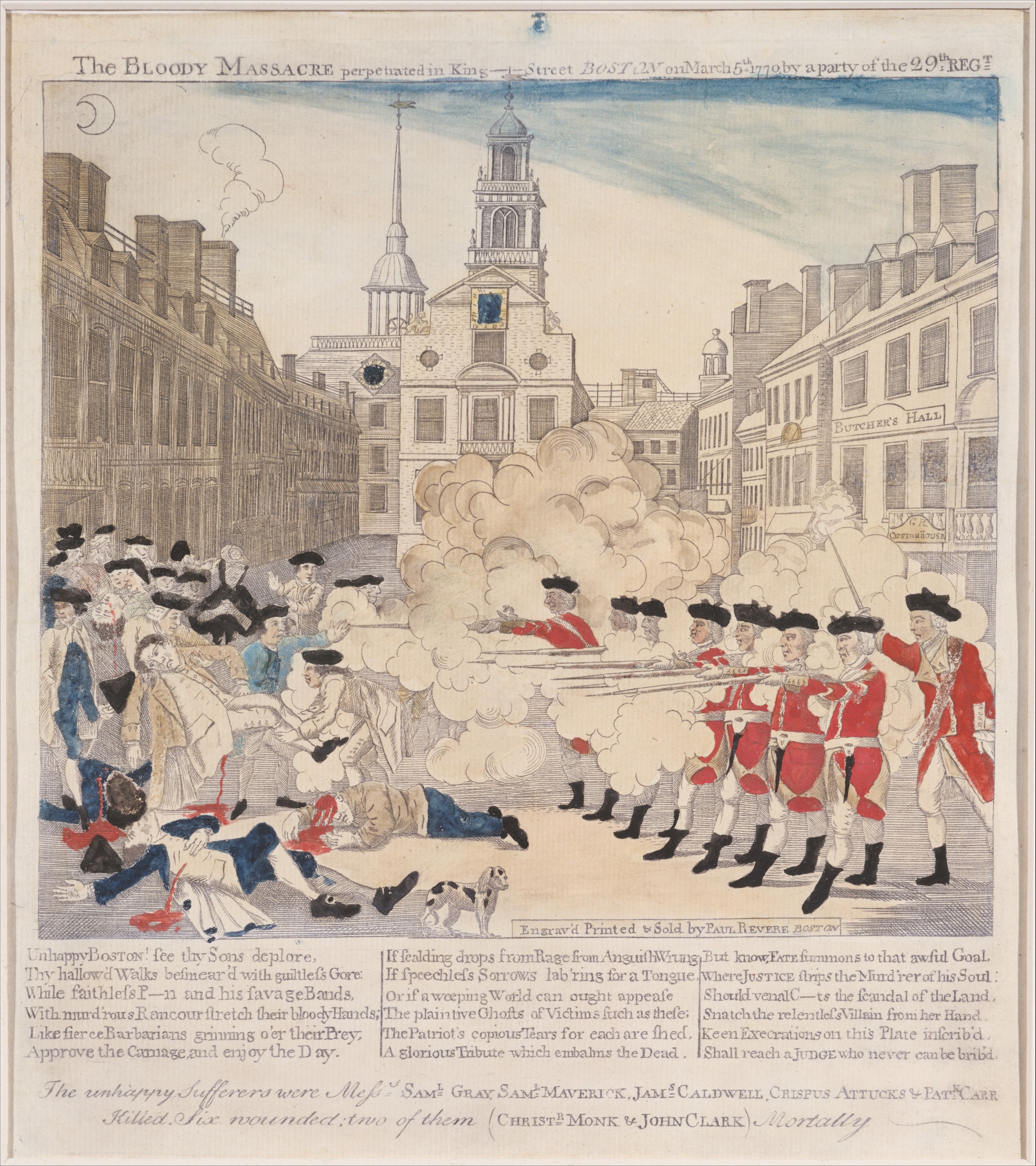
Perhaps the most iconic piece of propaganda came from the skilled hands of silversmith and engraver Paul Revere. His vivid, though heavily biased, engraving titled “The Bloody Massacre in King-Street Boston on March 5th 1770” depicted the British soldiers as merciless executioners firing into an innocent, unarmed crowd. This image, widely circulated throughout the colonies, became a powerful rallying cry, deepening anti-British sentiment and fueling the nascent revolutionary movement. It served as a stark visual reminder of what many perceived as British tyranny and the inherent danger of a standing army quartered among the populace. The public outcry was immense, demanding justice and accountability for the deaths of their fellow citizens.
The Trials: Justice and Diplomacy
In an extraordinary turn of events that underscores the complex legal and ethical landscape of the time, Captain Preston and his eight soldiers were arrested and charged with murder. What followed were two separate trials, both held in Boston later that year, that captivated the attention of the colonies and Great Britain alike.
Surprisingly, the defense attorneys for the British soldiers included two prominent colonial lawyers and patriots: John Adams and Josiah Quincy II. Despite the intense anti-British sentiment, Adams, who would later become the second U.S. President, famously argued that “facts are stubborn things; and whatever may be our wishes, our inclinations, or the dictums of our passions, they cannot alter the state of facts and evidence.” He believed firmly in the principle of a fair trial and the presumption of innocence, even for those deeply unpopular.
The trials were meticulously conducted. Captain Preston was tried separately and acquitted, as the jury found insufficient evidence that he had ordered his men to fire. In the subsequent trial for the eight soldiers, Adams successfully argued that the soldiers had fired in self-defense, provoked by the hostile and violent mob. Six of the soldiers were acquitted, while two, Hugh Montgomery and Matthew Kilroy, were found guilty of manslaughter. Their punishment was branding on the thumb, a relatively lenient sentence for the time, reflecting the jury’s acknowledgment of provocation. While the outcome was far from what many Bostonians had initially demanded, the trials demonstrated a remarkable commitment to due process, even amidst revolutionary fervor. However, for many colonists, the verdict only underscored the injustice of British occupation and solidified their resolve for greater autonomy.
The Boston Massacre’s Enduring Legacy and Its Place in American History
While the Boston Massacre involved a relatively small number of casualties, its impact on the burgeoning American independence movement was immeasurable. It was not merely a tragic incident; it was a catalyst, a rallying cry that helped transform simmering discontent into revolutionary action.
Sparking a Revolution: The Road to Independence
The Boston Massacre served as a stark and undeniable demonstration of the inherent dangers of military occupation and the growing chasm between colonial aspirations and imperial control. It galvanized public opinion, convincing many fence-sitters that British authority was indeed tyrannical and posed a direct threat to the lives and liberties of ordinary colonists. The propaganda disseminated by patriots like Samuel Adams and Paul Revere ensured that the event resonated far beyond the streets of Boston, uniting diverse communities across North America in shared outrage.
It fueled the arguments of those advocating for complete separation from the British Empire. The massacre was a pivotal moment in the narrative of oppression that would eventually lead to the Declaration of Independence. It was a clear precursor to other acts of defiance, such as the Boston Tea Party in 1773, further solidifying the colonists’ resolve and hastening the outbreak of the American Revolution in 1775. The event underscored the idea that the colonists’ fight was not just about taxes, but about fundamental rights, self-governance, and the sanctity of civilian life against military force.
Remembering the Massacre: Modern-Day Memorials and Significance
Today, the site of the Boston Massacre is one of the most significant historical landmarks in Boston. Marked by a cobblestone circle embedded in the pavement in front of the Old State House on State Street, it serves as a solemn reminder of the five men who lost their lives and the profound impact their deaths had on the trajectory of a nation.
For visitors, the site is not merely a historical marker; it’s a profound portal to the past. Standing on those very cobblestones, looking up at the balcony of the Old State House—where the Declaration of Independence was first read to Bostonians—one can almost hear the shouts of the crowd and the fateful musket shots. The location is an integral stop on the Freedom Trail, Boston’s famous 2.5-mile red-lined walking tour that connects 16 historically significant sites.
Visiting the Boston Massacre site offers a powerful educational experience, allowing individuals and families to connect with the very roots of American liberty. It encourages reflection on the delicate balance between civil authority and individual rights, the consequences of political extremism, and the enduring power of ordinary people to shape extraordinary events. It’s a testament to how a single tragic incident can ignite a movement and alter the course of history for generations to come.
Experiencing History: Visiting the Boston Massacre Site and Beyond
For those fascinated by American history and eager to delve into the origins of the nation, a visit to Boston is an absolute must. The city offers an unparalleled opportunity to walk in the footsteps of patriots and revolutionaries, and the Boston Massacre site is undoubtedly a highlight of this historical pilgrimage.
Walking the Freedom Trail: A Journey Through Revolutionary Boston
The best way to experience the Boston Massacre site and its surrounding historical context is by embarking on the Freedom Trail. This iconic route guides visitors through the heart of Revolutionary Boston, linking together 16 of the nation’s most significant historical treasures. The trail is easily navigable, either self-guided with a map or through engaging guided tours offered by various companies, often led by costumed interpreters who bring the past to life with vivid storytelling.
Starting at Boston Common, the nation’s oldest park, the Freedom Trail leads you directly to the Boston Massacre site in front of the Old State House. Here, you can stand at the exact spot where the fateful shots were fired, contemplating the events of March 5, 1770. Inside the Old State House itself, you’ll find a museum filled with artifacts and exhibits that further illuminate the pre-Revolutionary period, including a segment on the massacre.
Beyond this pivotal spot, the trail continues to other key locations that directly relate to the massacre’s aftermath and the broader struggle for independence. You’ll visit Faneuil Hall, known as the “Cradle of Liberty,” where heated debates and town meetings often featured prominent figures like Samuel Adams and James Otis. A short walk will take you past King’s Chapel and its adjacent Granary Burying Ground, the final resting place of Crispus Attucks and other Boston Massacre victims, as well as Samuel Adams, John Hancock, and Paul Revere. Further along, you can explore the Paul Revere House in the North End, the oldest house in downtown Boston and a tangible link to one of the massacre’s most impactful propagandists. Each stop offers a deeper layer of understanding, painting a comprehensive picture of the complex events that led to a nation’s birth.
Planning Your Historical Boston Getaway
Visiting Boston for a deep dive into history is a truly enriching experience that can be tailored to various travel styles and budgets. The city is highly walkable, especially the historical core, making it ideal for independent explorers.
Best Time to Visit: Spring and fall offer the most pleasant weather for walking the Freedom Trail, with vibrant foliage in autumn and blooming gardens in spring. Summer is also popular but can be warmer and more crowded. Winter, while cold, often provides a quieter, more reflective atmosphere for historical exploration.
Accommodation: Boston offers a wide array of accommodation options. For a luxurious stay close to historical sites, consider boutique hotels in Beacon Hill or Downtown Crossing. Mid-range options abound, providing comfortable access to public transportation, which is excellent for reaching sites further afield. Budget travelers can find affordable hotels or hostels, particularly outside the immediate city center, or explore apartment rentals for longer stays. Many hotels offer packages that include historical tours or proximity to major attractions, catering specifically to history buffs.
Beyond the Massacre: While the Boston Massacre is a focal point, don’t miss other crucial sites. Explore the Boston Tea Party Ships & Museum to immerse yourself in another pivotal protest. Visit the Bunker Hill Monument in Charlestown for breathtaking views and a deeper understanding of early Revolutionary War battles. Dive into local culture with a stroll through the bustling Quincy Market at Faneuil Hall, or enjoy the vibrant food scene. For families, many museums, like the Museum of Science or the New England Aquarium, offer engaging educational experiences that complement the historical journey.
A trip to Boston is more than just a vacation; it’s an immersive educational experience. By understanding the exact date and context of the Boston Massacre, March 5, 1770, you unlock a deeper appreciation for the dramatic events that forged a nation, allowing you to truly connect with the spirit of liberty that continues to define this remarkable city.
LifeOutOfTheBox is a participant in the Amazon Services LLC Associates Program, an affiliate advertising program designed to provide a means for sites to earn advertising fees by advertising and linking to Amazon.com. Amazon, the Amazon logo, AmazonSupply, and the AmazonSupply logo are trademarks of Amazon.com, Inc. or its affiliates. As an Amazon Associate we earn affiliate commissions from qualifying purchases.