
Navigating the intricacies of divorce proceedings in Florida can be a complex and often emotionally taxing journey. Beyond the personal implications, understanding the logistical timelines involved is crucial for planning and managing expectations. The duration of a divorce case in the Sunshine State is not a fixed entity; rather, it’s a fluid process influenced by a variety of factors, from the cooperation of the parties involved to the efficiency of the legal system. This article aims to demystify the timeline, breaking down the potential durations and outlining the key elements that contribute to the overall length of a divorce in Florida.
Understanding Florida’s Divorce Statutes and Waiting Periods
Florida operates under specific statutory guidelines that dictate the minimum timeframes for divorce proceedings. These regulations are designed to ensure that divorces are not granted impulsively and that parties have a reasonable period to consider their decisions and, where applicable, reach agreements.
The Mandatory Waiting Period
A cornerstone of Florida divorce law is the mandatory 20-day waiting period. This period commences once the petition for dissolution of marriage has been filed and served upon the other spouse. It is important to note that this is a minimum waiting period; it does not mean that a divorce can be finalized in exactly 20 days. This timeframe exists to provide a cooling-off period and to allow both parties adequate notice and opportunity to respond. Even in the most amicable and straightforward cases, this 20-day minimum must be observed before a judge can sign a final judgment of divorce.
Types of Divorce in Florida and Their Timelines
Florida recognizes several types of divorce, each with potentially different timelines:
Uncontested Divorce
An uncontested divorce is generally the quickest path to finalizing a dissolution of marriage in Florida. This occurs when both spouses agree on all significant issues, including but not limited to:
- Equitable Distribution of Marital Assets and Debts: This encompasses property, bank accounts, investments, and liabilities acquired during the marriage.
- Alimony: Whether one spouse will pay support to the other, and if so, the amount and duration.
- Child Custody and Timesharing: If minor children are involved, an agreement on parental responsibility, decision-making, and the schedule for spending time with each parent is necessary.
- Child Support: Financial support paid by one parent to the other for the upbringing of their children.
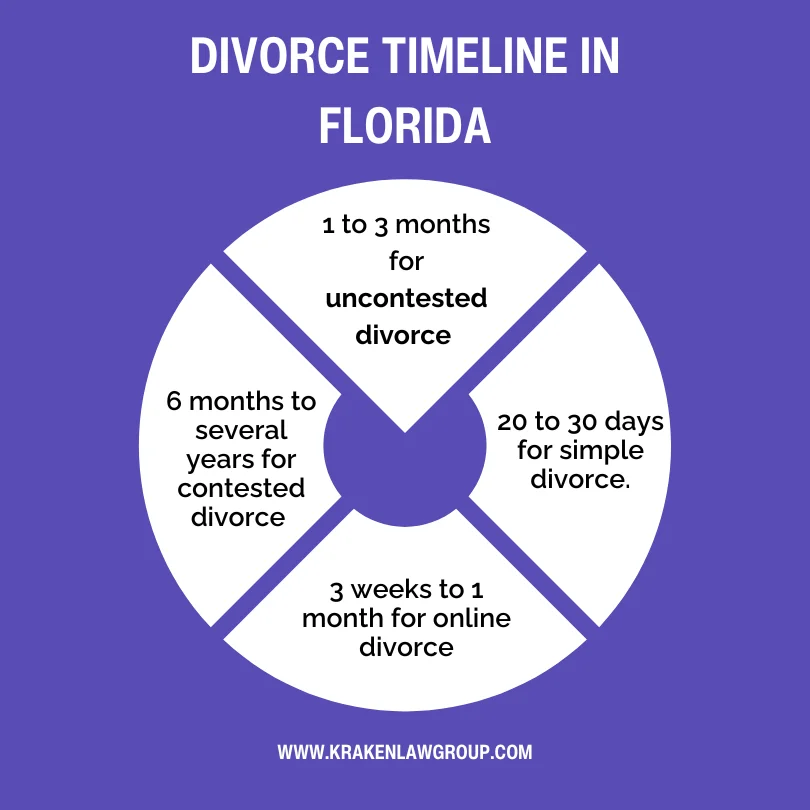
In an uncontested divorce, once the initial paperwork is filed and the 20-day waiting period has elapsed, the parties can submit a Marital Settlement Agreement (MSA) to the court for approval. Provided the agreement is fair and equitable, and all legal requirements are met, the judge can typically sign the final judgment of dissolution relatively quickly thereafter. In ideal circumstances, an uncontested divorce can be finalized within 30 to 60 days from the date the petition is filed and served, assuming all documentation is in order and the court’s calendar allows for prompt review. However, even in these streamlined cases, unforeseen delays in court processing or minor corrections needed in the paperwork can extend this timeline.
Contested Divorce
A contested divorce arises when spouses cannot agree on one or more of the key issues mentioned above. These cases are invariably more complex and take longer to resolve. The timeline for a contested divorce in Florida can vary dramatically, often ranging from several months to over a year, and in highly contentious situations, even longer. Several stages contribute to the extended duration of contested divorces:
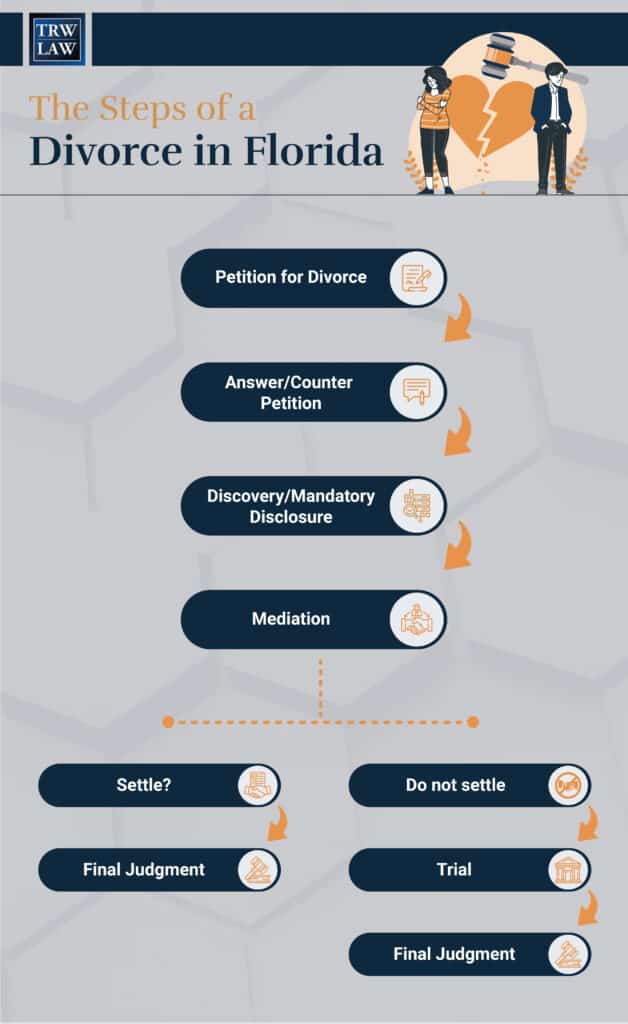
- Discovery Phase: This is a critical period where both parties exchange information and evidence relevant to the case. This can involve interrogatories, requests for production of documents, depositions (sworn testimony taken outside of court), and financial affidavits. The thoroughness and complexity of the assets, debts, and familial relationships can significantly impact the time required for discovery.
- Motions and Hearings: Disagreements often lead to court hearings on various issues, such as temporary alimony, child support, or timesharing arrangements. Scheduling these hearings can take time, depending on the court’s availability.
- Mediation: In Florida, mediation is often mandatory, especially when children are involved. This is a process where a neutral third party helps the spouses attempt to reach an agreement. If mediation is unsuccessful, the case proceeds toward trial.
- Trial: If no settlement is reached, the case will proceed to trial. Trials involve presenting evidence, witness testimony, and legal arguments before a judge who will then make the final decisions on all outstanding issues. The complexity of the case, the number of witnesses, and the judge’s schedule can all influence how long a trial takes and when it can be scheduled.
Simplified Dissolution of Marriage
Florida also offers a “Simplified Dissolution of Marriage” option, which is designed for couples who meet very specific criteria. To qualify, the couple must:
- Have no minor or dependent children.
- Agree that neither party will pay alimony.
- Have already divided their property and debts equally.
- Agree to waive their right to a trial and appeal.
If a couple meets these stringent requirements, the process can be significantly faster than even a standard uncontested divorce, potentially concluding shortly after the 20-day waiting period. The paperwork is streamlined, and the court process is expedited.
Factors Influencing Divorce Duration in Florida
While the statutory framework provides a baseline, numerous practical factors can either expedite or prolong the divorce process in Florida. Understanding these elements can help individuals better anticipate and manage their divorce timeline.
Cooperation and Communication Between Spouses
The most significant determinant of a divorce’s duration is often the level of cooperation and communication between the spouses. When parties can engage in respectful dialogue, share information openly, and are willing to compromise, the process moves much more smoothly. Conversely, high conflict, a lack of communication, or a refusal to negotiate can turn even simple matters into protracted disputes, significantly extending the timeline.

Complexity of Issues
The more complex the marital estate and the more contentious the issues, the longer the divorce will likely take. Cases involving extensive assets, businesses, multiple properties, or intricate child custody arrangements naturally require more time for investigation, negotiation, and legal deliberation.
Legal Representation
The choice of legal counsel can also play a role. While experienced attorneys can often facilitate smoother proceedings, highly aggressive or adversarial legal strategies, while sometimes necessary, can contribute to extended timelines. Conversely, attorneys who are skilled in negotiation and mediation may help expedite the resolution of contested matters. It is also important for individuals to consider whether they will be represented by an attorney, proceed without one (pro se), or utilize collaborative divorce processes.
Court Dockets and Schedules
The efficiency and caseload of the specific court handling the divorce can also impact the timeline. Judges have busy dockets, and obtaining hearing dates, trial dates, or even prompt review of submitted documents can sometimes lead to delays beyond the parties’ control. This is particularly true in larger, more populous counties like Miami-Dade or Broward.
Presence of Minor Children
Divorces involving minor children typically take longer than those without children, even if uncontested. This is due to the court’s paramount concern for the well-being of the children, requiring detailed parenting plans, timesharing schedules, and child support calculations that meet state guidelines. Ensuring these arrangements are in the best interests of the children necessitates thorough review and consideration.
Common Delays and How to Mitigate Them
While some factors contributing to divorce duration are inherent to the legal process, certain common delays can often be mitigated with proactive planning and approach.
Incomplete or Inaccurate Financial Disclosure
One of the most frequent causes of delay is incomplete or inaccurate financial disclosure. Both parties are legally obligated to provide a full and honest accounting of all assets, debts, income, and expenses. Failure to do so, or the discovery of hidden assets, can lead to significant delays as legal teams investigate, and the court may impose penalties.
- Mitigation: Be prepared to gather all relevant financial documents well in advance. This includes bank statements, tax returns, investment records, property deeds, and credit card statements. Open and honest disclosure from the outset is the most effective way to avoid this common pitfall.
Reluctance to Negotiate or Compromise
A rigid stance on all issues can bring negotiations to a standstill. While advocating for one’s rights is important, a willingness to find middle ground is essential for reaching a settlement and moving forward.
- Mitigation: Engage in mediation with an open mind. Consider the long-term benefits of a quicker resolution versus the emotional and financial costs of a prolonged legal battle. Focusing on achievable outcomes rather than absolutes can be highly beneficial.
Unforeseen Circumstances
Life is unpredictable. A sudden illness, job loss, or other significant life event can necessitate a pause or recalculation of settlement terms, inevitably adding time to the process.
- Mitigation: While these events cannot always be predicted, having a contingency plan or understanding how such events might impact finances and timelines can help in navigating them more effectively if they arise. Legal counsel can advise on how to address such circumstances within the divorce proceedings.
Procedural Errors or Incomplete Paperwork
Mistakes in filing court documents, missing required signatures, or failing to adhere to specific procedural rules can lead to rejections from the court and require refiling, thereby causing delays.
- Mitigation: If represented by an attorney, they will manage the procedural aspects. If proceeding pro se, it is highly advisable to utilize court-approved forms and, if possible, seek guidance from legal aid services or court clerks regarding proper procedures.
Conclusion: The Fluid Nature of Divorce Timelines in Florida
In conclusion, the question of “How Long Does It Take To Get A Divorce In Florida?” does not have a single, definitive answer. While the state mandates a minimum 20-day waiting period, the actual duration is a dynamic interplay of legal requirements, the complexity of the issues, and, most importantly, the cooperation between the parties involved. An uncontested divorce can often be finalized within two to three months, while a contested divorce can stretch for a year or more. By understanding the influencing factors, preparing thoroughly, and approaching the process with a spirit of resolution, individuals can navigate their divorce proceedings in Florida more efficiently and with less protracted uncertainty. Consulting with an experienced family law attorney in Florida is always recommended to gain personalized insights into your specific situation and to ensure all legal requirements are met efficiently.
LifeOutOfTheBox is a participant in the Amazon Services LLC Associates Program, an affiliate advertising program designed to provide a means for sites to earn advertising fees by advertising and linking to Amazon.com. Amazon, the Amazon logo, AmazonSupply, and the AmazonSupply logo are trademarks of Amazon.com, Inc. or its affiliates. As an Amazon Associate we earn affiliate commissions from qualifying purchases.