
Florida, often referred to as the “Sunshine State,” is a perennial favorite for travelers seeking sun-drenched beaches, world-class theme parks, and a vibrant cultural tapestry. Understanding the sheer volume of visitors to this popular destination is crucial for various stakeholders, from tourism boards and local businesses to individual travelers planning their trips. Each year, millions flock to Florida, drawn by its diverse attractions and unique allure. The exact number fluctuates, influenced by economic conditions, global events, and seasonal trends, but the consistent influx underscores Florida’s status as a leading tourist hotspot within the United States.
The economic impact of this constant stream of visitors is profound, supporting countless jobs and contributing billions of dollars to the state’s economy. This article delves into the statistics of Florida’s annual visitor numbers, exploring the factors that drive these figures and the implications for the tourism industry. We will examine recent trends and provide insights into what makes Florida such an enduringly attractive destination for domestic and international travelers alike.
Understanding Florida’s Tourism Landscape
Florida’s appeal is multifaceted, catering to a wide spectrum of traveler interests. Its geographical advantages, including extensive coastlines on both the Atlantic Ocean and the Gulf of Mexico, offer unparalleled opportunities for beach vacations. Beyond its natural beauty, the state boasts an unparalleled concentration of entertainment and family-friendly attractions, most notably the iconic Walt Disney World Resort and the Universal Orlando Resort. These entertainment giants alone draw tens of millions of visitors annually, significantly bolstering Florida’s overall tourism numbers.
Key Visitor Demographics
The visitors to Florida are a diverse group, encompassing families on vacation, couples seeking romantic getaways, solo adventurers, and business travelers. Domestic tourists form the largest segment, with a significant proportion originating from the Northeastern United States and the Midwest. The allure of warmer weather during the colder months makes Florida a prime destination for snowbirds and winter vacationers.
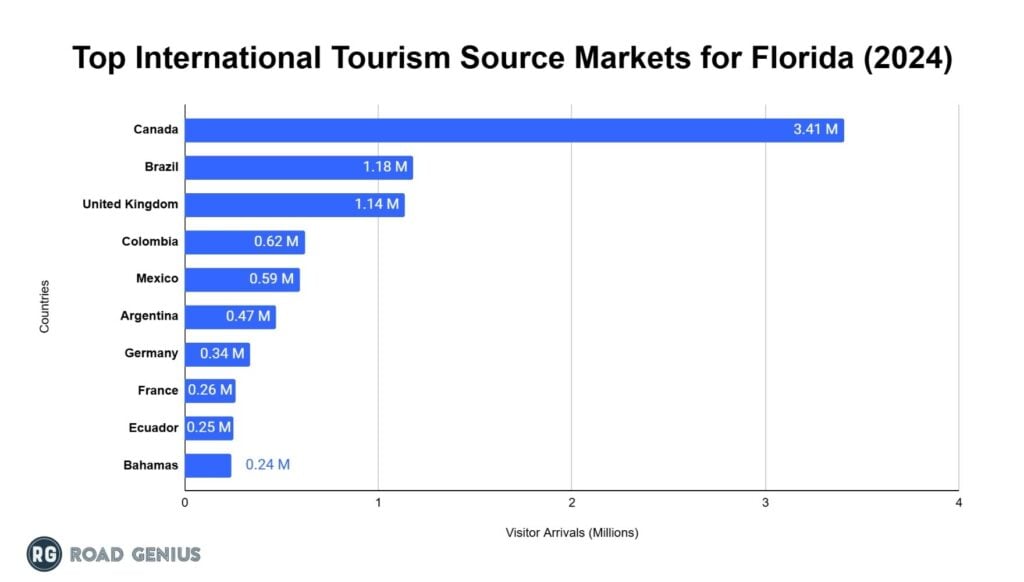
International visitors also play a vital role in Florida’s tourism economy. Travelers from Canada, the United Kingdom, Brazil, and Mexico consistently rank among the top international source markets. These visitors are often drawn to the theme parks, the unique ecosystems like the Everglades National Park, and the vibrant cultural experiences found in cities such as Miami and St. Augustine.
Driving Factors for Visitation
Several interconnected factors contribute to Florida’s enduring popularity as a travel destination:
World-Renowned Attractions
The presence of globally recognized theme parks such as Walt Disney World Resort, Universal Orlando Resort, and SeaWorld Orlando is arguably the single biggest draw. These parks offer immersive experiences, thrilling rides, and entertainment for all ages, making Orlando a premier family vacation destination. Beyond Orlando, other attractions like Busch Gardens Tampa Bay, the John’s Pass Village and Boardwalk in Madeira Beach, and the historical significance of places like St. Augustine add to the state’s diverse appeal.
Natural Beauty and Outdoor Recreation
Florida’s extensive coastline provides miles of pristine beaches, from the lively shores of South Beach in Miami Beach to the tranquil, shell-strewn beaches of the Florida Keys. The state also offers abundant opportunities for water sports, including fishing, boating, swimming, and diving. Inland, the unique ecosystems of the Everglades provide a haven for wildlife viewing and airboat tours, while numerous state parks and natural springs offer hiking, camping, and swimming experiences.
Climate and Weather
Florida’s consistently warm climate is a significant draw, especially for those seeking to escape colder weather. The state experiences mild winters, making it an ideal destination for year-round travel. While the summer months can be hot and humid, with the potential for thunderstorms and hurricanes, the overall appeal of sunshine and pleasant temperatures remains a powerful magnet for visitors.
Accessibility and Infrastructure
Florida boasts major international airports in cities like Miami International Airport, Orlando International Airport, and Fort Lauderdale-Hollywood International Airport, facilitating easy access for both domestic and international travelers. The state also has a well-developed network of highways, making road trips feasible and convenient. A robust tourism infrastructure, including a wide range of accommodation options and transportation services, further enhances the visitor experience.
Annual Visitor Numbers: A Deep Dive
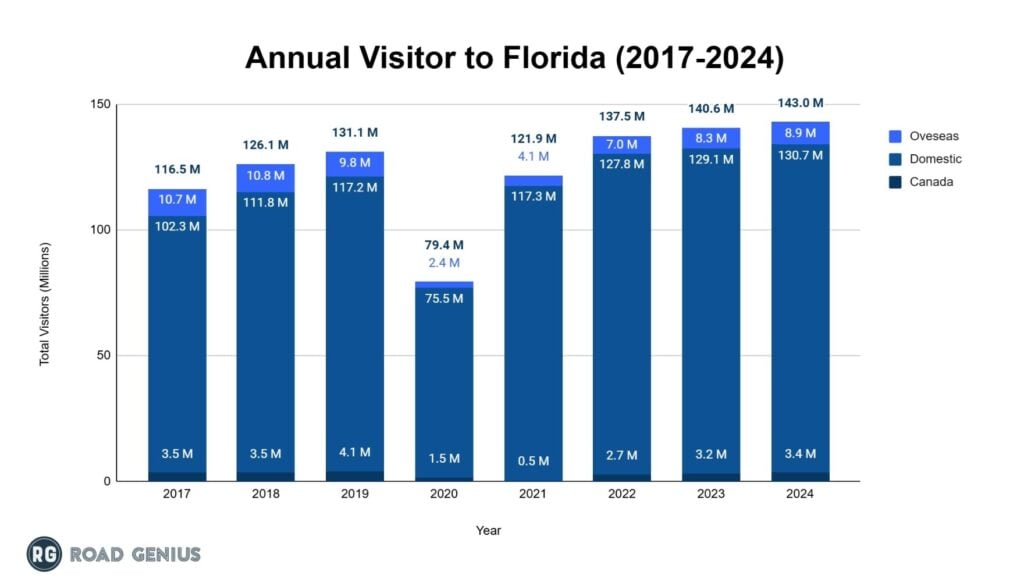
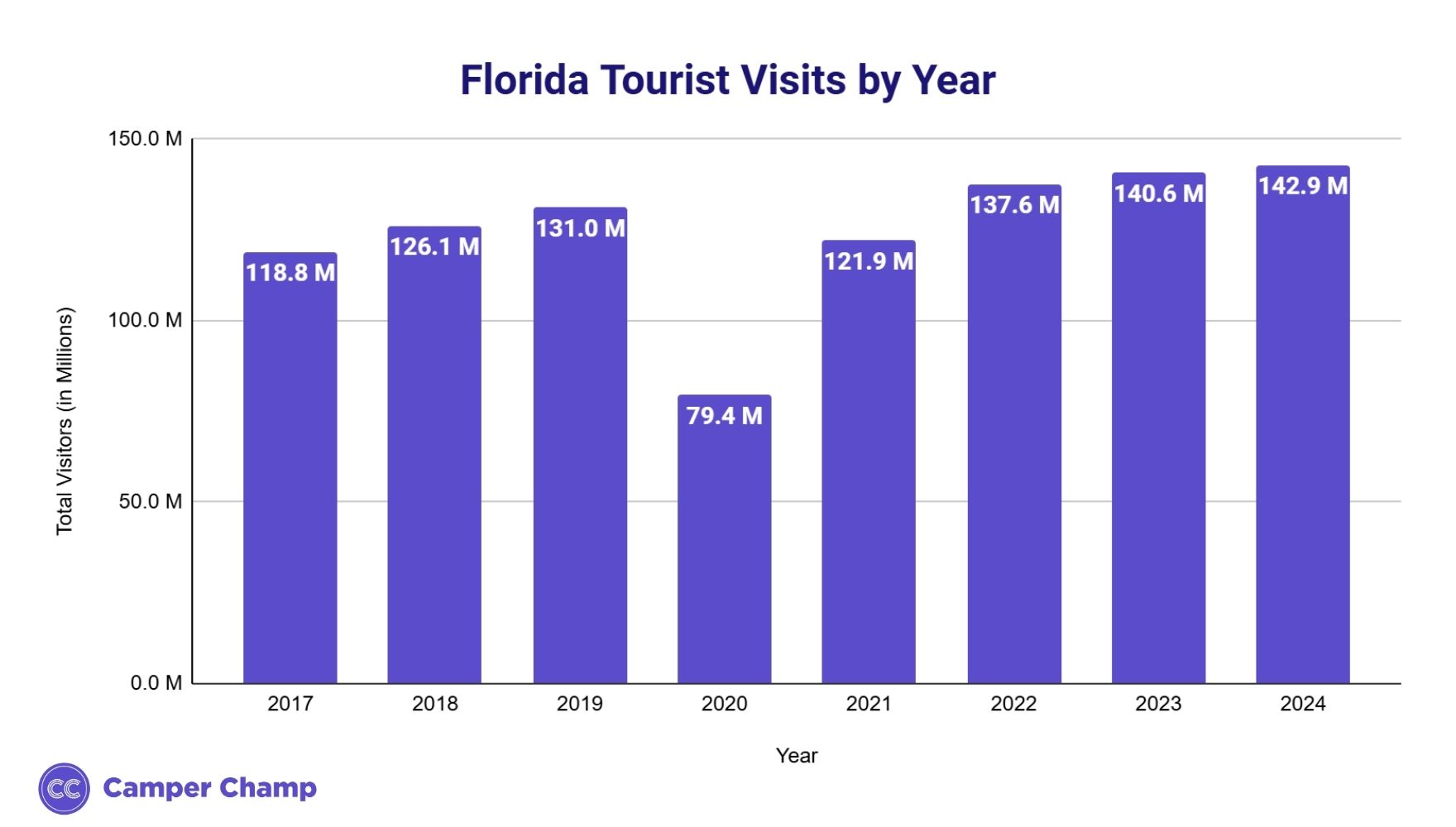
Pinpointing an exact, single figure for annual visitors to Florida can be challenging due to the various methodologies used for data collection and reporting. However, official tourism statistics consistently place the numbers in the tens of millions, frequently exceeding 100 million in recent pre-pandemic years.
Pre-Pandemic Peaks
In the years leading up to 2020, Florida’s tourism sector experienced remarkable growth. For instance, Visit Florida, the state’s official tourism marketing corporation, reported record-breaking visitor numbers. In 2019, for example, Florida welcomed an estimated 131.4 million visitors. This figure represented a significant increase from previous years and solidified Florida’s position as one of the most visited states in the United States.
The breakdown of these numbers typically includes both domestic and international travelers. Domestic visitors usually account for the vast majority of these figures, reflecting the strong appeal of Florida to residents of other states. International visitation, while smaller in absolute numbers, often represents a higher economic spend per visitor.
Impact of Global Events
The global COVID-19 pandemic had a significant, albeit temporary, impact on travel to Florida, as it did worldwide. In 2020, visitor numbers saw a substantial decline due to travel restrictions, health concerns, and a general slowdown in global tourism. However, Florida’s relatively open approach to travel and its abundance of outdoor, socially distanced activities helped it to recover more quickly than many other destinations.
By 2021 and 2022, visitor numbers began to rebound strongly. While they may not have immediately surpassed the pre-pandemic peaks, the recovery demonstrated the resilience of Florida’s tourism industry and the enduring desire of people to travel to the state. The pent-up demand for travel, coupled with Florida’s established attractions, fueled this resurgence.
Current Trends and Future Projections
In recent years, Visit Florida has continued to report robust visitor numbers, indicating a sustained recovery and growth trajectory. For example, preliminary data for 2023 often points to visitor numbers approaching or exceeding pre-pandemic levels, with millions of travelers choosing Florida for their vacations.
The state’s tourism outlook remains exceptionally bright. Factors such as continued investment in attractions, the development of new resorts and entertainment venues, and aggressive marketing campaigns by Visit Florida are expected to sustain this positive trend. Furthermore, Florida’s diverse offerings, ranging from family fun in Orlando to the cultural richness of Tampa and the laid-back charm of the Florida Keys, ensure its appeal across a broad demographic.
The Economic Significance of Florida’s Visitors
The sheer volume of visitors to Florida translates directly into substantial economic benefits for the state. Tourism is a cornerstone of Florida’s economy, generating significant revenue through accommodation, dining, transportation, entertainment, and retail sales.
Revenue Generation
The money spent by millions of tourists annually creates a powerful economic ripple effect. This includes direct spending on hotels, theme park tickets, meals, and souvenirs, as well as indirect spending on goods and services that support the tourism industry, such as food production, construction, and professional services. Visit Florida regularly publishes reports detailing the economic impact of tourism, often showing billions of dollars in visitor spending each year. This revenue is vital for state and local governments, contributing to tax bases that fund public services.
Employment Opportunities
The tourism and hospitality sector is a major employer in Florida. From hotel staff and theme park employees to restaurant servers, tour guides, and airline personnel, a vast workforce is dedicated to serving visitors. The industry provides a wide range of job opportunities, from entry-level positions to highly skilled management roles, contributing significantly to the state’s overall employment figures and economic well-being. The growth in visitor numbers directly correlates with the creation and sustainability of these jobs.
Investment and Development
The consistent influx of tourists encourages ongoing investment in Florida’s tourism infrastructure. This includes the development of new hotels, resorts, and attractions, as well as upgrades to existing facilities. Major developers and hospitality brands continue to invest in the state, recognizing its strong market demand and potential for growth. This continuous cycle of investment ensures that Florida remains competitive and attractive to travelers worldwide, further solidifying its position as a leading global destination. The sustained interest in Florida as a travel destination, reflected in its annual visitor numbers, is a testament to its enduring appeal and economic vitality.
LifeOutOfTheBox is a participant in the Amazon Services LLC Associates Program, an affiliate advertising program designed to provide a means for sites to earn advertising fees by advertising and linking to Amazon.com. Amazon, the Amazon logo, AmazonSupply, and the AmazonSupply logo are trademarks of Amazon.com, Inc. or its affiliates. As an Amazon Associate we earn affiliate commissions from qualifying purchases.