
Embarking on the journey of marriage is a momentous occasion, and for couples planning to tie the knot in the Sunshine State, understanding the financial aspects is a crucial step. Among the various costs associated with a wedding, obtaining a marriage license is a foundational requirement. This guide delves into the specifics of marriage license fees in Florida, exploring the standard costs, potential discounts, and the nuances that might affect the final price for couples celebrating their union in this vibrant state.
Understanding Florida’s Marriage License Fees
In Florida, the cost of a marriage license is largely standardized, though slight variations can occur based on the county in which the license is obtained. As of the latest information, the standard fee for a marriage license in Florida typically ranges from $86 to $93.50. This fee covers the administrative costs associated with issuing and processing the license, which is a legal document permitting a couple to marry within the state.
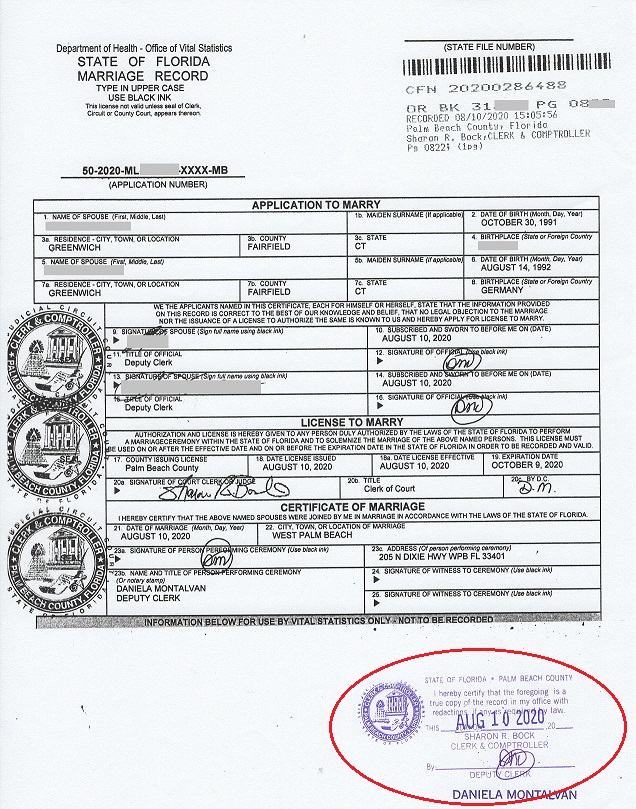
It is important to note that these figures are subject to change and can be influenced by legislative updates or local county ordinances. Therefore, it is always advisable for couples to verify the exact fee with the specific county clerk of court’s office where they intend to apply. This due diligence can prevent any last-minute surprises and ensure a smooth process as they prepare for their wedding day.
The Standard Fee Structure
The base fee for a marriage license in Florida is set by state law. This fee is collected by the county clerk of court at the time of application. The primary purpose of this fee is to fund the operations of the clerk’s office and to ensure that all legal requirements for marriage are met. The license itself is valid for a period of 60 days from the date of issuance, meaning the ceremony must take place within this timeframe.
County-Specific Variations
While the state sets a general guideline, individual counties have some latitude in setting their precise fees. For instance, one county might charge the maximum allowed by the state, while another, aiming to attract more residents and encourage matrimony within its jurisdiction, might opt for a slightly lower fee. These differences are usually minor, often a matter of a few dollars. However, for budget-conscious couples, especially those planning a wedding in a popular destination like Miami or Orlando, understanding these variations can be beneficial. The Miami-Dade County Clerk of Courts, for example, will have its own specific fee structure, as will the clerk’s office in Orange County.
Discounts and Reduced Fees
Florida offers a significant incentive for couples who complete a premarital preparation course. This initiative is designed to encourage couples to invest in their relationship and prepare for the responsibilities of marriage.
Premarital Preparation Course Discount
Couples who complete a premarital preparation course from a registered provider can qualify for a substantial reduction in their marriage license fee. If both applicants complete such a course, which must be at least four hours long and cover topics such as conflict management, communication skills, and financial responsibilities, the marriage license fee is reduced. This reduction typically brings the fee down to approximately $61. This discount not only makes marriage more affordable but also promotes stronger, more resilient marriages. The course must be completed within 12 months prior to applying for the license, and a certificate of completion must be presented to the clerk of court at the time of application.
Waiting Period Waivers
For non-Florida residents, there is generally no waiting period to get married after obtaining the license, provided they can present proof of having completed a premarital course. However, for Florida residents, a mandatory three-day waiting period applies between the issuance of the marriage license and the solemnization of the marriage. This waiting period can be waived if both applicants attest in writing that they have completed a premarital preparation course. This waiver is another benefit of completing such a course, allowing for more flexibility in wedding planning, especially for couples aiming for a spontaneous ceremony or those with out-of-town guests arriving soon after obtaining the license.
Additional Fees and Considerations
While the marriage license fee is the primary cost, there might be other minor fees or requirements that couples should be aware of.
Application Fees and Processing
The stated fees for the marriage license generally encompass the application and processing costs. However, some county clerks might charge a small administrative fee for services such as issuing certified copies of the marriage certificate, which are often required for name changes after marriage. It is prudent to inquire about these potential additional costs when applying.
Expedited Services
In most counties, there are no specific expedited service fees for marriage licenses. The process is generally efficient, and applications are typically processed on the same day they are submitted, provided all required documentation is in order. The focus is on compliance with legal requirements rather than offering premium speed for an additional charge.
Replacement Licenses
Should a marriage license be lost or damaged before the ceremony, a replacement can be issued. There will likely be a fee associated with obtaining a duplicate license, which is usually a nominal amount to cover administrative costs.
Factors Affecting Eligibility and Cost
To obtain a marriage license in Florida, couples must meet certain eligibility criteria, which, while not directly impacting the cost of the license itself, are essential for the process.
Age Requirements
Both applicants must be at least 18 years of age to obtain a marriage license without parental consent. Applicants who are 17 years of age may obtain a license with the consent of both parents or legal guardians, and the other applicant must be no more than two years older than the 17-year-old. For applicants under 17, marriage is generally prohibited in Florida, though exceptions may exist under specific court orders.
Identification and Documentation
Applicants are required to provide valid proof of identity and age. Acceptable forms of identification typically include a driver’s license, state-issued identification card, passport, or military identification. Social Security cards are also often requested. If either applicant has been previously married, they must provide proof that the prior marriage has been legally terminated, usually through a final divorce decree or a death certificate. The presentation of these documents is a prerequisite for obtaining the license and is part of the standard application process, with no extra fees attached to these checks themselves.
Residency Status
Florida does not require applicants to be residents of the state to obtain a marriage license. Therefore, couples from out of state or even out of the country can get married in Florida without needing to establish residency. This makes the state a popular choice for destination weddings, attracting couples from all over the world who wish to exchange vows against the backdrop of its beautiful beaches, vibrant cities like Tampa, or charming towns.
Applying for a Marriage License in Florida
The application process for a marriage license is relatively straightforward and can typically be completed at any county clerk of court’s office throughout Florida.
The Application Process
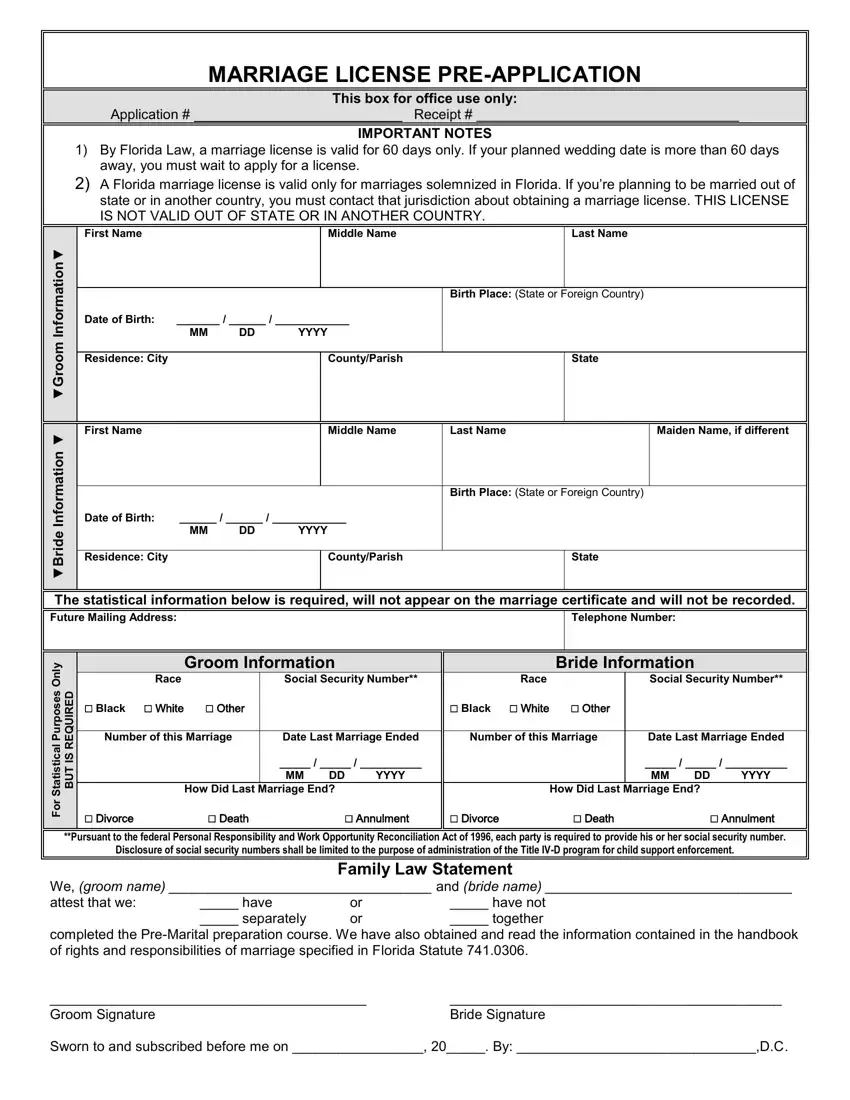
Both applicants must appear in person before the county judge or clerk of court to apply for the marriage license. They will be required to provide information such as their full names, addresses, dates of birth, places of birth, and the names and birthplaces of their parents. If a premarital preparation course has been completed, the certificate of completion must be presented at this time to qualify for the reduced fee.
Required Documents
As mentioned, valid identification and proof of dissolution of prior marriages (if applicable) are essential. It’s a good practice to contact the specific county clerk’s office beforehand to confirm their exact requirements for identification and any other necessary documentation. Some offices may also have specific requirements regarding the format of divorce decrees or death certificates.

Choosing the Right County
While any county clerk of court in Florida can issue a marriage license, couples often choose to apply in the county where they plan to hold their wedding ceremony or where they reside. The license is valid throughout the entire state, so the county of issuance does not restrict the location of the ceremony. However, understanding the fee structure and any specific county procedures, such as appointment availability, can help in making an informed decision. For instance, couples planning a wedding near the Panhandle might investigate fees in counties like Escambia County, while those heading to the Keys might look at Monroe County.
In conclusion, the cost of a marriage license in Florida is an accessible expense, with a standard fee that can be further reduced by participating in a premarital preparation course. This commitment to marriage preparedness not only offers financial savings but also contributes to the foundation of a lasting union. By understanding these costs and requirements, couples can confidently navigate this essential step towards their wedding day in the beautiful state of Florida.
LifeOutOfTheBox is a participant in the Amazon Services LLC Associates Program, an affiliate advertising program designed to provide a means for sites to earn advertising fees by advertising and linking to Amazon.com. Amazon, the Amazon logo, AmazonSupply, and the AmazonSupply logo are trademarks of Amazon.com, Inc. or its affiliates. As an Amazon Associate we earn affiliate commissions from qualifying purchases.