
Navigating the process of applying for food assistance in Florida can seem daunting, but understanding the steps involved can make it significantly more manageable. This guide aims to demystify the application process for the Supplemental Nutrition Assistance Program (SNAP), commonly known as food stamps, in the Sunshine State. Whether you are a resident of Miami, Orlando, or any other part of Florida, this information will serve as your comprehensive resource.
The Florida Department of Children and Families (DCF) administers the SNAP program in Florida. Its primary goal is to provide crucial nutritional support to low-income individuals and families, ensuring they have access to healthy food options. Eligibility is determined by a combination of factors, including household income, household size, and certain allowable expenses.
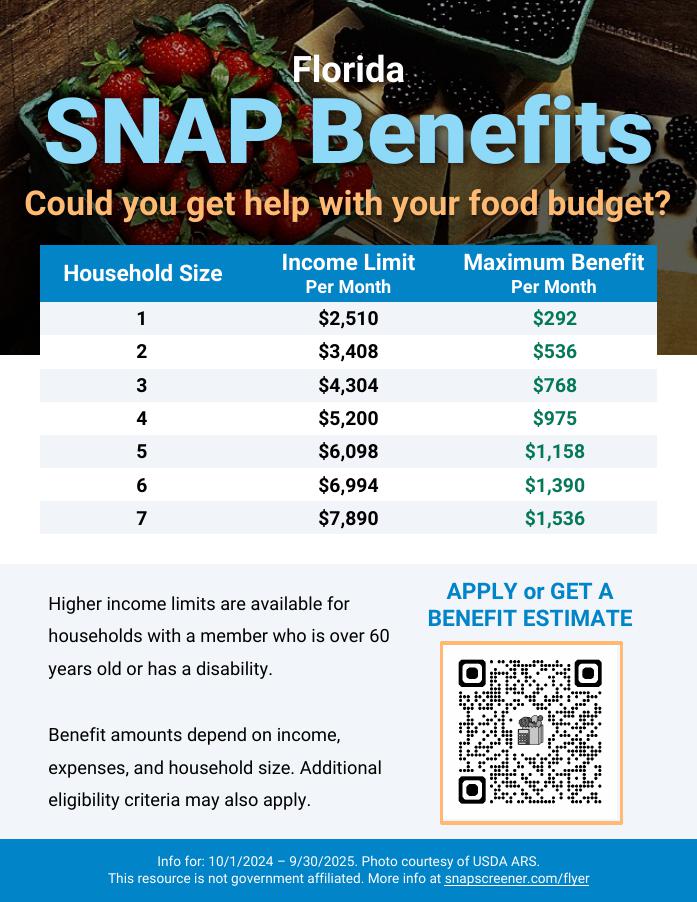
Understanding SNAP Eligibility in Florida
Before diving into the application process, it’s essential to grasp the fundamental eligibility requirements for SNAP benefits in Florida. These requirements are designed to assist those most in need.
Income and Asset Limits
The core of SNAP eligibility revolves around your household’s income. Florida adheres to federal guidelines, which typically involve a gross monthly income limit and a net monthly income limit.
- Gross Monthly Income: This is the total income your household receives before any deductions are taken.
- Net Monthly Income: This is your gross income minus certain allowable deductions, such as earned income disregards, dependent care expenses, and shelter costs (including utilities and a portion of rent or mortgage).
Generally, most households must meet both the gross and net income tests. However, households with elderly or disabled members may have different income requirements.
In addition to income, there are also asset limits. Assets are resources your household owns that could be converted into cash. Common countable assets include:
- Cash on hand
- Money in checking and savings accounts
- Stocks and bonds
- Motor vehicles (though there are exceptions for primary vehicles and vehicles necessary for work or medical treatment)
Certain assets are typically excluded from this calculation, such as the home you live in and one vehicle per adult household member. The specific asset limits can change, so it is always advisable to check the most current guidelines on the DCF website or during your application.
Household Composition
The size and composition of your household also play a significant role. SNAP benefits are calculated based on the number of eligible individuals in your household who purchase and prepare meals together. This includes:
- Spouses
- Children under 22 years old living with their parents
- Other relatives living with you who are dependent on you for food
- Roommates or non-relatives who purchase and prepare meals with the household
It’s important to accurately report all household members to ensure correct benefit calculations.
Special Circumstances
Certain situations can affect eligibility. For example, if you are a student, there are specific rules regarding your eligibility for SNAP. Likewise, if you have recently quit a job, there might be a waiting period or specific requirements to meet to re-establish eligibility. Work registration is also a requirement for most able-bodied adults without dependents (ABAWDs), though there are exemptions.
The Application Process: Step-by-Step
Applying for SNAP in Florida can be done through several convenient methods. The most common and often fastest way is online.
Online Application
The Florida DCF provides a user-friendly online portal for submitting SNAP applications.
- Visit the ACCESS Florida Website: The official portal for applying for benefits like SNAP, Medicaid, and Temporary Cash Assistance is ACCESS Florida. You will need to create an account if you don’t already have one.
- Create an Account: This involves providing basic information such as your name, address, date of birth, and a valid email address. You will also create a username and password.
- Complete the Application: Once logged in, you will be guided through a series of questions covering your household’s demographic information, income, expenses, assets, and living situation. Be prepared to provide detailed and accurate information. You can save your progress and return to the application later if needed.
- Gather Required Documents: While you can start the application online, you will eventually need to submit supporting documentation. It’s wise to begin gathering these documents as you complete the application. These typically include:
- Proof of identity (e.g., driver’s license, state ID, passport)
- Social Security numbers for all household members
- Proof of income (e.g., pay stubs, benefit award letters, tax returns)
- Proof of shelter costs (e.g., rent receipts, mortgage statements, property tax bills)
- Proof of utility expenses (e.g., utility bills)
- Proof of any work-related expenses or dependent care costs
- Medical expenses for elderly or disabled household members
- Submit the Application: After completing all sections and uploading or preparing to upload your documents, submit your application through the portal.
Paper Application

For those who prefer a paper application or lack consistent internet access, applications can be downloaded from the DCF website and mailed in, or picked up and dropped off at a local DCF service center.
Phone Application
In some cases, you may be able to complete a preliminary application over the phone by calling the DCF customer service center. However, a full application will likely still require a written submission or an interview.
After You Apply: The Interview and Verification Process
Once your application is submitted, the DCF will review it. You may be contacted for an interview, which is typically conducted over the phone or in person at a local service center.
The SNAP Interview
The interview is an opportunity for a DCF representative to clarify information on your application, ask follow-up questions, and ensure you meet all eligibility criteria. It’s crucial to:
- Be Punctual: If the interview is scheduled for a specific time, be ready.
- Be Honest and Accurate: Provide truthful answers to all questions.
- Have Your Documents Ready: Bring all the supporting documents you have gathered, even if you have already uploaded some online. This is your chance to present them directly.
- Ask Questions: If you are unsure about any part of the process or eligibility requirements, this is the time to ask.
Document Verification
Following the interview, the DCF will verify the information you provided using your submitted documents. This process can take some time, and delays can occur if the documentation is incomplete or unclear.
Receiving Your Benefits
If your application is approved, you will receive a notice from the DCF informing you of your eligibility and the amount of benefits you will receive.
Electronic Benefits Transfer (EBT) Card
SNAP benefits are issued electronically on a plastic card called an EBT card, often referred to as a “Golden Card” in Florida. This card works much like a debit card and can be used at participating grocery stores and farmers’ markets. You will receive your EBT card in the mail, along with instructions on how to activate it and set a Personal Identification Number (PIN).
Benefit Issuance Schedule
Benefits are typically loaded onto EBT cards on a staggered schedule throughout the month, based on the last digit of your case number. You will be informed of your specific issuance date.
Maintaining Your Benefits
Once you are approved for SNAP, your responsibility doesn’t end there. You must comply with ongoing requirements to maintain your benefits.
Recertification
SNAP benefits are not permanent. You will need to recertify your eligibility periodically, usually every six months or every year, depending on your household’s circumstances. The DCF will send you a recertification application, and it’s crucial to complete and submit it on time with all required documentation to avoid a gap in benefits.
Reporting Changes
You are required to report certain changes in your household’s circumstances to the DCF within 10 days of the change occurring. These changes can include:
- An increase in household income
- A decrease in household expenses (like shelter or utility costs)
- A change in household size (e.g., someone moving in or out)
- A change in work status for able-bodied adults
Failure to report changes can result in overpayments, which may need to be repaid, or even disqualification from the program.
Applying for SNAP in Florida is a vital process for many households seeking to supplement their food budget. By understanding the eligibility criteria, navigating the application steps, and fulfilling ongoing responsibilities, you can successfully access the nutritional assistance you and your family need to thrive. Remember to always refer to the official Florida DCF website or contact them directly for the most current information and assistance.
LifeOutOfTheBox is a participant in the Amazon Services LLC Associates Program, an affiliate advertising program designed to provide a means for sites to earn advertising fees by advertising and linking to Amazon.com. Amazon, the Amazon logo, AmazonSupply, and the AmazonSupply logo are trademarks of Amazon.com, Inc. or its affiliates. As an Amazon Associate we earn affiliate commissions from qualifying purchases.