
Navigating the process of obtaining a driver’s license in Florida is a significant milestone for many, whether you’re a new resident, a young aspiring driver, or an international visitor looking to drive legally within the Sunshine State. The Florida Department of Highway Safety and Motor Vehicles (FLHSMV) oversees this process, ensuring that all drivers meet the necessary qualifications for safety on the road. This comprehensive guide will walk you through the essential steps, requirements, and considerations for securing your Florida driver’s license.
Understanding Florida’s Licensing Tiers
Florida employs a tiered system for driver’s licenses, primarily designed to provide supervised driving experience for young drivers before they gain full privileges. This tiered approach emphasizes graduated steps toward independent driving, fostering a safer environment for all road users.
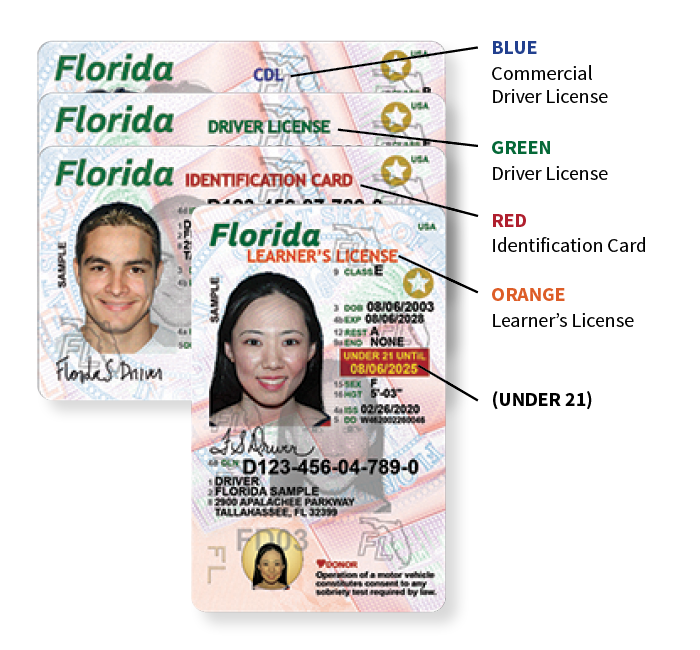
The Learner’s Permit (Class E Learner’s License)
The first official step for most individuals under 18 is to obtain a Learner’s Permit. This permit allows you to drive a vehicle when accompanied by a licensed driver who is at least 21 years old and occupies the front passenger seat. To be eligible for a Learner’s Permit, you must meet the following criteria:
- Age: Be at least 15 years old.
- Driver Education Course: Complete a certified drug, alcohol, and driver education course. This course typically covers traffic laws, safe driving practices, and the dangers of impaired driving.
- Vision and Written Tests: Pass a vision exam to ensure your eyesight meets the required standards for driving, and pass a knowledge test (also known as the Class E written test) that assesses your understanding of Florida traffic laws and road signs.
- Parental Consent: If you are under 18, you will need the signature of a parent or legal guardian on your application.
The application process for a Learner’s Permit involves visiting a Florida Tax Collector’s office that provides driver license services, or an FLHSMV service center. You will need to bring several documents, including proof of identity, Social Security number, residential address, and proof of completion of the required drug, alcohol, and driver education course.
The Intermediate License (Class E Restricted License)
Once you have held your Learner’s Permit for at least 12 months and are at least 16 years old, you can apply for an Intermediate License. This license comes with certain restrictions designed to further guide new drivers as they gain experience. Key restrictions include:
- Curfew: Drivers under 17 are prohibited from driving between 11:00 PM and 6:00 AM, unless accompanied by a licensed driver 21 years or older, or if the driving is necessary for employment or a school-related activity.
- Passenger Restrictions: For the first three years of holding an Intermediate License, drivers under 17 are not permitted to drive with more than one passenger under the age of 21, unless that passenger is a sibling, child, or stepchild.
To obtain an Intermediate License, you must demonstrate that you have held your Learner’s Permit for the required duration and have maintained a clean driving record. You will also need to pass a driving skills test (road test) administered by an authorized third-party provider or an FLHSMV service center. This test evaluates your ability to safely operate a vehicle in various driving scenarios.
The Full Driver License (Class E Unrestricted License)
Upon reaching the age of 18, or after holding an Intermediate License for a specified period and demonstrating safe driving habits, you can transition to a full, unrestricted Class E Driver License. This license grants you the privileges of driving without the age-related curfews or passenger restrictions associated with the Intermediate License.
Requirements for All Applicants
Regardless of age or the specific license tier you are pursuing, several fundamental requirements apply to all individuals seeking a Florida driver’s license.
Documentation Requirements
You will need to present original documents to verify your identity, Social Security number, and Florida residential address. It is crucial to have these documents in order before your visit to a driver license service center. Common acceptable documents include:
- Proof of Identity: A certified birth certificate, a U.S. passport, or an original or certified copy of your Consular Report of Birth Abroad.
- Proof of Social Security Number: Your Social Security card, or a W-2 form with your Social Security number.
- Proof of Residential Address: Utility bills, bank statements, or rental agreements in your name. Ensure these documents are recent and show your physical street address, not a P.O. Box.
- Proof of Legal Presence: If you are not a U.S. citizen, you will need to provide documentation of your legal presence in the United States, such as a valid visa or permanent resident card.
The FLHSMV website provides a comprehensive list of acceptable documents, and it is advisable to review this list thoroughly before your appointment.
Vision and Knowledge Tests
As mentioned earlier, all applicants must pass a vision exam and a knowledge test.
- Vision Exam: This test assesses your ability to see clearly and detect potential vision impairments that could affect driving safety. If you wear glasses or contact lenses, ensure you have them with you for the exam.
- Knowledge Test (Class E Written Test): This computer-based test covers essential Florida traffic laws, road signs, and safe driving principles. It is strongly recommended to study the Florida Driver License Handbook, which is available online and at driver license service centers, to prepare for this test. The handbook provides all the information you need to pass.
Driving Skills Test (Road Test)
The driving skills test is a practical evaluation of your ability to operate a vehicle safely and competently. You must provide a vehicle that is properly registered, insured, and in good working order for the test. The examiner will assess your skills in areas such as:
- Basic Vehicle Control: Starting, stopping, accelerating, and turning.
- Traffic Maneuvers: Changing lanes, making turns at intersections, and navigating various speed limits.
- Parking: Parallel parking, backing into a space, and forward parking.
- Observation and Awareness: Checking mirrors, blind spots, and general awareness of surroundings.
- Adherence to Traffic Laws: Following speed limits, obeying traffic signals and signs, and yielding appropriately.
It is important to practice these maneuvers with a licensed driver to build confidence and proficiency before taking the official test.
Special Considerations for Different Applicants
The driver’s license application process can vary slightly depending on your individual circumstances.
New Florida Residents
If you are moving to Florida from another state, you generally have 30 days from the date you establish residency to obtain a Florida driver’s license. You will need to surrender your out-of-state license and provide the standard documentation, including proof of identity, Social Security number, and Florida residency. You may be exempt from taking the written and driving skills tests if your out-of-state license is valid and you meet other criteria. However, you will still need to pass a vision test.
International Applicants
For individuals who are not U.S. citizens, the process involves additional documentation to prove legal presence in the United States. This includes presenting a valid passport and relevant immigration documents, such as a visa or permanent resident card, that clearly indicate your authorized stay in the country. The validity of your Florida driver’s license will be tied to the expiration date of your legal presence documentation. Some international applicants may also be required to take additional tests, depending on their country of origin and prior driving experience. It is essential to consult the FLHSMV website or visit a service center for specific requirements related to your immigration status.
Commercial Driver Licenses (CDL)
Individuals who intend to operate commercial motor vehicles (e.g., large trucks, buses) must obtain a Commercial Driver License (CDL). The CDL process is more rigorous and involves additional endorsements, a specialized knowledge test, and a more demanding skills test. This category of license ensures that individuals operating large and potentially hazardous vehicles have the highest level of training and competence.
The Application Process Step-by-Step
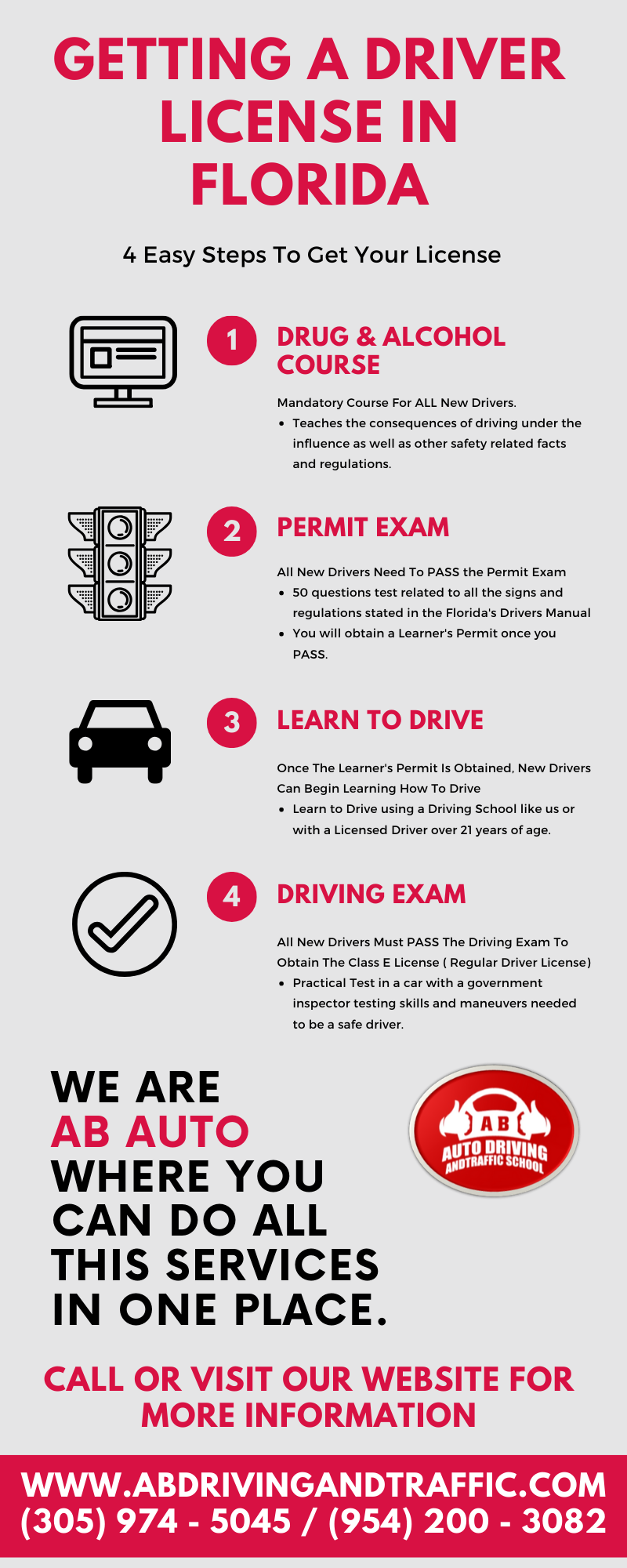
- Gather Required Documents: Compile all necessary original documents proving identity, Social Security number, and Florida residency. For those under 18, ensure you have completed the required drug, alcohol, and driver education course.
- Study the Florida Driver License Handbook: Familiarize yourself with Florida traffic laws, road signs, and safe driving practices.
- Visit a Driver License Service Center: Schedule an appointment or visit a Florida Tax Collector’s office or FLHSMV service center.
- Complete the Application Form: Fill out the driver license application accurately.
- Pass Vision and Knowledge Tests: Successfully complete the vision screening and the Class E written knowledge test.
- Provide Proof of Completion: Submit documentation of your completed drug, alcohol, and driver education course (if applicable).
- Take the Driving Skills Test: Schedule and pass the road test with an authorized examiner.
- Pay Fees: Pay the required fees for the license application and issuance.
- Receive Your Driver License: Upon successful completion of all requirements, you will be issued a temporary driver license, and your permanent license will be mailed to you.
Obtaining a driver’s license in Florida is a structured process designed to ensure that all drivers are competent and informed. By understanding the requirements, preparing thoroughly, and following the steps outlined by the FLHSMV, you can successfully navigate the journey to becoming a licensed driver in the beautiful state of Florida. Whether you are planning to explore the beaches of Miami or the theme parks of Orlando, having a valid Florida driver’s license will open up a world of travel and convenience.
LifeOutOfTheBox is a participant in the Amazon Services LLC Associates Program, an affiliate advertising program designed to provide a means for sites to earn advertising fees by advertising and linking to Amazon.com. Amazon, the Amazon logo, AmazonSupply, and the AmazonSupply logo are trademarks of Amazon.com, Inc. or its affiliates. As an Amazon Associate we earn affiliate commissions from qualifying purchases.