
Navigating the process of obtaining a prescription for Adderall in Florida involves understanding the medical and legal frameworks that govern stimulant medications. As a controlled substance, Adderall, a combination of amphetamine and dextroamphetamine, is prescribed for conditions such as Attention Deficit Hyperactivity Disorder (ADHD) and narcolepsy. The journey to a prescription in the Sunshine State is multifaceted, requiring a thorough medical evaluation, a clear diagnosis, and adherence to specific state and federal regulations. This guide aims to demystify the process for individuals in Florida seeking legitimate medical access to Adderall.
Understanding the Medical Necessity for Adderall
The cornerstone of obtaining any prescription, particularly for a controlled substance like Adderall, is a documented medical necessity. This is not a medication that is prescribed casually. Physicians in Florida adhere to strict guidelines to ensure that Adderall is only dispensed when it is clinically indicated and when other treatment options have been considered or are insufficient.

Diagnosis of ADHD
The most common reason for an Adderall prescription is the diagnosis of Attention Deficit Hyperactivity Disorder (ADHD). This neurodevelopmental disorder is characterized by persistent patterns of inattention and/or hyperactivity-impulsivity that interfere with functioning or development. In Florida, as elsewhere, a diagnosis of ADHD is made by qualified healthcare professionals, typically physicians specializing in psychiatry, neurology, or pediatrics, or by psychologists with diagnostic capabilities.
The Diagnostic Process
The diagnostic process for ADHD is comprehensive and typically involves:
- Clinical Interviews: Detailed discussions with the patient about their symptoms, history, and how these affect their daily life. This often includes gathering information from parents or educators for children and adolescents.
- Symptom Checklists and Rating Scales: Standardized questionnaires are used to quantify the severity and frequency of inattentive and hyperactive-impulsive symptoms. These are often completed by the patient, parents, teachers, or partners.
- Medical History and Physical Examination: To rule out other conditions that might mimic ADHD symptoms, such as thyroid problems, sleep disorders, or learning disabilities.
- Psychological and Educational Testing: In some cases, further assessments may be conducted to evaluate cognitive abilities, executive functions, and learning styles.
The diagnostic criteria, as outlined in the Diagnostic and Statistical Manual of Mental Disorders (DSM-5), are meticulously applied by Florida practitioners. A diagnosis requires that symptoms are present in multiple settings (e.g., home, school, work) and have been present since childhood, causing significant impairment.
Diagnosis of Narcolepsy
While less common than ADHD, narcolepsy is another condition for which Adderall may be prescribed. Narcolepsy is a chronic neurological disorder affecting the brain’s ability to regulate sleep-wake cycles. Symptoms include excessive daytime sleepiness, sudden sleep attacks, and sometimes hallucinations or sleep paralysis.
Narcolepsy Evaluation
Diagnosing narcolepsy typically involves:
- Sleep History: A detailed account of sleep patterns and daytime sleepiness.
- Polysomnography (PSG): An overnight sleep study to monitor brain waves, eye movements, and muscle activity during sleep.
- Multiple Sleep Latency Test (MSLT): A daytime nap study conducted after PSG to measure how quickly a person falls asleep and enters REM sleep.
A diagnosis of narcolepsy, confirmed through these specialized sleep studies, can lead to a prescription for stimulants like Adderall to manage excessive daytime sleepiness.
Alternative Treatments and Trial Periods
Before prescribing Adderall, healthcare providers in Florida are generally required to consider and often trial other, less potent or non-stimulant treatment options. For ADHD, these might include behavioral therapy, educational interventions, or non-stimulant medications like atomoxetine. If these alternatives prove ineffective or are not well-tolerated, and the documented symptoms meet diagnostic criteria, Adderall may then be considered the most appropriate course of treatment.
The Consultation Process with a Florida Healthcare Provider
The actual process of obtaining a prescription begins with scheduling an appointment with a qualified healthcare provider in Florida. The choice of provider is crucial, as not all medical professionals are authorized or equipped to diagnose and prescribe controlled substances.
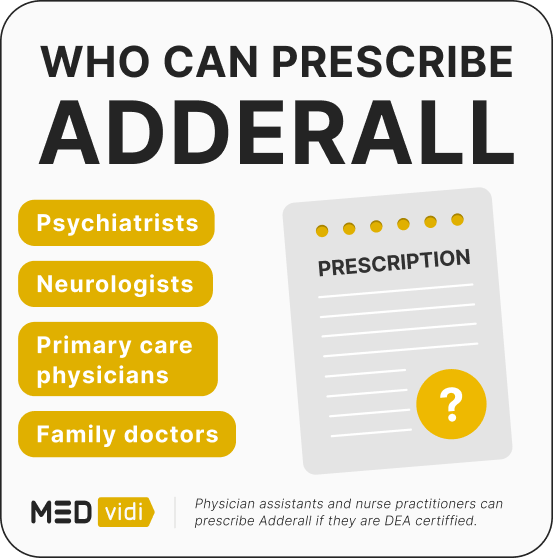
Choosing the Right Healthcare Professional
- Psychiatrists: These medical doctors specialize in mental health and are well-equipped to diagnose and treat conditions like ADHD. They can prescribe medication and often provide or coordinate behavioral therapies.
- Neurologists: Particularly those with an interest in sleep disorders or behavioral neurology, may be involved in diagnosing conditions like narcolepsy or complex ADHD presentations.
- Primary Care Physicians (PCPs): While PCPs can diagnose and manage many common conditions, they may refer patients to specialists for a definitive ADHD or narcolepsy diagnosis, especially if complex cases arise. However, some PCPs are experienced in managing ADHD with stimulant medications after a proper referral or initial assessment.
- Psychologists: Licensed psychologists can conduct diagnostic assessments for ADHD but generally cannot prescribe medication in Florida. They often work in conjunction with physicians who will then prescribe.
When seeking a prescription, it is advisable to look for providers who explicitly state they manage ADHD or narcolepsy and are experienced in prescribing controlled substances. Online platforms that connect patients with telehealth providers specializing in mental health are also becoming increasingly common in Florida, offering a convenient avenue for consultation.
What to Expect During the Appointment

During your initial consultation, the healthcare provider will conduct a thorough evaluation. Be prepared to discuss:
- Your Symptoms: Be specific about your challenges with attention, impulsivity, hyperactivity, or sleepiness. Provide examples of how these symptoms impact your work, studies, relationships, and daily activities.
- Your Medical History: Disclose any existing medical conditions, past psychiatric diagnoses, previous treatments, and any allergies.
- Family History: Mental health conditions, including ADHD and narcolepsy, can have a genetic component. Information about your family’s medical history can be helpful.
- Current Medications and Substance Use: Honesty about all medications, including over-the-counter drugs, supplements, and any history of recreational drug use or alcohol consumption, is critical for your safety and the provider’s ability to make an informed decision.
The provider will likely administer diagnostic questionnaires and may request information from family members or teachers, especially if the patient is a child or adolescent. The goal is to gather comprehensive data to support a diagnosis and determine if Adderall is an appropriate treatment.
Navigating Florida’s Regulations on Controlled Substances
Florida has specific regulations regarding the prescription and dispensing of controlled substances, including Adderall. These regulations are designed to prevent misuse, diversion, and addiction while ensuring that patients with legitimate medical needs have access to their medication.
Prescription Requirements
- Written Prescriptions: In most cases, a written prescription from a licensed practitioner is required. However, electronic prescribing (e-prescribing) is increasingly the standard and is compliant with Florida law.
- DEA Registration: Prescribers must have a valid registration with the Drug Enforcement Administration (DEA) to prescribe controlled substances.
- Schedule IV Classification: Adderall is classified as a Schedule IV controlled substance under the federal Controlled Substances Act. This means it has a lower potential for abuse than Schedule I or II drugs, but abuse and dependence are still possible. In Florida, it is regulated under state laws mirroring federal classifications.
Prescription Drug Monitoring Program (PDMP)
Florida operates a Prescription Drug Monitoring Program (PDMP), known as the E-Force System. This system collects data on dispensed controlled substances, including Adderall.
How PDMP Affects Prescriptions
When a healthcare provider prescribes Adderall, or when a pharmacist dispenses it, the transaction is reported to the E-Force System.
- Provider Access: Prescribing physicians and dispensing pharmacists can query the PDMP to check a patient’s prescription history for controlled substances. This helps them identify potential issues such as “doctor shopping” (seeking prescriptions from multiple physicians) or “pharmacy shopping” (filling prescriptions at multiple pharmacies) to obtain more medication than prescribed.
- Monitoring for Misuse: The PDMP is a critical tool for law enforcement and regulatory boards to monitor for patterns of drug diversion and abuse.
- Patient Impact: While this system primarily targets potential misuse, it means that any attempts to obtain Adderall prescriptions outside of legitimate medical channels will be more easily detected. Patients should be aware that their controlled substance prescription history is tracked.
Refills and Duration of Treatment
- Limited Refills: Prescriptions for Schedule IV substances like Adderall typically cannot be refilled more than five times within six months after the date of issue. After this period, a new prescription from the prescriber is required.
- Regular Follow-ups: Patients prescribed Adderall are generally required to have regular follow-up appointments with their healthcare provider. These appointments allow the provider to assess the medication’s effectiveness, monitor for side effects, check for signs of misuse, and re-evaluate the need for continued treatment. Typically, these follow-ups occur every 1 to 3 months, depending on the patient’s stability and the prescriber’s judgment.
The Role of Pharmacies and Dispensing
Once a valid prescription for Adderall is issued by an authorized healthcare provider in Florida, the next step is to fill it at a licensed pharmacy. Pharmacies play a vital role in the controlled substance supply chain.
Selecting a Pharmacy
- Licensed Pharmacies: Ensure the pharmacy is licensed by the Florida Board of Pharmacy. Most community pharmacies, such as those found in chains like Publix Pharmacy or independent pharmacies, are licensed.
- Availability: Stock levels for controlled substances can vary. It’s advisable to call ahead to confirm that the pharmacy has Adderall in stock, especially if you have a new prescription.
The Dispensing Process
When presenting your Adderall prescription:
- Identification: You may be asked to show a valid photo ID, especially for controlled substance prescriptions.
- Verification: The pharmacist will verify the prescription’s authenticity with the prescribing physician’s office if necessary.
- Counseling: Florida law requires pharmacists to offer counseling to patients about their medications. This includes information on how to take Adderall, potential side effects, interactions with other drugs, and storage instructions. It is crucial to listen to this counseling and ask any questions you may have.
- Record Keeping: The pharmacist will record the dispensing of Adderall in their inventory and report it to the E-Force System PDMP.
Important Considerations for Patients
- Secure Storage: Adderall should be stored in a secure location, away from children and others who might misuse it.
- Dosage Adherence: Always take Adderall exactly as prescribed by your doctor. Do not increase the dose, take it more frequently, or share it with others.
- Reporting Side Effects: If you experience any concerning side effects, contact your healthcare provider immediately. Common side effects can include decreased appetite, trouble sleeping, dry mouth, and increased heart rate or blood pressure.
- Travel with Medication: If you plan to travel, especially outside of Florida, carry your medication in its original prescription bottle with the label intact. It is also advisable to have a copy of your prescription and a letter from your doctor explaining the need for the medication. International travel may involve additional regulations.
Obtaining an Adderall prescription in Florida is a process rooted in medical necessity, a thorough diagnostic evaluation, and strict adherence to state and federal regulations governing controlled substances. By understanding these steps and working closely with qualified healthcare professionals, individuals can navigate the system to access legitimate treatment for their diagnosed medical conditions.
LifeOutOfTheBox is a participant in the Amazon Services LLC Associates Program, an affiliate advertising program designed to provide a means for sites to earn advertising fees by advertising and linking to Amazon.com. Amazon, the Amazon logo, AmazonSupply, and the AmazonSupply logo are trademarks of Amazon.com, Inc. or its affiliates. As an Amazon Associate we earn affiliate commissions from qualifying purchases.