
Navigating the labyrinthine process of obtaining an alcohol license in Florida is a crucial step for any entrepreneur looking to establish a business that serves or sells alcoholic beverages. From bustling Miami nightclubs and beachside restaurants in Clearwater to quaint craft breweries in St. Petersburg, understanding the regulations and requirements is paramount to success. This guide will demystify the journey, providing a comprehensive overview of the steps involved, the types of licenses available, and key considerations for prospective licensees.
Understanding Florida’s Alcohol Beverage Laws
The foundation of obtaining any alcohol license in Florida lies in a thorough understanding of the state’s Alcohol Beverage Laws, primarily governed by the Division of Alcoholic Beverages and Tobacco (ABT), part of the Florida Department of Business and Professional Regulation (DBPR). These laws are designed to ensure public safety, prevent underage consumption, and maintain fair competition within the industry. Familiarizing yourself with Chapter 561, Florida Statutes, and the accompanying administrative rules is the first and most critical step. This involves understanding what constitutes a legal sale, the hours of operation permitted, and the restrictions on advertising and promotions. The ABT is the primary authority responsible for issuing, renewing, and enforcing these licenses. Their website and local district offices are invaluable resources for up-to-date information and forms.
The Role of the Division of Alcoholic Beverages and Tobacco (ABT)
The Division of Alcoholic Beverages and Tobacco (ABT) is the gatekeeper for all alcohol licenses in Florida. Their mandate is to regulate the industry through a stringent licensing process. This includes background checks, site inspections, and ensuring compliance with all state and local ordinances. The ABT’s responsibilities are broad, encompassing not only the initial issuance of licenses but also ongoing enforcement, including investigations into violations and the imposition of penalties, which can range from fines to license revocation. For businesses planning to operate anywhere from the Keys to the Panhandle, understanding the ABT’s role and requirements is non-negotiable.
Key Regulatory Areas to Consider
Beyond general compliance, several specific regulatory areas demand attention. These include:
- Zoning Laws: Local county and municipal zoning ordinances play a significant role. Even if you secure a state license, your business must comply with local zoning regulations regarding the sale of alcohol. This often involves restrictions on proximity to schools, churches, or residential areas. It is essential to verify zoning approval with the local planning and zoning department before investing heavily in a location.
- Health and Safety Regulations: Businesses serving food alongside alcohol, such as restaurants and bars, must also adhere to health department regulations. This involves obtaining food service permits and ensuring that the premises meet all sanitation and safety standards.
- Advertising and Promotion Restrictions: Florida has specific rules governing how alcohol can be advertised and promoted. Businesses must be aware of these limitations to avoid potential penalties.
Types of Alcohol Licenses in Florida
Florida offers a diverse range of alcohol licenses tailored to different business models and types of establishments. Choosing the correct license is fundamental to your operational success and legal compliance. Misrepresenting your business type or operating under an incorrect license can lead to severe consequences. The ABT categorizes licenses broadly, with specific endorsements and quotas that further define their scope.
Full On-Premises Consumption Licenses
These licenses permit the sale of alcoholic beverages for consumption on the licensed premises. They are typically required for establishments where patrons drink alcohol as a primary or significant offering.
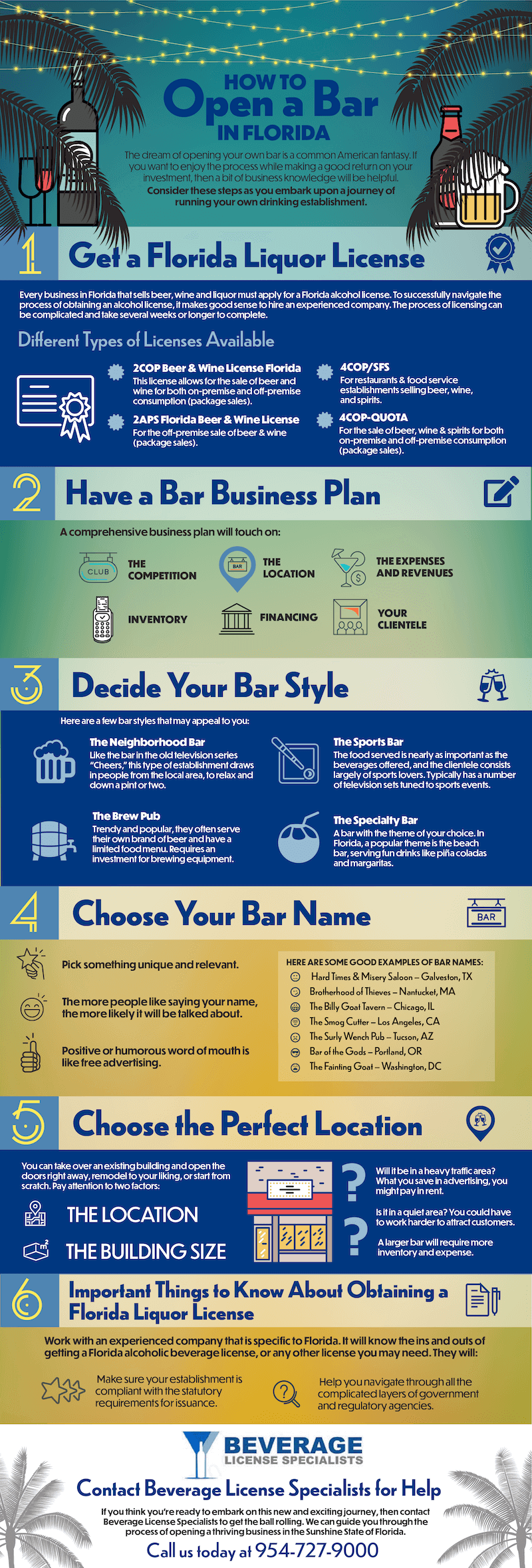
- 4COP/SRX (Quota License): This is one of the most sought-after and complex licenses. It allows for the sale of beer, wine, and spirits for consumption on the premises. The number of these licenses is capped by population quota in each county, making them expensive and subject to a lottery or purchase from an existing licensee. A common endorsement for this license is the “Special Restaurant” (SRX), which requires that 51% or more of the gross revenue comes from food sales. This is crucial for restaurants seeking to serve spirits.
- 2COP/DUI (Beer and Wine Only): This license allows for the sale of beer and wine for consumption on the premises. It is less restrictive than the 4COP and is often obtained by establishments like taverns, pool halls, or restaurants focusing primarily on beer and wine.
- Specialty Licenses: Beyond the general categories, Florida also offers specialty licenses for specific types of venues, such as:
- 6COP (Full Liquor – Caterer): For businesses that cater events off-site.
- 13COP (Full Liquor – Hotel/Motel): For hotels and motels with a certain number of rooms.
- Club Licenses (e.g., 12COP): For private clubs with membership requirements.
Off-Premises Consumption Licenses
These licenses authorize the sale of alcoholic beverages for consumption away from the licensed premises.
- 1APS (Beer and Wine – Package Store): Allows for the sale of beer and wine in sealed containers for consumption off-premises. This is typical for convenience stores and small liquor stores.
- 21APS (Beer, Wine, and Spirits – Package Store): Permits the sale of beer, wine, and spirits in sealed containers for consumption off-premises. This is the standard license for liquor stores.
Manufacturing and Wholesale Licenses
For those involved in the production or distribution of alcohol, different licensing categories apply.
- Brewpub Licenses: For breweries that also operate a taproom where beer is sold for on-premises consumption.
- Distillery Licenses: For the production of spirits.
- Winery Licenses: For the production of wine.
- Wholesale Licenses: For distributors who sell alcohol to retailers.
The Application Process: Step-by-Step
Obtaining an alcohol license in Florida is a multi-stage process that requires meticulous attention to detail and adherence to deadlines. Rushing through any step can lead to delays or outright rejection.
Step 1: Pre-Application Research and Planning
Before submitting any paperwork, conduct thorough research:
- Determine the Right License: Based on your business model, identify the specific license type and any necessary endorsements. Consult the ABT’s website or an experienced alcohol licensing attorney.
- Secure a Location: Find a suitable physical location for your business. Ensure it meets all zoning requirements and is not too close to prohibited areas. Obtain written confirmation of zoning approval from the local authorities.
- Business Structure: Decide on your business structure (sole proprietorship, LLC, corporation). Ensure all business registration documents are in order.
Step 2: Application Submission
The core of the process involves submitting a comprehensive application to the ABT.
- Application Forms: Download the relevant application forms from the ABT website. These are extensive and require detailed information about the applicant, the business, and the proposed location.
- Supporting Documentation: Gather all required supporting documents. This typically includes:
- Proof of United States citizenship or legal residency.
- A detailed floor plan of the premises.
- Lease agreement or proof of ownership for the property.
- Financial statements or proof of financial responsibility.
- Fingerprints for background checks for all principals.
- Federal Employer Identification Number (FEIN) if applicable.
- Sales tax registration from the Florida Department of Revenue.
- Application Fees: Submit the required application fees along with your application. These fees vary depending on the license type.
Step 3: Background Checks and Investigations
Once the application is submitted, the ABT initiates a thorough investigation.
- Criminal Background Checks: All individuals listed as principals on the application will undergo extensive criminal background checks. Any prior convictions, especially those related to alcohol or public order, can impact eligibility.
- Financial Investigations: The ABT may review your financial history to ensure you are financially responsible and not attempting to launder money.
- Site Inspection: An ABT investigator will conduct a physical inspection of the proposed premises to ensure it meets all requirements, including safety standards and the accuracy of the submitted floor plan.
Step 4: Public Notice and Protests
For certain license types, particularly quota licenses, a public notice period is required.
- Posting Notice: You will typically be required to post a notice at the proposed business location indicating your intent to apply for an alcohol license.
- Publication: In some cases, you may need to publish a notice in a local newspaper.
- Protest Period: This period allows concerned citizens or entities (e.g., existing businesses, community groups) to formally protest the issuance of your license. Grounds for protest typically relate to zoning, public nuisance, or character of the neighborhood.
Step 5: License Approval and Issuance
If all checks are clear, no valid protests are filed, and all requirements are met, the ABT will approve your application.
- Issuance: The official alcohol license certificate will be issued.
- Displaying the License: The license must be prominently displayed at your place of business at all times.
Tips for a Smooth Licensing Process
The alcohol licensing process in Florida can be complex, but certain strategies can streamline your application and increase your chances of success.
Engage Professional Assistance
While not mandatory, engaging an experienced alcohol licensing attorney or a specialized licensing consultant can be invaluable. These professionals understand the nuances of the ABT’s processes, can help identify potential pitfalls early on, and ensure your application is complete and accurate, saving you time and potential headaches. They can also assist in navigating any protests that may arise.
Understand Quota Licenses and Market Value
For 4COP/SRX licenses, it’s crucial to understand the quota system. These licenses are often purchased from existing holders, and their market value can fluctuate significantly based on demand and location. Research current market prices and be prepared for a substantial investment. Some businesses opt for leasing a license, which can be a more flexible option, especially for startups.
Maintain Impeccable Records
Throughout the application process and beyond, maintaining organized and accurate records is paramount. This includes financial records, employment documentation, and all correspondence with the ABT and other government agencies. Good record-keeping is not only essential for the licensing process but also for ongoing compliance and audits.
Be Prepared for Delays
While the ABT strives for efficiency, the licensing process can sometimes take longer than anticipated. Be patient and proactive. If you haven’t heard back within a reasonable timeframe, follow up politely. Building a good rapport with your assigned investigator can be beneficial.

Focus on Compliance from Day One
Once your license is issued, your work is not done. Continuous compliance with all state and local regulations is essential to maintain your license. This includes adhering to sale and service hours, responsible vendor training for staff, and accurate record-keeping for tax purposes. Regular review of ABT regulations and industry best practices will help prevent violations and ensure the longevity of your business. Obtaining an alcohol license is a significant undertaking, but with diligent preparation and a clear understanding of the process, entrepreneurs can successfully bring their vision to life in the vibrant Florida market.
LifeOutOfTheBox is a participant in the Amazon Services LLC Associates Program, an affiliate advertising program designed to provide a means for sites to earn advertising fees by advertising and linking to Amazon.com. Amazon, the Amazon logo, AmazonSupply, and the AmazonSupply logo are trademarks of Amazon.com, Inc. or its affiliates. As an Amazon Associate we earn affiliate commissions from qualifying purchases.