
Navigating the legal intricacies of a name change in the Sunshine State involves a series of structured steps, designed to ensure that your new identity is officially recognized across all facets of your life. Whether driven by marriage, divorce, personal preference, or other significant life events, understanding the process in Florida is paramount for a smooth transition. This guide will walk you through the essential requirements, documentation, and procedures to legally alter your name within the state.
Understanding the Florida Name Change Process
The legal pathway to changing your name in Florida primarily involves petitioning a court for a name change order. This is a formal legal proceeding that requires adherence to specific rules and the submission of necessary paperwork. While there are exceptions for name changes associated with marriage or divorce, the general process through the court is the most common for other reasons. It’s important to note that Florida law generally permits name changes as long as the intent is not to defraud or evade legal obligations.

Eligibility and Grounds for Name Change
To petition for a name change in Florida, you must be a resident of the state and at least 18 years old. Minors can also have their names changed, but this process is initiated by a parent or legal guardian and requires specific consent and court approval. The grounds for a name change are broad, encompassing:
- Personal Preference: Many individuals choose to change their name simply because they prefer a different one. This can be due to a desire for a name that better reflects their identity, a dislike of their current name, or other personal reasons.
- Marriage: Upon marriage, individuals often choose to adopt their spouse’s surname or combine surnames. While this can sometimes be accomplished through the marriage certificate itself in certain circumstances, a formal court order provides a definitive legal record.
- Divorce: Similarly, after a divorce, an individual may wish to revert to their maiden name or a previous surname. This can often be requested as part of the divorce decree.
- Gender Transition: Individuals undergoing gender transition may wish to change their name to one that aligns with their gender identity. This is a common and protected reason for seeking a legal name change.
- Adoption: When a child is adopted, their legal name is typically changed as part of the adoption proceedings.
- Other Reasons: This can include renaming a child, dissociating from a family name, or any other legitimate reason not associated with fraudulent intent.
It is crucial to understand that you cannot change your name to avoid debt, criminal prosecution, or other legal liabilities. The court will review the petition to ensure there is no such underlying motive.
Key Stages of the Court-Ordered Name Change
The court-ordered name change process in Florida typically involves the following stages:
-
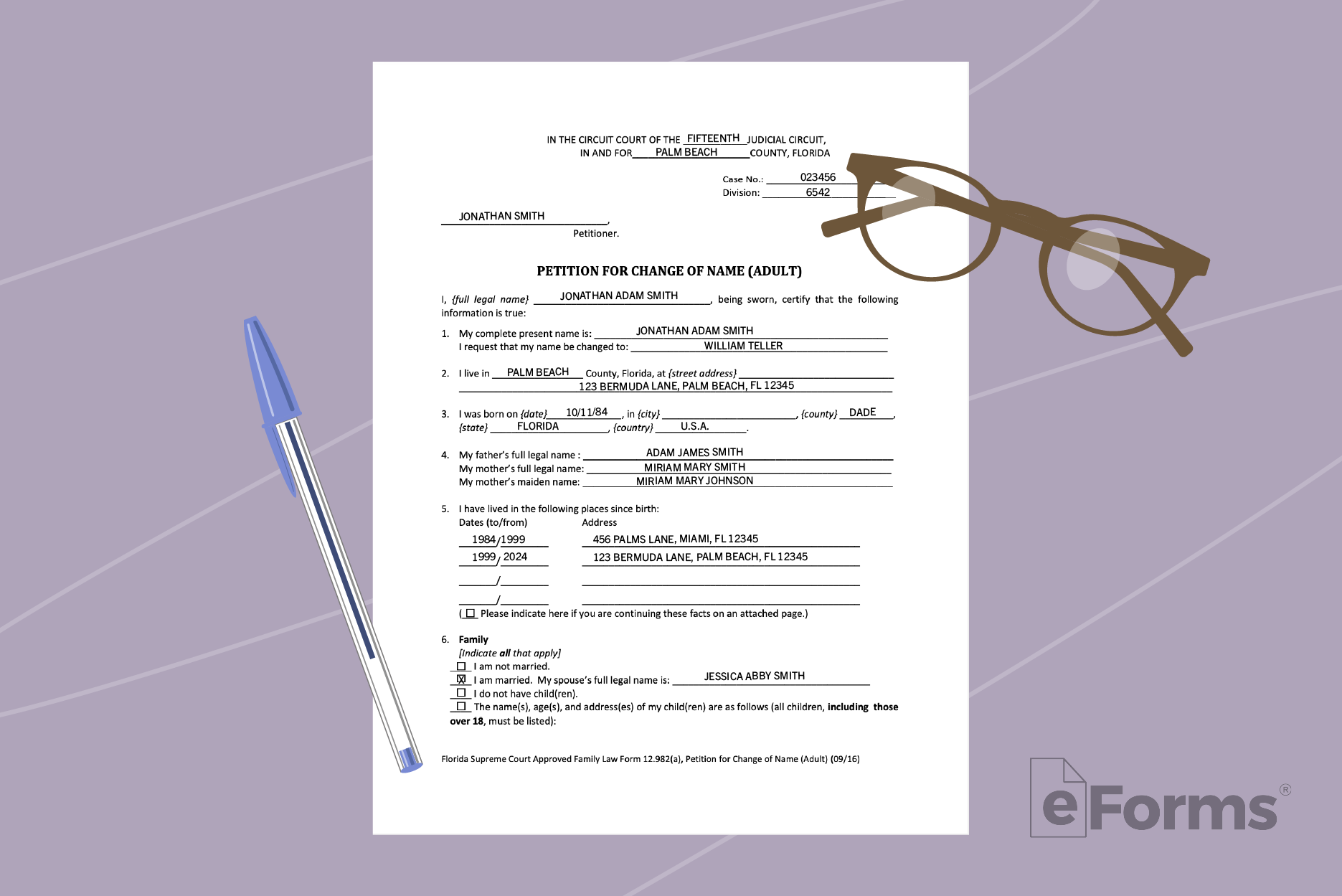
Filing the Petition: The process begins with filing a formal petition for a name change with the circuit court in your county of residence. This document, often referred to as a “Petition for Change of Name,” requires specific information, including your current legal name, the desired new name, your date of birth, address, and the reason for the name change. You will need to accurately complete all required sections.
-
Background Check and Fingerprinting: In most Florida counties, you will be required to undergo a criminal background check and submit fingerprints. This is a standard procedure to ensure that the requested name change is not being sought for illicit purposes. The results of this background check will be submitted to the court for review.
-
Publication of Notice: For most court-ordered name changes, Florida law requires that you publish a notice of your intended name change in a local newspaper of general circulation. This publication serves to inform the public of your request and allows any interested parties to object to the change within a specified timeframe. The court will provide you with specific instructions on where and how to publish this notice, as well as the required duration of publication. The newspaper will typically provide an affidavit of publication, which you must then file with the court.
-
Court Hearing: After the publication period has passed and if no objections have been filed, your case will be scheduled for a court hearing. During the hearing, a judge will review your petition, the background check results, and the proof of publication. You may be asked to appear before the judge to confirm your identity and your understanding of the petition and its implications. If all requirements are met and the judge finds no reason to deny the request, they will issue a final order for change of name.
-
Obtaining the Final Order: Once the judge approves your petition, they will sign a Final Judgment or Order for Change of Name. This is the official legal document that recognizes your new name. It is essential to obtain certified copies of this order from the court clerk. These certified copies will be required when you update your identification and personal records.
Essential Documentation and Requirements
Successfully navigating the name change process in Florida hinges on accurate and complete documentation. Missing or incorrect forms can lead to delays or outright rejection of your petition. Beyond the initial petition and background check requirements, several other items are critical to gather and present.
The Petition for Change of Name
The petition is the cornerstone of your name change application. It’s a legal document that must be filed with the clerk of the circuit court in your county of residence. While specific forms can vary slightly by county, they generally require the following information:

- Petitioner’s Full Legal Name: Your current, legal name as it appears on your birth certificate and other official documents.
- Desired New Name: The exact name you wish to be legally known by going forward.
- Date and Place of Birth: Your birth details.
- Current Address: Your residential address in Florida.
- Reason for Name Change: A clear and concise explanation of why you are requesting the change. As previously mentioned, this reason must be legitimate and not for fraudulent purposes.
- Affirmation of No Fraudulent Intent: A statement confirming that the name change is not intended to deceive, defraud, or evade any legal obligations.
You can often find specific petition forms on your local county court’s website, or you may be able to obtain them directly from the courthouse clerk’s office.
Supporting Documents
While the petition is the primary document, you may be asked to provide or have ready certain supporting documents:
- Proof of Residency: Evidence that you are a Florida resident, such as a driver’s license, utility bill, or lease agreement showing your address.
- Identification: A government-issued photo ID (e.g., driver’s license, passport) to verify your identity during the court process.
- Birth Certificate: While not always explicitly required for filing, it’s good practice to have your original birth certificate accessible, as it contains your legal name.
- Marriage Certificate or Divorce Decree (if applicable): If your name change is related to marriage or divorce, having these documents can expedite the process or be used as evidence of your previous name or the reason for change.
- Fingerprint Card and Background Check Results: As mentioned, these are often required by the court and will be processed through specific state agencies.
Fees and Costs
Be prepared for associated fees. Filing fees for a name change petition vary by county but typically range from $100 to $400. Additionally, there will be costs for fingerprinting services, background checks, and the required newspaper publication. The publication fee can vary depending on the newspaper and the length of the notice. It’s advisable to contact the clerk of court in your county to obtain an accurate estimate of all applicable fees. Some individuals may qualify for a fee waiver if they demonstrate financial hardship, which requires a separate application and court approval.
Updating Your Identity After the Legal Change
Receiving the court’s official Order for Change of Name is a significant milestone, but it is only the first step in establishing your new legal identity. The real work involves updating your name across all official records and personal documents. This is a systematic process that requires patience and attention to detail.
Social Security Administration (SSA)
The first and most crucial step is to update your name with the Social Security Administration (SSA). You will need to complete an Application for a Social Security Card (Form SS-5) and submit it along with your certified court order and proof of identity (such as a driver’s license or passport with your new name). You cannot change your name online; this must be done in person at an SSA office or by mail. It is vital to update your Social Security record first, as many other agencies and institutions will verify your name through the SSA database.
Driver’s License and State Identification
Next, you will need to update your Florida driver’s license or state identification card with the Florida Department of Highway Safety and Motor Vehicles (FLHSMV). You will typically need to visit a local Tax Collector’s office or a FLHSMV service center with your certified court order, your current driver’s license or ID, and proof of your new Social Security number (which should reflect the name change). Be prepared for applicable fees for a replacement license or ID.
Passport
If you have a United States passport, you will also need to update it. The process and required documentation depend on whether your passport was issued less than one year ago or more than one year ago. For passports issued less than one year ago, you can typically use Form DS-5504, “Application for a U.S. Passport – Name Change, Data Correction, and Limited Passport Book Replacement,” which is free of charge. For passports issued more than one year ago, you will need to use Form DS-82, “U.S. Passport Renewal Application,” and pay the standard renewal fee. In both cases, you will need your certified court order and your current passport.
Other Important Institutions
Once your primary identification documents are updated, you must systematically inform other institutions:
- Banks and Financial Institutions: Visit your bank, credit unions, and any other financial institutions where you hold accounts or credit cards. You’ll need to present your certified court order and updated identification to change your name on your accounts. This includes investment accounts, loan providers, and mortgage companies.
- Employer: Inform your employer so they can update your payroll, HR records, and any benefits associated with your employment. You will likely need to provide them with a copy of your name change order.
- Voter Registration: Update your voter registration with your local Supervisor of Elections.
- Insurance Providers: Notify all your insurance companies (health, auto, home, life) of your name change.
- Schools and Educational Institutions: If you are a student or have records with educational institutions, ensure they are updated.
- Landlord or Mortgage Company: If you rent or own property, inform your landlord or mortgage lender.
- Doctors and Healthcare Providers: Update your medical records with your doctors, dentists, and other healthcare providers.
- Utilities and Service Providers: Change your name on utility bills (electricity, water, gas, internet, phone).
- Loyalty Programs and Memberships: Update your name on any loyalty programs, gym memberships, or other recurring services.
The process of updating your identity can take time and effort. Keep copies of your certified court order readily available, as you will likely need to present it multiple times. By systematically addressing each requirement, you will successfully transition to your new legal name in Florida and beyond.
LifeOutOfTheBox is a participant in the Amazon Services LLC Associates Program, an affiliate advertising program designed to provide a means for sites to earn advertising fees by advertising and linking to Amazon.com. Amazon, the Amazon logo, AmazonSupply, and the AmazonSupply logo are trademarks of Amazon.com, Inc. or its affiliates. As an Amazon Associate we earn affiliate commissions from qualifying purchases.