
Florida, known for its sun-drenched beaches, vibrant theme parks, and thriving economy, is a popular destination for homeowners and investors alike. However, as property values have risen, so too have property taxes. For many residents, understanding and mitigating these taxes is a crucial aspect of managing their finances and making their Florida dream a sustainable reality. This guide delves into the various strategies and exemptions available to Florida property owners to help lower their tax burden.
Understanding Florida Property Tax Assessment
The foundation of property tax in Florida lies in the assessed value of your property. This value is determined annually by the county property appraiser’s office. The assessment process is designed to reflect the fair market value of your property as of January 1st of each year. Several factors influence this valuation, including recent sales of comparable properties in your neighborhood, the condition and features of your home, and any improvements or additions you may have made.

The Role of the Property Appraiser
Each of Florida’s 67 counties has a property appraiser whose primary responsibility is to discover, list, and value all taxable property within their jurisdiction. This valuation is then used to calculate your annual property tax bill. It’s essential to understand that the property appraiser’s assessment is the starting point for your tax liability. If you believe your property has been overvalued, you have the right to challenge this assessment.
Market Value vs. Assessed Value
While the property appraiser aims to assess properties at their fair market value, several factors can lead to a discrepancy between the market value and your legally assessed value for tax purposes. This is particularly true for homesteaded properties due to Florida’s Save Our Homes amendment.
The Save Our Homes Amendment
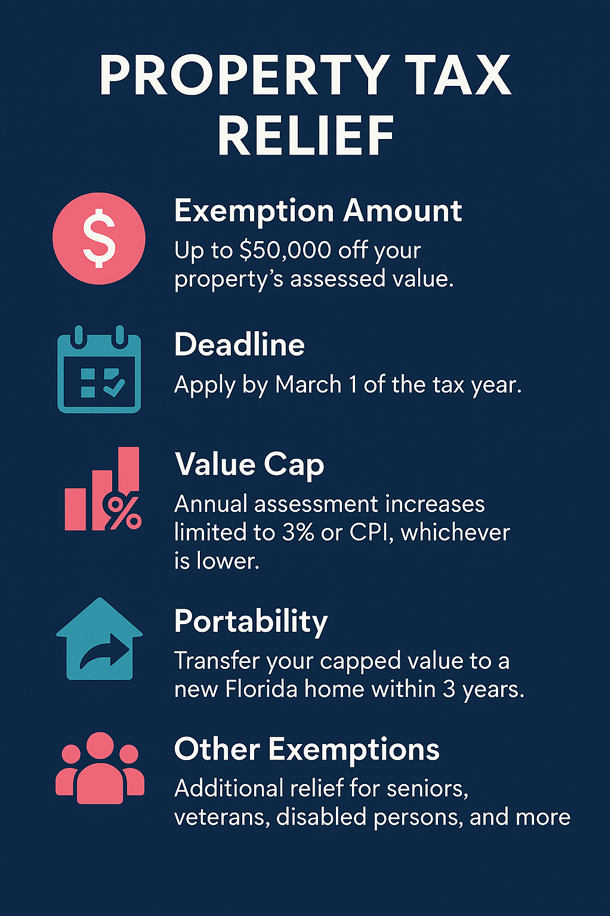
The Save Our Homes amendment, enshrined in the Florida Constitution, caps the annual increase in assessed value for homesteaded properties at the lower of 3% or the percentage change in the Consumer Price Index (CPI). This means that even if your property’s market value increases significantly, your assessed value for tax purposes will only rise by a limited percentage each year. This is a cornerstone of property tax relief for Florida homeowners.
Maximizing Property Tax Exemptions
One of the most effective ways to reduce your property tax bill is to take full advantage of the available exemptions. These exemptions reduce the taxable value of your property, thereby lowering the amount of tax you owe. Florida offers a range of exemptions, catering to different circumstances and property types.
Homestead Exemption
The most significant and widely used exemption in Florida is the Homestead Exemption. To qualify, you must own and occupy your Florida residence as your primary home on January 1st of the tax year. This exemption not only reduces your property’s assessed value by up to $25,000 for county and municipal taxes (and an additional $25,000 for taxes levied by school districts, with some limitations) but also protects your assessed value from the Save Our Homes cap limitations. It’s crucial to apply for this exemption with your county property appraiser’s office. Failure to apply by the deadline means you’ll pay taxes based on the unreduced value for that year.
Additional Homestead Exemptions
Beyond the standard Homestead Exemption, Florida offers additional exemptions for specific groups who meet certain criteria. These can provide further reductions in assessed value:
- Additional $25,000 Homestead Exemption: For those with an assessed value between $50,000 and $75,000, this provides an additional $25,000 reduction in taxable value for all tax levies except those for school districts.
- Senior Citizen Exemption: Available to individuals aged 65 and older, this exemption typically offers an additional reduction in assessed value, with specific income limitations that vary by county.
- Disability Exemption: For individuals who are totally and permanently disabled, a substantial exemption is available. Proof of disability from a qualified medical professional or government agency is required.
- Veteran Exemption: Honorably discharged veterans who are paraplegic or hemiplegic, or who have a specific service-connected disability rating, may be eligible for exemptions.
- Widow/Widower Exemption: Surviving spouses who have not remarried may qualify for an exemption.
- First Responder Exemption: Law enforcement officers, firefighters, and other first responders may be eligible for specific exemptions.
It is imperative to check the specific requirements and application deadlines for these additional exemptions with your local property appraiser’s office, as eligibility criteria and benefit amounts can vary.
Other Property Tax Exemptions
Florida also offers exemptions for properties used for specific purposes that benefit the public or certain groups:
- Agricultural Classification: Properties used for bona fide agricultural purposes may be assessed based on their agricultural productivity rather than their market value, often resulting in significantly lower taxes. This requires meeting specific criteria regarding the use of the land and its income-generating potential.
- Conservation Easements: Land subject to legally binding conservation easements may qualify for tax benefits, recognizing the public value of preserving natural resources.
- Renewable Energy Tax Credits: While not a direct exemption, certain installations of renewable energy systems might qualify for tax credits or incentives that indirectly reduce tax liability.

Appealing Your Property Tax Assessment
If you believe your property’s assessed value is higher than its fair market value, you have the right to appeal. This process can lead to a reduction in your property tax bill, especially if you can provide evidence that supports a lower valuation.
Understanding the Appeals Process
The appeals process typically begins with the property appraiser notifying you of your property’s assessed value. You then have a limited window, usually around 30 days from the mailing of the notice, to file a formal appeal. The first step in this process is often to request an informal review with the property appraiser’s office. During this meeting, you can present your evidence and discuss your concerns directly with the appraiser or their staff.
Filing a Formal Appeal
If the informal review does not resolve your concerns, you can proceed to file a formal appeal with the county’s Value Adjustment Board (VAB). The VAB is an independent body composed of county officials and citizen members who hear appeals regarding property tax assessments and exemptions.
Gathering Supporting Evidence
Successful appeals rely on strong evidence. When challenging your property’s assessed value, consider gathering the following:
- Recent Sales Data: Obtain a list of recent sales of comparable properties in your neighborhood. Look for homes of similar size, age, condition, and features. Real estate websites and your real estate agent can be valuable resources.
- Independent Appraisal: Commissioning an independent appraisal of your property by a certified appraiser can provide an objective valuation that may differ from the property appraiser’s assessment.
- Photos and Documentation: Document any issues with your property that might reduce its value, such as significant structural problems, outdated features, or necessary repairs. Take clear photographs to support your claims.
- Contractor Estimates: For repairs or renovations, obtain estimates from contractors to demonstrate the cost of addressing any deferred maintenance that impacts your property’s value.
The Value Adjustment Board Hearing
If your appeal reaches the VAB, you will have the opportunity to present your case. You can attend the hearing in person or through a representative. Be prepared to clearly articulate why you believe your property is overvalued and present your supporting evidence. The VAB will consider the evidence presented by both you and the property appraiser before making a decision.
Strategies for Long-Term Property Tax Management
Beyond immediate exemptions and appeals, adopting a proactive approach to property management and understanding tax laws can lead to sustained property tax savings in Florida.
Property Improvements and Their Impact
While improvements like new kitchens or bathrooms can increase your property’s market value, they can also lead to higher assessed values and, consequently, higher property taxes. It’s essential to weigh the potential tax implications against the benefits of such improvements. In some cases, the increase in property tax might outweigh the increase in resale value, particularly if the improvements are highly customized or not in line with neighborhood trends.
Understanding Millage Rates
Property taxes are calculated by multiplying the taxable value of your property by the millage rate set by each taxing authority (e.g., county government, city government, school district). A mill is one-tenth of a cent. While you can’t directly control these rates, understanding them helps you comprehend how your tax bill is constructed. Advocating for fiscal responsibility at local government meetings can indirectly influence millage rates over time.
Considering Property Location and Zoning
The location of your property and its zoning classification can impact its assessed value and tax treatment. Properties in areas with high demand and limited inventory tend to have higher market values. Understanding the long-term development plans for your area can also provide insights into future property value trends.
Reviewing Your Tax Bill Annually
Never assume your property tax bill will be the same each year. Life circumstances change, market conditions fluctuate, and taxing authorities adjust their rates. Make it a habit to review your tax bill carefully each year upon receipt. Compare it to previous years, and if anything seems unusual or significantly higher, investigate it promptly with the county property appraiser’s office.
By understanding the intricacies of Florida’s property tax system, diligently pursuing available exemptions, and being prepared to appeal assessments when necessary, property owners can effectively manage and potentially lower their annual property tax obligations, making their slice of the Sunshine State even more enjoyable.
LifeOutOfTheBox is a participant in the Amazon Services LLC Associates Program, an affiliate advertising program designed to provide a means for sites to earn advertising fees by advertising and linking to Amazon.com. Amazon, the Amazon logo, AmazonSupply, and the AmazonSupply logo are trademarks of Amazon.com, Inc. or its affiliates. As an Amazon Associate we earn affiliate commissions from qualifying purchases.