
Navigating the complexities of obtaining a General Contractor License in Florida is a crucial step for any individual or business looking to engage in the construction industry legally and professionally within the Sunshine State. The process, while comprehensive, is designed to ensure that only qualified and knowledgeable individuals are permitted to undertake contracting projects, safeguarding consumers and upholding industry standards. This guide delves into the essential requirements, application procedures, and considerations for securing this vital credential, offering a clear pathway for aspiring contractors.
Understanding Florida’s Contractor Licensing Structure
Florida’s approach to contractor licensing is managed by the Florida Department of Business and Professional Regulation (DBPR). The state distinguishes between two primary types of licenses: registered and certified. Understanding this distinction is paramount before embarking on the application process.
Registered vs. Certified Licenses
-
Registered Contractor: A registered contractor license is generally recognized within a specific local jurisdiction, such as a county or municipality. This means that if you obtain a registered license in Miami-Dade County, your contracting activities are typically limited to that specific county. To operate in multiple jurisdictions, you would need to obtain individual registered licenses from each. The requirements for registered licenses are determined by local building code enforcement agencies.
-
Certified Contractor: A certified contractor license is recognized statewide. This offers the significant advantage of being able to perform contracting work anywhere in Florida without needing to obtain additional local registrations. Certified licenses are generally more rigorous to obtain, requiring candidates to pass state-level examinations and meet stringent experience and financial requirements. For those aspiring to a broad scope of work across Florida, pursuing a certified license is the more strategic option.
The title “General Contractor License in Florida” most commonly refers to the certified general contractor license, which allows for the broadest scope of work. This guide will primarily focus on obtaining this certified license, as it represents the highest level of licensure and statewide recognition.
Eligibility Requirements for a Certified General Contractor License
To be considered for a certified general contractor license in Florida, applicants must meet several key eligibility criteria. These are designed to assess an individual’s competency, experience, and financial stability.
Experience and Financial Stability
The DBPR requires applicants to demonstrate a significant amount of relevant experience in the construction industry.
-
Work Experience: Typically, applicants must prove at least four years of experience as a contractor, a competent supervisor, or a foreman. This experience must be in a capacity that involved the supervision and management of construction projects. The DBPR will scrutinize the nature and scope of this experience to ensure it aligns with the responsibilities of a general contractor. Applicants are usually required to provide detailed information about the projects they have worked on, including their role and responsibilities.
-
Financial Responsibility: A crucial aspect of the application process involves demonstrating financial stability. Applicants must provide evidence of financial responsibility, which often includes submitting a credit report. The DBPR uses credit reports to assess an applicant’s credit history, including payment patterns and any history of bankruptcies or defaults. A satisfactory credit score is often a prerequisite for approval. In some cases, a financial bond may also be required, guaranteeing the contractor’s ability to complete projects and meet financial obligations.
Examination and Education
Beyond experience and financial standing, applicants must also pass state-administered examinations.
-
Contractor Examinations: Florida requires all certified contractor applicants to pass two comprehensive examinations:
- Business and Finance Examination: This exam tests the applicant’s knowledge of business management, financial principles, accounting, contract law, and employment regulations relevant to the construction industry in Florida.
- Trade Knowledge Examination: This exam assesses the applicant’s technical expertise in the field of general contracting. The content varies depending on the specific license type, but for a general contractor, it covers a broad spectrum of construction practices, building codes, safety regulations, and project management.
-
Education Requirements: While specific formal education beyond high school is not always a strict prerequisite for the general contractor license, relevant coursework or degrees in construction management, engineering, or architecture can be beneficial and may, in some instances, be considered in lieu of a portion of the required work experience. However, the primary focus remains on demonstrable, hands-on experience and passing the examinations.
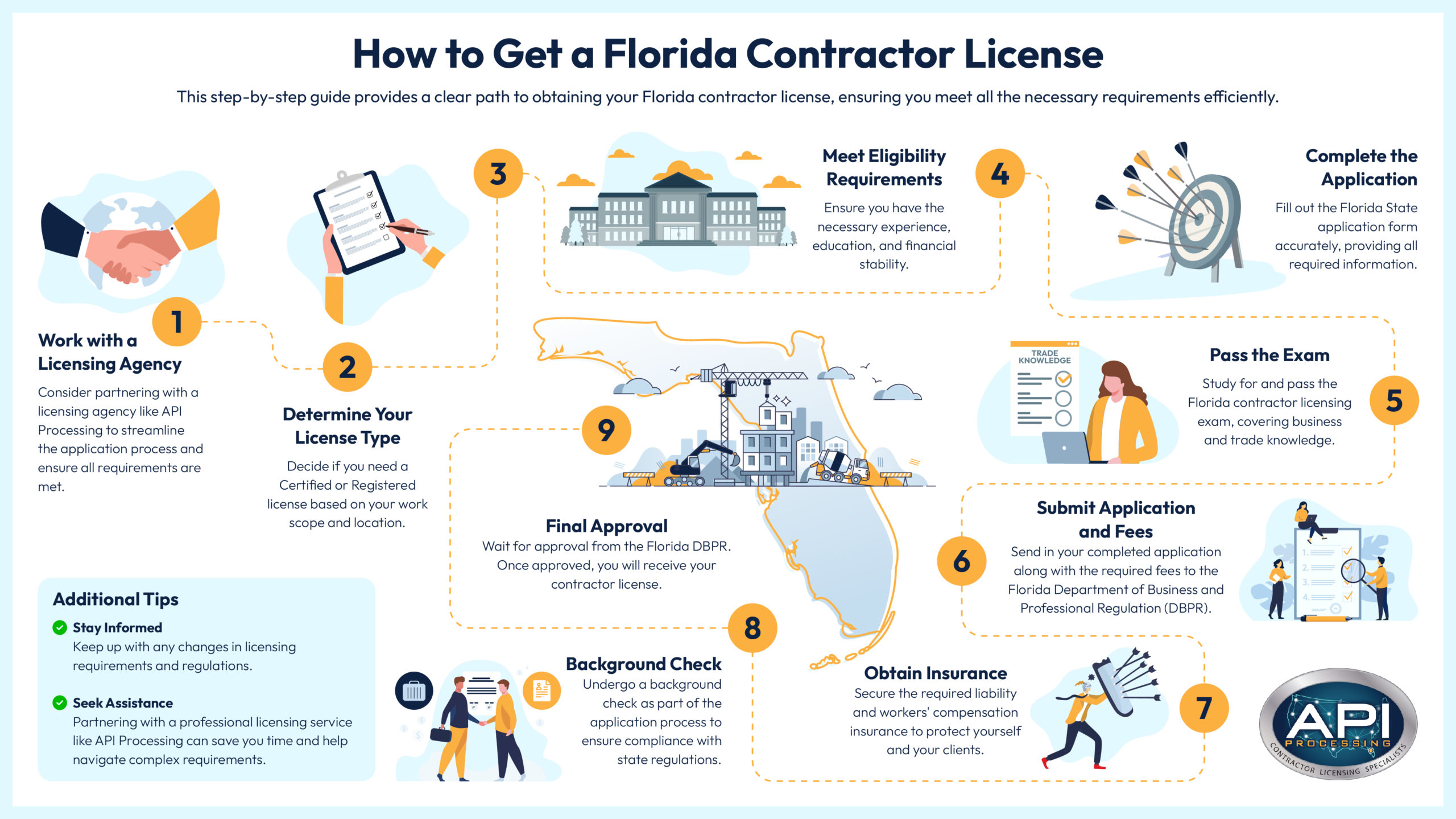
The Application Process: Step-by-Step
Obtaining a certified general contractor license in Florida involves a systematic application process. Following these steps diligently will help ensure a smooth and efficient journey.
1. Pre-Application Preparation
Before submitting any formal application, it is highly recommended to:
- Gather Documentation: Collect all necessary documents, including proof of experience (letters from former employers, project details), personal identification, and financial records (credit reports).
- Understand Exam Content: Familiarize yourself with the content of both the business and finance and trade knowledge examinations. Many reputable providers offer study materials and courses specifically designed to prepare candidates for these exams.
- Review DBPR Resources: Thoroughly review the official application forms and guidelines provided by the Florida Department of Business and Professional Regulation. These resources contain vital information on specific requirements, fees, and submission procedures.
2. Submitting the Application
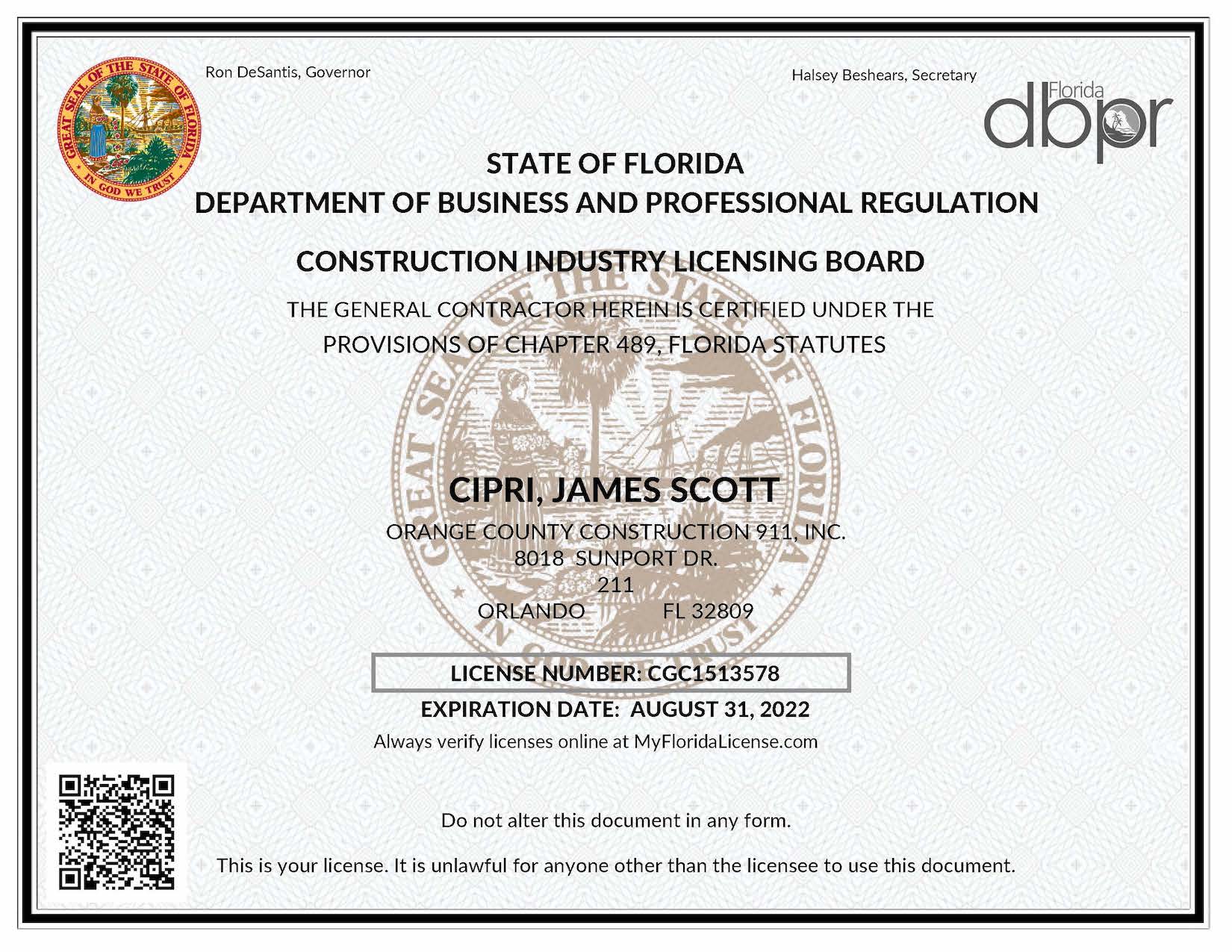
The formal application must be submitted to the DBPR for review.
- Application Form: Complete the official application form accurately and thoroughly. Any omissions or errors can lead to delays or rejection.
- Supporting Documents: Attach all required supporting documents, including proof of experience, financial responsibility evidence (such as a credit report from an approved agency), and any other documentation requested by the DBPR.
- Application Fee: Include the non-refundable application fee with your submission. The fee amount is subject to change, so always check the current fee schedule on the DBPR website.
3. Examination Scheduling and Taking
Once your application is deemed complete and you meet the initial eligibility criteria, you will be authorized to schedule your examinations.
- Scheduling: You will receive instructions on how to schedule your exams through an approved testing service. It is advisable to schedule your exams in advance to secure your preferred dates and locations.
- Taking the Exams: Arrive at the testing center well-prepared and on time. Ensure you understand the rules and regulations of the testing facility. Passing both the business and finance and trade knowledge exams is mandatory for licensure.
4. Final Review and License Issuance
After successfully passing both examinations, your application will undergo a final review by the DBPR.
- Final Approval: If all requirements are met, including passing the exams, providing satisfactory proof of experience and financial responsibility, and paying all applicable fees, your application will be approved.
- License Issuance: Upon approval, your certified general contractor license will be issued. You will then be legally permitted to operate as a general contractor anywhere in Florida.
Navigating Special Circumstances and Reciprocity
Florida’s licensing process acknowledges certain special circumstances, such as military service, and offers reciprocity with some other states.
Military Service Members and Veterans
Florida recognizes the valuable experience and skills gained by military service members and veterans. The DBPR offers provisions to assist them in obtaining contractor licenses.
- Waiver of Examinations: In some cases, military applicants with relevant service experience may be eligible for a waiver of the trade knowledge examination. This acknowledges that their military training and operational experience may equate to the required technical proficiency.
- Experience Equivalency: Military experience in construction, engineering, or related fields can often be applied towards the required work experience for licensure. Applicants are encouraged to clearly document their military roles and responsibilities to demonstrate their equivalency.
License Reciprocity
For individuals who hold a contractor license in another state, Florida offers reciprocity with certain jurisdictions. This means that if you hold a license in a state with which Florida has a reciprocity agreement, you may be able to obtain a Florida license without having to retake the examinations, provided certain criteria are met.
- States with Reciprocity: Florida has reciprocity agreements with a limited number of states. It is crucial to verify which states are included in this program and the specific conditions for transferring an existing license.
- Application Process: Even with reciprocity, an application must still be submitted to the DBPR, along with supporting documentation of your existing license and experience. You will likely still need to meet Florida’s financial responsibility and other general requirements.
Maintaining Your License and Continuing Education
Obtaining a general contractor license is a significant achievement, but it requires ongoing commitment to maintain its validity and to stay current with industry advancements.
License Renewal
Certified general contractor licenses in Florida are typically valid for two years and must be renewed with the DBPR.
- Renewal Period: The DBPR will send out renewal notices prior to the expiration date. It is the licensee’s responsibility to ensure that renewal applications and fees are submitted on time to avoid license expiration.
- Continuing Education: A key requirement for license renewal is the completion of continuing education (CE) courses. These courses are designed to keep contractors informed about the latest building codes, safety standards, legal updates, and best practices in the construction industry. The DBPR specifies the number of CE hours required per renewal cycle and approves specific CE providers and courses.
Staying Compliant
Beyond renewal, licensed general contractors must adhere to various regulations and ethical standards throughout their practice.
- Insurance: Maintaining adequate liability and workers’ compensation insurance is often a requirement for licensed contractors, protecting both the contractor and their clients.
- Building Codes: Strict adherence to the latest Florida Building Code and local ordinances is mandatory.
- Disciplinary Actions: The DBPR enforces professional conduct. Any violations of licensing laws or regulations can result in disciplinary actions, ranging from fines to license suspension or revocation. Staying informed about these regulations and maintaining a high standard of practice is essential.
Securing a general contractor license in Florida is a journey that demands preparation, perseverance, and a thorough understanding of the state’s regulatory framework. By diligently meeting the experience, financial, and examination requirements, and by committing to ongoing professional development, contractors can establish a strong foundation for a successful and reputable career in the vibrant construction industry of Florida.
LifeOutOfTheBox is a participant in the Amazon Services LLC Associates Program, an affiliate advertising program designed to provide a means for sites to earn advertising fees by advertising and linking to Amazon.com. Amazon, the Amazon logo, AmazonSupply, and the AmazonSupply logo are trademarks of Amazon.com, Inc. or its affiliates. As an Amazon Associate we earn affiliate commissions from qualifying purchases.