
Navigating the process of registering a vehicle in a new state can often feel like deciphering a complex map. For those relocating to the Sunshine State, understanding how to register your vehicle in Florida is a crucial step towards fully embracing your new life. This guide aims to demystify the requirements, procedures, and essential tips to ensure a smooth and efficient vehicle registration experience, allowing you to hit the scenic highways and explore all that Florida has to offer without delay.
Understanding the Essentials: What You Need Before You Go
Before you embark on your vehicle registration journey, it’s vital to gather all the necessary documentation and information. [Florida]’s Department of Highway Safety and Motor Vehicles (FLHSMV) has specific requirements to streamline the process. Failing to have the correct paperwork can lead to repeated trips and unnecessary frustration.

Proof of Ownership and Identity
The cornerstone of vehicle registration is proving that you rightfully own the vehicle and that you are who you say you are.
- Title: This is the primary document proving ownership. For vehicles purchased in Florida, you’ll need the Certificate of Title issued by the state. If you’re transferring a title from another state, you’ll need that state’s title. Ensure it is properly signed over to you. If your vehicle is financed, your lienholder will likely hold the title, and you’ll need to provide documentation from them.
- Proof of Insurance: [Florida] law requires all registered vehicles to have continuous Florida insurance coverage. You must present a valid Florida insurance policy identification card or a binder. The policy must meet the state’s minimum liability requirements: $30,000 for bodily injury to two or more people, $25,000 for injury to one person, and $10,000 for property damage per accident.
- Proof of Identity: You will need to present acceptable identification. This typically includes a valid driver’s license, U.S. passport, or a government-issued identification card. If you are a new resident, you will also need to obtain a Florida driver’s license within 30 days of establishing residency.
- Proof of Residency: As a new Florida resident, you’ll need to prove your residency. Acceptable documents include a mortgage statement, utility bill, lease agreement, or a sworn affidavit from a roommate or landlord.
Vehicle Identification and Inspection
Beyond ownership and identity, [Florida] requires verification of the vehicle itself.
- Vehicle Identification Number (VIN) Verification: For vehicles being registered for the first time in [Florida] (especially those coming from out of state), a VIN verification is mandatory. This inspection ensures the VIN on the vehicle matches the documentation. This can be performed by a law enforcement officer, a licensed Florida dealer, or a Florida notary public trained in VIN verification. For certain vehicles, like mobile homes, a different inspection process may apply.
- Emissions and Safety Inspections: Unlike some states, [Florida] generally does not require mandatory safety or emissions inspections for most passenger vehicles. However, specific vehicle types, such as commercial vehicles or those with certain modifications, may have different requirements. Always check with your local Tax Collector’s office for any specific local ordinances or vehicle types that might be exempt from this general rule.
Fees and Taxes
Be prepared to pay various fees and taxes associated with vehicle registration. These can vary based on the vehicle type, its age, weight, and whether you are purchasing a new plate or transferring an existing one.
- Sales Tax: If you purchased your vehicle in Florida, you would have paid sales tax at the time of purchase. If you are bringing a vehicle from out of state, Florida imposes a use tax, which is equivalent to the state’s sales tax rate, on vehicles brought into the state if sales tax was not paid in the state of purchase.
- Registration Fees: These fees are calculated based on factors like the vehicle’s weight, type, and whether it’s a new registration or a renewal.
- Title Fees: A fee is charged for the issuance of a Florida title.
- License Plate Fees: You will also pay a fee for your license plate. Florida offers a wide variety of specialty license plates, which often come with additional fees.
- Surtax: In some counties, a local option surtax may be added to the registration fees.
The Registration Process: Step-by-Step
Once you have all your documents in order, the actual registration process is relatively straightforward. The primary point of contact for vehicle registration in Florida is your local County Tax Collector’s office.
Step 1: Locate Your Local County Tax Collector’s Office
Florida has decentralized its motor vehicle services to the county level. You will need to visit the Tax Collector’s office in the county where you reside. Many counties offer online appointment scheduling, which is highly recommended to minimize wait times. You can find a list of county Tax Collector’s offices on the FLHSMV website.
Step 2: Complete the Necessary Forms
While many forms can be completed at the office, it’s often beneficial to download and review them beforehand. Key forms include:
- Application for Certificate of Title With/Without Registration (HSMV 82040): This is the primary form used to apply for a new title and/or register your vehicle.
- Bill of Sale (if applicable): If you purchased the vehicle from a private party, a bill of sale detailing the transaction is often required.
Step 3: Submit Your Documents and Pay Fees
At the Tax Collector’s office, you will present all your gathered documents to a customer service representative. They will review your paperwork to ensure everything is in order. This is also where you will pay all applicable registration fees, title fees, and taxes.
Step 4: Receive Your Registration and License Plate
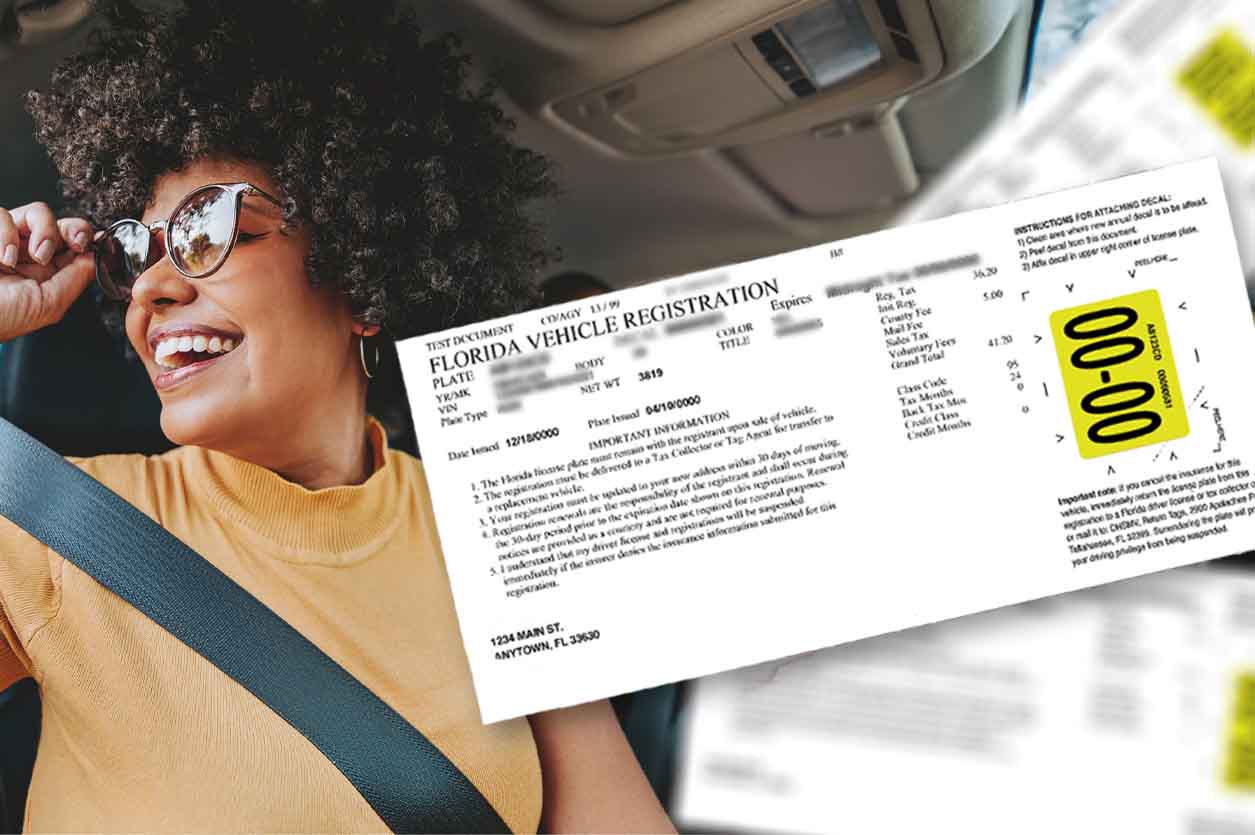
Upon successful completion of the process and payment of fees, you will be issued your Florida license plate and registration certificate. You will be given temporary tags if you are not transferring an existing plate. Your official license plate and registration documents will typically arrive by mail within a few weeks if you are issued new plates. It is important to affix the new license plate to your vehicle as soon as possible.
Special Circumstances and Considerations
While the standard process covers most situations, certain scenarios might require additional steps or have specific nuances.
New Residents
If you are moving to Florida from another state, you have 30 days from establishing residency to register your vehicle. This also includes obtaining a Florida driver’s license. You will need to surrender your out-of-state license plates when you register your vehicle in Florida. The VIN verification is particularly important for vehicles coming from out of state.
Leased Vehicles
If your vehicle is leased, the leasing company is typically the registered owner, and they will handle the Florida registration process. You will need to coordinate with your leasing company to provide them with the necessary information and documents, or they may handle it entirely and provide you with the updated registration and plates.
Transferring a License Plate
If you are purchasing a new vehicle and wish to transfer your existing Florida license plate from your old vehicle to the new one, you can do so at the Tax Collector’s office. You will need to surrender the old license plate at the time of transfer.
Specialty License Plates
Florida offers a vast array of specialty license plates supporting various charities, organizations, and themes. These often come with an additional annual fee on top of the standard registration fees. You can browse the available options and often see images of them on the FLHSMV website or at your local Tax Collector’s office.
Online Services
While initial registration typically requires an in-person visit, the FLHSMV and many county Tax Collector’s offices offer online services for renewals and other transactions, making future interactions more convenient.
Maintaining Your Registration: Renewals and Updates
Vehicle registration in Florida is not a one-time event; it requires annual renewal. Understanding the renewal process and keeping your information current is essential to avoid penalties.
Annual Renewals
Your Florida vehicle registration expires on your birthday. You will receive a renewal notice by mail approximately 60 days before your birthday. You can renew your registration online through the FLHSMV website or your county Tax Collector’s office, by mail, or in person at the Tax Collector’s office. Online renewal is often the quickest and most convenient method, provided your vehicle information and insurance are up to date.
Updating Your Information
If you move within Florida or change your name, you must update your vehicle registration and driver’s license within 30 days. This is typically done at your local county Tax Collector’s office. Failing to update your information can result in undeliverable mail and potential fines.

Lost or Damaged Plates/Registrations
If your license plate or registration certificate is lost or damaged, you can obtain duplicates from your local county Tax Collector’s office. You will need to complete an application and pay a fee for the replacement.
Registering your vehicle in Florida is a necessary step for any resident. By understanding the required documentation, following the outlined steps, and being aware of special circumstances, you can ensure this process is as seamless as possible, allowing you to enjoy the freedom of the open road throughout the beautiful state of Florida. Remember to always check the official FLHSMV website or contact your local county Tax Collector’s office for the most current and specific information.
LifeOutOfTheBox is a participant in the Amazon Services LLC Associates Program, an affiliate advertising program designed to provide a means for sites to earn advertising fees by advertising and linking to Amazon.com. Amazon, the Amazon logo, AmazonSupply, and the AmazonSupply logo are trademarks of Amazon.com, Inc. or its affiliates. As an Amazon Associate we earn affiliate commissions from qualifying purchases.