
The allure of the Sunshine State extends far beyond its pristine beaches and vibrant culture. For entrepreneurs and business owners, Florida presents a dynamic economic landscape, making it a prime location to establish and grow a business. Among the most popular legal structures for small and medium-sized enterprises is the Limited Liability Company, or LLC. Setting up an LLC in Florida offers significant advantages, including personal liability protection and pass-through taxation. This guide will walk you through the essential steps involved in forming your Florida LLC, ensuring a smooth and compliant launch for your venture.
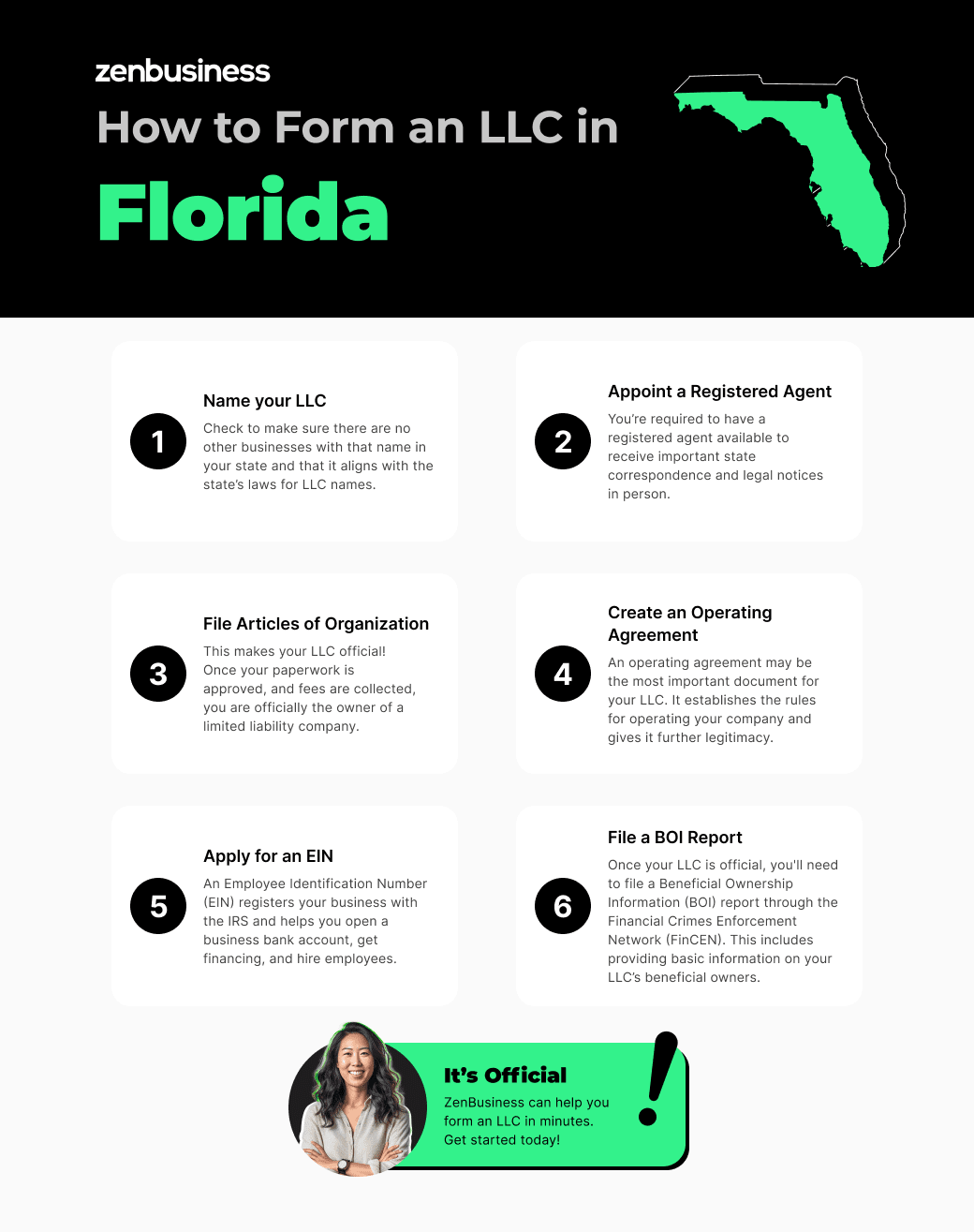
Understanding the Florida LLC Structure
A Limited Liability Company (LLC) is a hybrid business structure that combines the pass-through taxation of a partnership or sole proprietorship with the limited liability of a corporation. This means that the owners of an LLC, known as members, are generally not personally responsible for the debts and liabilities of the business. This crucial protection shields your personal assets, such as your home and savings, from business creditors.
Key Advantages of a Florida LLC
- Limited Liability Protection: As mentioned, this is the cornerstone of the LLC structure. It separates your personal finances from your business obligations.
- Pass-Through Taxation: Profits and losses of the LLC are passed through to the members and reported on their personal income tax returns. This avoids the “double taxation” often associated with C-corporations, where the corporation is taxed on its profits, and then shareholders are taxed again on dividends.
- Flexibility in Management: LLCs can be managed by their members (member-managed) or by appointed managers (manager-managed), offering flexibility to suit your business needs.
- Simplicity of Operation: Compared to corporations, LLCs generally have fewer formal requirements and less administrative burden.
When is a Florida LLC the Right Choice?
An LLC is an excellent choice for a wide range of businesses, from solo entrepreneurs and freelancers to small businesses with multiple partners. It’s particularly well-suited for businesses operating in industries that carry inherent risks, such as construction, consulting, or retail. For those considering establishing a presence in Florida, perhaps to tap into its growing economy or to benefit from its business-friendly environment, an LLC provides a robust and adaptable legal framework. Whether you’re planning to open a boutique in Miami, a tech startup in Orlando, or a service business catering to the residents of Tampa, a Florida LLC is a strategic starting point.
Step-by-Step Guide to Forming Your Florida LLC
Establishing an LLC in Florida involves a series of straightforward yet important steps. While the process can seem daunting, breaking it down into manageable stages makes it achievable for any aspiring business owner.
Step 1: Choose a Business Name
Your LLC’s name is its identity. It must be unique and distinguishable from other registered businesses in Florida.
Naming Requirements:
- Designator: The name must include a designator that clearly identifies it as an LLC, such as “Limited Liability Company,” “LLC,” or “L.L.C.”
- Uniqueness: Before finalizing your name, conduct a thorough search of the Florida Department of State’s Division of Corporations database to ensure your chosen name is not already in use. You can perform this search online.
- Prohibited Words: Avoid using words that may be misleading or imply that the LLC is a government agency or a different type of business entity (e.g., “Bank,” “Insurance,” “Corporation”).
Reserving Your Name (Optional but Recommended):
If you have a name in mind but are not ready to file your formation documents, you can reserve the name for a period of 120 days by filing an Application for Name Reservation with the Florida Department of State. This prevents others from registering your desired name while you prepare your filing.
Step 2: Appoint a Registered Agent
A registered agent is a person or entity responsible for receiving official legal and tax documents on behalf of your LLC. This individual or company must have a physical street address in Florida (not a P.O. Box) and be available during normal business hours.
Who Can Be a Registered Agent?
- An Individual: This can be a Florida resident who is a member of the LLC or another individual you trust.
- A Business Entity: You can appoint another Florida business entity that is authorized to do business in the state.
- A Commercial Registered Agent Service: Many companies offer registered agent services for a fee, which can be a convenient option, especially if you don’t have a physical address in Florida or prefer to maintain privacy.
Step 3: File Articles of Organization
The Articles of Organization are the foundational legal document that officially creates your LLC with the Florida Department of State.
Key Information Required:

- LLC Name: The exact name of your LLC, including the required designator.
- Principal Office Address: The main business address of your LLC. This can be the same as your registered agent’s address if they are in Florida.
- Registered Agent Name and Address: The name and physical street address of your appointed registered agent.
- Management Structure: Indicate whether the LLC will be member-managed or manager-managed.
- Organizer’s Name and Address: The name and address of the person filing the Articles of Organization. This is often your legal representative or yourself.
You can file the Articles of Organization online through the Florida Department of State’s Division of Corporations website or by mail. A filing fee is required, which is subject to change by the state.
Step 4: Create an Operating Agreement
While not legally required by the state of Florida for LLCs, an Operating Agreement is a crucial internal document that outlines the ownership structure, operating procedures, and member responsibilities of your LLC.
What an Operating Agreement Should Include:
- Ownership Percentages: Defines each member’s share of the LLC.
- Member Contributions: Details the initial contributions made by each member (e.g., cash, property, services).
- Profit and Loss Distribution: How profits and losses will be allocated among members.
- Management and Voting Rights: Outlines decision-making processes and voting power.
- Membership Changes: Procedures for admitting new members or the departure of existing members.
- Dissolution Procedures: How the LLC will be dissolved and its assets distributed.
A well-drafted Operating Agreement can prevent future disputes among members and provides a clear roadmap for the business’s operations.
Step 5: Obtain an Employer Identification Number (EIN)
An Employer Identification Number (EIN), also known as a Federal Tax Identification Number, is like a Social Security number for your business. It is issued by the Internal Revenue Service (IRS) and is necessary for most businesses, especially if you plan to hire employees, open a business bank account, or file certain tax returns.
How to Get an EIN:
You can apply for an EIN for free directly from the IRS website. The application process is usually quick, and you can receive your EIN immediately.
Post-Formation Requirements and Best Practices
Once your Florida LLC is officially formed, there are ongoing responsibilities and best practices to ensure compliance and continued success.
Annual Reports and Fees
Florida LLCs are required to file an annual report with the Florida Department of State, Division of Corporations. This report provides an update of your business information and ensures your LLC remains in good standing. A fee is associated with filing the annual report. Failure to file can result in the administrative dissolution of your LLC.
Business Licenses and Permits
Depending on your industry and location within Florida, you may need to obtain specific business licenses and permits at the federal, state, and local levels. Researching these requirements early on is essential to avoid penalties and operational disruptions. For example, a restaurant in Key West will have different licensing needs than a software company in Tallahassee.
Business Bank Account
It is highly recommended to open a separate business bank account for your LLC. This helps maintain the separation between your personal and business finances, which is crucial for preserving your limited liability protection. Commingling funds can jeopardize this protection.
Tax Obligations
Understand your tax obligations at federal, state, and local levels. As mentioned, Florida LLCs typically benefit from pass-through taxation. However, there may be state-specific taxes, such as sales tax, if your business sells goods or taxable services. Consult with a tax professional to ensure you are meeting all your tax requirements accurately.

Maintaining Records
Keep meticulous records of your business’s financial transactions, including income, expenses, and asset purchases. This is important for tax purposes, for your Operating Agreement, and for demonstrating the legitimacy of your business in the event of any legal scrutiny.
Establishing an LLC in Florida is a strategic move that offers significant benefits for entrepreneurs. By carefully following these steps and adhering to ongoing compliance requirements, you can build a strong foundation for your business in the vibrant economic landscape of the Sunshine State. Remember that consulting with legal and financial professionals can provide invaluable guidance throughout the formation and operational phases of your Florida LLC.
LifeOutOfTheBox is a participant in the Amazon Services LLC Associates Program, an affiliate advertising program designed to provide a means for sites to earn advertising fees by advertising and linking to Amazon.com. Amazon, the Amazon logo, AmazonSupply, and the AmazonSupply logo are trademarks of Amazon.com, Inc. or its affiliates. As an Amazon Associate we earn affiliate commissions from qualifying purchases.