
The age-old question of where one’s dollar stretches further often leads to a comparative analysis of states, particularly those with distinct geographical and economic profiles. For many, the allure of sunshine and a lower cost of living draws them south, while others find themselves drawn to the charming, albeit potentially pricier, northeastern landscape. This exploration delves into the intricacies of comparing the cost of living between the Sunshine State, Florida, and the Ocean State, Rhode Island, focusing on the fundamental elements that define daily expenses and overall lifestyle affordability.
Housing: The Biggest Budget Driver
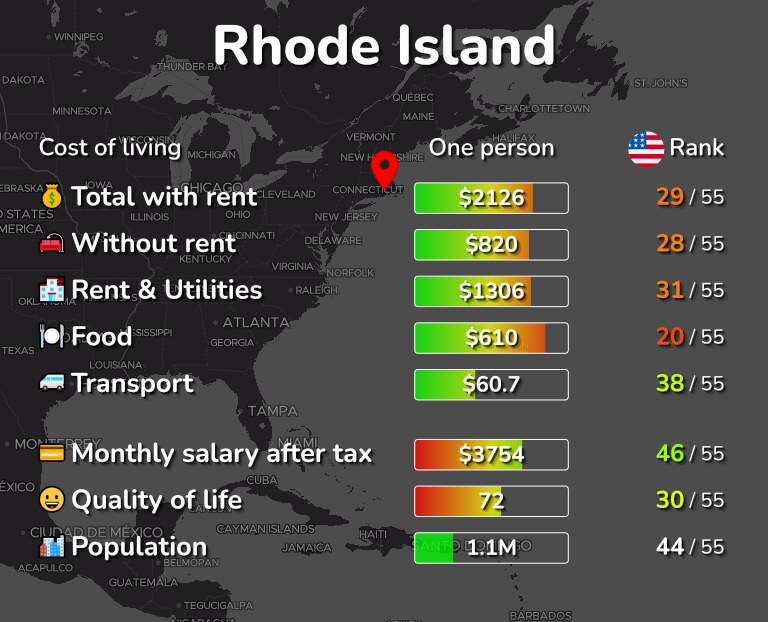
When considering the cost of living, housing typically emerges as the most significant expenditure. This is where the divergence between Florida and Rhode Island becomes most apparent, with considerable variations across different regions within each state.
Home Purchase Prices
The median home price in Florida has seen a steady increase, particularly in desirable coastal areas like Miami or parts of the Gulf Coast. However, when compared to the more densely populated and historically established communities of Rhode Island, such as those in the Providence metropolitan area, Florida generally offers more affordable entry points for homeownership, especially when venturing inland from the prime tourist zones. For instance, a single-family home in a mid-sized Florida city might cost a fraction of a comparable property in a desirable Rhode Island town like Newport.
Rental Market Dynamics
The rental market mirrors the purchase price trends. Renters in Florida can expect to find a wider range of options and generally lower monthly payments compared to Rhode Island. This is particularly true for apartments and smaller homes. Major metropolitan areas in Florida, such as Orlando or Tampa, often present more budget-friendly rental opportunities than the more sought-after neighborhoods in Providence or its surrounding suburbs. The demand for housing in Rhode Island is consistently high, driven by its proximity to Boston and its own unique economic drivers, which tend to inflate rental costs.
Property Taxes and Insurance
It’s crucial to consider associated housing costs beyond the mortgage or rent. Property taxes can vary significantly. While Florida has no state income tax, property taxes can be a substantial component of homeownership costs, especially in areas with high property values. Rhode Island, conversely, has a state income tax but may have more moderate property tax rates in certain municipalities. However, the cost of homeowners insurance in Florida can be significantly higher due to the increased risk of hurricanes and other weather-related events. In Rhode Island, while less prone to major hurricanes, flood insurance can be a considerable factor for coastal properties.
Daily Expenses: Food, Transportation, and Utilities
Beyond the roof over one’s head, the cost of day-to-day living plays a vital role in a state’s affordability. This encompasses groceries, transportation, and utility bills, all of which contribute to the monthly budget.
Groceries and Dining Out
When it comes to groceries, the cost differences between Florida and Rhode Island are often marginal for staple items. However, the availability of fresh, local produce can influence prices. Florida benefits from a longer growing season and its own agricultural production, which can sometimes lead to lower prices for certain fruits and vegetables, especially at local farmers’ markets. Dining out also presents a similar picture; while national chains often have consistent pricing, local restaurants in Florida might offer slightly more competitive pricing on average, particularly outside of the major tourist hubs.

Transportation Costs
Transportation is another key area where differences emerge. Florida is a large state, and car ownership is almost a necessity for navigating its sprawling cities and extensive road networks. This means higher costs associated with gas, car maintenance, and potentially higher insurance premiums due to traffic density and accident rates in some areas. While Rhode Island is geographically smaller, its public transportation system, particularly around Providence, is more developed than in many Florida cities, potentially reducing reliance on personal vehicles for some residents. However, the cost of gasoline can fluctuate in both states based on national and global market trends.
Utilities: A Tale of Climate
Utility costs are heavily influenced by climate. Florida residents will undoubtedly face higher electricity bills during the hot summer months due to the extensive use of air conditioning. Conversely, Rhode Island residents experience significant heating costs during its cold winters. Natural gas is more prevalent for heating in Rhode Island, while electric heating or a combination of systems might be found in Florida. Water and sewer costs can vary widely by municipality in both states, but generally, the extreme weather demands of each state’s primary seasons drive up overall utility expenses.
Healthcare and Taxes: Broader Economic Factors
Beyond immediate expenses, broader economic considerations like healthcare and taxation significantly impact the overall cost of living and financial well-being.
Healthcare Accessibility and Costs
Healthcare costs are a nationwide concern, and the difference between Florida and Rhode Island can be nuanced. Historically, Florida has had a reputation for higher healthcare costs, particularly in certain specialties and metropolitan areas. However, this can be highly dependent on insurance plans, provider networks, and individual health needs. Rhode Island often ranks well in terms of healthcare access and quality, which might translate to more predictable costs for some services. It’s advisable for individuals to research specific insurance options and local healthcare providers when considering a move to either state.
State and Local Taxation
One of the most significant tax distinctions is Florida’s lack of a state income tax. This is a major draw for many individuals and families looking to maximize their take-home pay. However, this absence is often compensated through higher sales taxes and property taxes, as discussed earlier. Rhode Island, on the other hand, has a progressive state income tax system, which means higher earners pay a larger percentage of their income in taxes. Sales tax rates can also differ, though often not dramatically. The overall tax burden will depend heavily on an individual’s income level, consumption habits, and property ownership. For retirees or those with significant investment income, the absence of state income tax in Florida can be a substantial financial advantage.

Conclusion: A State-by-State Equation
Ultimately, determining whether Florida is cheaper to live than Rhode Island is not a simple yes or no answer. It’s a complex equation that depends heavily on individual circumstances, lifestyle choices, and the specific locations within each state that are being considered.
Generally, Florida tends to offer a lower cost of housing, particularly for home purchases, and the absence of state income tax is a significant financial benefit for many. However, this can be offset by higher insurance costs and the necessity of car ownership.
Rhode Island, while often perceived as more expensive, offers benefits such as a more compact geography, a developed public transit system in its urban centers, and potentially more stable, though not necessarily lower, housing markets in certain areas. Its state income tax is a factor to consider, but its overall cost of living might be competitive for those who can leverage its public transportation and prefer its distinct four-season climate.
For those contemplating a move, a detailed personal budget, factoring in specific housing preferences, transportation needs, and tax implications, is the most effective way to ascertain which state aligns better with their financial goals and lifestyle aspirations. Visiting both states, exploring various cities and towns, and speaking with locals can provide invaluable firsthand insights into the true cost of living and the quality of life each offers.
LifeOutOfTheBox is a participant in the Amazon Services LLC Associates Program, an affiliate advertising program designed to provide a means for sites to earn advertising fees by advertising and linking to Amazon.com. Amazon, the Amazon logo, AmazonSupply, and the AmazonSupply logo are trademarks of Amazon.com, Inc. or its affiliates. As an Amazon Associate we earn affiliate commissions from qualifying purchases.