
Navigating the process of registering a vehicle in Florida can seem like a significant undertaking, particularly for new residents or those unfamiliar with the state’s Department of Highway Safety and Motor Vehicles (FLHSMV) procedures. This comprehensive guide aims to demystify the requirements, ensuring a smooth and efficient experience as you prepare to drive legally on the Sunshine State’s diverse roadways, from the bustling streets of Miami to the serene beaches of the Florida Keys. Understanding these steps is crucial for anyone looking to enjoy the freedom of driving their own vehicle in Florida.

Essential Documentation for Vehicle Registration
The cornerstone of a successful vehicle registration in Florida lies in presenting the correct and complete set of documents. The FLHSMV requires specific paperwork to verify ownership, identity, and the vehicle’s compliance with state regulations. Failing to have these readily available can lead to delays and multiple trips to a tax collector’s office.
Proof of Ownership
This is arguably the most critical document. For a new vehicle purchased from a dealership, you will typically receive a Manufacturer’s Statement of Origin (MSO) or a Manufacturer’s Certificate of Origin (MCO). This document serves as the initial proof of ownership from the manufacturer.
- New Vehicles: The MSO/MCO, along with a bill of sale from the dealer, will be necessary. The dealer often handles the initial submission of these to the state.
- Used Vehicles: If you are purchasing a used vehicle, you will need the vehicle’s title. This title must be properly endorsed by the previous owner, transferring ownership to you. Ensure there are no liens on the title, or if there are, that they have been satisfied and released. The bill of sale is also essential.
- Out-of-State Titles: If you are bringing a vehicle from another state, you will need to surrender the out-of-state title. The FLHSMV will then issue a new Florida title.
Proof of Identity and Residency
Florida requires proof that you are who you say you are and that you reside within the state. This is typically demonstrated through a valid driver’s license and supporting residency documents.
- Valid Driver’s License: You will need a valid Florida driver’s license. If you are a new resident, you will need to obtain a Florida driver’s license within 30 days of establishing residency. This process requires proof of identity, Social Security number, and two forms of residency.
- Proof of Residency: Acceptable documents for proving residency include utility bills, mortgage statements, lease agreements, or a Florida voter registration card, all bearing your name and Florida address. These documents must be current.
Proof of Florida Insurance
Florida law mandates that all registered vehicles must have continuous Florida insurance coverage. This is not just a recommendation; it’s a legal requirement.
- Insurance Policy: You must present proof of your Florida automobile insurance policy. This typically comes in the form of an insurance card, policy declaration page, or a letter from your insurance company.
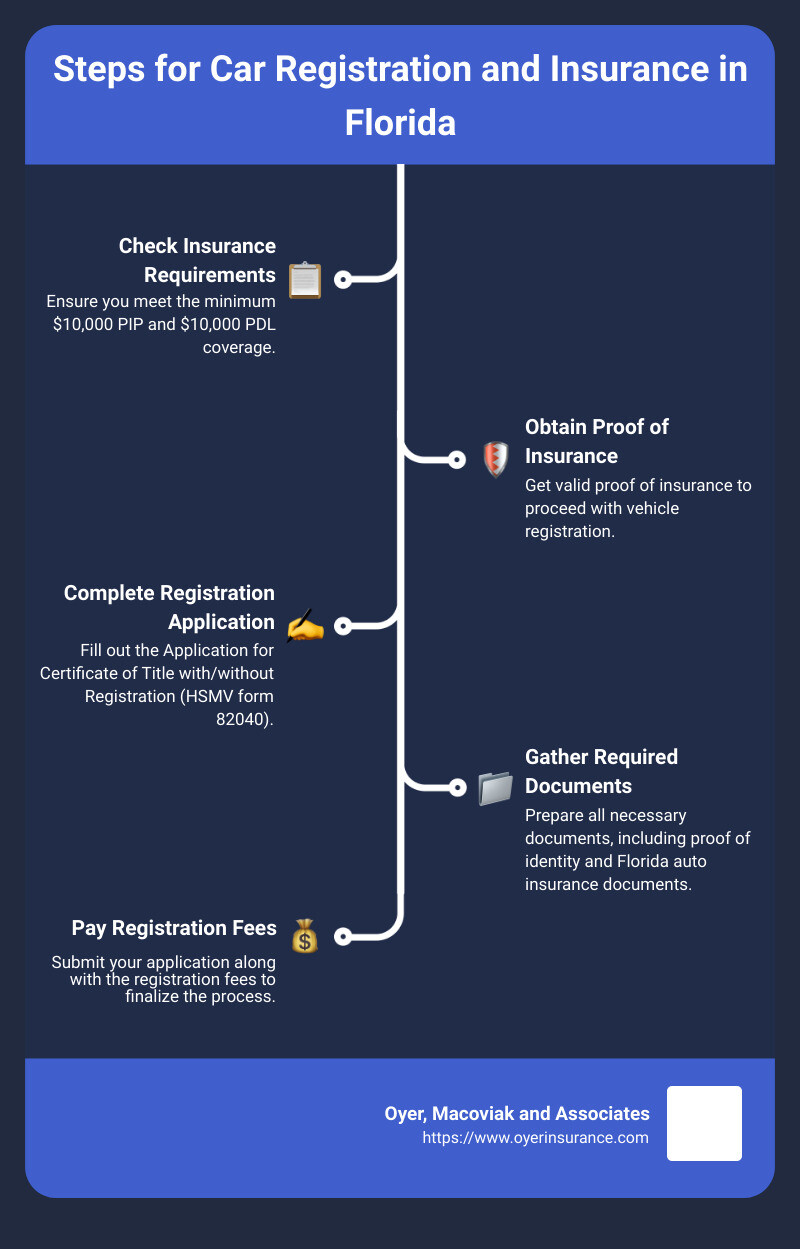
- Minimum Coverage: The policy must meet Florida’s minimum liability coverage requirements: $10,000 for Personal Injury Protection (PIP) and $10,000 for Property Damage Liability (PDL). Ensure your policy is active and reflects your new Florida address if you are moving from out of state.
Vehicle Identification Number (VIN) Verification
For vehicles being registered in Florida for the first time, especially those coming from out of state, a VIN verification is often required. This process ensures that the vehicle’s VIN matches the documentation and that the vehicle is not stolen or altered.
- Who Conducts VIN Verification: VIN verifications can be performed by authorized law enforcement officers (including local police and county sheriffs’ deputies) or licensed inspectors at authorized VIN verification stations.
- When is it Required: This is particularly important if you are titling and registering a vehicle that was previously titled and registered in another state. It’s also required for vehicles that have been declared a total loss by an insurance company or have had their title branded as salvage.
The Registration Process: Step-by-Step
Once you have gathered all the necessary documentation, you are ready to proceed with the actual registration process. This typically involves visiting a local county tax collector’s office, which acts as an agent for the FLHSMV.
Step 1: Gather Your Documents
Reconfirm that you have all the required documents: proof of ownership (title, MSO/MCO), proof of identity and residency (driver’s license, residency documents), and proof of Florida insurance.
Step 2: VIN Verification (If Applicable)
If your vehicle requires a VIN verification, ensure this has been completed and you have the signed verification form before heading to the tax collector’s office.
Step 3: Visit Your Local County Tax Collector’s Office
Locate the nearest county tax collector’s office that handles motor vehicle services. It’s advisable to check their specific hours of operation and whether appointments are recommended or required. You can usually find this information on the county’s official government website.
Step 4: Complete the Application for Certificate of Title With/Without Registration (HSMV Form 82040)
This is the primary application form you will need to fill out. It requests detailed information about you, the vehicle, and its previous ownership. You can often download this form from the FLHSMV website in advance to save time.
Step 5: Pay Applicable Fees and Taxes
There are several fees associated with registering a car in Florida. These include:
- Title Fee: A fee for the issuance of a new Florida title.
- Registration Fee: This varies based on the vehicle’s type, weight, and age.
- Sales Tax: If you purchased the vehicle in Florida, you will pay sales tax at the time of registration. If you purchased it out of state, you will likely have already paid sales tax in that state, but you may owe the difference if Florida’s sales tax rate is higher. You’ll need your bill of sale with the purchase price clearly indicated.
- Plate Fee: A fee for the issuance of your license plate.
- Other Potential Fees: Depending on your situation, there might be additional fees for services like lien recording or plate transfers.
Step 6: Receive Your License Plate and Registration Decal
Upon successful completion of the process and payment of all fees, you will be issued your Florida license plate and a registration decal. The decal is affixed to your license plate and indicates the expiration month and year of your registration. You will also receive a temporary registration certificate. Your official title and registration documents will be mailed to you by the FLHSMV.
Special Considerations and Exemptions
While the general process applies to most vehicle owners, Florida has specific regulations and exemptions that may apply to certain situations.
New Residents
If you have recently moved to Florida and brought your vehicle with you, you have 30 days from the date you establish residency to register your car. This requires obtaining a Florida driver’s license and surrendering your out-of-state title to the FLHSMV.
Vehicle Modifications and Special Plates
Florida offers a wide array of specialty license plates that support various causes, organizations, and interests. If you opt for a specialty plate, there may be an additional fee associated with it. Furthermore, certain vehicle modifications might require specific inspections or certifications to ensure they comply with state safety standards.
Electric and Alternative Fuel Vehicles
Florida has been increasingly encouraging the adoption of electric vehicles (EVs). While the core registration process remains similar, there might be specific incentives or registration considerations for EVs, such as potential exemptions from certain fees or access to special parking. It’s always worth checking the latest FLHSMV guidelines for these vehicles.
Transferring a Plate
If you are replacing a vehicle and have a valid Florida license plate on the old one, you may be able to transfer that plate to your new vehicle. This typically involves presenting the title for the new vehicle and paying a transfer fee. You will still need to register the new vehicle and ensure it has the required insurance.

Lienholders
If you financed your vehicle and there is a lien on the title, the lienholder (the bank or finance company) will typically hold the physical title until the loan is paid off. When you register your vehicle, you will need to provide information about your lienholder. The FLHSMV will record the lien on the Florida title. Once the loan is satisfied, the lienholder will release their interest, and you can then apply for a clear title.
By understanding these requirements and following the outlined steps, registering your car in Florida becomes a manageable task, allowing you to enjoy your travels across the state, from the theme parks of Orlando to the historic charm of St. Augustine.
LifeOutOfTheBox is a participant in the Amazon Services LLC Associates Program, an affiliate advertising program designed to provide a means for sites to earn advertising fees by advertising and linking to Amazon.com. Amazon, the Amazon logo, AmazonSupply, and the AmazonSupply logo are trademarks of Amazon.com, Inc. or its affiliates. As an Amazon Associate we earn affiliate commissions from qualifying purchases.