
Florida’s sunshine, pristine beaches, and vibrant culture have long drawn people to its shores. For many, the dream extends beyond a vacation; it’s about establishing a permanent residence, a sanctuary where they can enjoy the state’s unique lifestyle year-round. When considering a permanent move to the Sunshine State, understanding the intricacies of property ownership is paramount, and one term that frequently arises is “homestead property.” This concept is not merely a legal designation; it carries significant financial and legal implications for homeowners. In essence, a homestead property in Florida refers to a primary residence that qualifies for specific legal protections and tax benefits. It’s a cornerstone of Florida property law, designed to safeguard homeowners and their families from certain financial vulnerabilities.
Understanding the Florida Homestead Exemption
The Florida homestead exemption is a crucial benefit available to Florida residents who own and occupy their homestead property as their permanent residence. It is designed to protect a portion of a homeowner’s equity from creditors and to reduce the property tax burden. This dual purpose makes understanding the homestead exemption vital for anyone establishing a primary residence in Florida.
Eligibility Requirements
To qualify for the Florida homestead exemption, a property must meet several stringent criteria. These requirements are in place to ensure that the benefits are reserved for true Florida residents who are using the property as their principal dwelling.
Primary Residence
The most critical requirement is that the property must be the owner’s primary residence. This means it’s the place where the owner lives the majority of the time and intends to remain indefinitely. Proving primary residency often involves demonstrating a clear intent to make Florida the permanent home, which can be substantiated through various documents and actions. This includes:
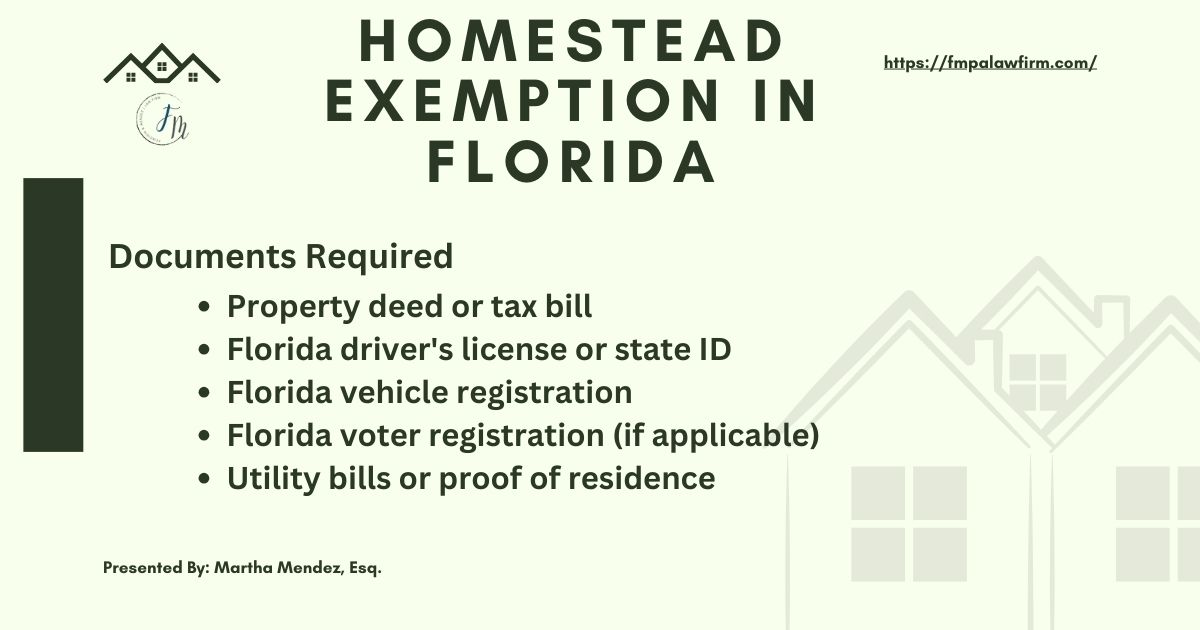
- Voter Registration: Registering to vote in Florida is a strong indicator of residency.
- Driver’s License/ID: Obtaining a Florida driver’s license or state identification card signifies a primary residence.
- Vehicle Registration: Registering vehicles in Florida is another key factor.
- Tax Filings: Filing federal and state income taxes as a Florida resident.
- Bank Accounts and Mail: Establishing financial accounts and receiving mail at the Florida address.
- Children’s Schooling: Enrolling children in Florida public schools.
The Florida Department of Revenue and local property appraisers’ offices will scrutinize these factors to determine if the property truly serves as the owner’s principal home. Owning multiple properties does not disqualify an individual from claiming homestead, as long as one is designated as the primary residence.
Ownership and Occupancy
The applicant must own the property and occupy it on January 1st of the tax year for which the exemption is claimed. This means that if you purchase a property and move in on January 2nd, you would not be eligible for the exemption until the following tax year. Similarly, if you sell your homestead property and move out before January 1st, you will no longer be eligible for the exemption on that property in the subsequent tax year.
Limitations on Acreage
The homestead exemption’s scope also includes limitations on the amount of land associated with the primary residence.
- Urban Homesteads: For properties located within a municipality (city or town), the homestead exemption applies to up to one-half (1/2) acre of contiguous land, including the home.
- Rural Homesteads: For properties located outside a municipality (in unincorporated areas), the exemption extends to up to one hundred sixty (160) acres of contiguous land, including the home.
These acreage limitations ensure that the homestead benefits are primarily directed towards residential use rather than extensive agricultural or commercial operations, although certain agricultural uses may still be permissible within the rural homestead context if they are incidental to the primary residence.
Property Tax Benefits
The most tangible benefit of a homestead property is the reduction in property taxes. Florida offers two primary homestead tax benefits: the Homestead Exemption itself, and the Save Our Homes (SOH) amendment.
The Homestead Exemption
The basic homestead exemption reduces the taxable value of your homestead property by $25,000. This means that the first $25,000 of your property’s assessed value is exempt from taxation. For example, if your home is appraised at $300,000, and the assessed value is the same, the homestead exemption would reduce your taxable value to $275,000. This exemption applies to all tax levies, including county, municipal, and school board taxes.
The Save Our Homes (SOH) Amendment
Beyond the $25,000 exemption, the Save Our Homes amendment, enacted in 1992, provides an additional layer of protection by capping the annual increase in assessed property value. For homestead properties, the assessed value cannot increase by more than 3% per year or the percentage change in the Consumer Price Index (CPI), whichever is less. This cap applies even if the market value of the property increases significantly.
This protection is invaluable, especially in a market like Florida’s, where property values can fluctuate. Without SOH, rising market values could lead to substantial increases in property tax bills. The SOH amendment ensures more predictable and manageable annual tax increases for homesteaded properties.
Portability of SOH Benefit
A significant advantage of the SOH amendment is its portability. When a Florida homeowner sells their homestead property, they can transfer their accumulated SOH benefit to a new homestead property in Florida. This means that the difference between the property’s market value and its SOH-capped assessed value on the old property can be applied to reduce the assessed value of the new property, up to the market value of the new property. This feature can significantly mitigate the impact of rising property values when moving to a new home within the state.
Legal Protections for Homestead Property
Beyond tax advantages, Florida’s homestead laws provide crucial protections against the forced sale of a primary residence by creditors. This protection is one of the strongest in the nation and is designed to ensure that individuals and families are not rendered homeless due to debt.
Protection Against Creditors
Article X, Section 4 of the Florida Constitution establishes robust homestead protections. It states that the homestead property is exempt from forced sale to pay debts or liabilities of the owner, with specific exceptions. This means that most creditors cannot force the sale of your homestead to satisfy a debt.
Exceptions to Creditor Protection
While Florida’s homestead protection is broad, it is not absolute. There are specific situations where creditors can force the sale of a homestead property to satisfy a debt. These exceptions are narrowly defined and are critical to understand:
- Purchase Money Mortgages: If the debt is incurred to purchase or improve the homestead property itself, the creditor can foreclose. This is a fundamental exception, as it allows lenders to secure loans used to acquire the very property being protected.
- Taxes and Assessments: Property taxes, special assessments (like those for local improvements), and federal, state, or local taxes are exceptions. The government has the right to enforce tax liens.
- Liens for Labor, Services, or Material: If a contractor performs labor or provides materials to improve the homestead and is not paid, they may be able to place a lien on the property and, in some cases, force its sale to satisfy the debt. This is often referred to as a “mechanic’s lien.”
- Mortgages Executed by the Owner and Spouse: If both the owner and their spouse (if one exists) execute a mortgage on the homestead property, that mortgage is enforceable. In Florida, a spouse has a vested interest in the homestead property, and their consent is generally required for any encumbrance or sale.
- Debts Incurred Prior to January 1, 1999 (with certain conditions): Certain pre-existing debts incurred before the current homestead laws took effect may be enforceable, though the specifics can be complex and often require legal interpretation.
It is crucial to note that the homestead protection does not extend to debts arising from fraud, intentional torts, or criminal acts. For instance, if an individual incurs significant debt through fraudulent means, their homestead might be vulnerable.
Spousal Rights
Florida law recognizes the importance of spousal rights concerning homestead property. If the owner is married, the homestead property cannot be sold or mortgaged without the consent of both the owner and their spouse, unless the spouse has legally abandoned the homestead or other specific legal circumstances apply. This ensures that a spouse is not dispossessed of their home without their agreement.
Applying for Homestead Exemption in Florida
Applying for homestead exemption in Florida is a straightforward process, but it’s essential to meet the deadlines and provide the necessary documentation. The application is typically filed with the local County Property Appraiser’s Office.
Application Process and Deadlines
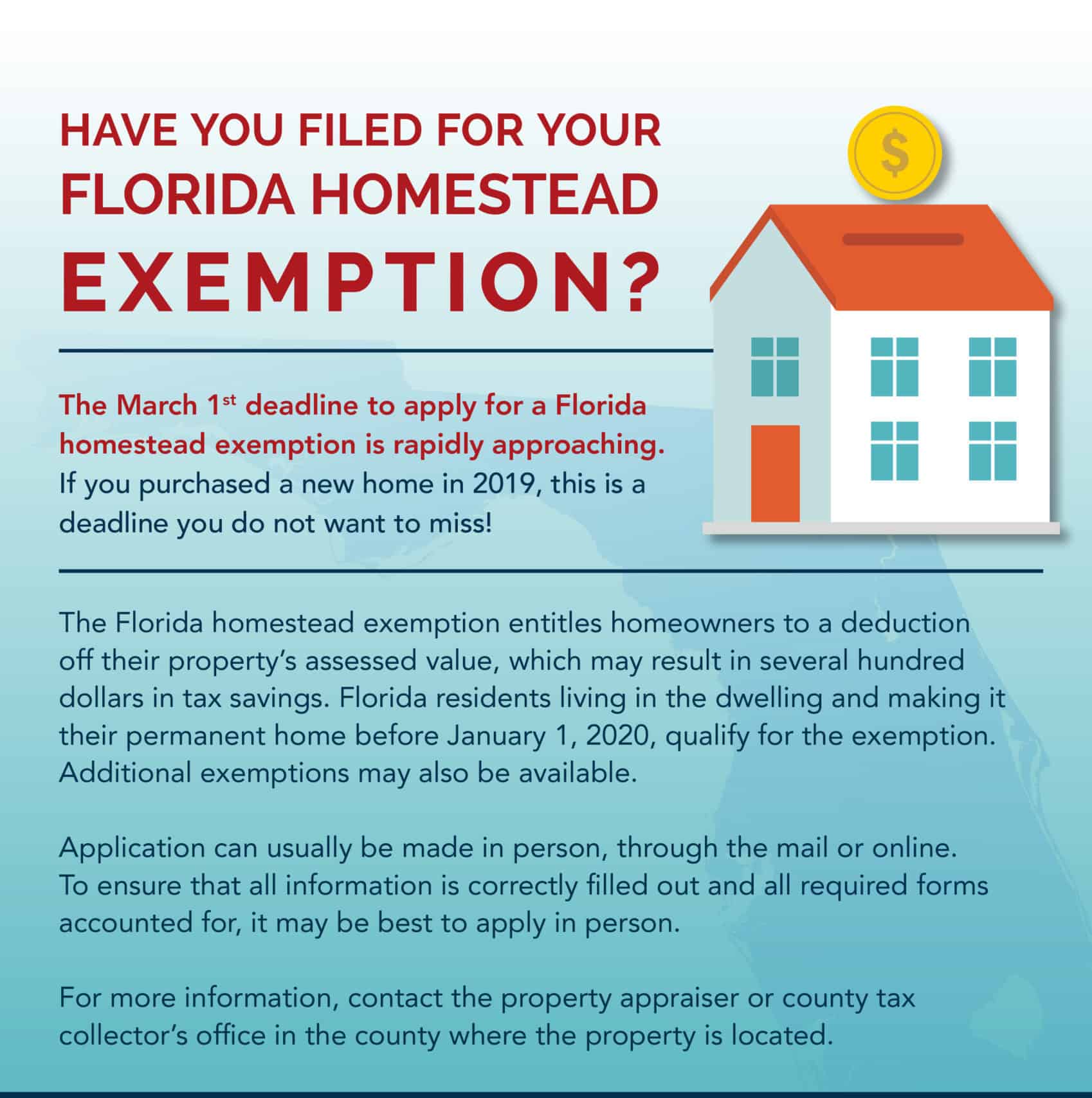
- Filing Period: The application period for homestead exemption begins on January 1st of each year and continues until March 1st. If March 1st falls on a weekend, the deadline is extended to the next business day.
- First-Time Applicants: For new homeowners, it is crucial to file the application as soon as possible after establishing residency and within the designated filing period.
- Renewal: Once granted, the homestead exemption typically renews automatically each year, provided the property remains your primary residence and there are no changes in ownership or use. However, it is the homeowner’s responsibility to notify the Property Appraiser’s Office of any changes that might affect eligibility, such as moving out or dedicating the property to business use.
Required Documentation
While specific requirements can vary slightly by county, common documentation needed for a first-time homestead application includes:
- Proof of Ownership: A recorded deed or title to the property.
- Proof of Residency: As detailed earlier, this can include a Florida driver’s license, voter registration card, vehicle registration, or utility bills in the applicant’s name at the homestead address.
- Social Security Number: For all owners applying for the exemption.
- Vehicle Identification Number (VIN): For at least one vehicle registered in Florida and titled in the applicant’s name at the homestead address.
What Happens If You Move?
If you sell your homestead property and move to a new residence in Florida, you must reapply for homestead exemption on your new property. You should also notify the Property Appraiser’s Office of the sale of your former homestead. This ensures that you receive the correct tax assessments on both properties and that your SOH benefit is properly transferred, if applicable.
Beyond the Primary Residence: Additional Homestead Considerations
While the primary focus of homestead property is a person’s principal dwelling, there are other related concepts and nuances worth noting for Florida residents.
Additional Homestead Exemptions
Florida offers several additional homestead exemptions that can provide further tax relief for specific groups of homeowners, provided they meet the criteria for the basic homestead exemption and the requirements for the additional exemption. These include:
- $5,000 Exemption: Available to widows, widowers, and totally and permanently disabled individuals.
- Long-Term Resident Exemption: For homeowners aged 65 and older who have owned and occupied their homestead for at least 25 consecutive years, and whose household income does not exceed a certain threshold (adjusted annually).
- Veteran Exemptions: Various exemptions exist for veterans, particularly those with service-connected disabilities, with the amount of exemption often varying based on the degree of disability.
- First Responder Exemptions: Some exemptions are available for law enforcement officers, firefighters, and emergency medical technicians.
These additional exemptions are applied on top of the basic homestead exemption, further reducing the taxable value of the property.
Homestead and Estate Planning
The homestead designation also plays a significant role in estate planning, particularly concerning the distribution of property upon the owner’s death. As mentioned, Florida law protects the surviving spouse’s right to the homestead property. Even if the deceased owner’s will attempts to devise the homestead to someone else, the surviving spouse typically has a legal right to reside in the homestead for life, or the property can be devised to the spouse with a life estate reserved for the children. This aspect of homestead law is complex and often requires consultation with an estate planning attorney to ensure proper inheritance and avoidance of legal disputes.

Distinguishing Homestead from Investment Property
It is vital to differentiate a homestead property from an investment property. An investment property, such as a rental unit or a vacation home that is not your primary residence, does not qualify for homestead protections or tax benefits. Trying to claim homestead status on a property that is not your primary residence can lead to penalties, back taxes, and interest.
In conclusion, understanding the definition and implications of a homestead property in Florida is fundamental for any homeowner. It represents not just a place to live, but a legal and financial sanctuary, offering vital tax advantages and robust creditor protection. By carefully adhering to the eligibility requirements and application procedures, Florida residents can ensure they fully benefit from this cornerstone of Florida property law, securing their home and their financial future in the Sunshine State.
LifeOutOfTheBox is a participant in the Amazon Services LLC Associates Program, an affiliate advertising program designed to provide a means for sites to earn advertising fees by advertising and linking to Amazon.com. Amazon, the Amazon logo, AmazonSupply, and the AmazonSupply logo are trademarks of Amazon.com, Inc. or its affiliates. As an Amazon Associate we earn affiliate commissions from qualifying purchases.