
The legal landscape of any jurisdiction can be complex, and understanding the nuances of criminal offenses is crucial. In Florida, felonies are categorized into degrees, with third-degree felonies representing a significant level of criminal culpability. This article delves into the definition, common examples, potential penalties, and broader implications of third-degree felonies within the state of Florida, providing insight into this critical aspect of the Florida justice system.
Understanding Felony Classifications in Florida
Florida categorizes its most serious crimes, known as felonies, into three distinct degrees: first-degree, second-degree, and third-degree. This classification system is not arbitrary; it is based on the severity of the offense, the potential harm caused to victims, and the overall threat to public safety. Each degree carries a corresponding range of penalties, with first-degree felonies being the most severe and third-degree felonies occupying the lowest tier of felony classification. However, it is essential to remember that even a third-degree felony is a serious criminal conviction with substantial consequences.
The Hierarchy of Felonies
- First-Degree Felonies: These are the most egregious offenses in Florida, often involving violent crimes, murder, or offenses that result in severe harm or death. Penalties are the most stringent, including lengthy prison sentences and substantial fines.
- Second-Degree Felonies: While still serious, second-degree felonies are less severe than first-degree offenses. They typically involve crimes that pose a significant risk of harm but do not reach the same level of severity as those in the first degree. Penalties are less severe than first-degree but still carry considerable prison time.
- Third-Degree Felonies: This category encompasses a range of offenses that are considered serious crimes but are less severe than first and second-degree felonies. These offenses often involve property crimes, certain drug offenses, or less violent forms of assault. The penalties are the least severe among the felony classifications, but still carry significant legal repercussions.
Defining a Third-Degree Felony in Florida
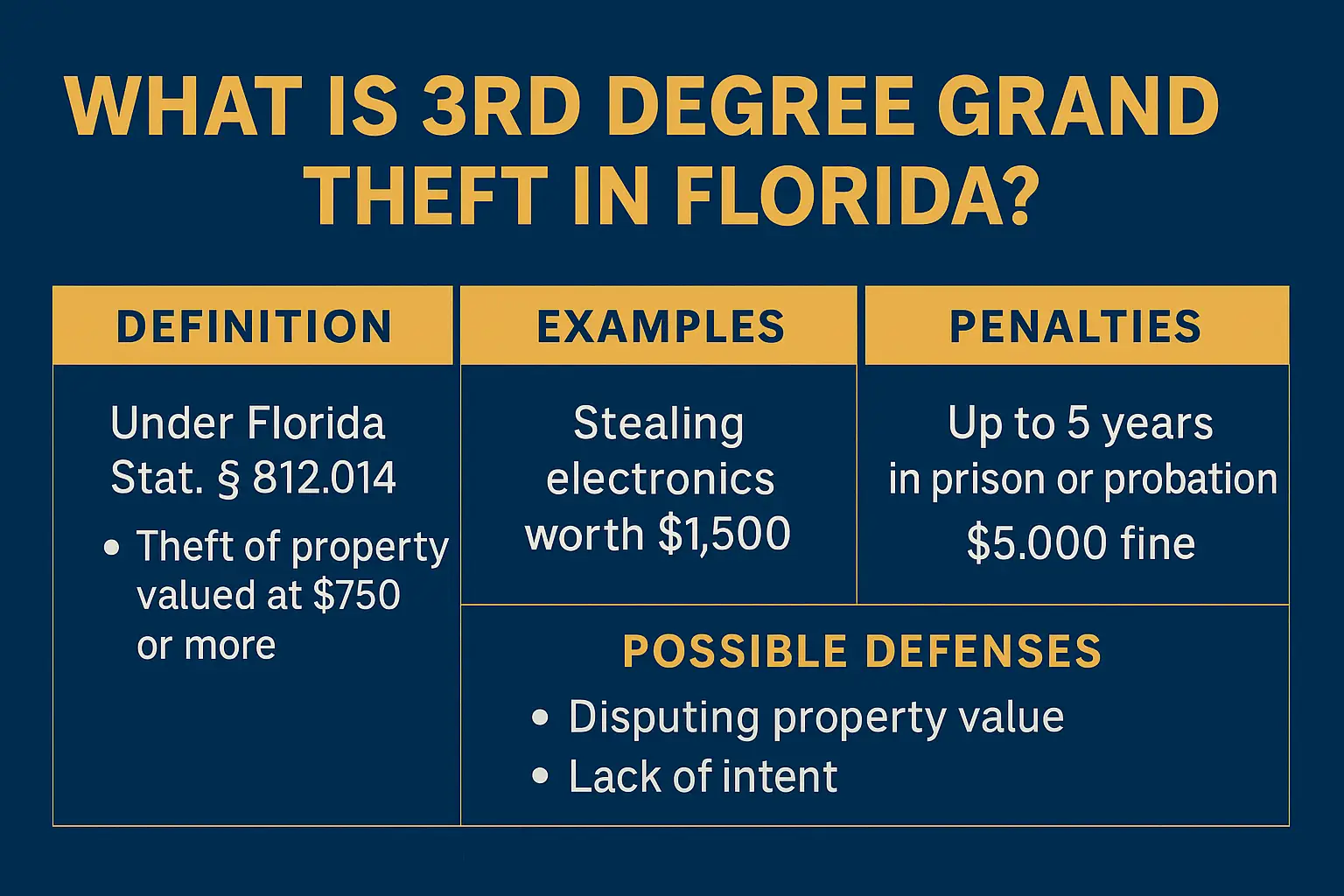
In Florida, a third-degree felony is defined as a criminal offense that carries a maximum penalty of up to five years in prison and a fine of up to $5,000. This statutory definition is codified in Florida Statutes § 775.082. It is important to note that this is the maximum potential penalty; sentencing is ultimately determined by the judge, taking into account various factors such as the specifics of the crime, the defendant’s criminal history, and any mitigating or aggravating circumstances.
Key Characteristics of Third-Degree Felonies
- Maximum Prison Sentence: As mentioned, the statutory maximum is five years. However, actual sentences can be shorter, especially for first-time offenders or in cases with minimal harm.
- Maximum Fine: A fine of up to $5,000 can be imposed in addition to or in lieu of a prison sentence.
- Felony Record: A conviction for a third-degree felony results in a permanent felony record, which can have long-lasting implications beyond the immediate penalties.
Common Examples of Third-Degree Felonies in Florida
The category of third-degree felonies in Florida covers a broad spectrum of criminal activities. Understanding these common examples can provide a clearer picture of what constitutes this level of offense.
Property Crimes
Many property-related offenses fall under the umbrella of third-degree felonies, particularly when the value of the stolen or damaged property exceeds certain thresholds.
- Grand Theft: This is perhaps one of the most common third-degree felonies. Grand theft occurs when the value of the stolen property exceeds $300 but is less than $5,000. For instance, stealing a laptop worth $600 or a valuable piece of jewelry could result in a grand theft charge. The specific value threshold is a critical factor in determining the degree of the theft charge.
- Burglary (of an unoccupied dwelling or structure): While burglary of an occupied dwelling is typically a more serious offense, the burglary of an unoccupied structure or dwelling, with the intent to commit a crime inside, can be classified as a third-degree felony. This involves unlawful entry into a building or dwelling without permission, with the intent to steal or commit another crime.
- Arson (of property): Arson, the intentional setting of fire to property, can be classified as a third-degree felony if it involves damage to property other than a person’s primary residence, and no one is seriously injured. The severity of the damage and the potential risk to life are factors that influence the classification.
- Dealing in Stolen Property: Knowingly buying, selling, or possessing property that one knows or should know is stolen, when the value of the property exceeds $300, is a third-degree felony. This offense targets individuals who profit from the illegal acquisition of goods.
Drug Offenses
Certain drug-related crimes, particularly those involving possession or sale of specific quantities of controlled substances, can be classified as third-degree felonies.

- Possession of Controlled Substances: While simple possession of small amounts of certain drugs might be a misdemeanor, possession of larger quantities, or possession with intent to sell, can elevate the charge to a third-degree felony. The type of drug and the amount are critical in this determination. For example, possession of a certain weight of cocaine or methamphetamine could be a third-degree felony.
- Sale or Delivery of Controlled Substances: The act of selling or delivering illegal drugs, even in small quantities, often constitutes a third-degree felony. This offense is viewed more seriously due to the active role in distributing illegal substances into the community.
Assault and Battery Offenses
While more severe forms of assault and battery are classified as higher-degree felonies or even first-degree felonies, certain less aggravated forms can fall into the third-degree category.
- Aggravated Battery (in specific circumstances): While aggravated battery often involves serious bodily harm or the use of a deadly weapon, certain circumstances, such as battery committed against a law enforcement officer without causing serious injury, might be charged as a third-degree felony.
- Assault with a Deadly Weapon (in specific circumstances): Similar to aggravated battery, an assault with a deadly weapon that does not result in serious bodily harm might be prosecuted as a third-degree felony, depending on the specifics of the incident and intent.
Penalties and Consequences of a Third-Degree Felony Conviction
A conviction for a third-degree felony in Florida carries significant consequences that extend far beyond the immediate legal penalties. Understanding these ramifications is crucial for anyone facing such charges or for those seeking to comprehend the state’s criminal justice system.
Legal Penalties
- Incarceration: As previously stated, the maximum prison sentence is five years. This can range from probation with no jail time to the maximum sentence, depending on the judge’s discretion and the specifics of the case.
- Fines: A monetary fine of up to $5,000 can be imposed. These fines are in addition to any restitution that may be ordered to compensate victims.
- Probation: In many cases, a third-degree felony conviction may result in a period of probation, during which the convicted individual must adhere to specific conditions, such as regular check-ins with a probation officer, drug testing, and community service.
- Restitution: The court may order the convicted individual to pay restitution to the victim(s) for any financial losses incurred as a result of the crime.
Long-Term Ramifications
- Criminal Record: A felony conviction creates a permanent criminal record. This record can significantly impact future opportunities and societal standing.
- Employment: Many employers conduct background checks, and a felony conviction can make it difficult to secure employment, especially in fields requiring trust or professional licensing.
- Housing: Landlords may deny rental applications based on a felony record.
- Education: Admission to certain educational institutions, particularly higher education programs, may be affected.
- Civic Rights: In Florida, convicted felons may lose certain civic rights, such as the right to vote, serve on a jury, or possess firearms, although some rights can be restored after the completion of the sentence.
- Professional Licensing: Individuals seeking or holding professional licenses (e.g., in healthcare, law, or education) may face disciplinary actions, including license revocation or denial.
- Travel: While less common for third-degree felonies than for more severe offenses, certain international travel destinations may deny entry to individuals with felony convictions.
Navigating a Third-Degree Felony Charge in Florida
Facing a third-degree felony charge is a serious matter that requires careful legal navigation. The complexities of Florida law, coupled with the potential for severe consequences, necessitate professional legal representation.
The Importance of Legal Counsel
- Understanding Your Rights: An experienced criminal defense attorney can explain your rights, the charges against you, and the potential legal strategies available.
- Building a Defense: Attorneys can investigate the circumstances of the alleged crime, gather evidence, interview witnesses, and build a robust defense strategy.
- Negotiating Plea Bargains: In some cases, a plea bargain may be negotiated with the prosecution, potentially leading to a reduced sentence or lesser charge.
- Court Representation: Attorneys will represent you in all court proceedings, from arraignments to trials.
- Sentencing Advocacy: If convicted, an attorney can advocate for a lighter sentence by presenting mitigating factors to the judge.

Potential Defense Strategies
The specific defense strategy will depend heavily on the facts of the case, but common approaches include:
- Challenging Evidence: Disputing the admissibility or validity of evidence presented by the prosecution.
- Alibi: Presenting evidence that the defendant was elsewhere at the time of the crime.
- Mistaken Identity: Arguing that the defendant was wrongly identified as the perpetrator.
- Lack of Intent: Demonstrating that the defendant did not possess the required criminal intent for the offense.
- Constitutional Violations: Arguing that the defendant’s constitutional rights were violated during the investigation or arrest.
In conclusion, a third-degree felony in Florida represents a serious criminal offense with a maximum penalty of five years in prison and a $5,000 fine. While less severe than first or second-degree felonies, the conviction carries substantial long-term consequences that can impact an individual’s life for years to come. Understanding the definitions, examples, and penalties associated with third-degree felonies is a crucial step in navigating the Florida legal system. Seeking qualified legal counsel is paramount for anyone facing such charges to ensure their rights are protected and to mount the most effective defense possible.
LifeOutOfTheBox is a participant in the Amazon Services LLC Associates Program, an affiliate advertising program designed to provide a means for sites to earn advertising fees by advertising and linking to Amazon.com. Amazon, the Amazon logo, AmazonSupply, and the AmazonSupply logo are trademarks of Amazon.com, Inc. or its affiliates. As an Amazon Associate we earn affiliate commissions from qualifying purchases.